A vast majority of the population in the world is affected by gum disease without even realizing it. The initial common presenting symptoms of gum disease include bleeding , swollen, painful gums and persistent bad breath. If not treated in an early stage the symptoms become more severe and can even lead to tooth loss.
Recently there has been a lot of promotion regarding the benefits of antimicrobial mouthwashes as indispensable means to maintain oral hygiene. If used in addition to oral hygiene practices and professional cleaning , antimicrobial mouthwashes are good for treating gum diseases. It cannot cure gum disease on its own. In this article, we will discuss what gum disease is, its stages, symptoms and how antimicrobial mouth washes are useful in treating them.
What is Gum Disease?
Gum disease is a bacterial infection that affects the soft tissue and bone supporting your teeth. It begins when dental plaque (that is a sticky film of bacteria) builds up along the gumline. When not removed through brushing and flossing the plaque tends to harden to form Tartar.
Tartar acts as a reservoir to harbour more bacteria further increasing the damage.
Stages of Gum Disease
Gingivitis
- It is the earliest, reversible and mildest stage of gum disease.
- Only the gum tissue becomes infected while the underlying bone is not yet affected.
- With proper brushing, flossing, and professional cleaning, the gums can return back to their full health.
Symptoms of Gingivitis
- Gums that bleed easily when brushing or flossing
- Redness, puffiness, or tenderness along the gumline
- Persistent bad breath (halitosis)
- Gums that look slightly swollen or shiny
Periodontitis
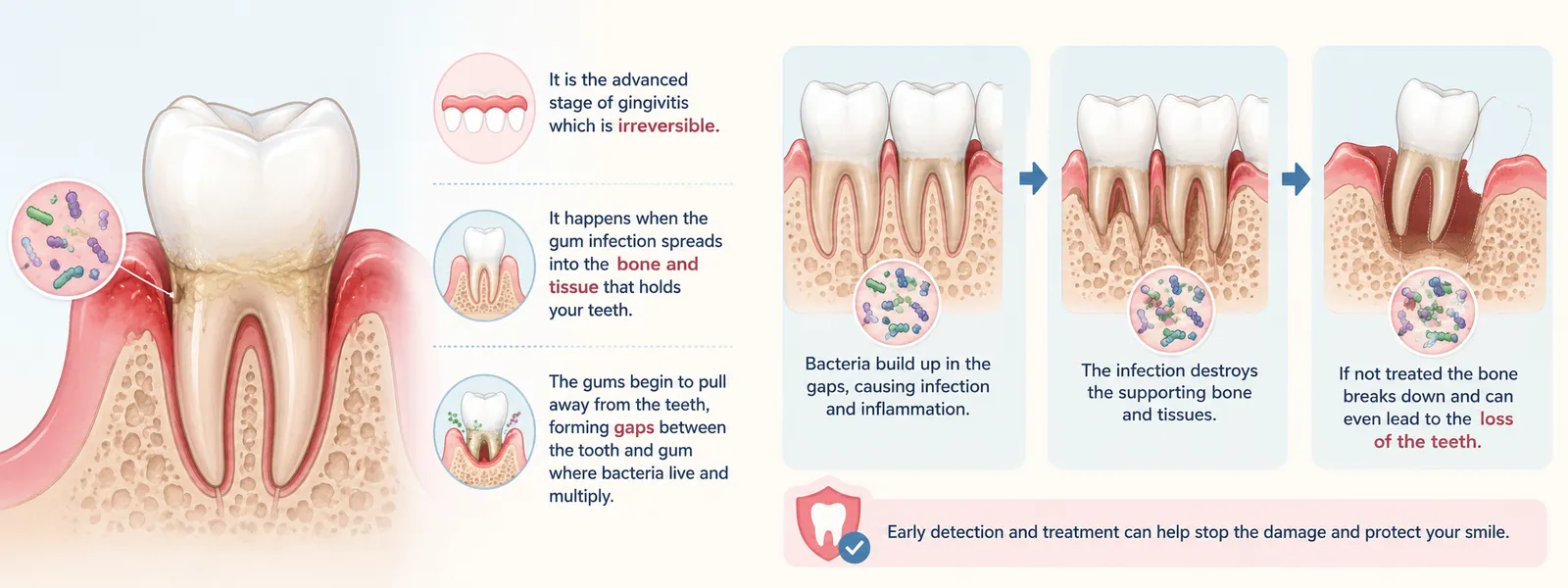
Symptoms of Periodontitis
It is characterised by:
- Bleeding gums
- Persistent bad breath
- Gum swelling
- Gum tenderness
- Loose teeth
What Is an Antimicrobial Mouthwash?
Antimicrobial mouthwash is a medicated oral rinse. They act by reducing or killing the disease-causing harmful bacteria in the mouth. They act by a number of mechanisms which include:
- Disrupting bacterial cell walls
- Preventing bacterial attachment
- Reducing biofilm formation
- Suppressing inflammatory responses
They are different from cosmetic mouthwash which are simply used for freshening the breath.
Antimicrobial mouthwashes are commonly recommended as an adjunct to brushing and interdental cleaning, especially for patients with gingivitis, periodontitis, orthodontic appliances, or difficulty maintaining adequate oral hygiene.
How Do Antimicrobial Mouthwashes Work?
Antimicrobial mouthwashes contain specific ingredients that help control disease causing bacteria in the mouth through several mechanisms:
1. Destroying Bacterial Cell Membranes
Certain agents in mouthwashes attach to bacterial cell walls. This damages the wall, causing leakage of bacterial cellular contents and death.
2. Inhibiting Bacterial Growth
Some ingredients prevent bacteria from multiplying and forming sticky plaques.
3. Reducing Plaque Formation
By limiting bacterial adhesion to tooth surfaces, these rinses slow down plaque accumulation along the gumline.
4. Suppressing Inflammation
Reducing the number of disease causing bacteria decreases the immune response , leading to reduction in symptoms like redness, swelling, and bleeding of the gums.
5. Cleaning in Inaccessible areas
Mouthwashes can penetrate around orthodontic brackets, fixed prostheses, and other areas that may be difficult to reach and clean with a toothbrush.
It is important to remember that antimicrobial mouthwashes cannot remove mature plaque (sticky film of bacteria which is already established around the gumline) or tartar and should not replace physical cleaning methods like toothbrushing. It works best along with brushing, flossing, and dental treatment.
Types of Antimicrobial Mouthwashes for Gum Diseases
1. Chlorhexidine Gluconate (CHX)
Chlorhexidine is considered the gold standard antimicrobial mouthwash by dentists because it is effective against several types of bacteria (Broad spectrum antimicrobial) in the mouth and has a long duration of action. Recommended time for use is 2-4 weeks after which side effects of chlorhexidine are seen.
Advantages
- Highly effective for gingivitis
- Useful after gum surgery
- Promotes healing following dental procedures like teeth cleaning
- Best mouthwash for bleeding gums
Disadvantages
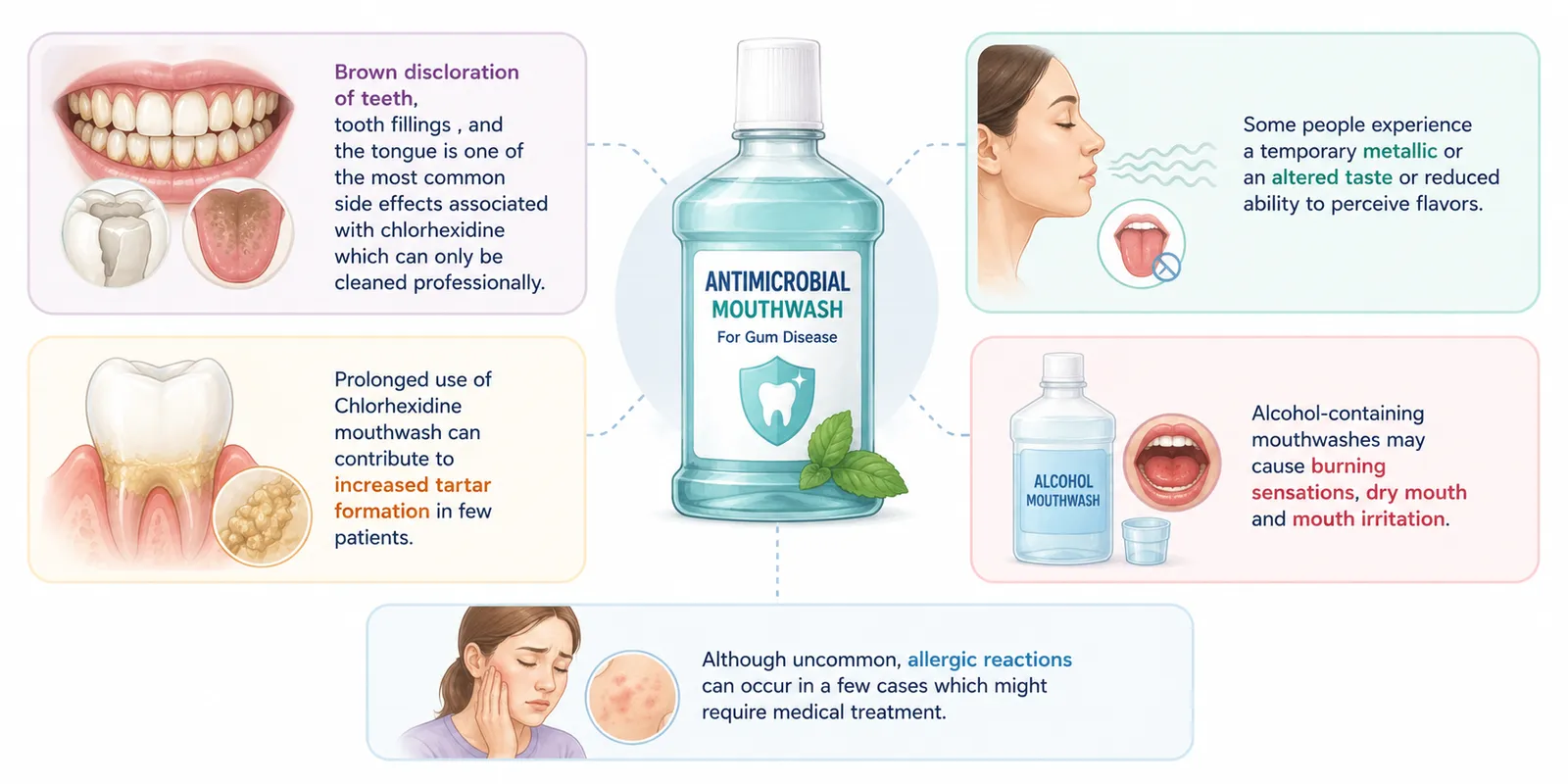
- Tooth and tongue staining
- Altered taste sensation
- Increased tartar accumulation
Best suited for: Moderate to severe gingivitis, post-surgical care, and short-term management of periodontal infections.
2. Cetylpyridinium Chloride (CPC)
CPC is a quaternary ammonium compound with antibacterial properties and can be used daily.
Advantages
- Available without prescription and safer
- Causes less staining than chlorhexidine
- Suitable for long-term use
Disadvantages
- Less effective than chlorhexidine
- May cause mild tooth discoloration in some individuals
Best suited for: Mild gingivitis and daily plaque control.
3. Essential Oil Mouthwashes
These rinses contain a combination of essential oils such as:
- Thymol
- Eucalyptol
- Menthol
- Methyl salicylate
Advantages
- Effective in reducing plaque and gingival inflammation
- Easily available
- Can be used for long-term
- Useful for bleeding gums
Disadvantages
- Some formulations contain alcohol
- May cause a burning sensation and dryness in mouth
Best suited for: Daily maintenance of gum health.
4. Stannous Fluoride Mouthwashes
Stannous fluoride provides both antimicrobial and also prevents cavity formation due to its fluoride content benefits.
Advantages
- Reduces gingivitis
- Protects against tooth cavity
- Helps decrease tooth sensitivity
Disadvantages
- Can cause temporary staining with longer use
Best suited for: Patients with both gum disease and a high risk of cavities.
5. Oxygenating Mouthwashes
These products release oxygen, creating an environment that is less favorable for anaerobic bacteria (bacteria which multiply without oxygen) leading to their death.
Advantages
- Can reduce bad odour
- Useful for management of mild gum irritation
Disadvantages
- Limited evidence for long-term periodontal benefits
- Excessive use may irritate and damage oral tissues
6. Natural or Herbal Antimicrobial Mouthwashes
Common ingredients include:
- Aloe vera
- Green tea extract
- Tea tree oil
- Neem
- Propolis
Advantages
- Generally well tolerated as they are natural compounds
- Often alcohol-free
Disadvantages
- No enough evidence to suggest their potential benefits
- Variability in formulations can reduce effectiveness
It helps more in early or mild gum problems than in advanced gum disease.


Consult a dental surgeon
Is Antimicrobial Mouthwash Good for Gum Disease?
The benefits of Antimicrobial mouthwash depends upon the stage of the disease if it is early stage of gum disease i.e. Gingivitis or a more advanced stage i.e. Periodontitis.
For Gingivitis
Antimicrobial mouthwash can be beneficial for patients with gingivitis. Research has shown that antimicrobial rinses can reduce plaque accumulation, bleeding, and gum inflammation when combined with daily brushing and interdental cleaning.
Very useful in patients who are:
- Undergoing orthodontic treatment
- Recovering from oral surgery
- Limited hand movements and agility
- Older adults, smokers and individuals with diabetes
For Periodontitis
The benefits of Antimicrobial mouthwash are limited in advanced gum disease i.e. Periodontitis. This is because bacteria have now established into areas like bone and deep pockets, where mouthwash cannot adequately penetrate. Therefore bacteria cannot be effectively killed due to inaccessibility.
At the same time Antimicrobial mouthwash cannot kill the bacteria multiplying in the hard tartar. Professional treatment remains keystone to the treatment and may include:
- Scaling and root planing (professional dental cleaning)
- Periodontal therapy (treating deep pocket)
- Local antimicrobial therapy
- Surgical procedures in severe cases
How to Choose the Right Antimicrobial Mouthwash for Gum Disease?
| Mouthwash Type | Best For | Advantages | Possible Side Effects | Suitable for Long-Term Use? |
|---|---|---|---|---|
| Chlorhexidine (0.12–0.2%) | Severe gingivitis, after deep cleaning or gum surgery | Most effective at reducing plaque and gingival inflammation | Tooth staining, altered taste, increased tartar buildup | No (typically 2–4 weeks only) |
| Essential Oils | Mild to moderate gingivitis, daily gum care | Good plaque control, widely available | Burning sensation; may contain alcohol | Yes |
| Cetylpyridinium Chloride (CPC) | Daily plaque control and mild gum inflammation | Less staining than chlorhexidine; alcohol-free options available | Mild oral irritation in some users | Yes |
| Tea Tree Oil | Patients seeking natural alternatives | Anti-inflammatory and antimicrobial properties | Possible allergic reactions; limited scientific evidence | Possibly (consult a dentist) |
Can Antimicrobial Mouthwash Cure Gum Disease?
No. Antimicrobial mouthwashes cannot cure Gum disease, however they can be used as an adjunct and supportive measure in addition to proper oral hygiene and professional dental treatment.
Can Antimicrobial Mouthwash Reverse Gingivitis?
When gum inflammation is in an early stage i.e. Gingivitis removing plaque and improving oral hygiene can allow the gums to heal. Antimicrobial mouthwash may accelerate symptom improvement by reducing the number of bacteria.
Can Antimicrobial Mouthwash Reverse Periodontitis?
No. Once the gingivitis has progressed to Periodontitis and infection has spread to the bone and supporting tissues of the tooth , an antimicrobial mouthwash cannot regenerate these lost and damaged tissues. Advanced gum disease requires professional dental treatment.
Side Effects of Antimicrobial Mouthwash for Gum Disease
Although antimicrobial mouthwashes are generally safe It can cause staining, taste changes, and irritation, prolonged use may cause unwanted effects.
Alcohol-Based Versus Alcohol-Free Mouthwash for Gum Disease
Alcohol serves as a solvent and preservative in some mouthwashes. It is however not necessary for antibacterial activity.
Alcohol-Free Mouthwash May Be Better For:
- Patients with dry mouth and sensitive oral tissues
- Older adults, pregnant women
- Patients undergoing cancer treatment
- People with oral mucosal diseases
Alcohol-Containing Mouthwash May Cause:
- Oral dryness
- Burning sensations
- Increased discomfort in sensitive mouths
Discussing the most suitable option with a dental professional can help prevent unnecessary irritation.
Natural Alternatives to Antimicrobial Mouthwash for Gum Disease
Several patients look for natural alternatives and remedies to manage gum disease. Only a few compounds have shown results to be promising:
Aloe Vera
It has anti-inflammatory and antimicrobial properties and may help reduce gingival bleeding and may be used in the form of mouthwashes.
Green Tea
Green tea mouthwashes contain Catechins that exhibit antibacterial activity against periodontal pathogens.
Tea Tree Oil
Tea tree oil has antimicrobial effects, although it should never be swallowed and may cause irritation in some individuals.
Saltwater Rinses
Warm saltwater rinses can soothe irritated tissues and temporarily reduce inflammation.
How Should You Use Antimicrobial Mouthwash Correctly?
- Brush your teeth thoroughly using toothpaste.
- Clean between your teeth with floss or interdental brushes.
- Measure the recommended amount of mouthwash.
- Swish vigorously for 30 to 60 seconds.
- Spit out the solution completely.
- Avoid rinsing with water afterward.
- Wait at least 30 minutes before eating or drinking.
Who Should Consider Using Antimicrobial Mouthwash?
- Patients with gingivitis
- Individuals recovering from periodontal therapy
- Orthodontic patients
- Smokers
- People with diabetes
- Individuals who struggle with effective brushing and flossing
When Should You See a Dentist for Gum Disease?
Schedule an immediate dental visit if you notice:
- Bleeding gums lasting longer than two weeks
- Receding gums
- Loose teeth
- Pus discharge
- Persistent bad breath
- Pain while chewing
- Gum swelling that does not improve
References
- American Dental Association. Mouthrinse (Mouthwash). American Dental Association.
- James G Gunsolley. A meta-analysis of six-month studies of antiplaque and antigingivitis agents. J Am Dent Assoc. 2006;137(12):1649–1657.
- J C Cortelli, et al. Cetylpyridinium chloride mouthrinses in the control of plaque and gingivitis: a systematic review. Int J Dent Hyg. 2025.
Frequently asked questions
Can antimicrobial mouthwash replace brushing?
No. Brushing and interdental cleaning remain the foundation of gum disease prevention.
Is chlorhexidine safe for long-term use?
It is generally recommended only for short-term use under professional supervision.
Can antimicrobial mouthwash cure gum disease?
No. Antimicrobial mouthwash can help reduce plaque, bacteria, and gum inflammation, particularly in gingivitis, but it cannot cure periodontitis or reverse bone loss.
Which antimicrobial mouthwash is best for gum disease?
The best mouthwash depends on your condition. Chlorhexidine is highly effective for short-term treatment of severe gingivitis, while cetylpyridinium chloride (CPC) and essential oil mouthwashes are better suited for long-term daily use.
Is antimicrobial mouthwash better than regular mouthwash?
Yes, therapeutic antimicrobial mouthwashes actively reduce harmful oral bacteria and help control gingivitis. Cosmetic mouthwashes mainly freshen breath and do not significantly affect plaque or gum inflammation.
Which mouthwash is best for bleeding gums?
Products containing chlorhexidine or cetylpyridinium chloride may help reduce inflammation and bleeding gums.
Should mouthwash be used before or after brushing?
Most dental professionals recommend using mouthwash after brushing and flossing.