


A bright, symmetrical, pearly white smile is a long sought obsession which is associated with confidence and attractiveness. It is synonymous with the term "Hollywood smile" and has made dental veneers one of the most sought-after cosmetic dental treatments worldwide. From celebrities to normal individuals, more people are choosing veneers to transform discolored, chipped, worn, or slightly misaligned teeth into a natural-looking perfect smile.
If you are planning on getting veneers and are worried thinking: Can veneers affect gum health? You are not alone, this is a question which crosses the mind of several people who are planning a smile makeover.
Veneers themselves do not cause gum disease or damage healthy gums. Gum health is affected when veneers are poorly placed, over-contoured, or when existing gum disease is left untreated before veneer placement.
What Are Dental Veneers?
Dental veneers are thin, custom-made shells which are made up of either porcelain or composite that are bonded to the front surface of your teeth to improve their appearance. They are designed to mimic the natural color, translucency, and texture of tooth enamel while correcting a variety of cosmetic concerns. Dentists commonly recommend veneers to improve:
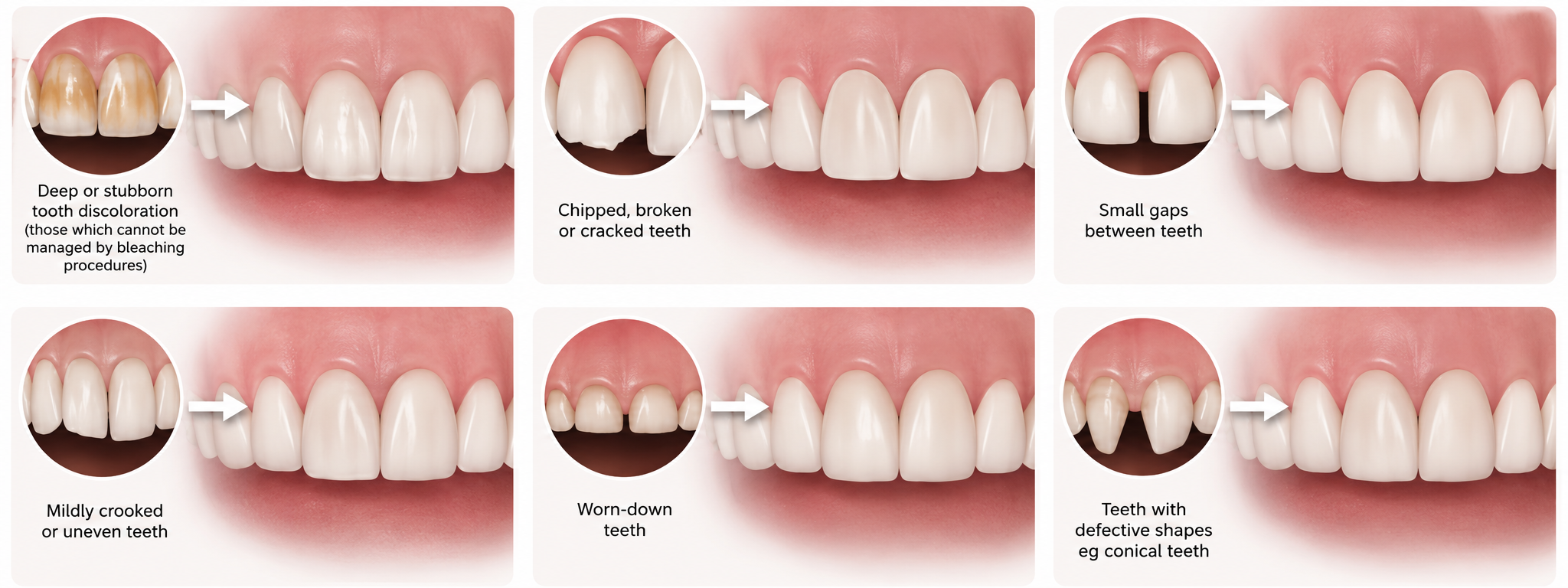
Veneers only cover the front surface of the teeth in comparison to the crown which covers all the tooth surfaces . This allows dentists to preserve more of the natural tooth structure while achieving significant cosmetic improvements.
Types of Dental Veneers
On the basis of the material used for fabrication, Veneers can be classified into two types:
Porcelain Veneers
Porcelain veneers are considered the gold standard because they are:
- Highly stain-resistant
- Durable often lasting 10–15 years or longer
- Natural-looking due to their enamel-like translucency
- Resistant
Composite Veneers
Composite veneers are made from tooth-colored resin applied directly to the tooth. They are preferred by several patients as:
- Lower cost compared to veneers
- Faster treatment, as they are often completed in one visit
- Easier repairs if chipped
However, they are generally less durable and more prone to staining than porcelain veneers.
Can Veneers Affect Gum Health?
The answer to this question is not direct and dependent upon several factors. It depends largely on how the veneers are designed, technique and precision with which they are placed, and cared for by the patient rather than the veneer material itself. Venners themselves are made up of biocompatible material, which has no role in affecting gum health.
Healthy Veneers placed on gums
When veneers are properly fabricated and bonded by an experienced dentist in a technique sensitive manner, they should fit seamlessly against the tooth without irritating the surrounding gum tissue.
The characteristics of a good veneer are:
- Have smooth, polished margins to prevent plaque accumulation
- Blend naturally with the gumline in a seamless manner
- Avoid creating plaque-retentive areas
- Allow normal brushing and flossing
- Preserve the natural relationship between the tooth and the gums
When a healthy veneer having the above characteristics is placed on the gums it will ensure there is minimum gum inflammation (body's natural defense response to injury, infection, or harmful stimuli.) and gum health is maintained.
Poorly Designed Veneers placed on Gums
Gum problems occur when veneers interfere with the natural anatomy around the gums. It can be seen in cases like:
- Over-contoured (excess material or bulky) veneers create ledges (spaces) where plaque accumulates.
- Rough, unpolished or uneven margins make cleaning difficult promoting plaque accumulation
- Excess dental cement left behind after bonding can trap bacteria, make flossing and brushing difficult.
- Veneers extending too far beneath the gumline may irritate soft tissues promoting inflammation
A poorly designed veneer can result in:
- Plaque (film of bacteria) accumulation
- Gingivitis (early gum disease)
- Chronic gum inflammation (body's natural defense response to injury, infection, or harmful stimuli. )
- Bleeding gums
- Bad breath
- Gum recession (gradual movement of the gum margin away from the crown of the tooth, exposing the root surface) over time
How Do Dental Veneers Affect Your Gums?
The manner in which the gums would respond to veneers depends upon two main factors: Veneer margins and Biologic width.
Role of Veneer Margin in gum health
A veneer margin is the edge or boundary where a dental veneer meets the natural tooth surface.
Gums form a protective seal around each tooth preventing bacterial buildup. If the veneer margin disrupts this seal, bacteria and plaque can accumulate more easily, increasing the risk of inflammation. An ideal veneer margin should:
- Fit precisely against the tooth
- Minimize plaque retention
- Preserve the natural attachment between the tooth and the gums.
- Preserve the health of the surrounding gum tissues
Even mild discrepancies at the margin can make daily cleaning more difficult and increase the risk of plaque accumulation and long-term gum irritation.
Role of Biological Width in gum health
Biological width is the natural space between the gum tissue and the underlying jawbone that helps keep teeth healthy and protected. It is made up of the tissues that attach the gums to the tooth, creating a protective seal that prevents bacteria from reaching the bone and supporting structures
If a Veneer tends to invade into this space it can lead to:
- Persistent gum inflammation
- Bleeding
- Gum overgrowth
- Bone loss
- Gum recession
Thus, any compromise on the biological width can cause gum problems.
Why Gum Health Is Evaluated Before Veneers?
Before recommending veneers, your dentist will examine your gums for signs of disease. Any existing gum disease needs to be effectively managed in order to ensure that veneers are successful for the patient. Your dentist will evaluate your dental health and suggest appropriate treatment for:
- Gingivitis (early gum disease)
- Periodontitis (advanced gum disease)
- Bleeding gums
- Significant plaque buildup and tartar deposits
- Active oral infections
Can Veneers Improve Gum Health?
Although, veneers primarily address esthetic concern but in a few cases they might improve gum health as well.
1. Veneers Create Smoother Tooth Surfaces
Teeth with irregular, chipped, broken surfaces can cause increased plaque accumulation and bacterial buildup. Well-polished porcelain veneers create smooth surfaces that may be easier to clean with regular brushing and flossing.
2. Reduce food entrapment between surfaces
Small spaces, uneven tooth edges, or worn teeth sometimes allow food particles to become trapped near the gums. When veneers restore proper tooth margins and contact, they may reduce these areas where plaque and food debris accumulate.
3. They Can Close "Black Triangles" spaces between teeth
At times small dark spaces exist between teeth near the gumline called black triangles. These spaces may occur due to mild gum recession or changes in tooth shape. Veneers can reshape the teeth to reduce these gaps, making the smile appear fuller while also limiting areas where food tends to collect.
4. They improve oral hygiene practices and thus gum health
People with veneers are often more likely to:
- Brush twice daily
- Floss consistently
- Attend regular dental checkups
- Schedule professional cleanings
- Follow their dentist's maintenance recommendations
Factors That Influence How Veneers Affect Your Gum Health
| Factor | Effect on Gum Health |
|---|---|
| Proper veneer fit | Minimizes plaque accumulation and gum irritation. |
| Smooth, polished margins | Reduces bacterial retention around the veneers. |
| Healthy gums before treatment | Lowers the risk of complications during and after veneer placement. |
| Excellent oral hygiene | Helps prevent gingivitis and periodontitis. |
| Regular professional cleanings | Detects problems early and removes plaque and tartar deposits. |
| Experienced cosmetic dentist | Ensures proper veneer design, margin placement, and bite alignment. |
When Can Veneers Harm Your Gum Health?
Dental veneers are designed to improve your smile without damaging your gum health .
Similar to any filling or restorative procedure if veneers are poorly planned, improperly placed without taking into consideration factors like veneer margin and biologic width, or not cared for correctly post placement, they might compromise gum health . Understanding these risks can help you recognize potential problems early and take steps to protect your gums.
1. Poorly Fitted Veneers
A veneer should fit snugly against the tooth with smooth, well-adapted margins. If it is too bulky, too long, or does not fit closely against the tooth surface it can create small spaces where plaque and food debris collect. This ill fitting veneer can cause:
- Persistent gum irritation
- Plaque accumulation around the veneer margins
- Swollen or tender gums
- Bleeding during brushing or flossing
- Bad breath due to bacterial buildup
Over time, it can increase the risk of gingivitis (early gum disease) and in more severe cases periodontitis (advanced gum disease).
2. Over-Contoured Veneers
Over-contouring occurs when a veneer is thicker or more convex than the natural shape of the tooth. A properly contoured veneer should closely match the natural shape of your tooth as it meets the gumline, allowing your gums to stay healthy and making the area easier to clean. Over-contoured veneers can:
- Make brushing and flossing more difficult
- Create plaque-retentive areas
- Increase bacterial growth near the gumline
- Cause chronic inflammation of the gingival tissues compromising gum health
3. Rough or Improperly Finished (Unpolished) Veneer Margins
The margin is the edge where the veneer meets the natural tooth. If this junction is rough, uneven, or poorly polished, bacteria can adhere more easily to the surface. This ultimately leads to plaque buildup and compromise gum health. Rough margins may result in:
- Increased plaque buildup
- Bleeding gums
- Persistent gingival inflammation
- Difficulty maintaining oral hygiene
Smooth, highly polished margins are less likely to accumulate plaque and are generally better tolerated by the surrounding gum tissue.
4. Excess Dental Cement
During veneer placement, dentists use adhesive resin cement to attach the veneer to the tooth. Any excess cement should be removed. If small amounts remain beneath or around the gumline, they can:
- Irritate the soft tissues
- Trap bacteria
- Contribute to pocket formation
- Make flossing and toothbrushing difficult
5. Poor Oral Hygiene
Plaque can accumulate around both natural teeth and veneers. If the patient is not maintaining good oral hygiene it can cause poor gum health.
6. Untreated Gum Disease Before Veneers
Patients with active gum disease should receive appropriate treatment before getting veneers. Placing veneers over teeth with gum disease can cause:
- Advancement of early gum disease into advanced gum disease
- Gum recession (movement of the gum margin away from tooth )
- Exposure of veneer margins
- Reduced life of veneers
7. Smoking and Lifestyle Factors
Smoking reduces blood flow to the gums and weakens the body's immune response, making it harder to heal and fight infection. Smokers with veneers may have a higher risk of veneer failure due to:
- Gum inflammation
- Delayed healing
- Gum disease worsening
- Discoloration of veneers
Can Veneers Cause Gum Recession?
Gum recession is the gradual movement of the gum margin away from the crown of the tooth, exposing the root surface.
Veneers do not cause gum recession on their own. They are made up of biocompatible materials which means they do not react with tissues. However, certain circumstances associated with veneer treatment can contribute to recession over time.
Common Causes of Gum Recession Around Veneers
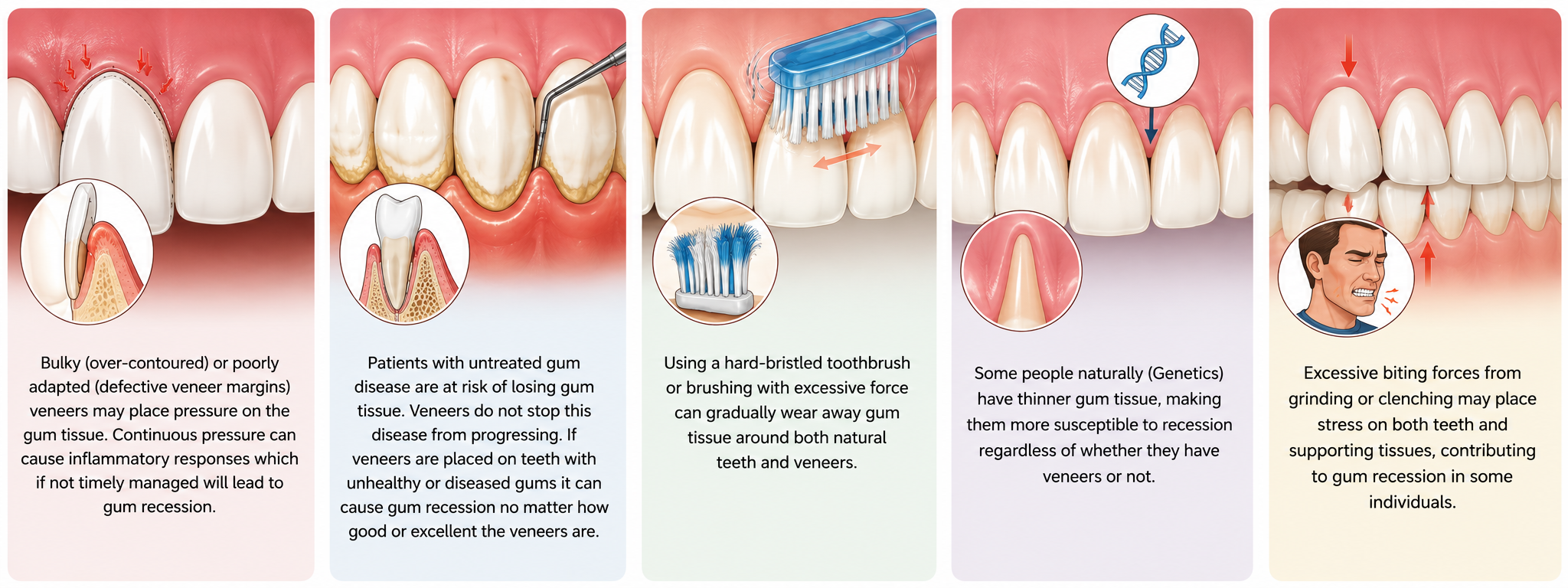
Signs of Gum Recession Around Veneers
- Teeth appearing longer than before
- Visible veneer margins near the gumline
- Increased tooth sensitivity
- Small notches near the gumline
- Food getting trapped more easily
- Changes in your smile appearance
Symptoms that suggest your Veneers may be affecting your gum health
| Symptom | Possible Cause | What You Should Do |
|---|---|---|
| Red or swollen gums | Plaque buildup or irritation | Improve oral hygiene and see your dentist if symptoms persist. |
| Bleeding during brushing | Gingivitis or poorly fitting margins | Schedule a dental examination. |
| Persistent bad breath | Bacterial accumulation around veneers | Get a professional cleaning and evaluation. |
| Gum tenderness | Inflammation or excess cement | Consult your dentist. |
| Gum recession | Periodontal disease or restoration issues | Seek a periodontal assessment. |
| Pain while chewing | Bite imbalance or an ill-fitting veneer | Have your bite checked by your dentist. |
| Visible veneer edge | Gum recession or improper veneer placement | A dental evaluation is recommended. |
Who Should Delay Getting Veneers?
In a few cases it is best to delay or totally avoid Veneers. It is best to consult your dentist who will ideally guide you if you are a suitable candidate for getting veneers.
- Active gum disease
- Significant plaque or tartar buildup
- Uncontrolled diabetes affecting gum health
- Poor oral hygiene habits
- Heavy smoking or those not willing to quit smoking and tobacco consumption
- Severe teeth grinding that has not been treated
Your dentist may recommend professional cleanings, periodontal therapy, or other treatments before proceeding with veneers.
When Should You Visit a Dentist?
In case you might be affected by the following symptoms it is best to visit your dentist for appropriate treatment:
- Bleeding gums that persist for more than a few days
- Swelling or redness around the veneers
- Persistent bad breath despite good oral hygiene
- Gum recession exposing the veneer margins
- Pain while chewing
- Loose or chipped veneers
- Pus or discharge around the gums
- Increased tooth sensitivity that does not improve
How to Keep Your Gums Healthy After Getting Veneers?
Maintaining healthy gums is essential for protecting both your veneers and your natural teeth.
- Brush twice daily using a soft-bristled toothbrush and a fluoride toothpaste. Gentle brushing along the gumline helps remove plaque without damaging the gum tissues.
- Daily flossing removes plaque from between teeth and beneath the gumline, areas your toothbrush cannot reach.
- Your dentist might suggest you to use additional aids to ensure adequate oral hygiene maintenance, especially between back teeth where it is tough to reach using a toothbrush. Dentist usually recommend using:
- Interdental brushes
- Water flossers
- Floss threaders for difficult-to-clean areas
- Professional dental examinations every six months (or more frequently if advised) help detect early signs of gum disease, veneer wear, or bite changes before they become serious.
- In a few cases patients might have the problem of grinding teeth at night known as bruxism. In order to prevent damage to veneers, custom night guards might be suggested as they can help protect both your veneers and the supporting gum tissues from excessive forces.
- Quitting smoking supports healthier gums, improves healing, and reduces the risk of gum disease and implant or restoration failure.
Key Takeaways
- Dental veneers are thin, custom-made shells which are made up of either porcelain or composite that are bonded to the front surface of your teeth to improve their appearance.
- Veneers do not inherently damage healthy gums.
- If veneers are poorly planned, improperly placed without taking into consideration factors like veneer margin and biologic width, or not cared for correctly post placement, they might compromise gum health.
- Understanding these risks can help you recognize potential problems early and take steps to protect your gums.
- Poorly fitted veneers can increase plaque retention and gum irritation thereby affecting gum health.
- Healthy gums are essential before starting veneer treatment.
- Daily brushing, flossing, and routine dental visits help prevent complications.
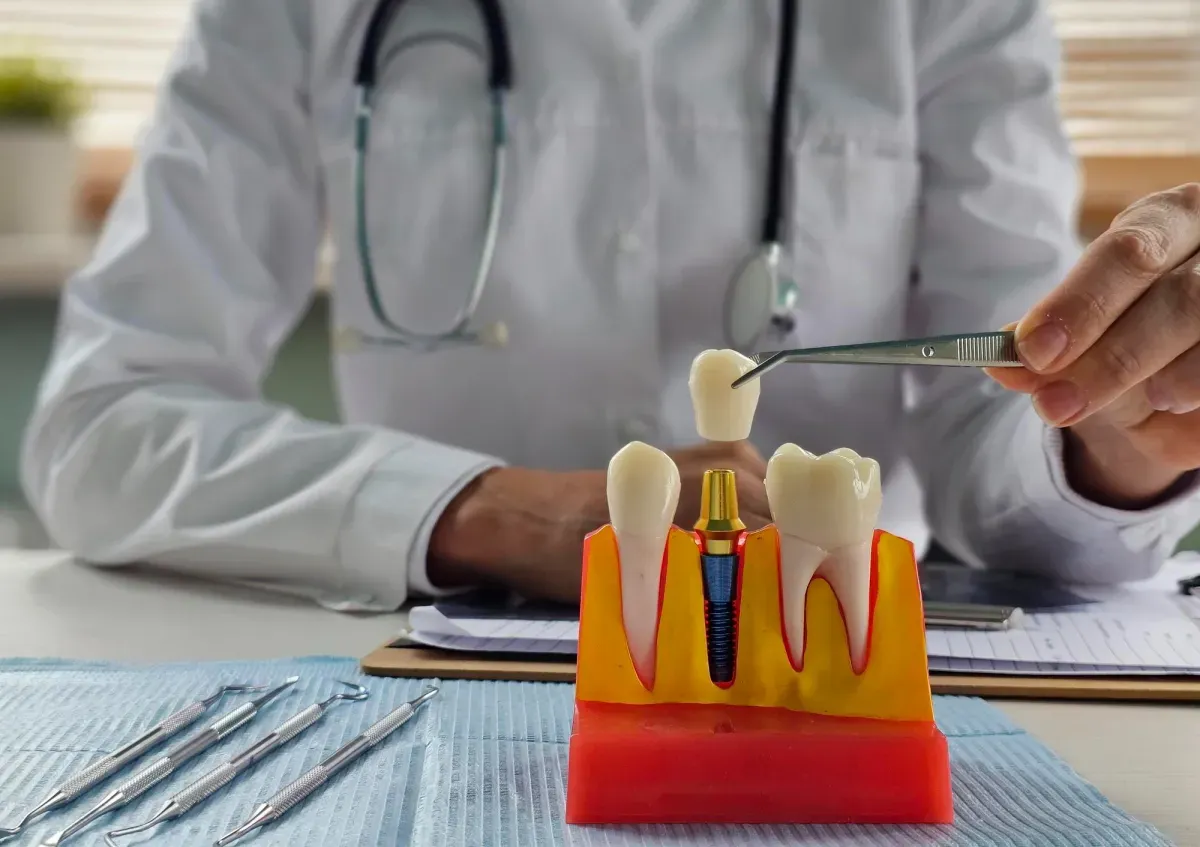
Maintaining healthy gums around your veneers is essential because severe gum recession doesn't just affect the gums, it can also lead to bone loss that may require a bone graft.
FAQ’s
Can veneers cause gum disease?
No. Veneers do not directly cause gum disease as they are made of bio inert materials. However, poor oral hygiene or improperly fabricated or bonded veneers can promote gum disease.
Can veneers cause bleeding gums?
Bleeding gums are usually a sign of inflammation rather than the veneers themselves. Common causes include plaque accumulation, gingivitis, excess cement, or poorly adapted veneer margins.
Can you get veneers if you have gum disease?
It is generally recommended to treat active gum disease before getting veneers. Healthy gums provide better support for the restorations and improve long-term outcomes.
How long do veneers last if your gums are healthy?
Porcelain veneers typically last 10–15 years or longer, while composite veneers often last 5–7 years. Good periodontal health, regular dental visits, and excellent oral hygiene can help maximize their lifespan.
What should I do if my gums hurt after getting veneers?
Some mild sensitivity or pain may occur shortly after placement. However, persistent pain, swelling, bleeding, or gum recession should be evaluated by your dentist to identify the underlying cause.
Can veneers hide gum disease?
No. Veneers improve the appearance of the teeth but cannot conceal or treat underlying gum disease. Regular dental examinations are necessary to detect and manage gum problems early.
References
- Edelhoff D, et al. Porcelain laminate veneers: Clinical performance and long-term outcomes. Clinical Oral Investigations.
- American Academy of Periodontology. Gum Disease (Periodontal Disease): Prevention, Diagnosis, and Treatment.
- American Dental Association. Veneers: What Patients Should Know.
- Peumans M, Van Meerbeek B, Lambrechts P, Vanherle G. Porcelain veneers: A review of the literature. Journal of Dentistry.


Member discussion