


Healthy gums are often described as pink, firm, and snuggly wrap around teeth. If you've recently noticed that your gums appear white, pale, or lighter than usual, it's natural to wonder whether something is wrong.
The color of gums can provide important clues about your overall oral and body health. While not every change in gum color is a cause for concern. However, persistent white patches, widespread gum discoloration, or accompanying symptoms like pain, bleeding, or swelling should never be ignored.
In this article, we'll explore the most common white gum causes, explain the difference between healthy and unhealthy gum colors, discuss when pale gums may indicate a medical problem, and help you understand when it's time to seek professional dental care.
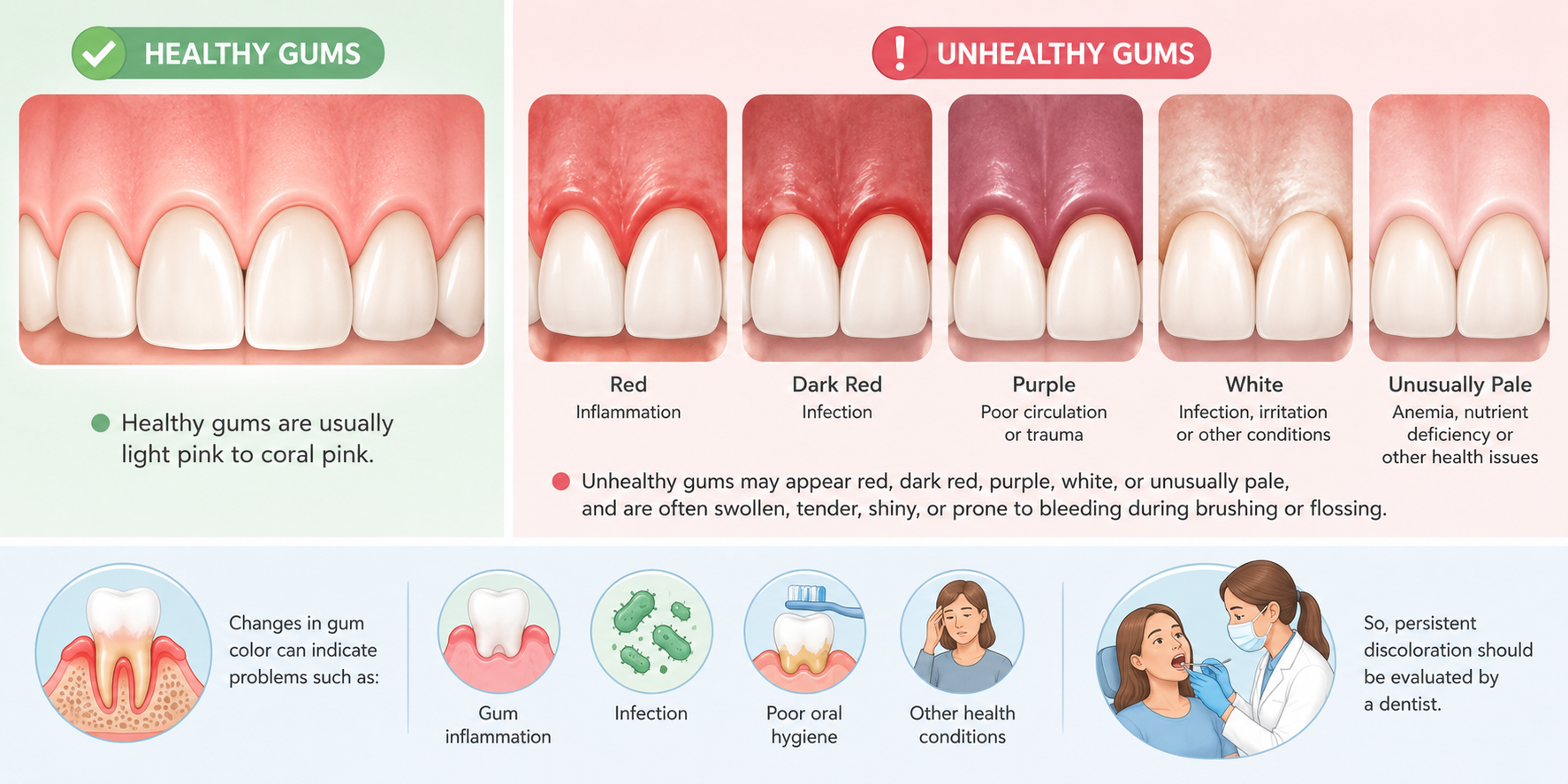
What Do Healthy Gums Look Like?
Healthy gums are typically Pink in color, although they may appear light brown in individuals with darker skin tones.
Few other traits of Healthy gums include -
- The exact shade varies from person to person
- They should feel firm rather than spongy
- Hug snugly around the base of each tooth,
- Do not bleed when you brush or floss.
- Some natural variation in shade is normal gums can be slightly lighter near the teeth and a bit darker toward the sides of the mouth.
Why do gums turn white instead of pink?
Gums can look white because of irritation, injury, or reduced blood flow that makes them appear pale. White patches may also be caused by infections such as oral thrush or by mouth ulcers. If the whiteness lasts more than two weeks or is accompanied by pain, swelling, or bleeding, it should be checked by a dentist.
Common Causes Of White Gums
The causes of White gums can range from harmless reasons to more urgent cases which immediately require medical attention.
Plaque and tartar buildup
- Plaque is a sticky film made of bacteria that forms on teeth every day and if it is not removed by brushing and flossing, it can harden into tartar.
- This buildup tends to collect right along the gumline, giving the appearance of white or yellowish discoloration where the gum meets the tooth.
Gingivitis (early gum disease)
- It is caused by poor brushing and flossing which leads to bacterial buildup
- Gums can sometimes appear pale or whitish before progressing to the red, swollen stage.
- Symptoms include bleeding and receding gums, bad breath, pain and swelling.
Oral thrush (Oral Candidiasis).
- This is a fungal infection caused by an overgrowth of yeast ( C. Albicans a fungus commonly part of oral microbes) in the mouth.
- It shows up as soft, creamy white patches that can resemble cottage cheese, and when wiped away, the skin underneath often looks red and may bleed.
- It's more common in people with weakened immune systems, those on antibiotics, or denture wearers.
Leukoplakia
This condition causes thickened white patches inside the mouth, often on the gums, cheeks, or floor of the mouth and is strongly associated with tobacco use.
- Leukoplakia patches are usually painless
- These patches cannot be scraped off by wiping
- If you notice such patches then you should see a healthcare professional for proper evaluation.
Oral lichen planus
- This is an immune-related condition that can cause white, lacy patches on the gums and other oral tissues.
- It tends to be chronic, meaning it can come and go over time rather than resolving quickly.
- Lacy white patches are seen on gums and other parts of the mouth along with burning sensation.
Canker sores and minor irritation.
- A single or multiple small white or yellowish sore with a red border, often triggered by stress, minor injury, or certain foods, is usually a canker sore.
- These are typically self-limiting and heal within one to two weeks.
Anemia and nutritional deficiencies
This is one of the most overlooked causes of pale gums and thus it becomes important to correlate gum health with body's health. Gums may look pale or white in the following conditions:
- Iron deficiency anemia
- Vitamin B12 deficiency
- Kidney disease
- Hormonal changes during pregnancy and puberty.
Temporary and harmless causes
Sometimes white gums are simply a side effect of a recent dental procedure.
- Pale gums after teeth whitening are caused by the chemicals used to brighten teeth and require no treatment.
- The color typically returns within hours to a few days.
- Similarly, after a tooth extraction, no treatment is needed because the normal healthy gum color should reappear within a few days.
Oral Cancer
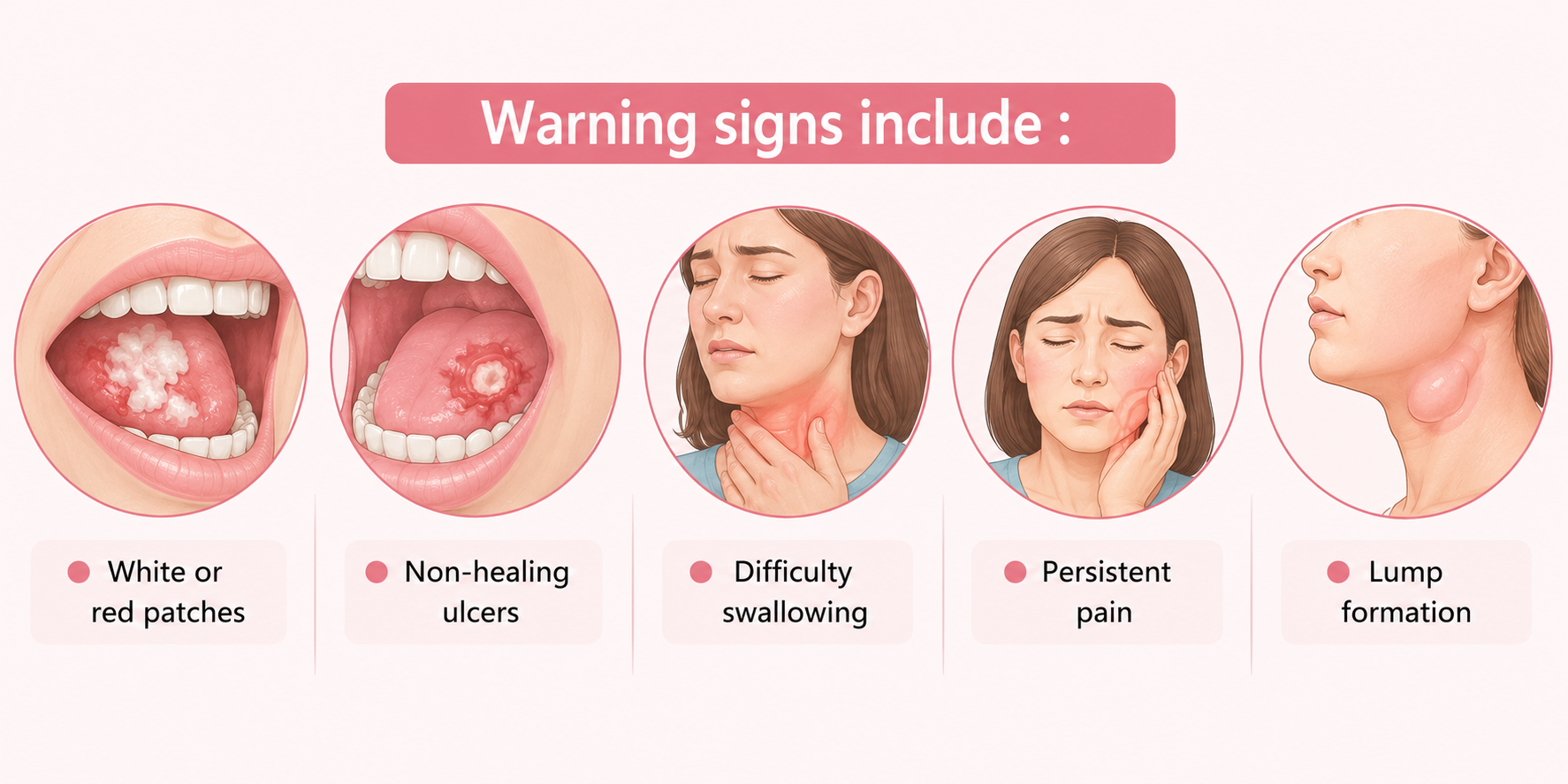
Although uncommon, persistent white patches may indicate oral cancer. Warning signs include:
- White or red patches
- Non-healing ulcers
- Difficulty swallowing
- Persistent pain
- Lump formation
Any lesion lasting more than two weeks should be evaluated by a dentist or oral medicine specialist.
Healthy vs Unhealthy Gum Colour
Common Causes
The causes of White gums can range from harmless reasons to more urgent cases which immediately require medical attention.
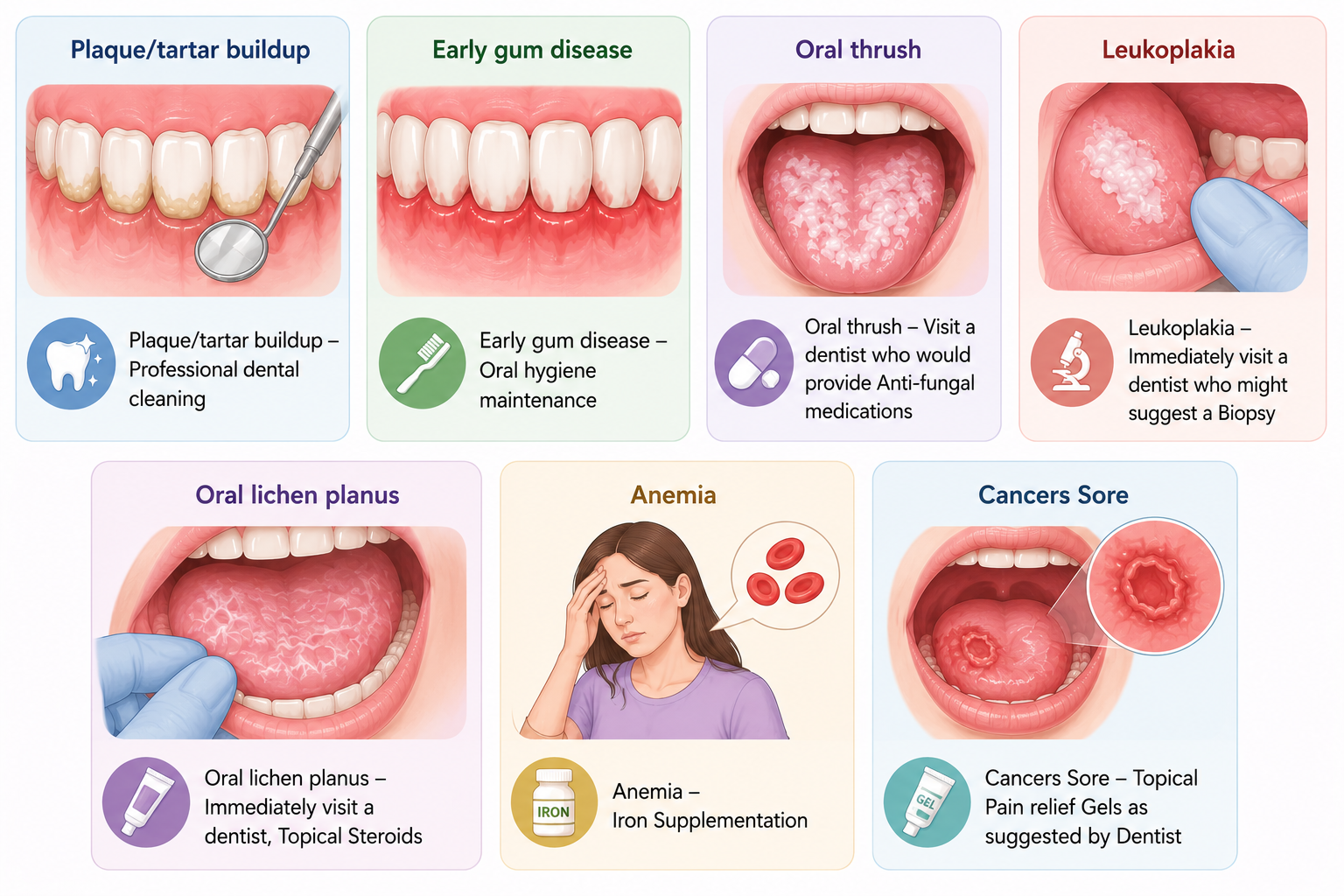
- Plaque and tartar buildup
- Gingivitis (early gum disease).
- Oral thrush is a fungal infection caused by an overgrowth of yeast in the mouth.
- Leukoplakia causes thickened white patches inside the mouth, often on the gums, cheeks, or floor of the mouth and is strongly associated with tobacco use.
- Oral lichen planus is an immune - related condition that can cause white, lacy patches on the gums and other oral tissues. It tends to be chronic, meaning it can come and go over time rather than resolving quickly.
- Canker sores and minor irritation shows a single or multiple small white or yellowish sore with a red border, often triggered by stress, minor injury, or certain foods, is usually a canker sore.
- Anemia and nutritional deficiencies.
- Temporary, harmless causes - Sometimes white gums are simply a side effect of a recent dental procedure.
- Oral Cancer Although uncommon, persistent white patches may indicate oral cancer.
Could It Be a Medical Condition?
Sometimes the problem isn't in the mouth itself. Several systemic conditions can affect gum color. Thus it becomes important to correlate gum health with body's health. Gums may look pale in the following conditions.
- Iron deficiency anemia
- Hormonal changes
- Kidney disease
- Vitamin B12 deficiency
White Gums in Children
Kids can develop pale or white gum tissue too. In children, the most common causes are usually minor:
- teething irritation (especially around erupting molars),
- accidentally biting the cheek or gum
- temporary canker sore.
These typically resolve on their own within a week or two.
How Dentists Diagnose White Gums?
A dentist may perform:
- Clinical oral examination
- Medical history review
- Gum disease assessment
- Blood tests (if anemia is suspected)
- Oral swab for fungal infection
- Biopsy for suspicious lesions
Diagnosis depends on identifying the underlying cause rather than treating the color change alone.
When to See a Dentist or Doctor Immediately?
Most causes of white gums are manageable, but certain signs mean it's time to stop waiting and book an appointment:
- White patches that have lasted longer than two weeks without improvement
- Patches that are thick, raised, or cannot be wiped away
- Pale gums accompanied by fatigue, dizziness, or shortness of breath (possible anemia)
- Bleeding gums, loose teeth, or persistent bad breath alongside the discoloration
- Any white or red lesion that is painful, growing, or has irregular borders
- If pale gums appear suddenly after a tooth extraction, dental implant, or trauma, it could indicate reduced blood flow or infection and should be checked promptly.
Treatment
Prevention
- Use a soft-bristled brush at a 45-degree angle along the gumline, where plaque tends to accumulate and cause that whitish film.
- Floss daily
- Warm saltwater rinse.
- Stay hydrated
- Stop tobacco use.
- Add iron-rich foods.
Key Takeaways
- White or pale gums are a signal worth paying attention to, but not necessarily a reason to panic.
- The location, texture, and accompanying symptoms matter far more than the color change alone.
- Localized white film near the gumline is often just plaque. Overall paleness across the gums can point toward anemia and is worth a simple blood test. Patches that don't wipe away, especially if they persist for more than two weeks, deserve a dental evaluation to rule out leukoplakia or lichen planus.
- When in doubt, a quick visit to your dentist can provide clarity, peace of mind, and if needed an early start on treatment.

Wondering why your gums are white instead of pink? Learn how white spots on the gums may contribute to these noticeable colour changes.
FAQ's
How long should white gums last?
Temporary whitening from irritation may resolve within a few days. White patches lasting longer than two weeks warrant professional evaluation.
Can white gums go back to pink on their own?
Yes, in many cases. White gums caused by teeth whitening or tooth extraction typically return to their normal pink color within a few hours to a few days without any treatment. However, for conditions like an autoimmune disorder or gum disease, it may take longer for gums to return to their normal color, and with chronic conditions like oral lichen planus, this can take more time but is still manageable with proper care.
Are white gums always a sign of disease?
No. White gums can be entirely harmless caused by temporary irritation, recent dental work, or tartar on otherwise healthy tissue.However, persistent, widespread, or patchy white discoloration is worth checking, since it can occasionally point to something that needs treatment.
Is it normal for gums to look white after brushing?
Brief, mild whiteness right after brushing, especially if brushed firmly, is usually just temporary blanching from pressure on the tissue and should fade within minutes.
Are white gums always serious?
No. White gums may result from temporary irritation, canker sores, or whitening treatments. However, persistent changes should be evaluated.
Can stress cause white gums?
Yes. Stress may contribute indirectly by increasing susceptibility to canker sores and immune-related oral conditions.
Can anemia cause pale gums?
Yes. Pale gums are a recognized sign of anemia because reduced red blood cells decrease oxygen delivery to tissues.
References
- Crest. "White Gums: Causes, Symptoms, And Treatments." crest.com
- Oral-B. "White Gums: Causes, Symptoms, And Treatments." oralb.com
- Putney Dental Care. "White Gums: Causes & Treatments." putneydentalcare.com.au
- TruCare Dentistry. "Pale Gums: a Serious Oral Health Condition and Its Key Causes." trucaredentistry.com
- AT Dental Care San Jose. "Why Are My Gums White Around My Teeth?" atdentalcaresanjose.com
- Utah Periodontics. "Why Are My Gums White? The Gum Color Guide." utahperio.com
- Cambridge Dental. "Why Do You Have White Gums? Signs, Risks & Solutions." cambridge-dental.com
- The White Tusk. "What Causes White Gums? Meaning, Symptoms & Treatment." thewhitetusk.com
- Colgate. "Anemia Gums And Your Oral Health." colgate.com
- Chrysanth Dental Care. "Pale Gums – What They Mean and When to See a Dentist." chrysanth.london
- Batavia Family Dental. "Pale Gums Could Indicate Health Issues." bataviafamilydental.com
- Omaha Dentists. "Anemia And Gums: Understanding The Connection Between Blood Health And Oral Health." omahadentists.net
Member discussion