


Most people ignore the problems related to tongue until something looks or feels different. A bump appears out of nowhere, something feels swollen at the back of your mouth, or you notice a colour change that was not there yesterday. Before the worry sets in, it helps to understand what you are actually looking at.
Your tongue is a powerful barometer for your overall health. While most bumps on tongue at back are harmless, others can be early warning signs of oral diseases.
Let’s understand what those bumps on the back of your tongue mean, what causes them, and when it is time to stop waiting and see a doctor.
What Are Those Bumps ?
The tongue is covered in tiny nodules called papillae. These are not actually taste buds. When these papillae become inflamed, enlarged, or change colour, they form what most people call bumps.
There are four kinds of papillae on your tongue:
- Filiform: at the front and centre of your tongue, they appear threadlike and do not contain taste buds
- Fungiform: most people have between 200 and 400 of these, distributed across the tongue, each containing about three to five taste buds
- Foliate: found on each side of the back of your tongue, they look like rough folds of tissue, with each one containing several hundred taste buds
- Circumvallate (vallate): the large bumps arranged in a V-shape at the very back of your tongue
The large bumps you can see lined up at the very back of your tongue are circumvallate papillae. They are completely normal, but when they become inflamed or unusually prominent, they are often the first thing people notice and worry about.
Common Causes of Lumps on back of the tongue
1. Inflamed Papillae
The majority of tongue bumps are because of irritated papillae. Inflamed lumps on back of the tongue, which is the circumvallate papillae, usually are not a cause for concern and will heal on their own. However, severe, spreading, or longer-lasting bumps might be a sign of an underlying condition that requires medical attention.
Common triggers for papillae inflammation:
- Accidentally biting your tongue
- Eating very hot food or drinks
- Spicy, acidic, or highly seasoned foods
- Dehydration and dry mouth
- Poor oral hygiene
- Smoking, which inflames the entire oral lining
2. Lie Bumps
One of the most common and most misunderstood causes of tongue bumps has an unexpectedly memorable name.
Lie bumps or liar's tongue happens when something irritates your papillae, the tiny bumps covering your tongue and containing your taste buds. In this condition, irritated papillae start to swell and form noticeable, painful bumps. Lie bumps are very common. They usually go away on their own within a few days, are not dangerous, and typically require no treatment.
What lie bumps typically look like:
- Small red or white raised bumps on the tongue surface
- Often tender or mildly painful to touch
- Usually appear suddenly after eating certain foods or during stress
- Resolve on their own within two to four days
3. Canker Sores, Painful but Not Contagious
Canker sores are among the most frequently occurring mouth ulcers, and they can appear right at the back of the tongue.
Canker sores are small, flat ulcers that can emerge in any area of the mouth, including the tongue. They make talking or eating uncomfortable and are one of the more recognisable causes of tongue bumps.
4. Oral Thrush
Oral thrush is a fungal infection inside your mouth caused by the yeast Candida albicans. People with thrush develop raised, white spots on their tongues and inner cheeks that resemble cottage cheese. You can scrape these lesions off, but doing so causes bleeding.
Along with swollen tongue bumps, signs of oral thrush include white lesions, a burning sensation, and soreness throughout the mouth.
Who is most at risk for oral thrush:
- Infants and young toddlers
- People taking antibiotics or corticosteroids
- Individuals with diabetes or compromised immune systems
- People who use inhaled corticosteroids
5. Strawberry Tongue
A raspberry-coloured tongue can be a sign of an underlying medical condition. Some red colour changes on the tongue, sometimes described as "strawberry tongue" which could be related to a vitamin deficiency, Kawasaki disease, or a strep infection such as scarlet fever.
If you or your child develops a bright red, bumpy tongue alongside a sore throat, fever, and rash, seek medical attention promptly. Scarlet fever requires antibiotic treatment.
6. Cold Sores: The Herpes Simplex Virus
Cold sores which are also known as fever blisters are caused by the herpes simplex virus (HSV) and can appear on the lips, inside the cheeks, or on the tongue. They begin as a fluid-filled blister that ruptures after a day or two before starting to heal. The sores usually last around 8 to 10 days and are highly contagious.
How to manage cold sores on the tongue:
- Avoid oral contact during an active outbreak
- Do not share utensils, lip balms, or cups
- Antiviral medications can reduce duration and severity
- Over-the-counter topical gels can ease pain
7. Leukoplakia: White Patches That Warrant Attention
The primary symptom of leukoplakia is thickened, white patches on the tongue, gums, bottom of the mouth, and insides of the cheeks. They cannot be scraped off. Chronic irritation from tobacco is often the cause. While leukoplakia patches are usually non-cancerous, some do show early signs of cancer.
8. Nutritional Deficiencies
Nutritional deficiencies can make your tongue look like:
- Smooth, pale tongue which may indicate iron deficiency, anaemia
- Bright red, smooth tongue which is often linked to B12 or folate deficiency
- Swollen or sore tongue which can signal general B vitamin deficiency
- Some people with diabetes, anaemia, and autoimmune diseases may also experience inflamed tongue bumps
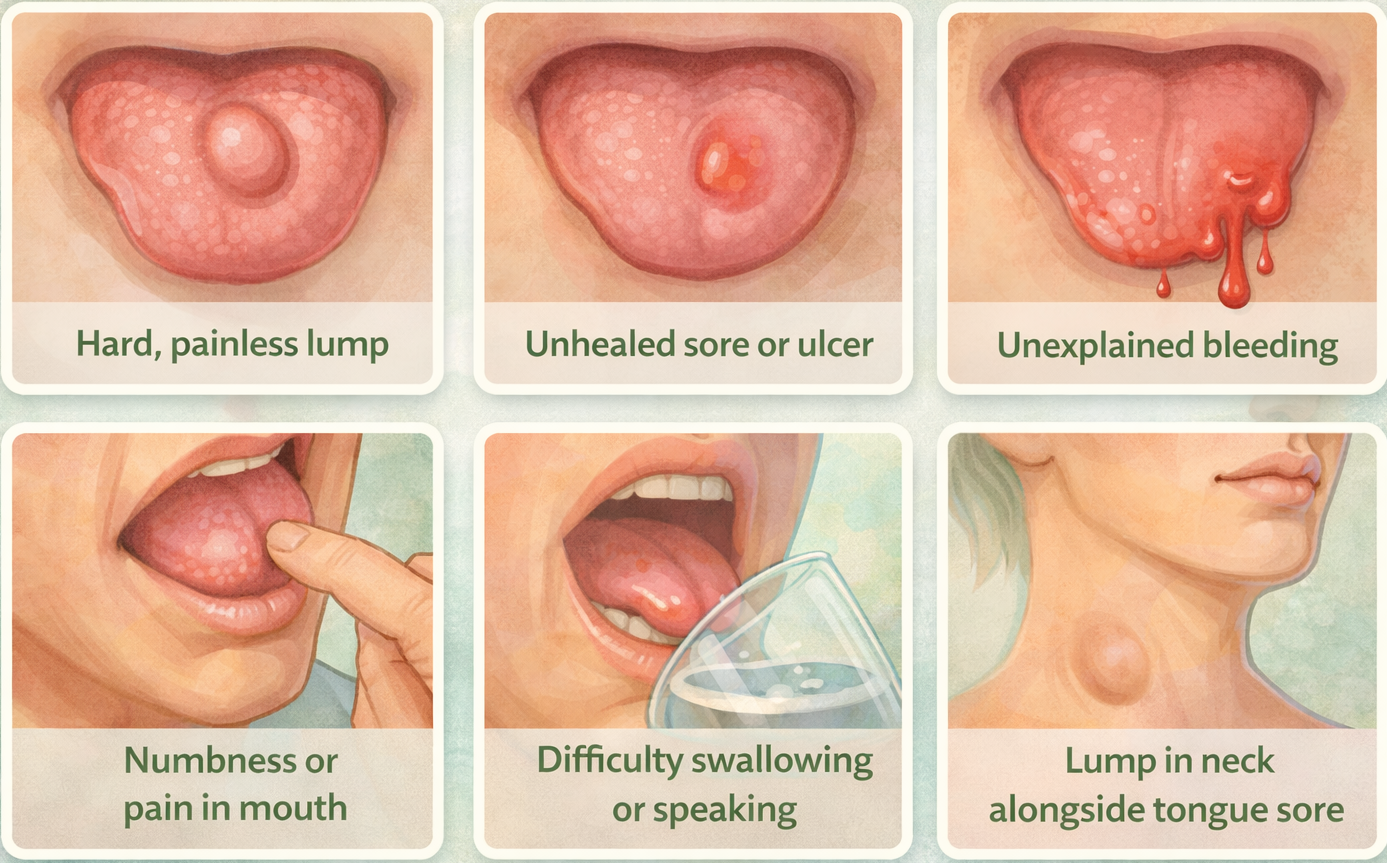
Warning signs that require immediate professional evaluation:
How to Care for Your Tongue at Home
Home remedies for tongue bumps:
- Dissolve half a teaspoon of salt in warm water and rinse several times daily
- Stay well hydrated
- Avoid spicy, acidic, or very hot foods while bumps are healing
- Do gentle brushing and flossing to keep bacteria levels low
- Use alcohol-free mouthwash to avoid further drying and irritation
- Apply over-the-counter topical gels for painful canker sores
When to See a Doctor or Dentist
Most nodules on the back of the tongue are harmless and resolve within a few days. But there are clear situations where waiting is not the right call.
See a doctor or dentist if:
- A bump or sore has not healed after two weeks
- The bump is growing, spreading, or increasing in number
- You notice a hard, painless lump anywhere on the tongue
- White patches appear that cannot be scraped away
- You have difficulty swallowing, speaking, or moving your tongue
- The bump is accompanied by fever, swollen glands, or ear pain
- There is unexplained bleeding, numbness, or a lump in your neck alongside the tongue lesion
Final Thoughts
Your tongue reveals far more about your health than most people realise. What looks like a minor bump can be your body's way of flagging an irritation, a nutritional gap, an infection, or in rarer cases, something that needs medical attention. So, next time you notice something unusual in your tongue, remember that your tongue is trying to tell you something.
Frequently Asked Questions
What do oral thrush tongue bumps look like?
Oral thrush tongue bumps usually appear as small, white or creamy raised patches on the tongue and inside the mouth, sometimes with red, inflamed areas underneath, which may cause soreness or a burning sensation.
What do cancerous tongue bumps look like?
Cancerous tongue bumps are usually persistent, firm, red or white lumps or sores that don’t heal and may cause pain or bleeding.
How long do tongue bumps usually last?
Most tongue bumps last a few days to two weeks and often heal on their own, though persistent bumps lasting more than two weeks should be evaluated by a doctor.
References
- Healthline (Tongue Bumps: 10 Potential Causes and Treatments)
- Colgate (Bumps On The Back Of The Tongue: Normal or Abnormal?)
- NewMouth (Bumps on Back of Tongue: Causes, Pictures, and When to Worry)
- MedicineNet (What Does It Mean When You Have Bumps on the Back of Your Tongue?)


Member discussion