


Introduction
While brushing your teeth, or eating your favorite food have you noticed your gums feeling puffy, red, or painful with occasional bleeding? Or maybe you have experienced that drinking cold water makes you wince with pain. What if I say the problem might not be associated with your teeth but rather it is associated with your gums? Surprised ? Well, you are not alone swollen, painful gums are one of the most common ignored dental complaints. And the good news is that most causes are very treatable once you understand what is happening. The bad news is that you often ignore it. This blog covers everything you need to know about your gums.
What do healthy gums look like?
First and foremost it is important to understand - What are gums ? Gums, also known as Gingiva, is the soft tissue that surrounds the base of the tooth. It protectively encases the tooth and holds it in its place. In health, it is pink in colour, firm and resilient to touch and free from any sort of pain, swelling and bleeding. It tightly snugs around each tooth with no gaps or puffiness.
If your gums are changing their colour to red, purple, puffy and swollen , or are bleeding at the slightest touch, your body is sending you a signal that something is wrong and needs immediate attention. Any sort of delay in treatment might worsen the condition. So visit your dentist as soon as possible.
What are swollen gums?
Swollen gums means the soft tissue around your teeth has become inflamed or infected. You might notice that your gums have become enlarged, puffy, and sometimes painful. It can seen either around a single tooth or the entire gumline. Swollen gums are a symptom, not a disease. Something is causing the inflammation, and finding that cause is the key to fixing it. The important thing to remember here is that, even painless gum swelling should not be ignored. Painless swelling can still signal a serious underlying problem that will worsen without treatment.
Common causes of swollen and painful gums
It is important to understand the fact that swollen and painful gums itself is not a disease. It is a symptom which you will notice. There are a variety of causes which might result in your gums becoming painful and swollen. Let’s now understand what might be causing this.
1. Gum disease (gingivitis and periodontitis)
Tooth Infections that involve the gums are the primary causes which cause swollen and painful gums The disease is termed as gingivitis. It begins when plaque which is a sticky film of bacteria builds up along the gumline. If not removed by brushing and flossing, plaque hardens into tartar, which irritates the gum tissue. It is the initial and early stage of the disease which is fully reversible with good hygiene and a professional dental teeth cleaning.
If not addressed timely, Gingivitis may proceed to a more severe form of disease known as periodontitis. The advanced disease can cause loosening of the teeth and their ultimate loss.
2. Food particles stuck under the gumline
Sometimes, you might notice that a popcorn kernel, seed, or food fragment can get lodged between your tooth and gum, causing swelling around that one tooth. If not removed it can lead to swollen and painful gums. Try gently flossing and rinsing with warm water. The swelling usually settles once the debris is gone.
3. Dental abscess
If the dental infection is not managed timely, it can turn into a dental abscess. An abscess is a pocket of pus caused by a bacterial infection. It appears as a pimple on the gums. You might feel sudden throbbing pain, swelling, bad breath, fever, and a bad taste. This needs urgent dental attention an abscess will not clear up on its own and can spread to other parts of the body. If this swelling is spreading to the neck region accompanied by progressive worsening of symptoms like increasing fever, headache nausea confusion, difficulty in breathing immediately visit your Doctor as it is a sign of medical emergency.
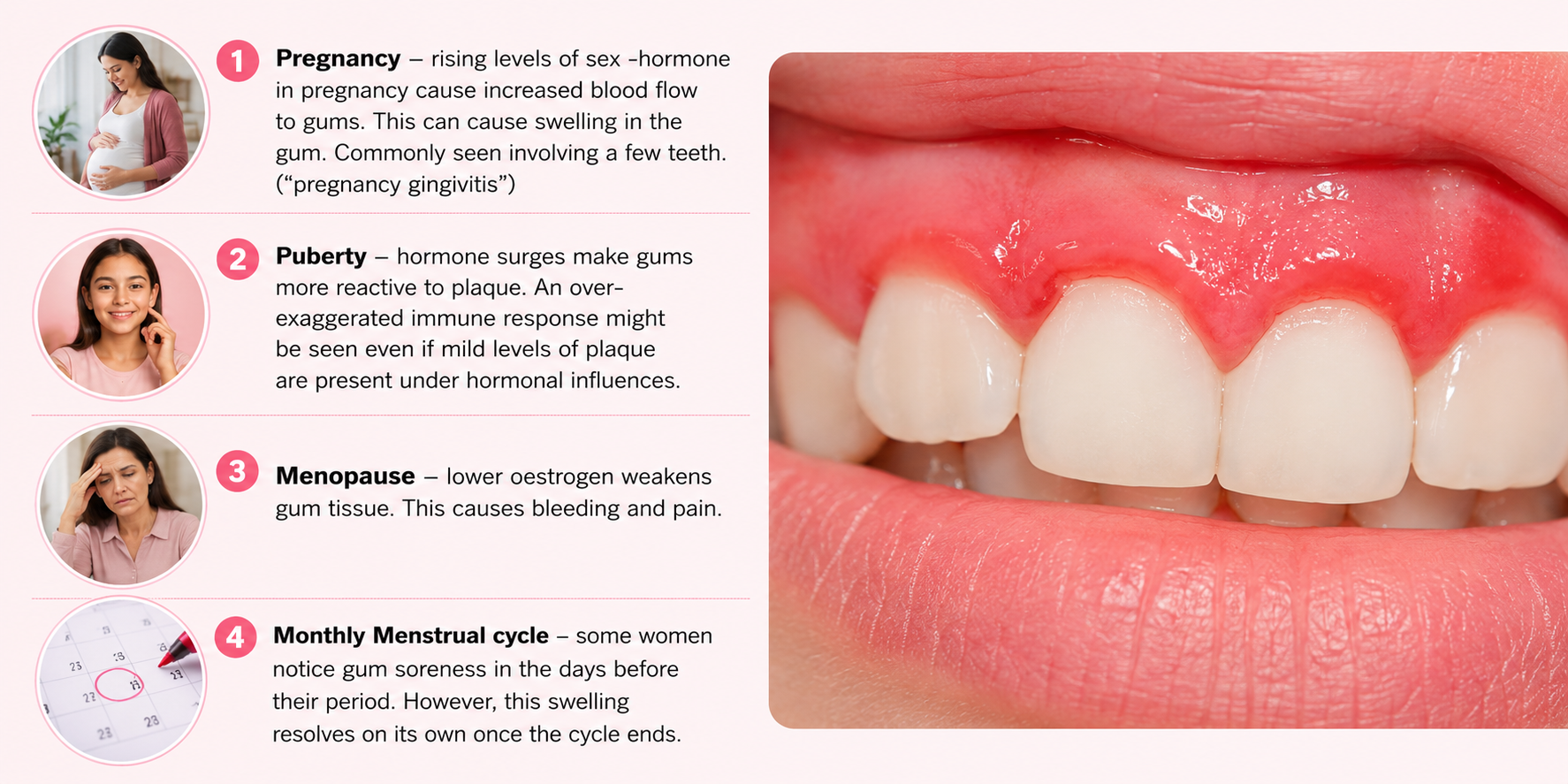
4. Hormonal changes
At times gum swelling might be associated with changing hormonal levels. Few conditions include.
5. Unerupted or partially erupted Wisdom teeth
As wisdom teeth push through the gum, they can cause significant swelling and pain at the back of the mouth. Sometimes the pain is found to radiate to the jaw or ear (referred pain). An impacted wisdom tooth (one that cannot come through properly as it is trapped within the jaw bone) can trap bacteria and cause repeated infections. Your dentist may recommend extraction.
6. Stress
Chronic stress weakens your immune system, making it harder for your body to fight off the bacteria that cause gum inflammation. Stress also raises cortisol (stress hormone), which promotes inflammation throughout the body. It can trigger teeth grinding (bruxism), putting repeated pressure on gum tissue and causing soreness.
7. Vitamin deficiencies
Nutritional deficiencies like vitaminB and C can cause gum pain and swelling
- Vitamin C deficiency : weakens gum tissue and slows healing. Causes a condition known as Scurvy. It is suggested to include citrus, berries, and broccoli in your diet
- Vitamin B deficiency : can trigger oral inflammation and mouth sores and cause swollen gums.
8. Medications and medical conditions
Some blood pressure medications and anti-epileptic drugs can cause gum overgrowth. Medications that cause dry mouth reduce saliva, your mouth's natural defence against bacteria. Conditions like diabetes, heart disease, and immune disorders also increase gum disease risk your mouth is a window to your overall health.
Swollen gums around one tooth what does it mean?
If only one area is affected, the most likely causes are a trapped food particle, a localised abscess, an ill-fitting cap on a tooth that has been treated by your dentist, an improper dental filling, or normal post-procedure healing.
Even without pain, localised swelling should be checked.
How to treat swollen or painful gums around teeth?
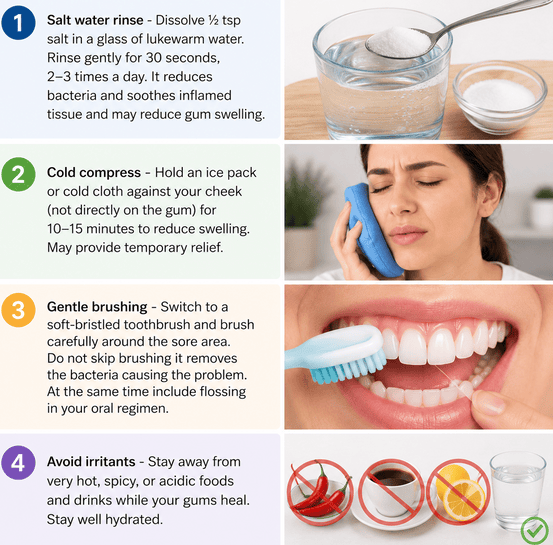
Home remedies
They cannot replace and cure gum pain and swelling. They can be used as an adjunct if you are unable to visit your dentist immediately.
Professional dental treatments
- Deep cleaning (scaling and root planing): Dental professional cleaning removes tartar from below the gumline thus reducing the bacterial load. It is the cornerstone treatment for gum disease
- Antibiotics: Medications suggested by your dentist after reviewing your condition might include tablets or a gel applied directly to the gum for bacterial infections Do not use any medication without supervision and guidance by your dentist.
- Incision and drainage: In case of a dental abscess, the dentist drains the pus to relieve pressure and pain. This is followed by appropriate medications.
- Root canal treatment: removes infection from inside the tooth to save it
- Tooth extraction: when the tooth cannot be saved eg in case of wisdom tooth
- Periodontal surgery: for advanced gum disease to clean deep pockets around the roots
Post-procedure healing timeline
- Days 1–2 : Swelling is at its peak. Use ice packs, take prescribed pain relief, eat soft foods. This is normal.
- Days 3–5 : Swelling should gradually begin to reduce. Continue saltwater rinses and gentle hygiene.
- Day 7 onwards : If swelling is not improving or is getting worse, immediately visit your dentist this may indicate an infection or worsening of disease.
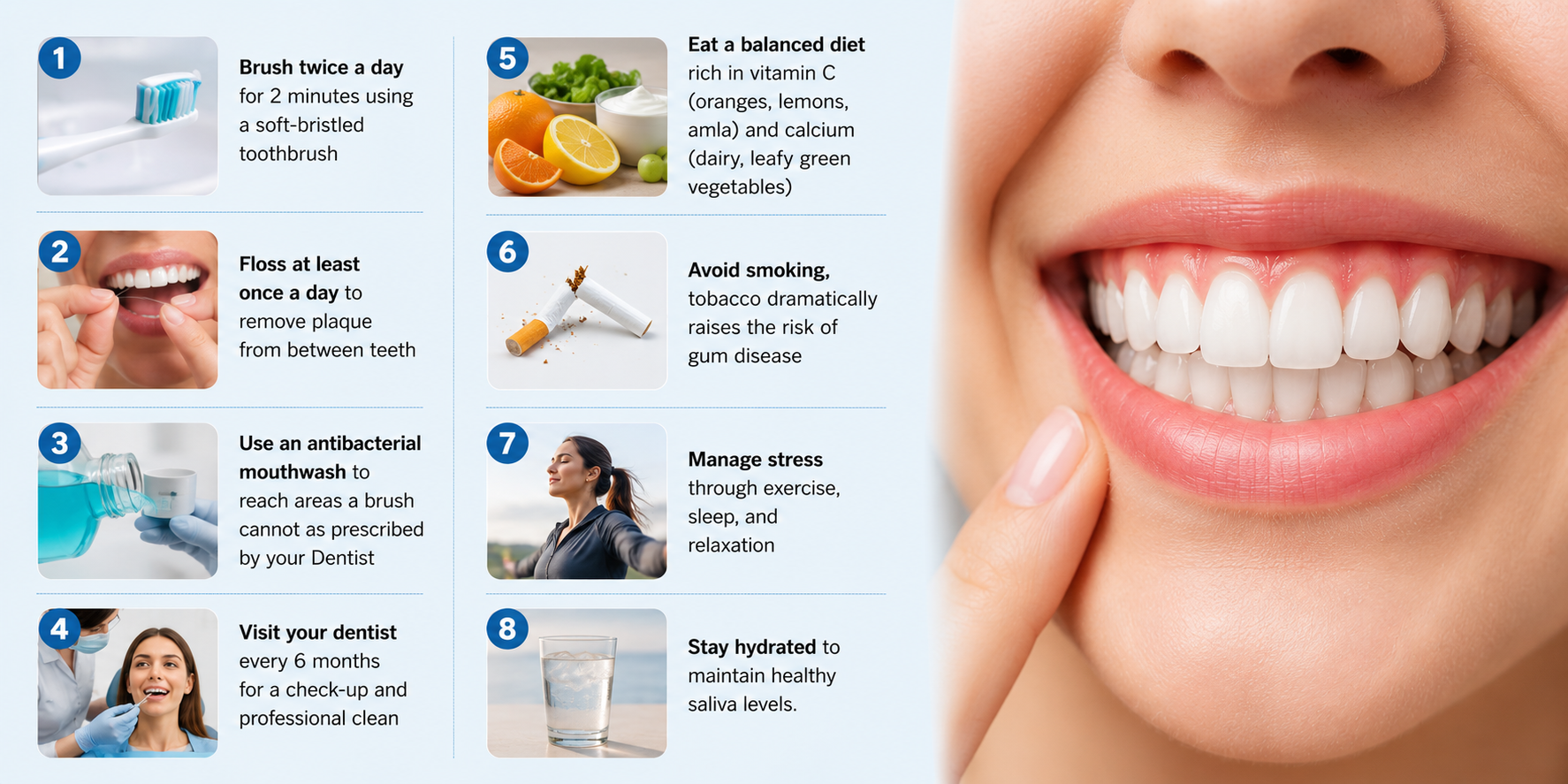
How to prevent swollen gums?
When should you see a dentist?
- Gum swelling that has lasted more than two weeks
- Swelling that is getting worse, not reducing in size and spreading
- A visible bump or lump on the gum suggestive of a dental abscess
- Fever, bad breath, or a bad taste alongside the swelling
- Pain that is severe or waking you up at night
The link between gum health and your overall health
Bacteria from infected gums can enter the bloodstream and travel to other organs. Oral health is not isolated, rather it is linked to your entire body. The relationship between Gum and overall health is not one-sided. Certain medical conditions like diabetes can increase the risk of gum inflammation, while unhealthy gums may, in turn, affect general health. It thus becomes a two way cyclical risk factor, one condition worsening the other. Research links untreated gum disease to:
- Increased risk of heart disease and stroke
- Poorer blood sugar control in people with diabetes
- Higher risk of preterm birth and low birth weight
- Greater susceptibility to respiratory infections
CONCLUSION
Swollen, painful gums are your body's way of saying something that needs attention. The most common cause of gum disease is Gingivitis that is highly treatable, especially when caught early. Simple daily habits like brushing, flossing, eating well, and seeing your dentist regularly prevent most problems before they start and become complicated. Often we tend to ignore minor dental problems thinking they will cure themselves. However, an early dental treatment will help you treat these diseases with better outcomes. So,if your gums have been bothering you for more than a week or two, book a dental appointment. A dentist can identify the cause quickly and help you get comfortable again.

Taking care of swollen gums today may help reduce your risk of cavities tomorrow.
Frequently asked questions
Can stress cause swollen gums?
Yes. Stress suppresses the immune system, making it easier for gum-disease bacteria to take hold. It also increases cortisol hormone released during stressand can cause teeth grinding, which puts repeated pressure on gum tissue.
Can swollen gums go away on their own?
Mild swelling from a trapped food particle or minor irritation may settle within a day or two. However, long-lasting swelling from gum disease, an abscess, or another underlying cause will not resolve without treatment and will usually worsen.
Is it normal for gums to swell after a filling or crown?
Some swelling is a normal part of healing after dental work and should gradually improve over the first week. If swelling persists or worsens beyond that, contact your dentist.


Member discussion