


Smoking and Vaping both expose the body to harm from nicotine. They are both the most common preventable cause of diseases which can affect not only your body but also your mouth. Most people neglect the mouth when they think about the damages which are caused by smoking and vaping. A common question which arises in the mind is: Can Smoking and Vaping Cause Gum Disease? The answer to this question is Yes. Both can increase the risk of gum disease, but the process involved differs from each other.
Several years of research has established the ill effects of smoking on gums. Research is still ongoing in the field of vaping and gum disease as vaping (e-cigarettes) is relatively a newer trend. Whether you smoke traditional cigarettes, use vapes, enjoy hookah, or alternate between smoking and vaping, or conveniently use both, understanding how these habits affect your gums is the first step toward protecting your oral health.
In this guide you will understand how smoking and vaping each can cause gum disease, how they compare to each other, what happens if you do both, how fast the damage sets in, and how much of the damage you can actually reverse.
What is gum disease?
Gum disease (periodontal disease), is a chronic inflammatory condition that affects the tissues that support and protect your teeth. It develops when bacterial plaque (sticky film of bacteria) accumulates around the gumline and triggers an immune response.
If plaque is not removed through proper oral hygiene and professional dental cleanings, it hardens into tartar, allowing harmful bacteria to multiply beneath the gums causing gum disease.
Stages of gum disease
Gingivitis
Gingivitis is the mildest form of gum disease and affects only the gum tissue. It is characterized by inflammation (the body's natural defense response to injury, infection, irritation, or harmful substances) without permanent damage to the supporting structures of the teeth. It is reversible if managed timely through proper brushing and professional dental cleaning.
Common symptoms of gingivitis:
- Red or swollen gums
- Pain while brushing
- Bleeding gums
- Persistent bad breath
- Mild gum discomfort
Periodontitis
If gingivitis is left untreated, it can progress to periodontitis. At this stage, bacteria spread below the gumline, causing chronic (long standing) inflammation that destroys supporting tissue and bone around the teeth. Damage at this stage becomes irreversible.
Common symptoms of Periodontitis:
- Gum recession
- Deep periodontal pockets
- Loose teeth
- Pus around the gums
- Pain while chewing
- Tooth loss in severe cases
Can Smoking Cause Gum Disease?
Yes. Studies have shown that smoking is one of the biggest modifiable risk factor for gum disease. Smokers are more likely to develop severe periodontal disease than non-smokers. Smokers are also more likely to experience signs of advanced gum disease like rapid attachment loss (fast breakdown of the gums, tissue, and bone that support your teeth), bone destruction, delayed healing after dental procedures, and eventual tooth loss.
The risk increases with the number of cigarettes smoked per day and the duration of the smoking habit. Heavy smokers often develop more advanced gum disease than light or occasional smokers.
How does smoking damage gums?
Smoking exposes the mouth and body to several harmful chemicals at each drag. It affects the gums through several outcomes.
1. Reduced blood flow to the gums
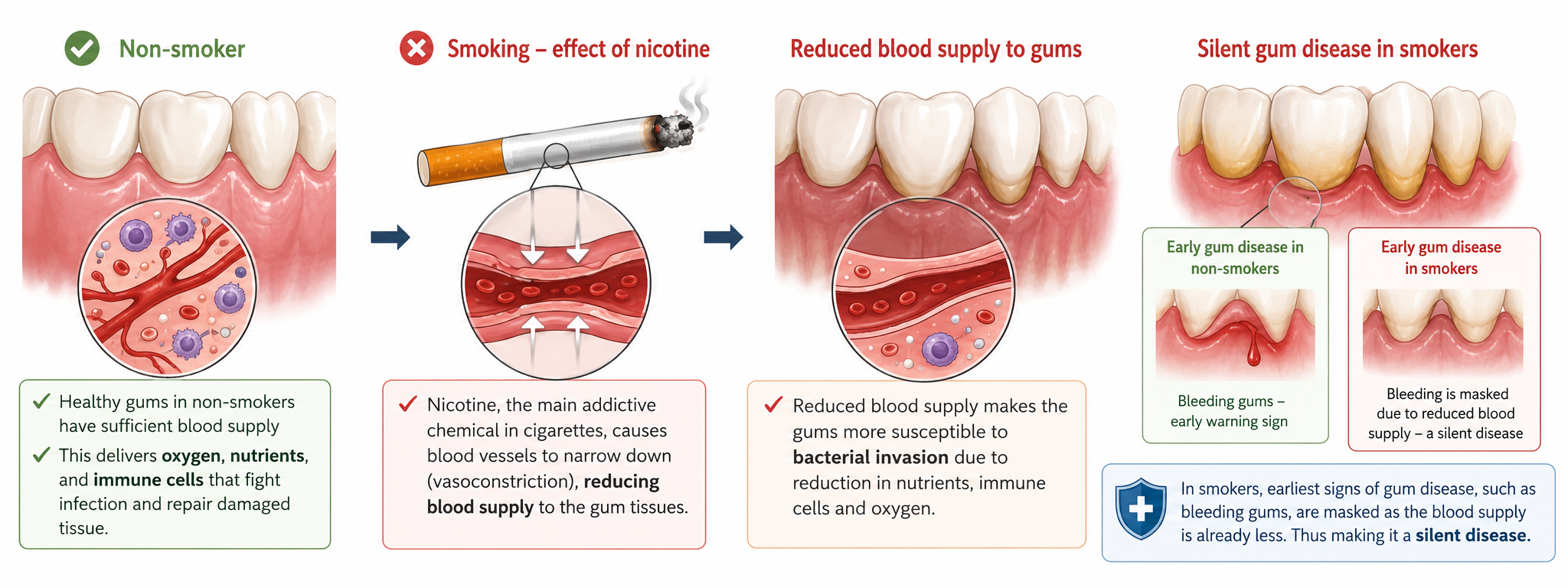
2. Weakened immune response
Smoking impairs the function of and other immune cells like neutrophils, macrophages, responsible for controlling bacterial infections. This causes:
- Harmful bacteria survive longer
- Long standing inflammation
- Tissue destruction hastens up
- Healing becomes slower and delayed
3. Changes in the oral bacterial communities
- The mouth is the residence of millions of bacteria which live in close harmony with each other. Smoking tips the balance and favours the growth of disease-causing bacteria associated with periodontitis.
- Studies show smokers have higher prevalence of periodontitis causing bacteria such as Porphyromonas gingivalis, Tannerella forsythia, and Treponema denticola.
- These bacteria form sticky layers of plaque beneath the gumline and release harmful toxins that trigger long-term inflammation, gradually damaging the gums and the tissues supporting the teeth.
4. Slower and delayed healing
Smoking interferes with collagen production, reduces oxygen delivery, and impairs the function of fibroblasts (these are cells which are responsible for repair). This causes:
- Delayed healing after deep cleaning (scaling and root planing)
- Poor recovery following gum surgery
- Increased risk of dental implant failure
- Reduced success of treatment
5. Increased bone loss
- Chronic inflammation, combined with impaired healing and reduced blood supply, accelerates the destruction of the bone that supports the teeth.
- As bone loss progresses, teeth lose their stability and may eventually become loose or require extraction.
6. Gum tissue damage from tar and cigarette combustion by-products
- Smoking involves burning plant material, which produces tar and other toxic compounds beyond nicotine.
- These substances irritate soft tissue directly and contribute to t changes seen in smokers' mouths: bad breath, dark staining, and thicker and stiff gum tissue.
Can vaping cause gum disease?
Although vaping is relatively new compared to traditional smoking, ongoing research suggests that it is not harmless to your gums.
A common assumption in those inclined and defensive about vaping is that unlike the traditional cigarettes, E-cigarettes do not produce tobacco smoke, thus considering them safer for oral health. However, vaping aerosols contain substances that can still irritate and damage oral tissues.
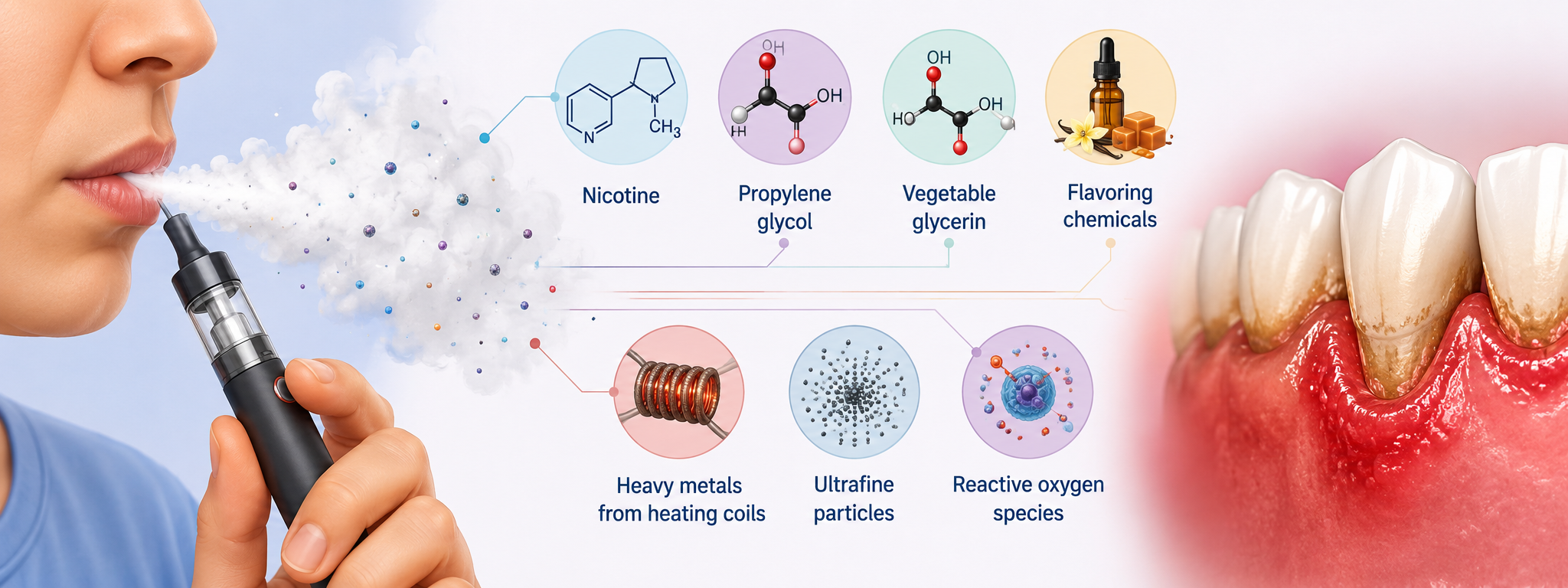
These aerosols may include:
How does vaping affect gum health?
Vaping doesn't involve the process of combustion making people assume it to be gentler on the gums. Newer research suggests this is not true. Vaping can affect the gum health in the following manner:
Nicotine exposure to gums is present in vaping as well
- Most e-liquids (part of e-cigarettes) contain nicotine.
- Vapour form of nicotine has the same effect as smoke form on the gums. Both these cause narrowing of blood vessels, reducing circulation to gum tissue.
- Reduced blood supply makes the gums more susceptible to bacterial invasion due to reduction in nutrients, immune cells and oxygen.
Dry mouth
- E-liquids with the E-cigarettes contain propylene glycol (PG) and vegetable glycerin (VG) as the main carrier bases.
- Both of these are humectants (compounds that absorb moisture) and inhaling them repeatedly throughout the day reduces saliva production.
- The main role of saliva is to keep the mouth hydrated and moist; it washes away food debris, neutralizes the acids bacteria produce, contains several Immunoglobulins (to fight infections and bacteria)and delivers minerals that help repair early enamel damage.
- Chronic dry mouth (xerostomia) from vaping removes a big part of the mouth's natural defense system, letting bacteria multiply more freely around the gumline.
Heated aerosol chemicals irritate soft tissue
- Heating PG, VG, nicotine, and flavoring compounds together creates additional byproducts, some of which are known irritants to gums.
- Studies have shown that some sweet and fruity vape flavorings can be more harmful to oral cells than unflavored e-liquids. They may also disrupt the natural balance of bacteria in the mouth, encouraging the growth of harmful bacteria linked to cavities and gum disease.
Vape aerosol lingers on tissue longer than smoke
As vapor is denser and often exhaled more slowly, it tends to settle and stay in contact with the teeth and gums for longer stretches than cigarette smoke, which extends exposure time even during a single vaping session. Thus the side effects are more in comparison to smoke.
Side effects of smoking and vaping on your gums
Both smoking and vaping can harm your gum health by reducing the mouth's natural ability to fight infection and heal. Common effects include:
- Reduced blood flow to the gums, limiting oxygen and nutrient supply
- Weakened immune response, making it harder to fight bacterial infections
- Disruption of the natural balance of bacteria in the mouth, allowing harmful bacteria to thrive
- Increased plaque buildup and a higher risk of gum disease
- Chronic inflammation that damages the gums and supporting tissues
- Dry mouth (xerostomia), especially with vaping, which reduces saliva's protective effects
- Slower healing after professional dental cleaning, gum surgery, or tooth extraction
- Increased risk of gum recession and periodontal pocket formation
- Progressive bone loss around the teeth in advanced gum disease
- Loose teeth and eventual tooth loss if periodontal disease remains untreated
- Persistent bad breath (halitosis)
- Reduced success rates of dental implants and other periodontal treatments
Smoking vs. Vaping: Which is worse for your gums?
Many people switch to vaping believing it completely eliminates the oral health risks associated with smoking. While current evidence indicates that cigarette smoking remains more harmful overall, vaping should not be considered harmless.
| Factor | Smoking | Vaping |
|---|---|---|
| Gum disease risk | Very high | Moderate to high (based on current evidence) |
| Reduced blood flow | Severe | Moderate (especially with nicotine-containing products) |
| Dry mouth | Common | Very common |
| Plaque accumulation | Increased | Increased |
| Changes in oral microbiome | Well established | Increasing evidence |
| Delayed healing | Strong evidence | Emerging evidence |
| Bone loss | Strong evidence | Possible, under investigation |
| Tooth staining | Severe | Minimal |
| Oral cancer risk | Significantly increased | Long-term risk still under study |
If your goal is optimal gum health, neither smoking nor vaping is a safe choice.
Is vaping safer than smoking for gum disease?
While vaping is generally thought to expose consumers to fewer harmful chemicals than traditional cigarette smoking, it should not be considered safe for your gums. Current research suggests that cigarette smoking causes more extensive and well-documented damage to gum tissue, but growing evidence indicates that vaping can also negatively affect oral health.
Cigarette smoke contains thousands of toxic chemicals that reduce blood flow to the gums, weaken the immune system, alter the natural balance of bacteria in the mouth, and increase the risk of severe periodontitis and tooth loss.
Vaping eliminates the process of burning tobacco. However, e-cigarette aerosols may still contain nicotine, flavoring chemicals, heavy metals, and ultrafine particles that can irritate gum tissues, reduce saliva production, and promote inflammation.
The healthiest option for your gums is to avoid both smoking and vaping. If you're trying to quit smoking, switching completely to vaping may reduce your exposure to some harmful chemicals, but it should ideally be viewed as a temporary step toward becoming nicotine-free rather than a long-term solution.
Effect of dual use (both smoking and vaping) on gums?
Few people are categorized as dual users which means that they smoke traditional cigarettes as well as continue with vaping. The harmful effects of both are seen in these individuals.
Dual use may actually prolong nicotine exposure and increase cumulative damage to the gums. . Their gums are dealing with reduced blood flow from two nicotine sources, tissue irritation from two different delivery mechanisms, and a mouth that's chronically drier than either habit alone would cause. In addition to this combustion toxins and tar exposure from cigarettes on top of the dry-mouth and microbiome disruption specific to vaping. This causes:
- Greater bacterial imbalance
- Persistent inflammation
- Higher nicotine exposure
- Delayed periodontal healing
- Increased risk of disease progression
While research is ongoing, most dental professionals recommend eliminating all tobacco and nicotine products rather than alternating between them.
Can smoking cause gum recession?
Gum recession occurs when the gum tissue gradually pulls away from the tooth, exposing the root surface. Smoking is a risk factor for gum recession, although recession does not occur solely because someone smokes.
While smoking does not directly cause the gums to recede, it creates conditions that damage the tissues supporting your teeth, making gum recession more likely over time. Once the supporting bone is lost due to periodontitis, the gums often recede. Smoking contributes to gum recession by:
- Reducing blood supply
- Weakening of the gum tissue
- Slowing tissue repair
- Increasing periodontal destruction
Symptoms of Gum Recession
- Teeth appearing longer
- Increased sensitivity to cold or sweets
- Visible roots
- Notches near the gumline
- Food trapping between teeth
- Difficulty cleaning certain areas
Can vaping cause gum recession?
Research is still evolving, but several studies suggest vaping may contribute indirectly to gum recession. Possible mechanisms include:
- Persistent dry mouth
- Reduced tissue hydration (lack of hydration and moisture)
- Increased inflammation
- Slower healing
- Higher plaque accumulation
Can Smoking and Vaping Lead to Bone Loss?
One of the major results of untreated periodontitis (advanced gum disease) is the destruction of the bone that holds teeth firmly in place. Inflammation activates specialized cells called osteoclasts (bone eating cells), which break down bone faster than the body can rebuild it.
Smoking accelerates this process by:
- Increasing inflammatory chemicals
- Reducing blood supply
- Impairing bone-forming cells (osteoblast)
- Delaying healing
If the disease is still not treated, teeth may become loose, change their positions , or eventually require extraction. Although research on vaping is newer, laboratory studies indicate that vape aerosols may also stimulate inflammatory pathways involved in bone destruction.
Early Signs of gum disease in smokers and vapers
As discussed previously both smoking and vaping mask gum bleeding which is the earliest sign of gum disease. Hence it may go unnoticed for years. Paying attention to subtle warning signs is essential.
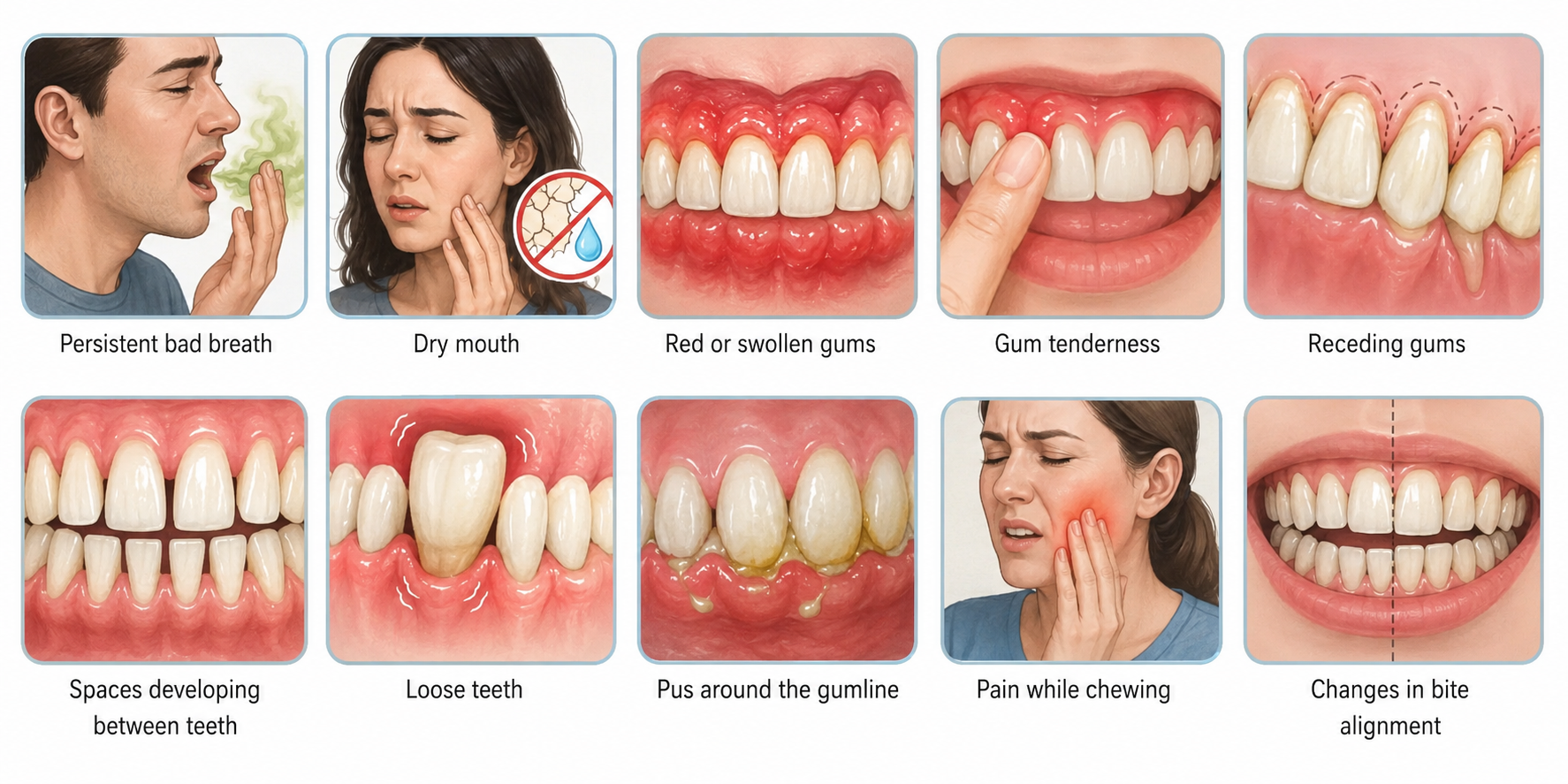
Common early symptoms of gum disease in smokers and vapers include:
Warning signs that require immediate dental evaluation
Contact your dentist immediately if you notice any worsening of symptoms like:
- Teeth becoming loose
- Gums that look darker, duskier, or more purple-red than pink
- Swelling with pus discharge
- Severe gum pain
- Discoloration (dark or black) along the gumline
- Persistent bleeding despite quitting smoking
- Rapidly worsening gum recession
- Difficulty chewing due to tooth mobility
Early diagnosis allows treatment to begin before irreversible bone loss occurs.
How fast does smoking or vaping damage your gums?
The damage does not happen overnight. Each session of smoking or vaping exposes the mouth to nicotine. It reduces blood flow to the gums by narrowing blood vessels. Repeated exposure over weeks, months, and years gradually weakens the gums' natural defenses, allowing harmful bacteria to thrive and increasing the risk of gum disease.
The exact timeline is not fixed. It depends upon factors such as intensity and duration of smoking or vaping, the number of cigarettes smoked each day, the nicotine concentration in e-liquids, oral hygiene, genetics, diet, and overall health.
Timeline of gum damage from smoking and vaping
| Time | What Happens? |
|---|---|
| Within minutes | Nicotine causes blood vessels in the gums to narrow, reducing blood flow and oxygen delivery. |
| Within days to weeks | The mouth becomes drier, harmful bacteria begin to increase, and the gums become more vulnerable to inflammation. |
| Within a few months | Plaque and tartar accumulate more easily, early gingivitis may develop, and healing becomes slower. Smokers may not notice bleeding because nicotine masks this symptom. |
| After 1–2 years | The risk of developing periodontitis increases, particularly in people who smoke regularly or have poor oral hygiene. |
| Over several years | Chronic inflammation leads to gum recession, destruction of the supporting bone, loose teeth, and eventually tooth loss if the disease remains untreated. |
Can your gums heal after you quit smoking or vaping?
Quitting smoking or vaping can significantly improve gum health. Although the existing bone loss and advanced periodontal damage cannot be completely reversed, stopping tobacco and nicotine exposure allows your gums to heal more effectively and reduces the risk of further destruction.
As blood circulation improves and immune function begins to recover, the gums regain some of their ability to fight infection and repair damaged tissues.
What Happens After You Quit?
| Time After Quitting | What Happens to Your Gums |
|---|---|
| 24–48 hours | Nicotine levels begin to decline, and blood circulation gradually improves. |
| 1–2 weeks | Gum tissues receive more oxygen and nutrients, supporting early healing. |
| 1–3 months | Reduced inflammation, healthier gum color, and improved response to professional cleaning. |
| 3–6 months | Better healing after periodontal treatment and a lower risk of disease progression. |
| 1 year and beyond | Continued reduction in periodontal disease risk compared with current smokers, although the risk may remain slightly higher than in people who have never smoked. |
If you quit vaping after prolonged nicotine use, similar improvements may occur, although long-term studies are still ongoing.
Can the Damage Be Reversed?
- The extent to which the damage can be reversed depends on how early it is detected and whether smoking or vaping or both are stopped or not.
- In the early stages of gum disease (gingivitis), the damage is reversible. With professional dental cleaning, good oral hygiene, and quitting tobacco or nicotine products, the gums can return to a healthy state.
- However, once gum disease progresses to periodontitis, the damage becomes largely irreversible.
- Lost gum attachment and supporting bone do not naturally grow back.
- Treatments such as scaling and root planing, periodontal surgery, bone grafting, and gum grafting can help control the disease and restore some lost tissues in selected cases; they cannot fully regenerate all the structures destroyed by advanced periodontitis.
How do dentists diagnose gum disease?
Early diagnosis of gum disease is essential specially in smokers and vapers because they can progress silently, gums may not bleed easily. During a clinical examination for gum disease, your dentist may:
- Review your medical history and tobacco or vaping habits
- Examine your gums for redness, swelling, and recession
- Measure periodontal pocket depth using a periodontal probe
- Check for bleeding on probing
- Assess tooth mobility
- Evaluate plaque and tartar accumulation
- Take dental X-rays to assess bone loss
These findings help determine whether you have gingivitis or periodontitis and guide the most appropriate treatment plan.
Treatment of gum disease
Treatment depends on the severity and stage of the gum disease.
1. Professional Dental Cleaning
For gingivitis, removing plaque and tartar through a professional cleaning is often enough to restore gum health when combined with good oral hygiene. It includes scaling and root planing to remove the tartar and plaque buildup below the gum line.
2. Antimicrobial Therapy
Depending on the severity of infection, your dentist may recommend:
- Antimicrobial mouthwashes
- Local antibiotic gels
- Antibiotic microspheres
- Systemic antibiotics in selected cases where infection is severe
3. Periodontal Surgery
Advanced cases may require surgical treatment, including:
- Flap surgery (pocket reduction surgery)
- Bone grafting
- Guided tissue regeneration
- Soft tissue (gum) grafting
Smoking significantly reduces the success rate of many periodontal surgical procedures, making tobacco cessation an important part of treatment planning.
How to protect your gums if you smoke or vape?
The most effective way to reduce your risk of gum disease is to stop smoking and vaping altogether. However, maintaining excellent oral hygiene can also help limit disease progression.
- Brush for at least two minutes using a soft-bristled toothbrush and fluoride toothpaste. Ensure adequate plaque removal specially from sites which are difficult to clean..
- Clean between your teeth. Plaque often develops in areas that a toothbrush cannot reach. Use:
- Dental floss
- Interdental brushes
- Water flossers (if recommended by your dentist)
- Smoking and vaping commonly cause dry mouth, reducing saliva's ability to protect the teeth and gums. Drink water regularly throughout the day and limit sugary or acidic beverages.
- Professional examinations and cleanings help detect gum disease before irreversible damage occurs. Visit your dentist regularly for six-monthly followups
- A balanced diet supports gum healing and immune function. Include foods rich in:
- Vitamin C
- Vitamin D
- Calcium
- Omega-3 fatty acids
- Protein
- Antioxidants
- Consider a tobacco cessation program in case quitting tobacco is difficult for you. Behavioral counseling, nicotine replacement therapy, and prescription medications may improve your chances of long-term success.
Key Takeaways
- Both smoking and vaping increase the risk of gum disease.
- Cigarette smoking remains one of the strongest risk factors for periodontitis and tooth loss.
- Vaping is not harmless and may contribute to gum inflammation, dry mouth, and delayed healing.
- Nicotine reduces blood flow, weakens immune defenses, and masks early signs such as bleeding gums.
- Smoking alters the natural oral bacterial communities, allowing harmful bacteria to multiply.
- Quitting smoking or vaping improves circulation, enhances healing, and increases the success of periodontal treatment.
- Regular dental visits, excellent oral hygiene, and tobacco cessation are the most effective ways to protect your gums.

Your last cigarette isn't the end of nicotine's journey. Find out how long it lingers in your body and how this affects your recovery.
Frequently Asked Questions
Can vaping cause bleeding gums?
Yes. Vaping may irritate the gums and contribute to inflammation, especially if plaque is present. However, nicotine can also reduce blood flow, which may make bleeding less noticeable despite ongoing disease.
Is vaping better than smoking for gum health?
Current evidence suggests vaping may expose users to fewer harmful chemicals than traditional cigarettes, but it is not safe for gum health. Both smoking and vaping can increase the risk of periodontal disease.
Can smokers get dental implants?
Yes, but smokers have a higher risk of implant failure because smoking interferes with bone healing and osseointegration. Quitting before and after implant placement significantly improves the chances of success.
Does nicotine-free vaping damage your gums?
Even nicotine-free vape aerosols may contain flavoring chemicals, aldehydes, and ultrafine particles that can irritate oral tissues and contribute to inflammation. More long-term research is needed.
Why don't smokers' gums bleed?
Nicotine causes blood vessels in the gums to narrow, reducing blood flow and masking bleeding. This can make gum disease appear less severe than it actually is.
How long does it take for gums to improve after quitting smoking?
Many people notice healthier-looking gums within a few weeks. Significant improvements in healing and periodontal treatment results typically occur over several months.
References
- Papapanou PN, et al. Periodontitis: Consensus report of Workgroup 2 of the 2017 World Workshop. Journal of Clinical Periodontology. 2018.
- Centers for Disease Control and Prevention (CDC). Smoking, Gum Disease, and Tooth Loss.
- American Academy of Periodontology. Smoking and Periodontal Disease.
- World Health Organization. WHO Report on the Global Tobacco Epidemic.
- National Institute of Dental and Craniofacial Research. Gum (Periodontal) Disease.


Member discussion