


If your dentist has ever mentioned " Gum recession" or "Gum disease" during a checkup, you may have walked out of the clinic wondering whether those two things are the same? You might be confused if the two are the different names of the same thing or two completely different problems. You're not alone. These terms get used interchangeably all the time, and that confusion can actually delay the care your gums need.
Gum recession and gum disease are related, but they are not the same thing. One is a physical change in your gums; the other is an infection. You can have one without the other. Understanding this distinction is the first step toward protecting your long-term oral health. Let's break it all down and understand this clearly.
What Is Gum Recession?
Gum recession occurs when the gum tissue that surrounds and protects your teeth pulls away or wears down, exposing the lower portion of the tooth. It is classified as a form of advanced gum disease. It occurs when early gum is not treated. It causes the loss of supporting structures of the teeth like bone and gums. It might involve one tooth or many teeth simultaneously.
The condition develops slowly and silently. It is so silent at times that you may find it out in late stages when you feel sensitivity in teeth or notice cavities in the root region of the teeth. It is more common in older adults, particularly over 65 years of age.
What Causes Gum Recession?
Gum recession is rarely caused by a single reason. It is mostly associated with several causes which are related to each other. Research shows that anatomical and mechanical factors can contribute significantly to recession even in patients without active periodontal disease. Most cases involve a combination of the following reasons:
- Advanced Gum Disease
- Brushing Too Hard
- Genetics
- Teeth Grinding and Clenching (Bruxism)
- Tobacco Use.
- Hormonal Changes
- Orthodontic Treatment (Braces and Aligners).
- Injury, Trauma, or Oral Piercings
Symptoms of Gum Recession
As the gum recession progresses slowly and silently, many people tend to overlook it. If you notice and identify the symptoms early you might prevent yourself from losing your teeth. Being alert and performing self dental examinations at regular intervals can help you identify Gum changes at an early stage.
What does the Gum recession look like? What to Watch For?
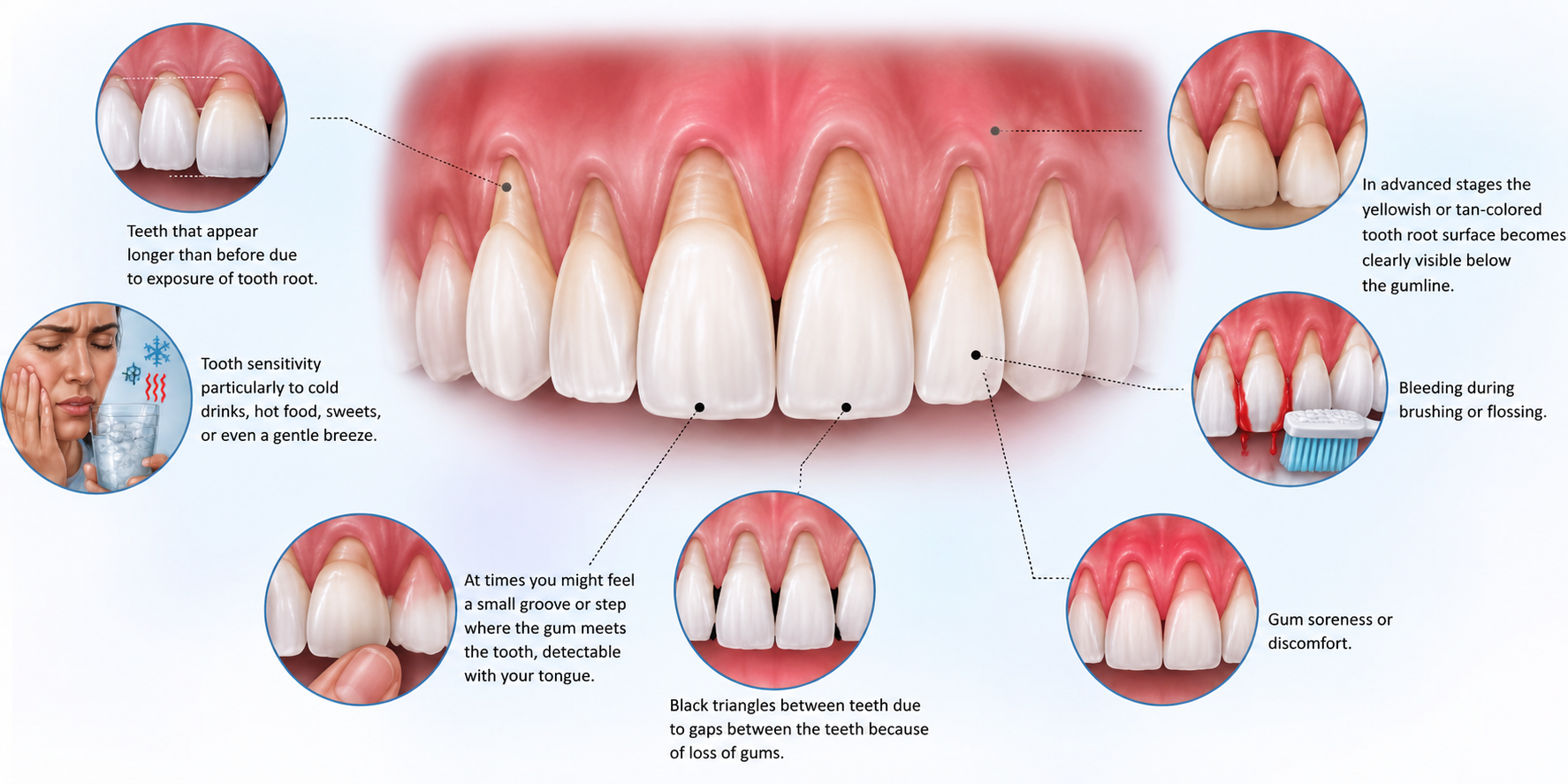
These symptoms develop gradually. If you notice any of them, schedule a dental visit promptly earlier intervention means more treatment options and better outcomes.
What Is Gum Disease? Understanding the Infection Behind the Problem
Gum disease (formally called periodontal disease) is a bacterial infection that affects the soft tissue and bone supporting your teeth. It begins when dental plaque ( that is a sticky film of bacteria) builds up along the gumline and is not removed through regular and correct brushing and flossing.
Stages of Gum Disease
- Gingivitis : is the earliest and mildest stage. In this stage only the gum tissue itself is inflamed the underlying bone is not yet affected. This is important because gingivitis is reversible. With proper brushing, flossing, and a professional cleaning, the gums can return to full health. The problem is that gingivitis is often painless, so many people don't realize it's happening.
Common gingivitis symptoms
- Gums that bleed easily when brushing or flossing
- Redness, puffiness, or tenderness along the gumline
- Persistent bad breath (halitosis)
- Gums that look slightly swollen or shiny
- Periodontitis : is the advanced stage of gingivitis. It happens when the infection moves deeper, spreading into the bone and tissue that anchor your teeth. The gums begin to pull away from the teeth, forming gaps between the tooth and gum where bacteria thrive. Over time, the bone itself breaks down a process that is largely irreversible.
Symptoms of Periodontitis
Common warning signs include:
- Bleeding gums
- Persistent bad breath
- Gum swelling
- Deep pockets around teeth more than 4-5 mm
- Gum tenderness
- Loose teeth
- Changes in bite
Gum Recession vs Gum Disease: The Key Differences
The most important distinction is that gum recession is a physical change in gum position, while gum disease is an infectious disease process.
| Feature | Gum Recession | Gum Disease |
|---|---|---|
| Definition | Loss of gum tissue | Infection and inflammation |
| Primary Cause | Multiple factors | Plaque bacteria |
| Bleeding Gums | May be absent | Common |
| Swelling | Rare | Common |
| Root Exposure | Present | May develop later |
| Bone Loss | Not always | Common in periodontitis |
| Tooth Sensitivity | Common | Variable |
| Reversibility | Cannot naturally regenerate | Gingivitis can be reversed |
Can You Have Gum Recession Without Gum Disease?
Yes .This is the most important gap in understanding which creates a lot of confusion amongst many patients. Many patients assume that if their gums are receding, they must have gum disease. But recession can happen even in mouths with excellent oral hygiene and no active infection. This means you could be faithfully brushing twice a day, flossing nightly, and visiting your dentist every six months and still develop gum recession. Here are the non-infectious causes of recession:
- Overly Aggressive Brushing (Toothbrush Abrasion)
- Tooth Misalignment and Bite Issues
- Thin Gum Tissue (Biotype)
- Orthodontic Treatment Side Effects
- Hormonal Changes
- High Frenum Attachment
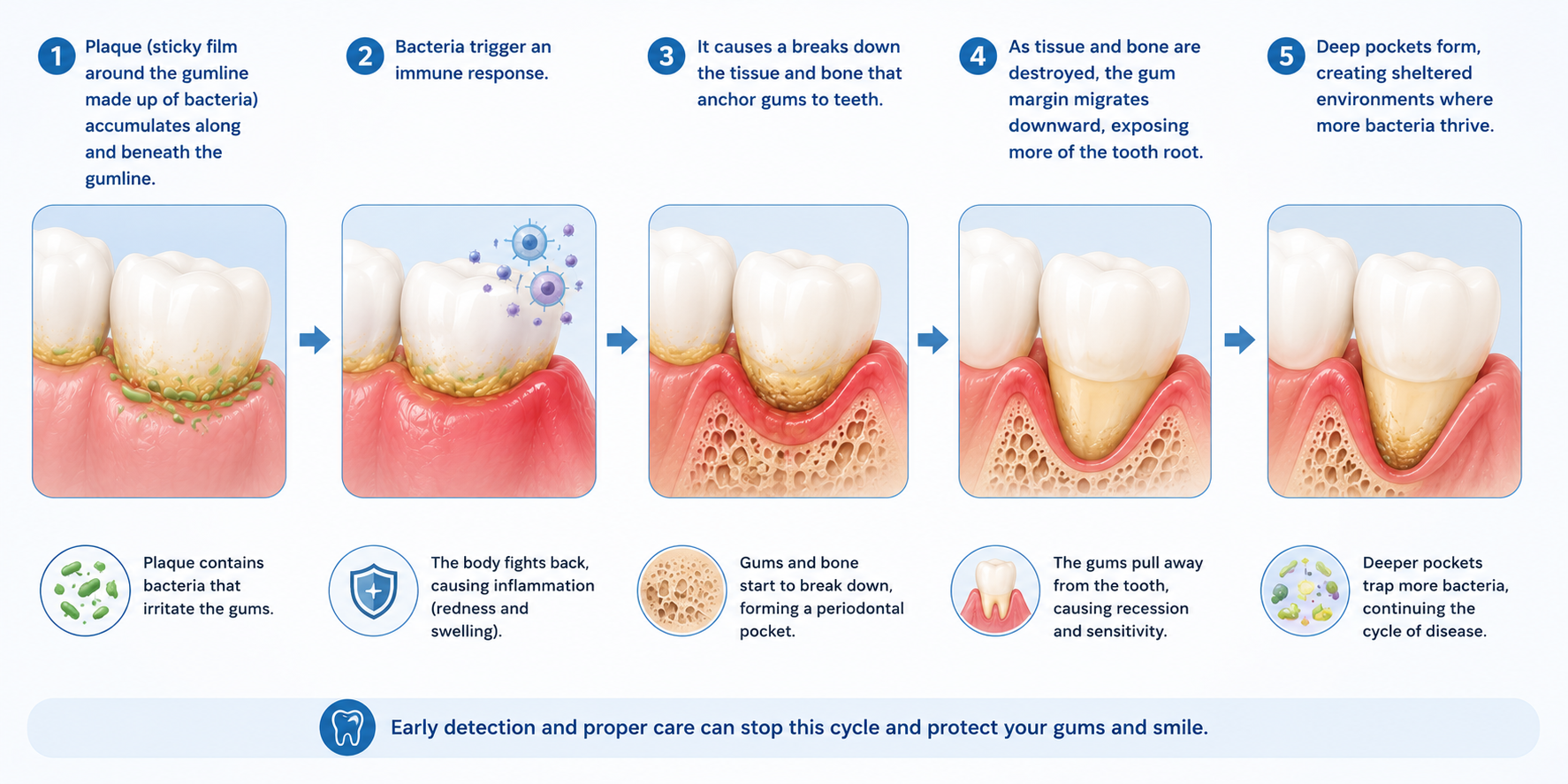
How Gum Disease Causes Recession?
While recession can occur without infection, gum disease is still the most common cause of gum recession globally.This is a self-reinforcing cycle. Recession creates harder-to-clean areas, which attract more bacteria, which drive further tissue loss. Breaking that cycle requires professional intervention usually scaling and root planing (deep cleaning) or, in advanced cases, surgical treatment.
Here's the pathway:
Diagnosis: How Dentists Tell the Difference?
Your dentist uses a few key tools to evaluate what's happening with your gums:
- Probing : measures the depth of the pockets between your gums and teeth. Healthy pockets are 1–3 mm. Gingivitis typically produces pockets around 4 mm. Active periodontitis often shows pockets deeper than 5 mm.
- Dental X-rays : reveal the level of bone supporting each tooth. It is essential for spotting bone loss that may not be visible during a visual exam alone.
- Recession measurement : maps how far the gum margin has moved from its ideal position on each tooth, allowing your dentist to track whether recession is progressing.
Treatment Options
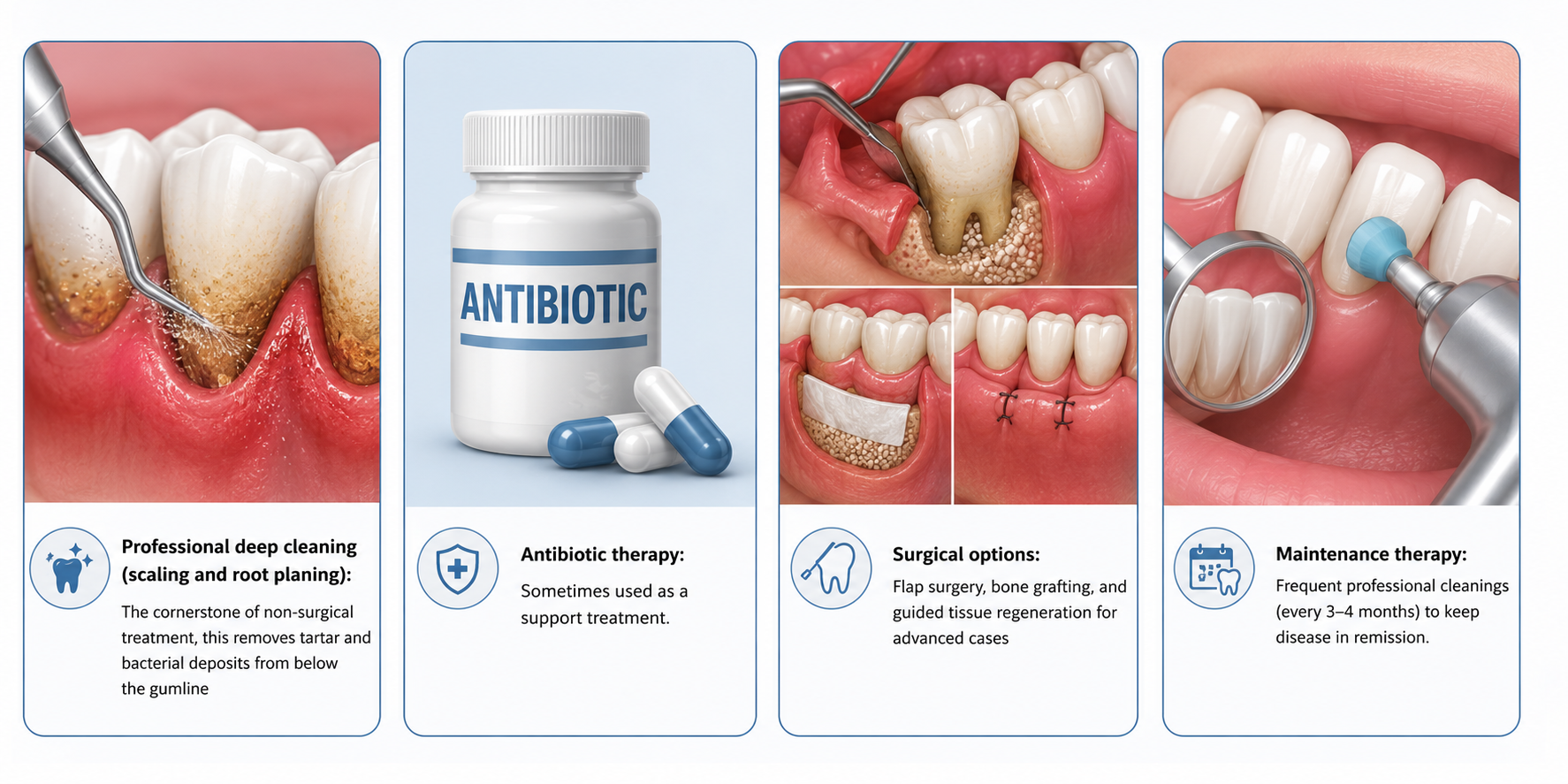
Treating Gum Disease
Treating Gum Recession
You need to visit your Dentist who is going to explain to you what is the best treatment for you. This will also be determined by what type of changes you want in your gums, cost. and overall status of gum health.
Non-Surgical Treatments
Scaling and Root Planing (Deep Cleaning)
The procedure removes tartar from below the gumline and smooths root surfaces. As the infection is controlled the gums become healthier, tighter, and more stable.
Antibiotics and Antimicrobial Therapy
Topical antibiotics (applied directly into the area of gum loss) or oral antibiotics may be prescribed alongside deep cleaning.Antimicrobial mouth rinses containing chlorhexidine are commonly recommended as support therapy.
Habit Modification
Switching to a soft-bristled toothbrush, correcting brushing technique, quitting tobacco, and addressing bruxism with a nightguard are foundational steps that remove the ongoing causes of recession.
Orthodontic Treatment
Correcting tooth misalignment with braces or clear aligners can stop the advancement of gum recession.
Surgical Treatments
Gum graft surgery is the most predictable and long-lasting treatment option for gum recession. During this surgery, a gum graft is used to replace your missing gum tissue. The graft usually is taken from the roof of your mouth. Once the gum graft is in the proper position, your surgeon stitches it into place. There are several different types of gum grafting procedures. Your surgeon can help determine which one is right for your situation.
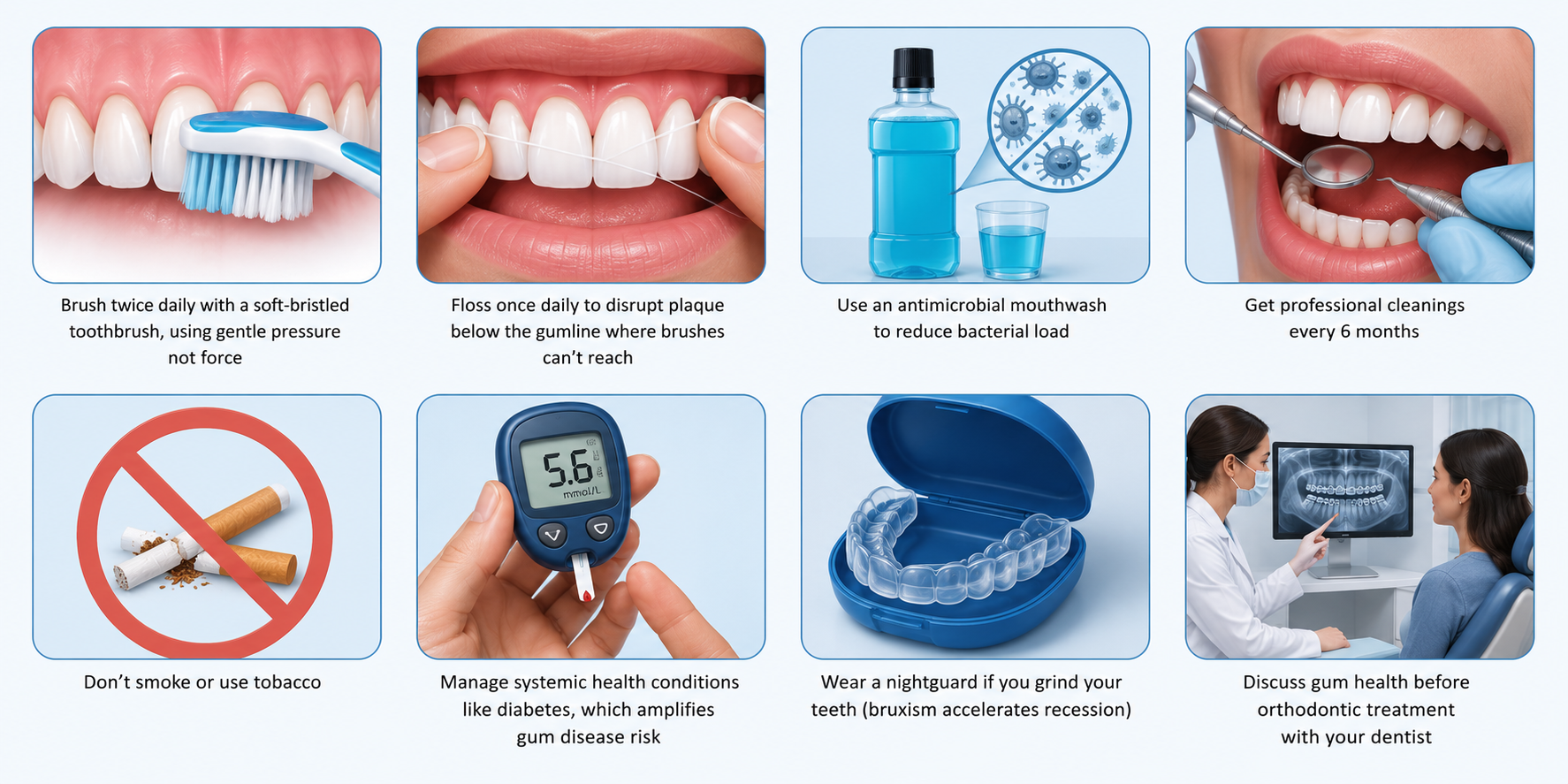
Prevention: What Actually Works?
Whether you're trying to prevent gum disease or slow recession, the fundamentals are consistent:
Key takeaways
- Gum recession and gum disease are closely related but distinct conditions.
- Gum disease is an infection that, if allowed to progress, can cause recession. But recession can also develop in perfectly healthy mouths due to brushing habits, genetics, hormonal changes, or anatomy.
- The fact that gum tissue cannot regenerate on its own makes early detection critical for both conditions. Waiting until you feel pain is often waiting too long.
- If your gums look like they're pulling back, your teeth feel more sensitive than usual, or your dentist mentions "pocketing" or "recession" at your next visit take it seriously.
- Your gums are the foundation of your smile.
- The earlier you protect them, the longer they'll protect your teeth.

Don’t Ignore Gum Changes They Can Lead to Dangerous Tooth Infections
Frequently Asked Questions
Can gum recession be reversed?
No. Once gum tissue recedes, it does not regenerate on its own. Surgical grafting is needed to restore lost tissue.
Is gum disease always the cause of receding gums?
No. While gum disease is the most common cause, recession can also result from aggressive brushing, thin gum tissue, hormonal changes, orthodontic treatment, or bite issues.
Can bleeding gums mean something other than gum disease?
Occasional bleeding can be caused by brushing too hard or a vitamin deficiency, but persistent bleeding is a hallmark of gingivitis and should be evaluated by a dentist.
How quickly does gum disease progress to recession?
This varies significantly between individuals. With risk factors like smoking, diabetes, or a genetic predisposition, progression can be faster. Regular monitoring is the only reliable way to catch it early.
What's the best toothbrush to prevent recession?
A soft-bristled brush manual or electric used with gentle pressure is consistently recommended by periodontists. Electric toothbrushes with pressure sensors can help prevent over-brushing.


Member discussion