


INTRODUCTION : You wake up one morning and like every normal day head to the bathroom to brush your teeth. As you spit out the toothpaste, you notice something weird and unusual. There is blood in the sink. You are confused. Curious to find out what has happened you touch and try to self examine your gums to see what is wrong and notice that they are swollen and painful. At the same time you realize that of late you are experiencing persistent bad taste in your mouth that doesn't go away, no matter how consistently you brush. Has this ever happened to you?
I’m sure it has and most often you might have ignored it thinking maybe you have brushed too vigorously or maybe you have hurt your gums from the hard bristles of the toothbrush. These are the silent warning signs your mouth is giving you before something more serious happens.
Gingivitis is the earliest and in most cases reversible stage of gum disease. Studies have claimed that it approximately affects an estimated 796 million people worldwide making it one of the most prevalent non-communicable diseases in the world . But often due to lack of awareness and knowledge it is widely misunderstood and ignored. What makes addressing this condition more important is that it goes beyond the standard oral hygiene. In a study conducted, it was surprisingly found out that gingivitis was associated with cardiovascular disease, gestational diabetes, respiratory illness, and gut microbiome disruption. Thus, proving that systemic health is indirectly linked to oral hygiene.
What Is Gingivitis?
First and foremost it is important to understand - What is Gingiva? Gingiva, commonly known as gums, is the soft tissue that surrounds the base of the tooth. It protectively encases the tooth and holds it in its place. In health, it is pink in colour, firm and resilient to touch and free from any sort of pain, swelling and bleeding. Gingivitis is an inflammatory condition affecting the gingiva (Gums). It occurs when plaque ( sticky film of bacteria ) accumulates along the gumline. It tends to trigger an immune response, causing the gums to become inflamed, discolored, painful and prone to bleeding.
What are the most Common Types of Gingivitis
It is classified into two primary forms on the basis of the causative reason:
1. Plaque-Induced Gingivitis -
This is the most common form of gingivitis. It develops when dental plaque continues to stick around the tooth and is not removed effectively through brushing and flossing. With time,the bacteria and the toxins that they produce irritate the gums. This leads to gum inflammation which can be seen in the form of redness, swelling, painful and bleeding gums.
2. Non–Plaque-Induced Gingival Lesions -
Less common type. At times gum inflammation can occur for reasons other than plaque buildup. Some of these reasons include bacterial, viral, or fungal infections, allergic reactions to certain products or materials (like dental filling materials), or irritation from foreign substances (like toothpaste). This type is not associated with dental plaque.
What Changes Might You Notice in Your Gums? Early Signs of Gingivitis
Gingivitis often starts quietly, which is why many people don’t notice it at first. But your gums usually give early warning signs that something is not right. Paying attention to these small changes can help you catch the problem early and prevent it from getting worse.
Painless Bleeding Gums
You may notice bleeding while brushing or flossing, even if there is no pain. Healthy gums don’t usually bleed until and unless they are traumatized by pressure or force (like eating something hard or brushing forcefully), so this is often one of the first warning signs.
Redness or Darkening of Gums
Instead of a light pink color, your gums may start looking red, darker, or slightly discolored. This change often signals irritation or early inflammation. Often this can be self detected by you using simple self examination techniques.
Swelling or Tenderness
Gums may feel slightly swollen or sensitive when you touch them or brush. Even gentle pressure can sometimes feel uncomfortable. Eating hard food and even drinking cold water might make you wince.
Persistent Bad Breath
Ongoing bad breath or an unpleasant taste in the mouth (halitosis) can happen when bacteria build up along the gum line. This will not go away no matter how hard you try to brush or maintain oral hygiene.
Receding Gums
In some cases, gums may slowly start pulling away from the teeth, making teeth look longer than usual. The tight sung of the gums around the tooth will be lost creating gaps and spaces. This is a sign that the condition may be progressing and needs attention.
When Gum Symptoms Become Urgent: Don’t Wait to See a Dentist
Sometimes gum problems move beyond early warning signs and become more serious. At this stage, it is important not to ignore the symptoms, as the condition may be progressing into periodontitis or a dental infection (abscess) that needs urgent care.
Pus Between Gums and Teeth
If you notice pus or discharge coming from the gums, it often indicates an active infection that should be treated immediately.
Pain While Chewing
Discomfort or pain when biting or chewing can mean the infection is affecting deeper supporting structures of the teeth.
Loose Teeth or Gum Loss
If your teeth start feeling loose or you notice visible gum recession, it may be a sign that the infection has spread to the supporting bone and tissues. The disease is advancing towards a more serious condition known as Periodontitis.
Possible Dental Abscess
In some cases, swelling, severe pain, and infection may develop into a dental abscess, which requires urgent professional treatment.
Causes and Risk Factors associated with Gingivitis
Primary Cause: Plaque and Bacterial Biofilm
The primary cause of gingivitis is the accumulation of dental plaque. Dental plaque is a sticky biofilm complex which consists of more than 700 bacterial species. When plaque is not regularly removed through brushing and flossing, it tends to mineralize into tartar (calculus). Tartar is the hardened deposit that can only be removed professionally in a dental clinic and cannot be removed by toothbrushing.
Modifiable Risk Factors
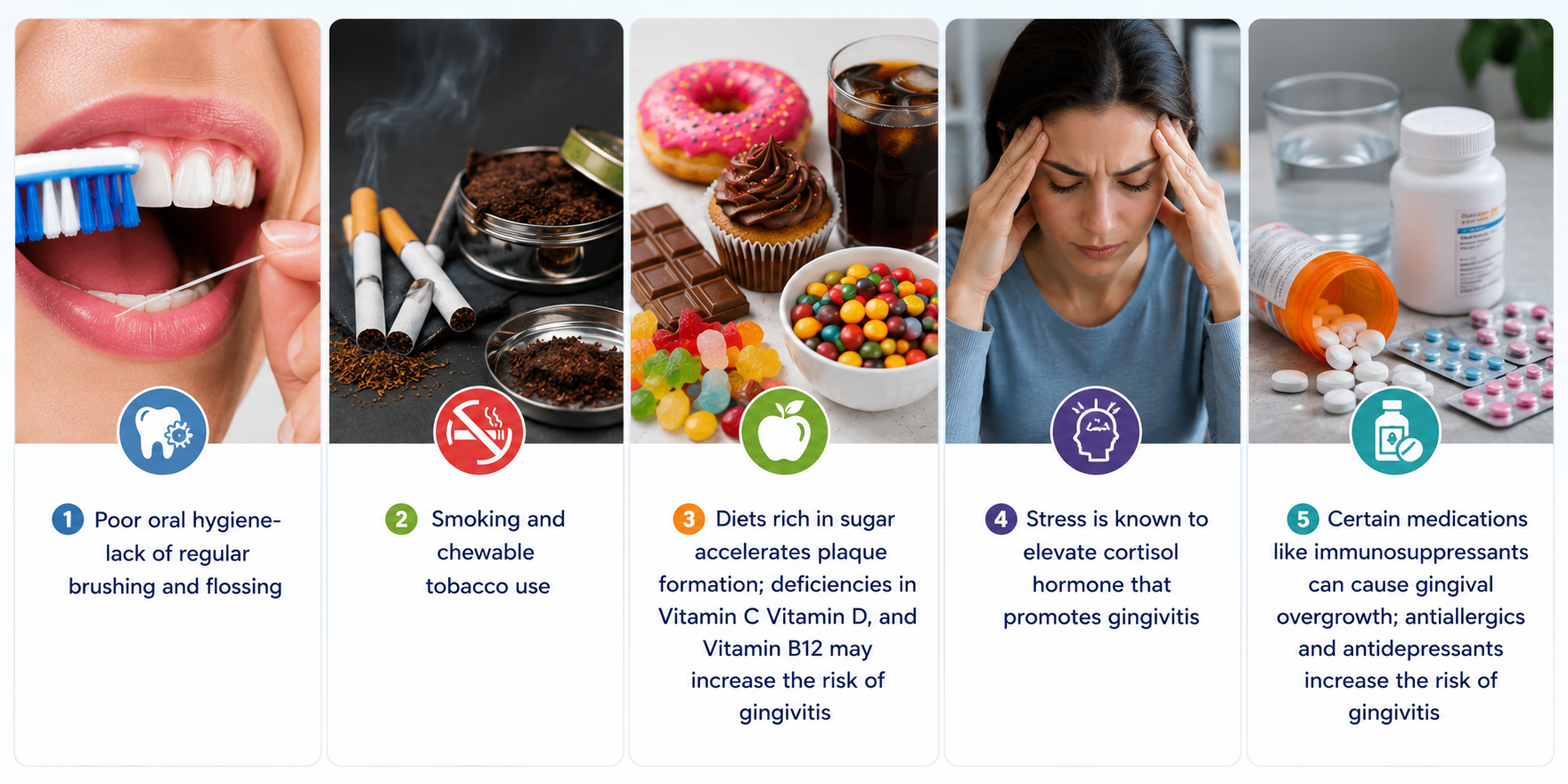
Non-Modifiable Risk Factors
- The risk of gingivitis increases with age. Older individuals are more prone to the occurrence of gingivitis.
- Few individuals have a hereditary (Genetic) predisposition to inflammatory gum responses.
- Hormonal changes like those seen during puberty, menstruation, pregnancy, and menopause increase susceptibility to gingivitis.
The Surprising Connection Between Your Gums and Overall Health
The relationship between Gum and overall health is not one-sided. Certain medical conditions like diabetes can increase the risk of gum inflammation, while unhealthy gums may, in turn, affect general health. It thus becomes a two way cyclical risk factor, one condition worsening the other.
Diabetes and Gingivitis -
People with diabetes are more likely to develop gingivitis. It occurs because elevated blood glucose levels can promote inflammation. This inflammation is attributed to the release of pro-inflammatory cytokines like TNF-α, IL-1β, IL-6 in the blood during uncontrolled diabetes. This increased inflammatory response may accelerate damage to the structures supporting the teeth.
At the same time, long standing gum inflammation can make it more difficult to maintain stable blood sugar levels. As a result, diabetes and gingivitis often create a cycle in which each condition can worsen the other.
The Oral – Gut Connection -
Hang et al., in a recent study found that the health of the gut microbiome may also influence gum health. Imbalances in microorganisms living in the gut ( Class Actinobacteria and family Defluviitaleaceae ), have been associated with an increased risk of gingivitis. This highlights the potential connection between the mouth and the gut health. These findings emphasize that oral health is closely linked to the body's microbial ecosystem.
Diagnosis: How will your dentist determine if you have Gingivitis?
Gingivitis is a silent disease, that is there is no pain associated with it. It becomes essential to diagnose gingivitis in early stages as it is completely reversible. Your dentist can perform a variety of clinical tests and examinations in order to accurately diagnose gingivitis.
- Visual examination - It involves assessing gum for its color, shape, structure , and any swelling. At the same time assessment for plaque biofilm and tartar is done. During medical history discussion, be honest with your dentist for any other systemic condition like diabetes, thyroid which you might be suffering with. Also, if you are on any medication tell the doctor clearly about it.
- Periodontal probing - It is used to measure the depth of the space, known as the between the tooth and the surrounding gum tissue. It is usually between 1-3mm normally. Increased depth is suggestive of progressive worsening and advancing stage of the disease (Periodontitis).
- Radiographic assessment (X-rays) - A series of x-rays might be taken to rule out the presence of bone loss in a more severe or advancing stage (Periodontitis) of gum disease.
- Bleeding on probing - Healthy gums generally do not bleed. The presence of bleeding on probing can help identify gingivitis at an early stage, often before more serious damage occurs.
Treatment of Gingivitis
Professional Dental Treatment
Scaling and root planing (professional dental cleaning) - It involves the removal of plaque and tartar using specialized ultrasonic machines. It is a completely painless procedure which lasts for 45 minutes to an hour. It can be in some cases followed by polishing of the tooth surface to make it smooth so that plaque cannot stick to the tooth surface.
Your dentist might suggest you Chlorhexidine gluconate mouthwash (0.12 – 0.2%). It is known to reduce plaque buildup and gingival bleeding.
Follow-up and monitoring at every 6 months is essential because gingivitis can recur rapidly without home maintenance.
At-Home Management
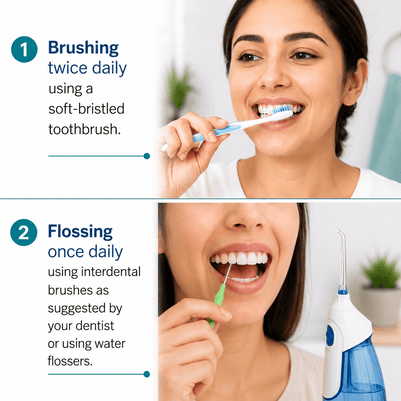
Can Certain Supplements Support Gum Health?
Some nutritional supplements and natural compounds may help support gum health. However, these cannot be considered as the replacement of professional dental care. Before starting any supplement, it is important to consult your dentist to determine whether it is appropriate for your individual needs. Some options that have shown benefit and improved gum health include Vitamin C, Omega-3 Fatty Acids, Probiotics and Green Tea Extracts. But self medication is not suggested.
Prevention: Building Healthy Habits for Lifelong Gum Health
Gingivitis is largely preventable and also reversible if timely interventions are taken. Good oral hygiene practices, healthy lifestyle choices, and regular dental visits can keep your gums healthy for a lifetime.
Daily Gum Care Routine
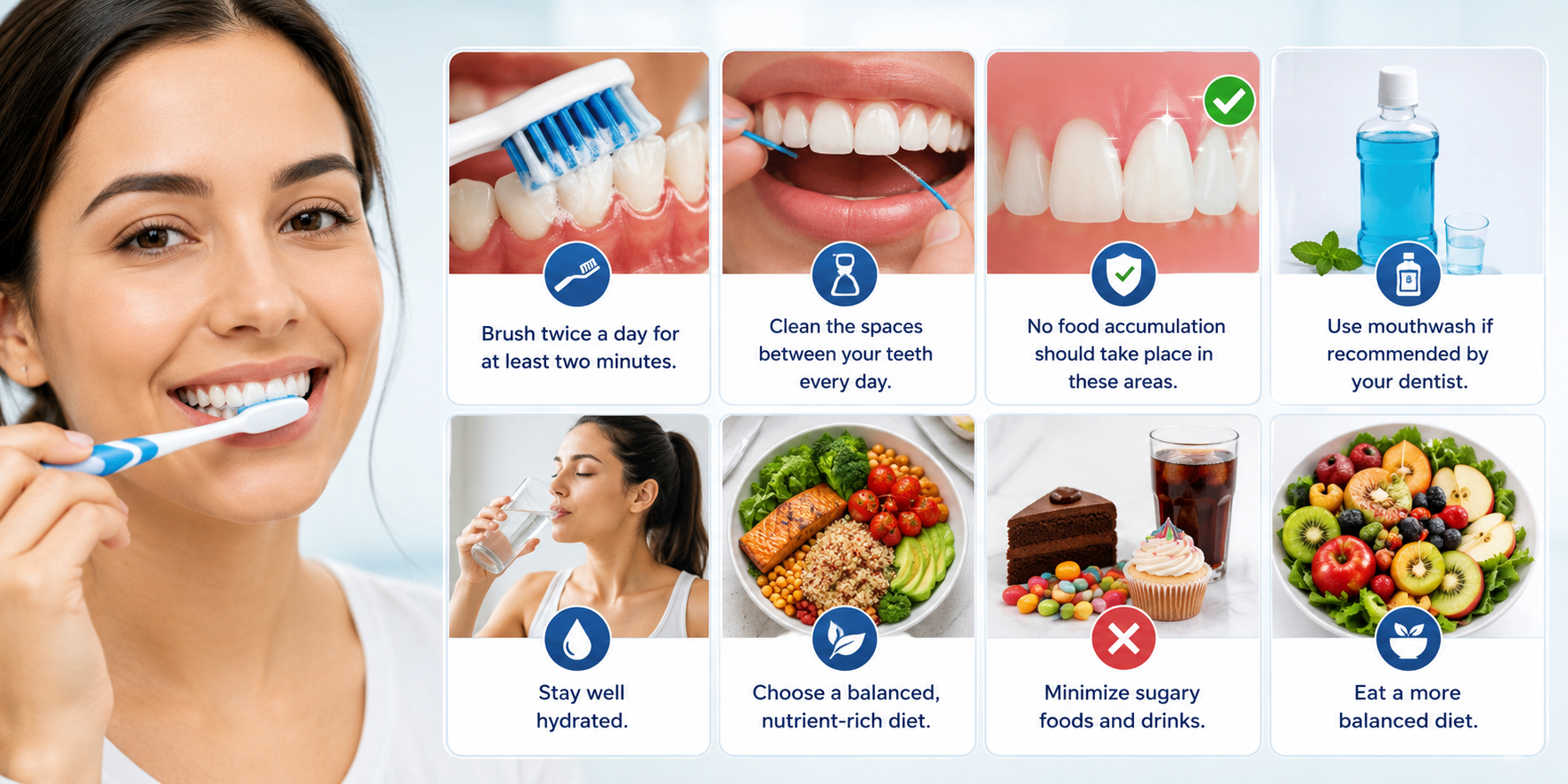
Lifestyle Habits That Protect Your Gums
- Quit smoking or tobacco use as they not only damage your oral health but also increase the risk of more severe and life threatening diseases.
- Conditions such as diabetes can affect gum health. Maintaining a good check on blood sugar can help improve gingivitis.
- Manage stress effectively.
- Pregnancy is not a reason to postpone dental treatment. If you observe swollen gums during pregnancy it is highly recommended to visit your dentist immediately.
Key Takeaways
- Gingivitis is an early stage of gum disease. It is completely reversible and is caused by bacterial plaque. It is painless, frequently ignored and often missed due to negligence.
- You may notice bleeding, swollen or red gums with bad breath. Most commonly bleeding while brushing of teeth is the first symptom to be seen.
- Risk is increased by poor oral hygiene, smoking, nutritional deficiencies, hormonal changes, diabetes, stress, and certain medications. Always be honest to your dentist while discussing your medications and systemic conditions.
- Treatment requires professional dental cleaning combined with a rigorous home care routine.
- Prevention is highly effective. Regular and consistent brushing, interdental cleaning, and regular six monthly dental visits can stop gingivitis before it starts

Think smoking only affects your lungs? It may also be making those painful mouth ulcers harder to heal.
frequently asked questions
Can gingivitis be reversed?
Yes. Early stages of gingivitis is the only stage of gum disease that is completely reversible. Because it affects only soft gum tissue with no bone loss, a professional cleaning combined with consistent daily brushing and flossing can restore gums to full health, typically within 2–4 weeks.
Is Gingivitis contagious?
No it is not contagious like a cold or flu, but the bacteria that cause it can transfer between people through saliva.
Why does Gingivitis keep coming back?
Gingivitis is not a one-time event for many people. If the conditions that caused it are not addressed, it will return often within weeks of treatment. The most common reasons for recurrence are hygiene gaps and systemic risk factors.


Member discussion