


In order to maintain a healthy smile and gums people often brush twice daily and include flossing in their regimen. They often get disappointed when despite maintaining all the good oral hygiene practices they notice symptoms like bleeding gums. This often leaves them wondering: Why are my gums bleeding even though I brush and floss?
Bleeding gums are a sign of gum inflammation caused by plaque buildup along the gumline. However, bleeding can also occur due to incorrect brushing or flossing technique, hardened tartar, hormonal changes, vitamin deficiencies, certain medications, diabetes, smoking or vaping, and other underlying health conditions.
Healthy gums should not bleed during routine brushing or flossing. If the bleeding continues for more than one to two weeks despite good oral hygiene, it's important to schedule a dental examination to identify and treat the underlying cause before it progresses into something more severe.
Are Bleeding Gums Normal?
Healthy gums do not bleed. The main features of healthy gums are :
- They are firm
- Pale pink or naturally pigmented depending on skin tone
- Snugly fit around the teeth
- Do not bleed during brushing or flossing
Bleeding from gums which occurs after accidentally injuring your gums with floss or eating a hard food may not be a cause for concern as it is temporary and self healing. What is concerning is recurrent bleeding from the gums. Persistent bleeding usually indicates inflammation (the body's natural defense response to injury, infection, or irritation which helps to protect and heal damaged tissues ) caused by bacteria or another underlying condition that requires attention.
Why do Gums Bleed?
The most common cause of bleeding gums is inflammation in response to plaque buildup. Inflammation is the body's natural defense response to injury, infection, or irritation which helps to protect and heal damaged tissues. Plaque is a sticky biofilm of bacteria which tends to stick around the gum line. If plaque is not adequately removed through brushing and flossing it can result in gum disease.
The bacteria within plaque release toxins that irritate the gums, triggering your immune system to respond.As your body tries to fight the bacteria:
- Blood vessels widen
- More immune cells enter the area
- Gum tissues become swollen.
- The delicate blood vessels become fragile and prone to bleeding
This is why inflamed gums bleed so easily even from gentle brushing or flossing. Bleeding is often one of the earliest warning signs of gum disease, appearing before pain develops.
Why Are My Gums Bleeding Even Though I Brush and Floss?
Bacterial plaque is the primary cause of bleeding gums. Bleeding gums can also be a symptom of changes happening elsewhere in the body. Hormones, nutrition, medications, chronic illnesses, and lifestyle habits can all make your gums more prone to inflammation and bleeding even if your brushing routine is excellent.
Understanding the cause of bleeding despite flossing and brushing regularly is the first step toward stopping the bleeding and protecting long-term oral health.
Common causes of gum bleeding despite brushing and flossing
1. Plaque is not adequately removed through brushing and flossing
One of the most common reasons for bleeding gums despite good oral hygiene is that plaque isn't being completely removed through brushing and flossing. Many people brush the visible surfaces of their teeth well but unintentionally miss areas such as:
- Along the gumline
- Behind the back teeth
- Between teeth
- Around crowded teeth
- Near dental fillings or crown
The timing and the aggressiveness with which the teeth are being bruised is not important. Using the correct technique to ensure that plaque is removed ensures adequate plaque removal.
This can result in plaque buildup in these areas and may irritate the gums enough to cause their inflammation and bleeding leading to gum disease (gingivitis).
Common signs include:
- Bleeding during brushing
- Bleeding while flossing
- Puffy gums
- Bad breath
- Mild redness
2. Untreated Gingivitis ( Early gum disease)
The most common cause of bleeding gums is gingivitis.
Gingivitis develops when plaque remains on the teeth long enough for bacteria to irritate the gums. In this stage, the inflammation affects only the gums and has not yet damaged the bone or supporting tissues holding the tooth in place.
The stage is completely reversible with professional dental cleaning and improved oral hygiene.
Symptoms of gingivitis
- Bleeding while brushing or flossing
- Red or swollen gums
- Tender gums
- Persistent bad breath
- Mild gum sensitivity
With proper oral hygiene maintenance and professional dental cleaning , reduced bleeding is seen within 7 to 14 days. If bleeding continues after two weeks of improved oral care, it's important to consult your dentist for further evaluation.
3. Aggressive toothbrushing
A common misconception makes people believe that harder and aggressive toothbrushing is equivalent to better tooth cleaning. However, aggressive brushing can injure your gums without removing plaque more effectively.
Using excessive pressure while bruising can lead to:
- Damage delicate gum tissue
- Cause gum bleeding
- Lead to gum recession over time
- Increase tooth sensitivity
Signs of aggressive toothbrushing you can look out for:
- Frayed toothbrush bristles within a few weeks
- Notches near the gumline
- Gum soreness
- Tooth sensitivity to cold
Dentists suggest using a soft-bristled toothbrush and applying gentle pressure. Hold the brush handle at about a 45-degree angle toward the gumline and use small circular or vibrating motions rather than vigorous back-and-forth scrubbing.
4. Incorrect flossing technique
Several patients assume that bleeding is caused by flossing and thus stop it. It is important to understand that using the correct technique while flossing prevents bleeding from gums.
In the initial days when you start flossing mild bleeding is expected because inflamed gums are more fragile. With consistent daily flossing, the bleeding usually decreases within one to two weeks. If your technique is incorrect, flossing can traumatize healthy gums.
Common flossing mistakes made by patients:
- Snapping the floss into the gums
- Using a sawing motion
- Skipping tight spaces
- Flossing inconsistently
- Not cleaning beneath the gumline
It is important to discuss the correct way of flossing with your dentist. The correct technique is:
Instead of forcing the floss straight down, gently guide it between the teeth, wrap it into a C-shape around one tooth, and slide it just below the gumline before moving up and down several times. Repeat for the adjacent tooth before removing the floss.
5. Presence of tatar that is irritating the gums
Despite regular brushing you might still develop tartar. Tartar forms when plaque is left on the teeth and it hardens through contact with minerals in saliva. Unlike plaque, tartar cannot be removed with a toothbrush or floss.
It creates a rough surface that attracts even more bacteria and makes it harder to keep the area clean.
Signs of tartar buildup
- Bleeding gums
- Persistent bad breath
- Yellow or brown deposits near the gumline
- Rough feeling on the teeth
- Swollen gums
Professional scaling performed by a dentist or dental hygienist is the only effective way to remove tartar safely.
6. Early stage of advanced gum disease (Periodontitis)
Early gum disease if not treated might progress into advanced gum disease. In this stage bacteria spread below the gumline, causing the spread of infection into supporting tissues of the tooth and bone.
Unlike gingivitis, periodontitis cannot be completely reversed, but it can often be managed successfully with timely treatment.
Warning signs of periodontitis
- Bleeding gums
- Receding gums
- Loose teeth
- Spaces developing between teeth
- Persistent bad breath
- Pain while chewing
- Pus around the gums
Because periodontitis may progress slowly and often without significant pain, regular dental check-ups are essential for early diagnosis.
7. Hormonal Changes that can make gums more prone to bleeding
Hormonal fluctuations are common in women during the phase of menstruation, puberty, pregnancy , hormonal contraceptive use and menopause.
- Changes in blood hormone levels can increase blood flow to the gums, making them more reactive to even small amounts of plaque.
- This is why some people notice bleeding gums during certain stages of life.
- A common example is seen during pregnancy (pregnancy gingivitis) where increased levels of estrogen and progesterone can exaggerate the body's inflammatory response to plaque, leading to. Gums may appear swollen, tender, and bleed easily during brushing or flossing.
Although hormonal changes cannot always be prevented, maintaining good oral hygiene and scheduling professional dental cleanings can help reduce inflammation and lower the risk of gum disease during these periods.
8. Underlying vitamin and mineral deficiency might be causing gum bleeding
Gums depend on several vitamins and minerals to stay healthy and heal properly.
| Vitamin/Nutrient | How It Helps Bleeding Gums | Signs You May Be Deficient | Good Food Sources |
|---|---|---|---|
| Vitamin C | Supports collagen production, strengthens gum tissue, promotes wound healing, and helps reduce gum inflammation. | Bleeding or swollen gums, slow wound healing, easy bruising, frequent infections. | Oranges, kiwi, strawberries, guava, bell peppers, broccoli, tomatoes. |
| Vitamin K | Helps blood clot properly, reducing excessive gum bleeding. | Easy bruising, prolonged bleeding from cuts, bleeding gums. | Spinach, kale, broccoli, cabbage, Brussels sprouts. |
| Vitamin D | Supports the immune system, reduces inflammation, and helps maintain healthy bones and teeth. | Frequent gum inflammation, bone loss, muscle weakness. | Sunlight exposure, fortified dairy products, egg yolks, salmon, sardines. |
| Vitamin B12 | Maintains healthy oral tissues and supports healing of the gums. | Mouth ulcers, burning tongue, fatigue, pale gums, bleeding gums (in severe deficiency). | Meat, fish, eggs, dairy products, fortified cereals. |
| Folate (Vitamin B9) | Helps repair gum tissue and supports healthy cell growth. | Inflamed gums, mouth sores, fatigue, anemia. | Spinach, lentils, beans, asparagus, avocado, leafy greens. |
| Iron (Mineral) | Delivers oxygen to gum tissues, supporting healing and reducing susceptibility to infections. | Fatigue, pale gums, mouth sores, recurrent oral infections. | Lean meat, spinach, beans, lentils, pumpkin seeds, fortified cereals. |
| Zinc (Mineral) | Supports immune function, tissue repair, and healing of inflamed gums. | Slow healing, frequent infections, reduced taste sensation. | Oysters, meat, nuts, seeds, legumes, whole grains. |
9. Diabetes can increase the risk of bleeding gums
Diabetes and gum disease have a two-way relationship. High blood sugar levels can:
- Reduce the body's ability to fight infections
- Slow wound healing
- Increase inflammation
- Encourage bacterial growth in the mouth
As a result, people with poorly controlled diabetes are more likely to develop gingivitis and periodontitis. On the other hand, untreated gum disease can make it harder to control blood sugar levels, creating a cycle that affects both oral and overall health.
It is important to undergo diabetes screening if you are suffering from bleeding gums.
10. Certain medications can make your gums bleed more easily
Some medications increase bleeding tendency making gums bleed more easily.These include:
- Blood-thinning medications
- Aspirin
- Warfarin
- Clopidogrel
- Direct oral anticoagulants
Because these medications reduce the blood's ability to clot, even mild gum inflammation may result in noticeable bleeding.
11. Dental Restorations or Orthodontic Appliances may trap plaque and cause gum disease
Even if you brush thoroughly, certain dental treatments can create areas that are more difficult to clean.
These include:
- Braces
- Clear aligners
- Crowns
- Bridges
- Veneers with poorly fitting margins
- Dental implants
Food particles and plaque can collect around these areas if cleaning techniques aren't adjusted. This in turn can lead to gum inflammation and early gum disease causing gum bleeding. Your dentist may recommend:
- Interdental brushes
- Water flossers
- Threader floss
- Specialized cleaning aids
Serious causes of gum bleeding despite brushing and flossing
If your gums continue to bleed despite good oral hygiene especially if you have other symptoms it's important to seek medical or dental evaluation. They might be indicative of serious medical causes.
| Medical Condition | How It Can Cause Bleeding Gums | Other Signs and Symptoms |
|---|---|---|
| Leukemia | Abnormal blood cells can reduce healthy platelet levels, making the gums bleed easily, even with gentle brushing. | Frequent infections, fever, fatigue, easy bruising, unexplained weight loss, and nosebleeds. |
| Blood Clotting Disorders | Conditions that impair blood clotting can lead to prolonged or spontaneous gum bleeding. | Easy bruising, prolonged bleeding after injuries, frequent nosebleeds, and heavy menstrual bleeding. |
| Severe Vitamin Deficiencies (Especially Vitamin C and Vitamin K) |
Vitamin C deficiency weakens gum tissue, while vitamin K deficiency affects normal blood clotting, increasing the risk of bleeding. | Swollen gums, easy bruising, delayed wound healing, and fatigue. |
| Liver Disease | The liver produces proteins needed for blood clotting. Liver dysfunction can increase bleeding tendencies. | Jaundice (yellowing of the skin or eyes), abdominal swelling, fatigue, and easy bruising. |
| Immune Disorders | Autoimmune conditions may cause chronic inflammation or reduce the body's ability to fight infections, affecting gum health. | Joint pain, skin rashes, persistent fatigue, and recurrent infections. |
| Platelet Disorders | Low platelet counts or platelet dysfunction can make the gums bleed with minimal irritation. | Tiny red or purple skin spots (petechiae), easy bruising, and prolonged bleeding from cuts. |
Home Care for Bleeding Gums
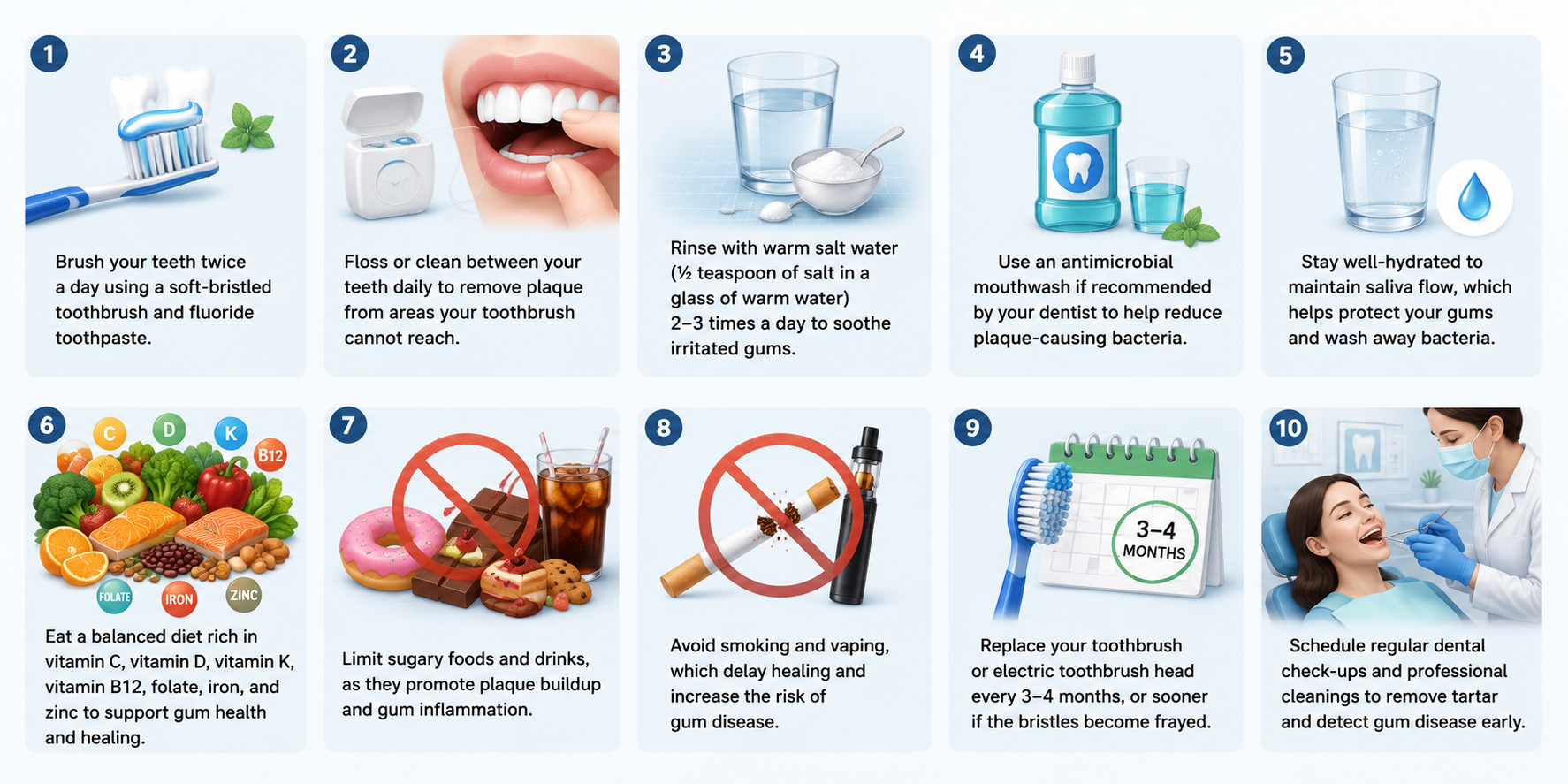
When Should You See a Dentist?
Occasional bleeding after vigorous brushing isn't usually an emergency. However, persistent bleeding should never be ignored. Schedule a dental appointment if:
- Gums bleed for more than one to two weeks.
- Swollen or receding gums.
- Persistent bad breath (halitosis)
- Loosening of teeth
- Bleeding occurs around only one tooth.
- Pain while chewing.
- Pus develops near the gums.
- Professional dental cleaning has not been done in the past six months.
How Dentists Diagnose the Cause of Bleeding Gums?
Finding the cause of bleeding gums begins with a thorough dental examination. The dentist will review your medical history, medications, oral hygiene habits, and any symptoms you've noticed.
A typical evaluation may include:
Medical and dental history: Your dentist might ask you questions like:
- Current medications
- Habit history like Smoking or vaping
- Medical conditions such as diabetes
- Pregnancy or hormonal changes
- Family history of gum disease
Gum examination : dentist will then examine gums for:
- Gum color
- Swelling
- Bleeding points
- Plaque and tartar buildup
- Gum recession
- Periodontal probing: A small instrument known as periodontal probe measures the space between your teeth and gums, known as the periodontal pocket. Healthy gums generally have shallow pockets. Deeper pockets may indicate periodontitis.
- Dental X-rays; it will assess bone levels around the teeth and identify hidden problems that may not be visible during a clinical examination.
Treatment for Bleeding Gums
When the underlying cause of the bleeding gums despite brushing and flossing is determined then treating it becomes more effective. Removal of the root underlying cause is the primary aim of the treatment.
Professional dental cleaning
If plaque and tartar are the root cause then your dentist will recommend professional dental cleaning followed by maintenance of oral hygiene and improved home oral care
Improved oral hygiene
Your dentist may suggest:
- Using a soft-bristled toothbrush
- Brushing twice daily with fluoride toothpaste
- Daily flossing or interdental cleaning
- Cleaning along the gumline using proper technique
Treating underlying conditions
If diabetes, vitamin deficiencies, or medications are contributing to bleeding gums, managing these issues alongside dental treatment is essential for long-term improvement.
- Control blood sugar levels if you have diabetes, as this helps reduce gum inflammation and promotes healing.
- Correct vitamin deficiencies, especially vitamins C and K, through a balanced diet or supplements if recommended by your healthcare provider.
- Review your medications with your healthcare provider if you are taking blood thinners or other drugs that may increase gum bleeding. Never stop taking prescribed medications without medical advice.
Lifestyle changes
Stopping smoking or vaping, improving nutrition, staying hydrated, and maintaining regular dental check-ups can significantly improve gum health.
How to Prevent Bleeding Gums?
- Visit your dentist regularly for routine check-ups and professional cleanings, even if you don't have symptoms.
- Eat a nutrient-rich diet that supports healthy gums, including foods high in vitamins C, D, K, B12, folate, calcium, and iron.
- Avoid tobacco products, including cigarettes and e-cigarettes, to reduce your risk of gum disease.
- Keep conditions like diabetes well controlled, as they can increase your susceptibility to gum infections.
- Stay hydrated to support healthy saliva production and reduce bacterial buildup in the mouth.
- Manage stress, as chronic stress can weaken your immune response and make your gums more prone to inflammation.
- Replace ill-fitting dental restorations or appliances that trap plaque or irritate the gums.
- Discuss medication side effects with your healthcare provider if you notice persistent gum bleeding after starting a new medication.
- Don't ignore early warning signs such as bleeding, swollen gums, or persistent bad breath.
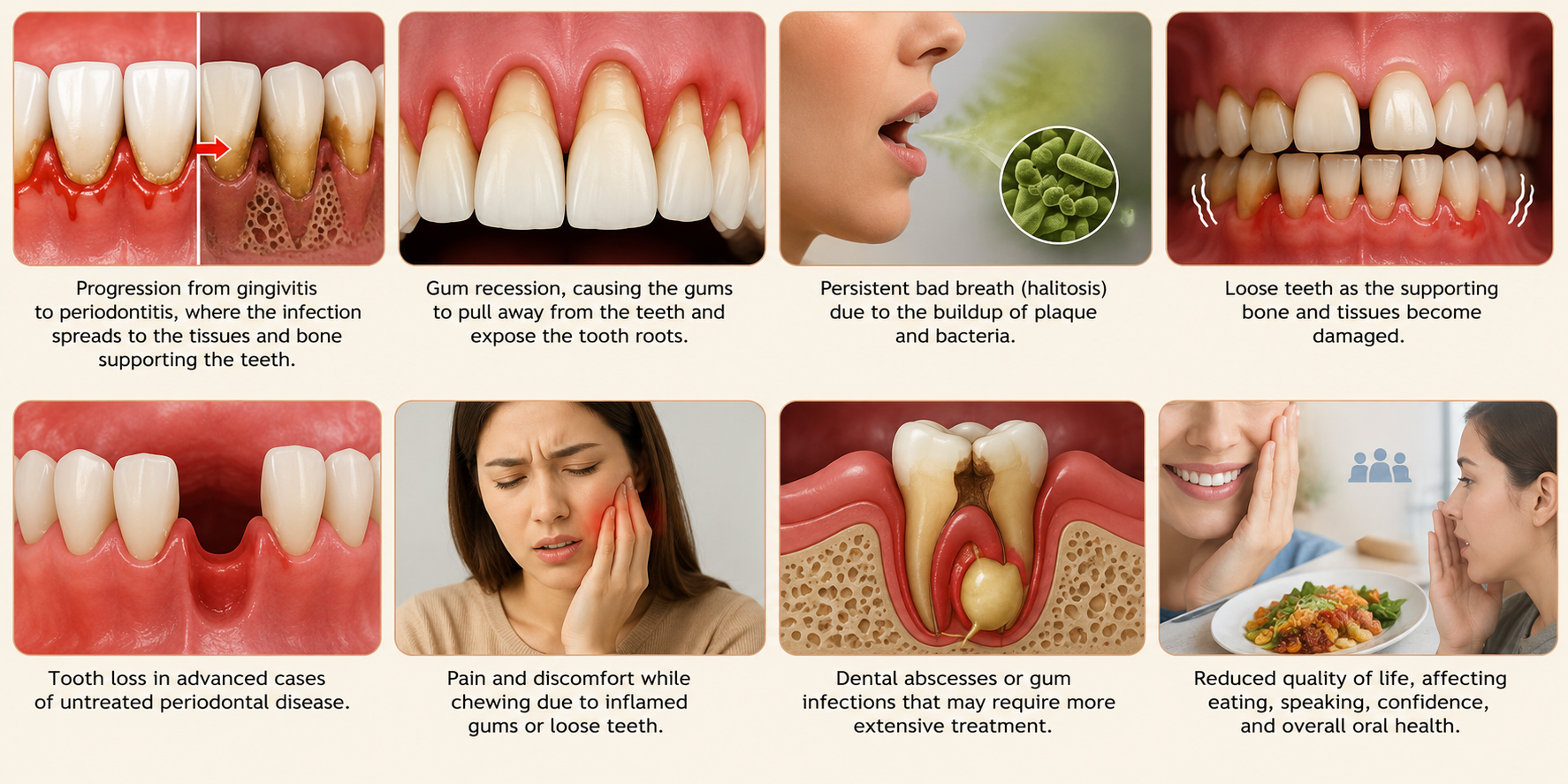
Complications of Untreated Bleeding Gums
Ignoring persistent bleeding gums can allow the underlying problem to worsen over time. Without timely treatment, complications may include:
FAQ’s
Why do my gums bleed even though I brush twice a day?
Brushing alone may not remove plaque from the gumline and between the teeth. Bleeding can also result from gingivitis, tartar buildup, improper brushing technique, hormonal changes, medications, or underlying medical conditions.
Why do my gums bleed but don't hurt?
Early gum disease is often painless. Bleeding may occur before pain, gum recession, or tooth mobility develops.
Should I keep flossing if my gums bleed?
Yes. If the bleeding is due to gingivitis, gentle daily flossing usually reduces inflammation within one to two weeks. However, persistent or heavy bleeding should be evaluated by a dentist. It is also important to ensure that you are adopting correct flossing techniques.
Can stress cause bleeding gums?
Yes. Chronic stress can weaken the immune response, increase inflammation, and make it harder for the body to fight plaque bacteria. Stress may also lead to teeth grinding or neglected oral hygiene, which can worsen gum problems.
Why do my gums bleed around only one tooth?
Bleeding localized to one tooth may indicate plaque accumulation, a trapped food particle, a poorly fitting restoration, gum injury, or a localized periodontal problem. A dental examination can determine the exact cause.
Can bleeding gums heal on their own?
If bleeding is caused by temporary irritation, it may improve with better oral hygiene. However, if the underlying cause is plaque, tartar, or gum disease, professional treatment is often necessary. Persistent bleeding should not be ignored.
Key Takeaway's
- Healthy gums should not bleed during routine brushing or flossing.
- The most common cause of bleeding gums is gingivitis, which is reversible with early treatment.
- Other causes include tartar buildup, improper brushing or flossing technique, hormonal changes, vitamin deficiencies, diabetes, certain medications and certain medical conditions.
- If bleeding persists for more than one to two weeks, or is accompanied by swelling, bad breath, gum recession, or loose teeth, consult a dentist promptly.
- Regular dental check-ups, professional cleanings, proper oral hygiene, and a healthy lifestyle are the best ways to keep your gums healthy and prevent future problems.
Reference's
- American Dental Association. Gum disease (gingivitis and periodontitis). Accessed July 7, 2026.
- American Academy of Periodontology. Gum Disease Information. Accessed July 7, 2026.
- National Institute of Dental and Craniofacial Research. Periodontal (Gum) Disease. Accessed July 7, 2026.
- Centers for Disease Control and Prevention. Adult Oral Health. Accessed July 7, 2026.
- Mayo Clinic. Bleeding gums: Causes and treatment. Accessed July 7, 2026.
- Cleveland Clinic. Bleeding Gums: Symptoms, Causes & Treatment. Accessed July 7, 2026.
- National Health Service. Bleeding gums. Accessed July 7, 2026.
- World Health Organization. Oral Health. Accessed July 7, 2026.
- European Federation of Periodontology. S3 Clinical Practice Guideline for the Treatment of Periodontitis. J Clin Periodontol. 2020;47(S22):4–60.
- Tonetti MS, Jepsen S, et al. Clinical practice guideline for the treatment of stage I–III periodontitis. Journal of Clinical Periodontology. 2020;47(S22):4–60.
- American Academy of Periodontology. Papapanou PN, et al. Periodontitis: Consensus report of the 2017 World Workshop on the Classification of Periodontal and Peri-Implant Diseases and Conditions. J Periodontol. 2018;89(Suppl 1):S173–S182.
- American Dental Association. Brushing Your Teeth and Flossing. Accessed July 7, 2026.


Member discussion