


The problem of sore throat is very common as seasons change, during allergies, common cold and throat infections. A sore throat causes a constant irritation, burning and scratchy feeling in the throat along with difficulty in speaking, swallowing thereby hindering everyday work. In addition to taking medicine for cure you can try natural remedies like home brewed teas for sore throat.
Although tea cannot cure the cause of sore throat, it can provide symptomatic relief. Few teas don't just feel good and soothe your throat but are also known to contain natural compounds that reduce inflammation, fight bacteria, coat irritated throat tissue, and support your immune system.
This makes them one of the best home remedies for sore throat.
Why Does Tea Help a Sore Throat?
There are several reasons which make a cup of tea so beneficial in relieving a sore throat.
Warmth and Moisture
Warm liquids increase blood flow to irritated throat tissues and may reduce the discomfort. They reduce the pain and swelling and loosen the mucous. It keeps the airway moist and thus less irritated.
Hydration
Staying hydrated keeps the airway lining moist and may reduce dryness and irritation. A sore throat is easier to tolerate when the tissues stay moist and lubricated. Tea makes drinking fluids easy and pleasant.
Steam
Steam from tea can loosen mucus and relieve nasal congestion and provide hydration to the airway.
Natural Plant Compounds
Many teas contain substances like antioxidants, anti-inflammatory agents, and antimicrobial compounds. They ease discomfort and support the body's recovery from sore throat.. Honey if added to the tea can enhance these effects by creating a protective layer over the throat.
What are the best teas to drink for a sore throat?
Ginger Tea
Ginger tea is considered the gold standard for sore throat relief. Ginger contains a powerful compound called gingerol, which has anti-inflammatory and antioxidant properties.
It also can help the immune system fight off the infection causing sore throat. If sore throat comes with nausea or an upset stomach, ginger also helps as a digestive aid. Thus dobbling the benefits
How to brew it?
Slice 4–5 thin rounds of f9resh ginger root and add them in boiling water for 10–15 minutes. Add a teaspoon of raw honey and a squeeze of lemon for extra soothing power. Fresh ginger makes the strongest, most therapeutic tea.
Best for
Sore throats with significant inflammation, pain when swallowing, or digestive issues nausea.
Chamomile Tea
Chamomile is one of the oldest herbal remedies for sore throats. It contains anti-inflammatory compounds called Chamazulene and Bisabolol, which help reduce throat swelling. It also has mild antispasmodic properties that can ease the tightness and discomfort in your throat.
It also promotes relaxation and restful sleep. Since chamomile is naturally caffeine-free, several cups can be consumed throughout the day, without disturbing night sleep.
How to brew it?
Put one chamomile tea bag (or a tablespoon of dried flowers) in boiling water for 5–7 minutes. Add honey and a squeeze of lemon.
Best for
Evening sore throat relief, sore throats that are disrupting your sleep, or when you need to relax and recover.
Honey and Lemon Tea
Honey and lemon together have a synergistic effect that when combined they have a more beneficial effect.
Honey forms a thick, protective coating over irritated throat tissue, reducing friction and pain every time you swallow. It also has natural antibacterial properties. Lemon, breaks the mucus buildup, delivers vitamin C which is essential for immunity, and has mild antibacterial effects of its own.
How to brew it?
Brew any mild tea (green, chamomile, or plain hot water all work). Stir in 1–2 teaspoons of raw honey while the water is still warm (not boiling as very high heat can degrade some of honey's beneficial compounds). Squeeze in half a fresh lemon. Add a slice of fresh ginger if you have it.
Best for:
General sore throat, mucus buildup, early-stage sore throats
Peppermint Tea
Peppermint tea offers an immediate cooling, numbing sensation from its active ingredient, menthol. Menthol works as a mild natural anesthetic (Numbing agent) that temporarily numbs irritated throat tissue, giving fast relief from pain. It also acts as a decongestant that breaks the mucous clearing the airway.
Any sore throat that is accompanied by sinus pressure or a blocked nose benefits from peppermint tea. It helps thin mucus and opens airways, making it easier to breathe.
How to brew it?
Put a peppermint tea bag in boiling water for 5–7 minutes. Before sipping, lean over the cup and breathe in the menthol steam for 30 seconds. This will clear the congestion.
Best for:
Sore throat with sinus congestion, sore throats that need fast, temporary pain relief.
Green Tea
Green tea is packed with plant compounds called Catechins, which have both antiviral and anti-inflammatory properties. Research suggests that green tea catechins can inhibit viral replication which makes this tea particularly useful when your sore throat is caused by a cold or flu.
How to brew it?
Add green tea to water at a temperature around 80°C (175°F) for 2-3 minutes . Do not use boiling water as it makes green tea bitter.. Add honey to taste. You can also let it cool slightly and gargle it before swallowing for extra throat benefit.
Best for:
Sore throats during cold or flu season
Licorice Root Tea
Licorice root has been a part of traditional medicine for centuries. It contains a compound called Glycyrrhizin with proven anti-inflammatory and antiviral properties. In addition it has a unique demulcent quality which means that it forms a thick, coating layer over irritated throat tissue, physically protecting the irritated throat surfaces that hurt when you swallow.
For this reason, licorice root tea is particularly helpful for the kind of dry, raw sore throat where every swallow feels like it's tearing something. It's also one of the few teas that may directly address vocal cord inflammation, making it a favourite among singers and teachers.
How to brew it?
Put a licorice root tea bag for 5–10 minutes in boiling water. It has a naturally sweet, slightly anise-like flavour, honey is not needed.
Best for:
Dry, raw sore throats with vocal strain
Marshmallow Root Tea
Marshmallow root is rich in a substance called mucilage. It turns into a gel-like coating when it is mixed with water. Upon drinking, this coating physically soothes and protects the raw, irritated surfaces of the throat.
How to brew it?
Put marshmallow root tea for 5–10 minutes in hot (not boiling) water. The mucilage is more active in cooler water, so some people prefer to cold-steep it overnight for maximum benefit.
Best for:
Dry, scratchy sore throats, difficulty swallowing, or sore throats caused by dry air or post-nasal drip.
Turmeric Tea
Turmeric contains Curcumin, a natural anti-inflammatory compound. Turmeric tea can help target that inflammation in a mildly swollen and painful sore throat.
The flavour is earthy and slightly peppery, but it can be paired with honey and a pinch of black pepper that makes for a genuinely effective and warming drink.
How to brew it?
Stir half a teaspoon of turmeric powder into hot water or warm milk. Add a pinch of black pepper, a teaspoon of honey. This is sometimes called "golden milk tea".
Best for:
Sore throats with persistent swelling, or when other teas haven't provided enough relief.
Slippery Elm Tea
Herbal beverage made from the inner bark of the slippery elm tree. It contains mucilage, a gel-like substance that becomes slippery when mixed with water. This coating may temporarily soothe an irritated or scratchy throat and make swallowing more comfortable.
How to brew it?
Stir 1–2 teaspoons slippery elm bark powder hot water .Have with or without honey.Sip slowly while warm.
Best for:
Dry, scratchy sore throats, difficulty swallowing, or sore throats caused by dry air or post-nasal drip.
10. Combination teas
There are several commercial products that mix many of the herbs specific for throat soothing and coating.
How to select the best tea for sore throat?
Selecting the best tea for sore throat depends upon a number of factors like your symptoms, additional problems with sore throats, and any ongoing medical conditions.
| Tea | Best For | How It Helps | Taste | Avoid If |
|---|---|---|---|---|
| Chamomile Tea | Sore throat with poor sleep | Soothes inflammation and promotes relaxation | Floral, mild | Ragweed allergy |
| Ginger Tea | Swollen throat | May reduce inflammation and swelling | Spicy, warm | Taking blood thinners |
| Peppermint Tea | Congestion and postnasal drip | Menthol cools and helps loosen mucus | Minty, refreshing | GERD or heartburn |
| Green Tea | Fatigue and mild viral sore throat | Antioxidants may support immune function | Earthy, grassy | Sensitive to caffeine |
| Licorice Root Tea | Severe irritation or hoarseness | Coats and soothes throat tissues | Sweet, woody | Pregnancy or high blood pressure |
| Turmeric Tea | Sore throat with body aches | Curcumin may help reduce inflammation | Earthy, warm | Gallbladder disease |
| Marshmallow Root Tea | Dry cough and scratchy throat | Mucilage coats and moisturizes the throat | Mild, slightly sweet | Taking certain medications |
| Honey Lemon Tea | Mild sore throat and cough | Honey soothes while lemon may help thin mucus | Sweet, tangy | Infants under 1 year (honey) |
| Slippery Elm Tea | Dry throat and painful swallowing | Forms a protective coating over throat tissues | Mild, woody | Pregnancy or medication use without medical advice |
Can Tea Cure a Sore Throat?
The answer to this question is NO. Tea itself cannot cure sore throat however it can act as an adjunct to the medical treatment by:
- Relieving pain
- Maintaining hydration
- Decreasing irritation
- Improving comfort
- Causing decongestion
Tea does not eliminate viruses or bacteria causing infections but it can provide support during your recovery.
How To Get Maximum Benefits from Tea for Sore Throat?
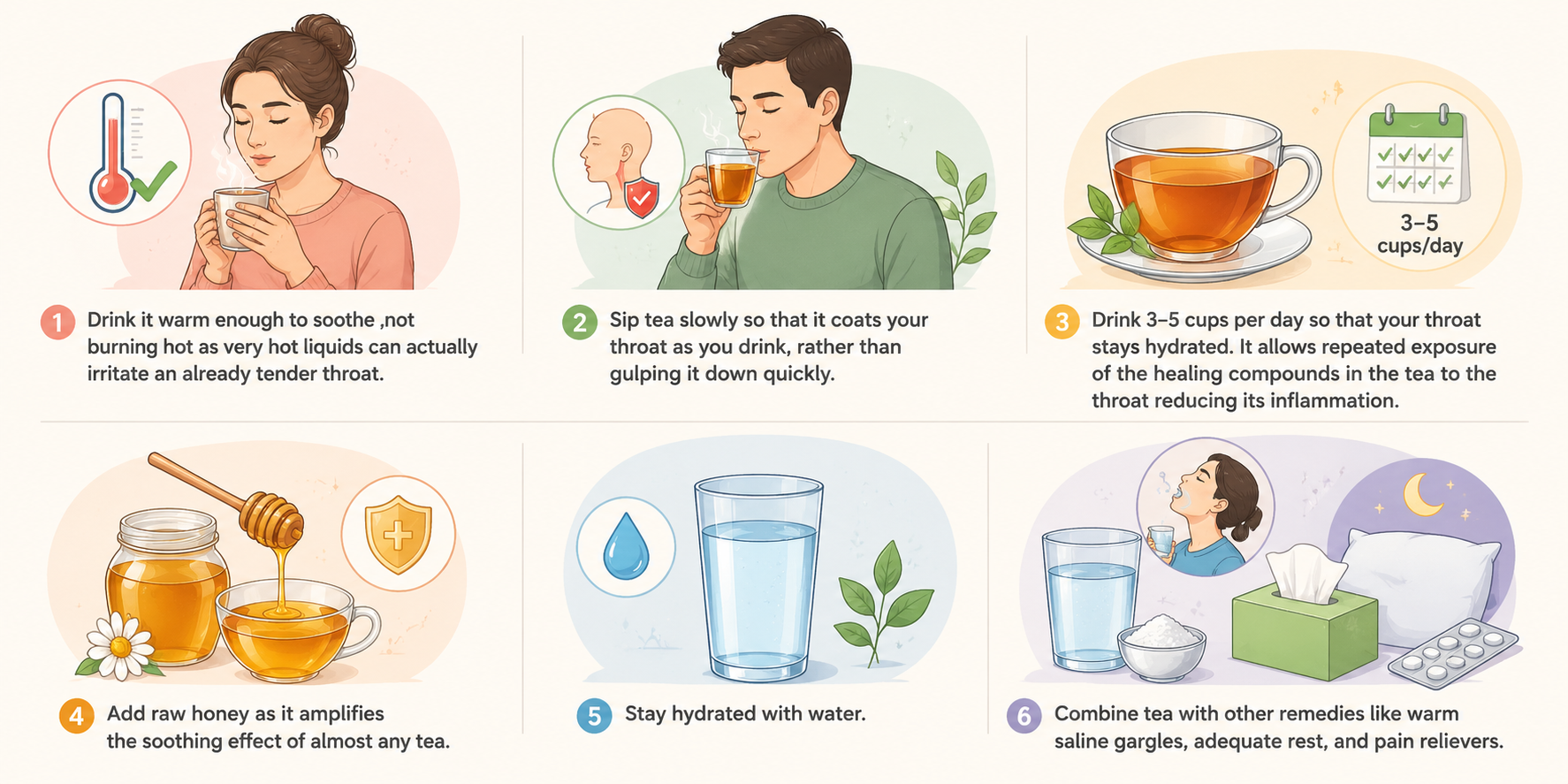
How Many Cups of Tea Can You Drink for Sore Throat Relief?
For most adults Three to five cups of tea daily to relieve sore throat are generally reasonable. This allows frequent exposure of the active ingredients of the tea to the throat area thus relieving pain. Caffeinated teas should be limited as they can cause
- Palpitations
- Anxiety
- Difficulty sleeping
Herbal teas are often better choices before bedtime.
What Are The Risks of Drinking Tea for a Sore Throat?
Some herbal teas may interact with medications or medical conditions. Herbs are not regulated by the Food and Drug Administration (FDA),they may be fake, mixed and contaminated. It is better to choose herbs from reliable sources.
You can discuss with your doctor if you have any ongoing medical condition. They can help you understand the potential risks of taking certain herbs, including possible drug interactions and other side effects. Consult a healthcare professional before regular use if you:
- Are pregnant
- Are breastfeeding
- Have high blood pressure
- Take blood thinners
- Have kidney disease
General Precautions While Drinking Tea for Sore Throat
- Drink tea warm, not scalding hot, as very hot beverages can further irritate throat tissues.
- Herbal teas should not replace medical treatment for conditions such as Streptococcal sore throat, tonsillitis, or severe infections.
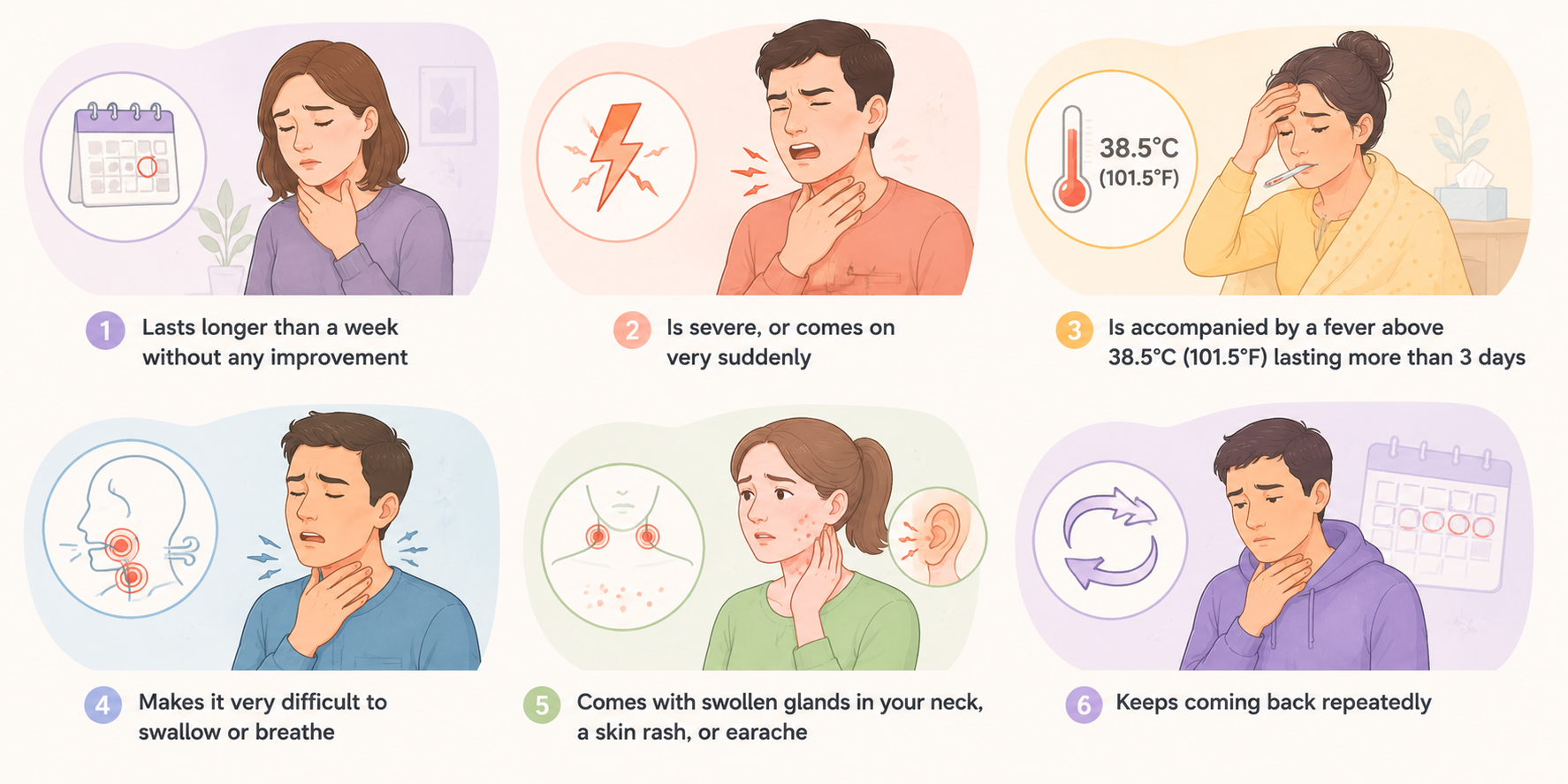
- If your sore throat lasts more than a week, worsens, or is accompanied by high fever, difficulty breathing, or trouble swallowing, consult a healthcare professional.
When Should You See a Doctor?
Tea is wonderful for mild to moderate sore throat discomfort, but it cannot replace medical treatment. See a doctor if your sore throat:
Tea can support your comfort and immune response, but it cannot replace antibiotics for bacterial infections.
Key Takeaways
- Tea cannot cure sore throat but it can provide temporary relief from sore throat symptoms by soothing irritation, reducing inflammation, and keeping the throat hydrated.
- Chamomile, ginger, peppermint, licorice root, marshmallow root, and slippery elm teas are among the best options, each offering unique benefits.
- Adding honey may enhance the soothing effects of tea and help calm a cough.
- Some herbal teas may interact with medications or worsen certain health conditions, so choose wisely.
- Tea can ease discomfort, but it is not a cure for infections. Consult a healthcare professional if symptoms are severe, persist for more than a week, or are accompanied by difficulty breathing or swallowing.
Packed with protein, fiber, and minerals—discover what pumpkin seeds can do for you.
FAQ’s
What is the single best tea for a sore throat?
Ginger tea with honey and lemon is considered as the best tea for sore throat as it suits and benefits most people. Ginger reduces inflammation and fights bacteria, honey coats and protects the throat lining, and lemon cuts through mucus and adds vitamin C. In case where throat is very dry and scratchy, marshmallow root or licorice root tea may work better due to their thick, coating properties
How quickly does tea help a sore throat?
Drink 3–5 cups spread throughout the day for maximum benefits. Most people notice noticeable comfort improvement within 24–48 hours of consistent use.
Is hot tea or cold tea better for a sore throat?
Warm tea is generally better. Warm liquids increase blood flow to the throat, help loosen mucus, and allow anti-inflammatory compounds in herbal teas to make better contact with irritated tissue. Cold tea (or ice water) can temporarily numb pain but may also cause throat muscles to tighten, which can increase discomfort over time.
Can I drink tea for a sore throat if I have strep throat?
Yes, tea can help ease the discomfort of strep throat, but it cannot treat the infection itself.
Should I add honey to my tea for a sore throat?
Yes, whenever possible. Raw honey is one of the most effective natural throat soothers available. It forms a thick protective coating over irritated tissue, has proven antibacterial properties, and research suggests it may suppress cough in adults as effectively as some over-the-counter remedies
How many cups of sore throat tea should I drink per day?
Three to five cups per day is a good target for most adults. This keeps your throat consistently hydrated and maintains a steady supply of the anti-inflammatory and soothing compounds from the tea.
Can children drink herbal tea for a sore throat?
Many herbal teas are safe for children over age 2 in small, diluted amounts but always check with your paediatrician first, especially for younger children
Refrence's
- Centers for Disease Control and Prevention. Sore Throat Basics.
- Centers for Disease Control and Prevention. Sore Throat Basics.
- National Center for Complementary and Integrative Health. Chamomile. National Institutes of Health.
- National Center for Complementary and Integrative Health. Ginger.
- National Center for Complementary and Integrative Health. Licorice Root.
- National Center for Complementary and Integrative Health. Turmeric.


Member discussion