Dry Scalp vs Dandruff: Know the Difference Before You Treat It

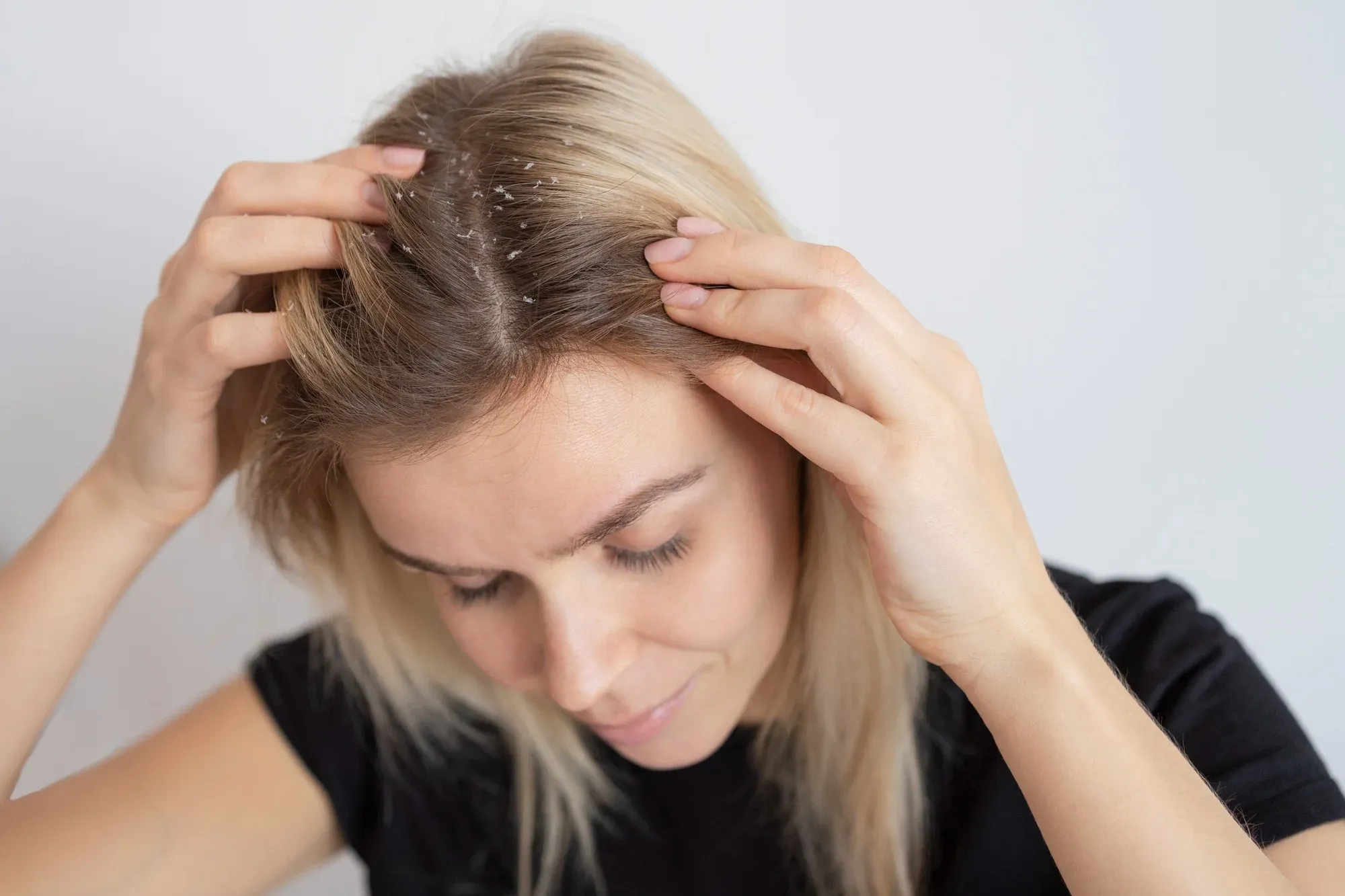
Millions of people suffer from the problem of flaking which is a cause of social embarrassment. To treat flaking effectively, it becomes important to understand Dry scalp vs Dandruff, both of which are the two most common causes of scalp flakes. A dry scalp usually occurs due to lack of hydration and moisture on the scalp on the other hand Dandruff is caused by excessive oil production in the scalp causing overgrowth of Malassezia yeast in the scalp.
In order to successfully treat the flaking and prevent its recurrence it becomes important to identify its cause and treat it appropriately. Choosing the right products, following preventive measures can help relieve symptoms, reduce recurrence, and improve overall scalp health.
What Is a Dry Scalp?
A dry scalp is a condition which occurs when the skin on the scalp does not have enough moisture. It is similar to dry skin on hands or legs. The scalp can become dehydrated thus causing it to become irritated, and flaky.
The scalp feels stretched and itchy and causes shedding of small, white, powdery flakes.
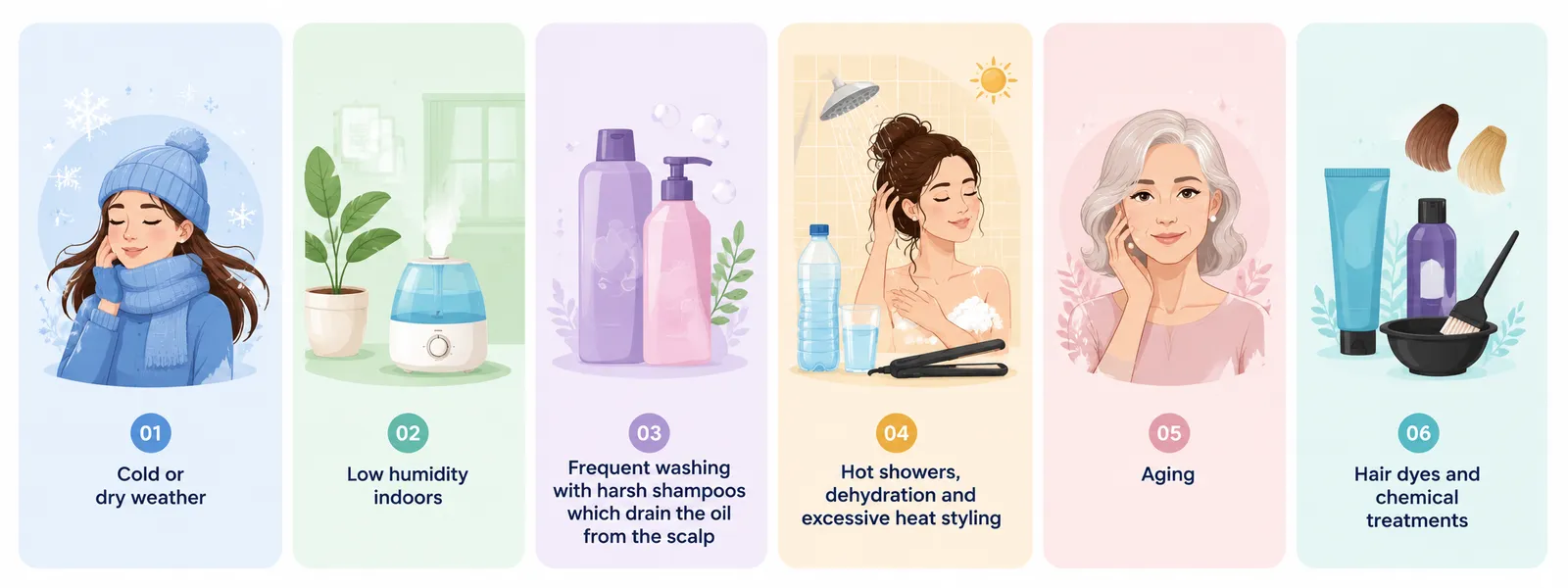
Common Causes of Dry Scalp
What is Dandruff?
Dandruff is a condition caused by excessive oil (Sebum) production in the scalp which causes an increase in the number of naturally occurring yeast called Malassezia. This yeast is a natural, harmless resident of the normal scalp. But when the number of this fungus increases it causes skin irritation and inflammation. This triggers the rapid shedding of the scalp skin causing excessive flaking.
Common causes of dandruff
- Malassezia yeast overgrowth: the most common trigger which causes inflammation of the scalp skin causing rapid skin shedding and flaking.
- Overactive sebaceous glands: producing too much scalp oil (sebum) providing an ideal medium for Malassezia overgrowth.
- Seborrheic dermatitis: a chronic skin condition characterised by red, inflamed skin covered with greasy, yellowish-white scales
- Stress: releases cortisol, due to which the body's natural defenses reduce and it can trigger flare ups.
- Hormonal changes: puberty, pregnancy, and menopause can all affect scalp oil
- Infrequent washing: oil and dead skin build up on the scalp promoting yeast growth
- Certain hair products: heavy oils and styling products can clog follicles
Dry Scalp vs Dandruff: How do they feel different?
What dry scalp feels like:
- Scalp feels tight or stretched, especially after washing
- Small, white, powdery flakes
- Itching that increases in cold or dry weather
- Hair might feel dry and brittle
- Dry patches may appear on other parts like arms, legs, face
What dandruff looks and feels like:
- Larger flakes, white or yellowish in color
- Flakes may stick to your hair or scalp as they are oily
- Scalp may look red or irritated
- Itching that can be intense
- Hair may look oily even after washing
- In some people, dandruff can spread to eyebrows, sides of the nose, ears, or beard
Dry Scalp vs Dandruff: Symptoms
Although both conditions can cause itching and flakes, there are important differences when it comes to the symptoms presented during both the conditions.
Dry Scalp Symptoms
Dry scalp symptoms include:
- Small, white flakes
- Tight or dry feeling on the scalp
- Mild itching
- Dry skin on other parts of the body
- Increased symptoms during winter
Dandruff Symptoms
Common dandruff symptoms include:
- Larger flakes
- Yellowish or greasy scales
- Persistent itching
- Redness of the scalp
- Oily hair
- Symptoms that worsen during stress
Dry Scalp vs Dandruff: Flakes
The flakes in dry scalp and dandruff are different from each other. This is an important feature in identifying which condition is affecting your scalp.
| Feature | Dry Scalp | Dandruff |
|---|---|---|
| Size of Flakes | Small, dry flakes that fall off easily like fine dust. | Larger, oily flakes that tend to stick to the scalp and hair. |
| Texture | Dry and powdery. | Greasy or oily. |
| Flake Color | White. | White or yellowish. |
| Scalp Condition | Dry, tight, or rough. | Oily and may appear red or irritated. |
| Itching | Usually mild. | Moderate to severe and often persistent. |
| Skin on Other Body Parts | Often dry on the face, arms, or legs as well. | Usually normal, though oily areas like the eyebrows or nose may also be affected. |
| Main Cause | Lack of moisture, cold weather, harsh shampoos, or dehydration. | Overgrowth of Malassezia yeast, excess oil, or seborrheic dermatitis. |
| Best Treatment | Use moisturizing shampoos, gentle hair care products, and scalp oils. | Use anti-dandruff shampoos containing ketoconazole, zinc pyrithione, selenium sulfide, or salicylic acid. |
How to tell at home:
- Dry scalp usually feels tight, dry, and irritated.
- Dry scalp flakes are small, white, and dry.
- Dandruff usually looks oilier and more noticeable.
- Dandruff flakes are often larger and may look yellowish.
- Dandruff tends to come back more often.
- Dry scalp is more linked to lack of moisture.
- Dandruff is more linked to oil buildup and scalp irritation.
Dry scalp vs Dandruff: How are they diagnosed?
Dermatologists usually diagnose dry scalp based on medical history, physical examination of the scalp, symptoms and looking for dryness in other parts of the body, reviewing hair care products. Any special test is usually not required.
Most cases of dandruff can be diagnosed during a scalp examination. Doctors look for characteristic greasy or yellowish flakes, scalp redness, and signs of excess oil production A dermatologist may occasionally perform additional tests if psoriasis, fungal infection, or eczema is suspected.
Can You Have Both Dandruff and Dry Scalp at the Same Time?
Yes it is common to have both at the same time. Some people have dandruff but then use a harsh medicated shampoo to treat it. This makes the scalp also become dry. This makes the scalp oily in a few patches and dry in others in a cyclical manner.
Signs you may have both include:
- You have large, greasy flakes and your scalp feels tight and uncomfortable
- Your scalp is both itchy and dry-looking at the same time
- Dandruff shampoo gives some relief but leaves your scalp feeling stripped off moisture
It is recommended to use a gentle antifungal shampoo 2–3 times per week in these patients. In order to prevent moisture from stripping , a lightweight conditioner should be applied on the lengths and ends after shampoo. Avoid applying conditioner on the scalp.
Could Your Flaky Scalp Be Something Else?
Sometimes flaky scalp might be caused by a more serious cause.
Seborrheic Dermatitis
Seborrheic dermatitis is a severe form of dandruff caused by inflammation of the scalp. It may go beyond the scalp to involve sides of the ear and brows.
It commonly causes:
- Thick, yellowish scales
- Red, inflamed patches
- Greasy skin
- Persistent itching
Scalp Psoriasis
Scalp psoriasis is an autoimmune condition that can cause flaking on the scalp as well as the skin. It has more serious symptoms which require medical attention.
- Thick, silvery-white scales
- Well-defined raised patches (plaques)
- Dry, cracked skin
- Bleeding after scratching
Eczema
Eczema can affect the scalp like it affects the skin.
Common symptoms include:
- Dryness
- Redness
- Itching
- Increased sensitivity or irritation
Contact Dermatitis
Contact dermatitis occurs when the scalp reacts to components of hair care products causing flaking. Common triggers include fragrances, colors and dyes.


Consult a dermatologist
Dry Scalp vs Dandruff: Treatment
The treatment for a dry scalp and dandruff differs because the underlying causes are different. While a dry scalp needs moisture and hydration, dandruff requires controlling excess oil, yeast overgrowth, and inflammation.
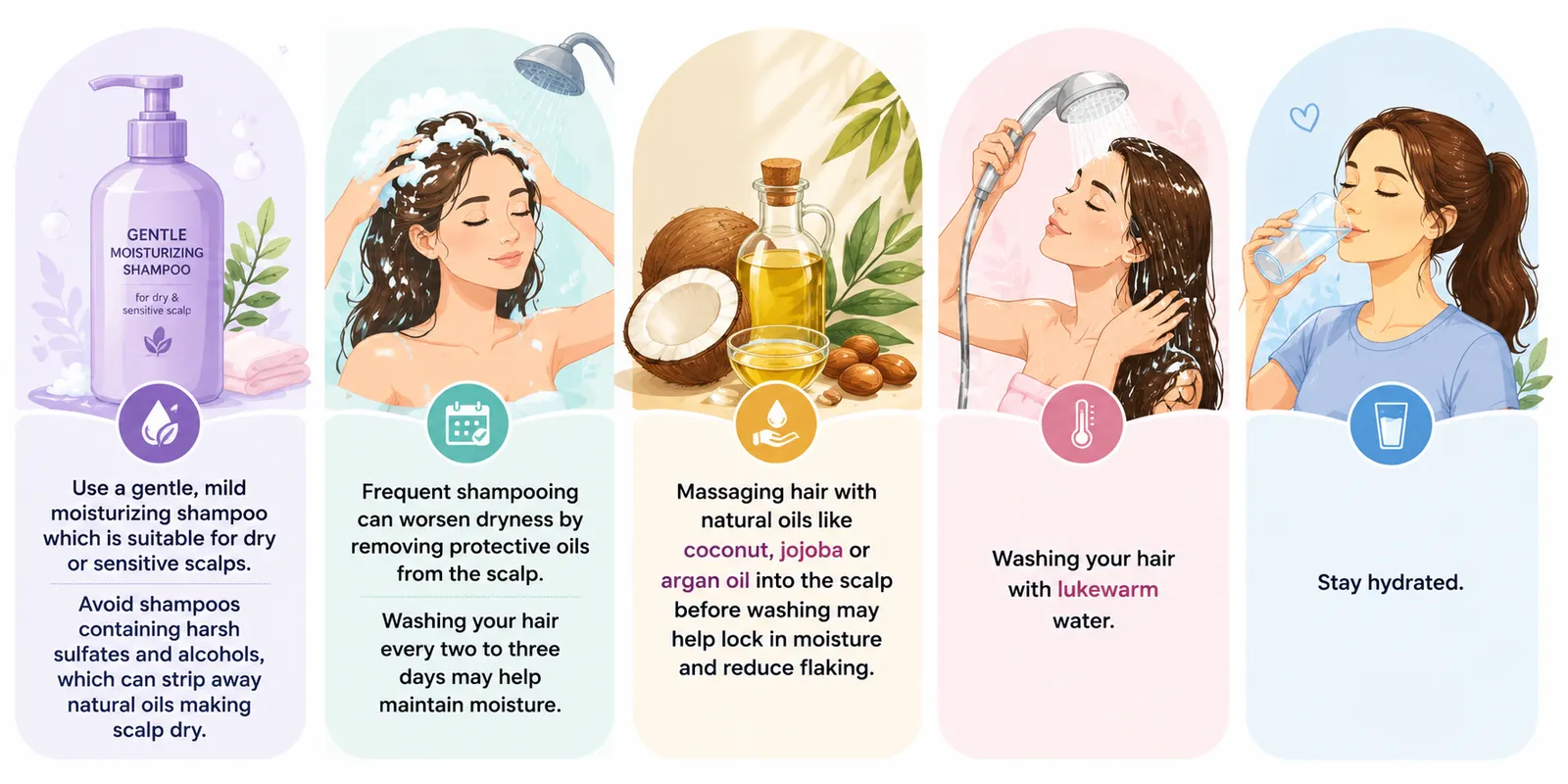
Treatment for Dry Scalp
Most cases of dry scalp improve with simple changes in hair care habits. The aim of the treatment is to maintain the moisture and hydration of the scalp.
Treatment for Dandruff
Dandruff is usually treated with medicated shampoos that reduce yeast growth, inflammation, and excessive skin shedding.
1 Using antidandruff shampoo as suggested by your dermatologist.
Few of the commonly used shampoos are -
- Ketoconazole Shampoo-reduce the growth of Malassezia yeast
- Zinc Pyrithione Shampoo -help relieve itching and flaking
- Selenium Sulfide Shampoo-decreases yeast activity in scalp
- Salicylic Acid Shampoo-helps loosen and remove thick scales
- Coal Tar Shampoo-beneficial for severe dandruff
2 Using a proper technique to wash hair with antidandruff shampoos.
- Wet your hair thoroughly.
- Apply the shampoo directly to the scalp.
- Massage gently with your fingertips creating lather.
- Leave the shampoo on for 5–10 minutes. Rinse thoroughly.
- Use it 2–3 times per week or as recommended by your dermatologist.
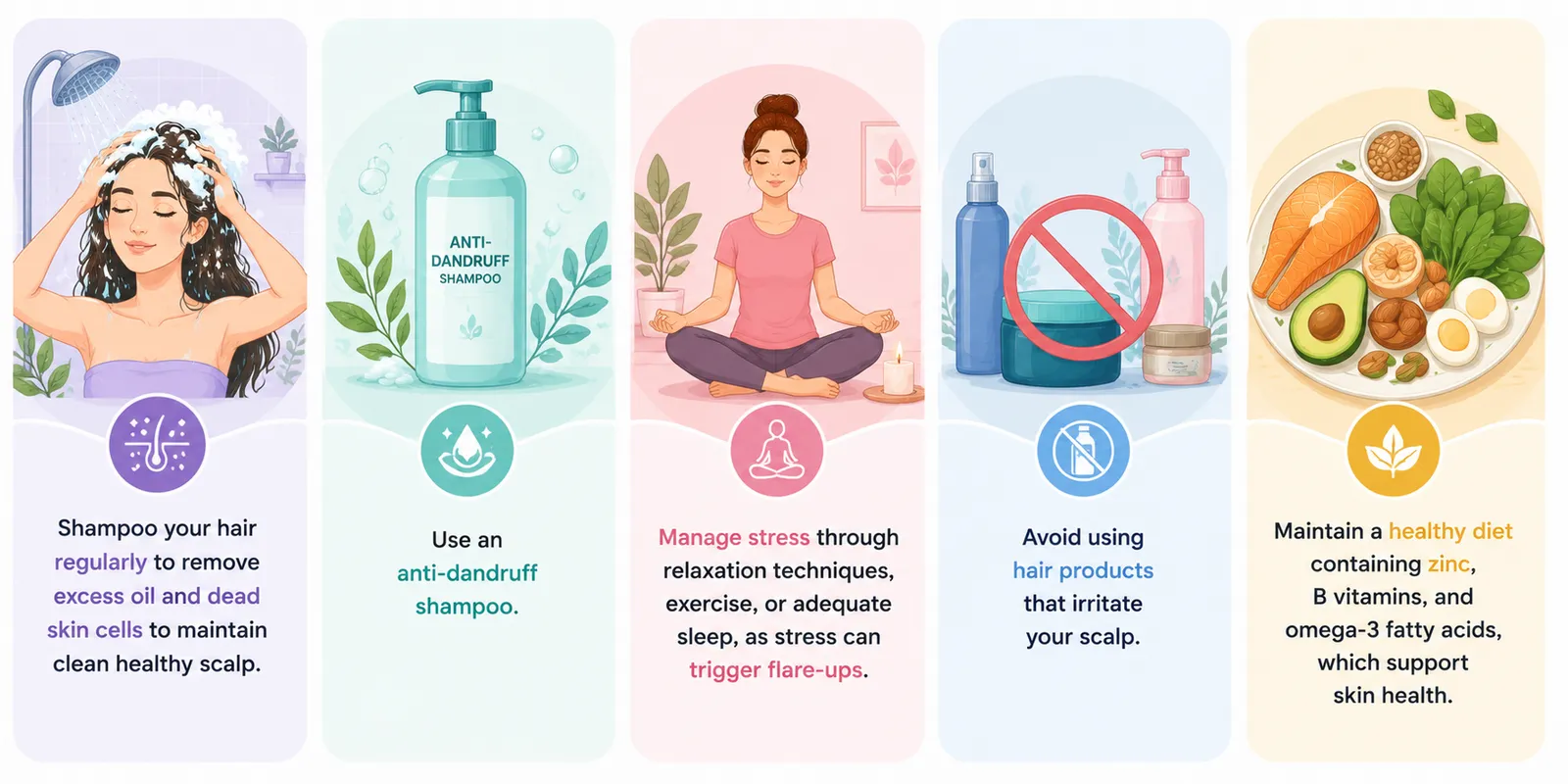
3 management: as stress increases cortisol level it causes inflammation of the scalp leading to flare ups. Incorporation of activities which manage stress can be beneficial.
4 Proper scalp hygiene maintenance.
5 Avoid using excessive amounts of haircare products as they can clog scalp pores.
When Should You See a Dermatologist?
Consult a dermatologist if:
- Flaking persists despite treatment.
- The scalp becomes painful or swollen.
- You develop thick scales, sores, or bleeding. (might be indicative of Psoriasis)
- You experience significant hair loss along with flaking.
- Symptoms spread to the face, ears, or other parts of the body.
Dry Scalp vs Dandruff: Prevention
Although dry scalp and dandruff cannot always be prevented, adopting healthy hair care habits can reduce flare-ups and keep your scalp healthy.
Preventing Dry Scalp:
- Use a gentle, moisturizing shampoo designed for dry or sensitive scalps.
- Avoid washing your hair too frequently, as it can strip away natural oils making scalp dry.
- Wash your hair with lukewarm rather than hot water.
- Limit the use of heat-styling tools such as hair dryers, straighteners, and curling irons.
- Apply scalp-friendly oils, such as coconut or jojoba oil,
- Stay well hydrated and eat a balanced diet rich in vitamins, minerals, and healthy fats.
Preventing Dandruff:
Dry Scalp vs Dandruff: What's the difference?
| Feature | Dry Scalp | Dandruff |
|---|---|---|
| Cause | Lack of moisture and hydration in the scalp. | Excess oil production, overgrowth of Malassezia yeast, and scalp inflammation. |
| Type of Flakes | Small, dry, white, and powdery flakes. | Larger, greasy, white or yellowish flakes. |
| Scalp Texture | Dry, tight, or rough. | Oily or greasy. |
| Itching | Usually mild to moderate. | Moderate to severe and often persistent. |
| Redness | Uncommon. | May occur, especially in severe cases. |
| Skin on Other Body Parts | Often dry. | Usually normal. |
| Hair Appearance | Hair may appear dull and dry. | Hair may appear oily or greasy. |
| Common Triggers | Cold weather, low humidity, harsh shampoos, hot showers, and dehydration. | Stress, infrequent shampooing, hormonal changes, and oily skin. |
| Who Is More Likely to Develop It? | People with dry or sensitive skin. | People with oily skin or seborrheic dermatitis. |
| Treatment | Use moisturizing shampoos, scalp oils, and avoid over-washing. | Use medicated anti-dandruff shampoos containing ketoconazole, zinc pyrithione, selenium sulfide, or salicylic acid. |
| Can It Recur? | Yes, especially during winter or when exposed to drying conditions. | Yes, dandruff often follows a chronic, recurring pattern. |
| When to See a Doctor | If dryness or flaking continues despite moisturizing treatments. | If dandruff is severe, accompanied by hair loss, pain, redness, or thick scaly patches. |
References
Frequently asked questions
How can I tell if I have dandruff or a dry scalp?
A dry scalp usually causes small, white, powdery flakes and a tight, dry feeling on the scalp. Dandruff typically produces larger, greasy, white or yellowish flakes accompanied by persistent itching and an oily scalp.
Can a dry scalp turn into dandruff?
No. Dry scalp and dandruff are separate conditions with different underlying causes. However, a person can have both conditions at the same time.
Is dandruff caused by poor hygiene?
No. Dandruff is not caused by poor hygiene alone. It is associated with excess oil production, overgrowth of Malassezia yeast, and inflammation. Infrequent shampooing may worsen symptoms by allowing oil and dead skin cells to accumulate.
Can dandruff cause hair loss?
Dandruff itself does not usually cause hair loss. However, severe itching and repeated scratching may damage hair follicles and contribute to temporary hair shedding.
What is the best shampoo for a dry scalp?
A mild, fragrance-free, moisturizing shampoo is usually recommended for a dry scalp. Products containing harsh sulfates and alcohol should be avoided as they can further dry out the scalp.
How often should I wash my hair if I have dandruff?
Most people with dandruff benefit from washing their hair regularly and using an anti-dandruff shampoo two to three times per week, or as directed by a dermatologist.
When should I see a dermatologist for scalp flakes?
Consult a dermatologist if flaking persists despite treatment, becomes painful, is associated with redness, bleeding, thick scales, or noticeable hair loss.