


Now you might be wondering how something as small and simple as a tooth infection can possibly kill you? Well here is the answer Once a tooth infection spreads beyond the tooth into surrounding tissue that is the bone, gums, neck spaces or if it enters the bloodstream, it can become fatal if not managed immediately. This is not a mere exaggeration but rather a scientifically documented medical reality.
The good news is that most tooth infections never actually reach that stage. If you timely visit your dentist and get your toothache treated in early stages, there's nothing to worry about. It is nothing but simply manageable and straightforward dental treatment. The danger lies entirely in delay and negligence and in not knowing when "wait and watch" might turn into a life threatening situation.
What Is a Tooth Infection and Can it Kill You?
A tooth infection (medically termed as dental abscess) occurs when bacteria from a cavity invade the inner soft part of the tooth called the pulp. The pulp contains nerves, and blood supply which are responsible for keeping the tooth healthy and alive. After a while, if the infection is not treated, it can damage the blood vessels. This can cause the loss of blood flow to your tooth. Blood is necessary to keep your tooth alive and when blood flow stops your tooth starts to die. The body's immune system cannot fight the infection because your tooth is dead.
So, the infection just keeps getting worse. If not treated you might get an abscess. An abscess is, like a pocket of pus that your body makes to try to stop the infection. If treatment is further delayed for the infection at this stage, it might spread to your gums, jaw bones or face and neck region.This can cause some serious problems.
Types of Dental Abscess and Why is this difference important?
Why do some tooth infections become more serious and life threatening than others? The answer lies in understanding the two different types of tooth abscesses.
Periapical abscess
These are seen at the lower end of the tooth, that is the tooth root. This is the most common type and usually results from decay eating the tooth until bacteria reach and infect the pulp. It has a direct path to the jawbone and surrounding facial spaces.
Periodontal abscess
This type originates in the gum tissue surrounding the tooth. It's somewhat more contained initially, but can still spread to underlying bone and tissue if left untreated for longer duration.
Why a Tooth Infection Will Never Resolve on Its Own?
It is important to understand that tooth infection does not cure on its own. It is not similar to common cold or fever which even if left untreated will cure itself. Once the bacteria affect the pulp and compromise its blood supply, no amount of rest, time, or wishful thinking changes this reality. Dental treatment is the only way out to manage this infection.
How Long Until a Tooth Infection Kills You? The Actual Timeline
The answer to this question is not as straightforward and same for each individual. Each person is unique in their constitution. Their bodies vary, bacteria within the body vary, and so does immune systems' response to tooth infection. However, broadly the general pattern often looks like this:
Phase 1 - The Infection Builds Up
It is a slow phase which lasts somewhere between a few weeks to months. During this phase bacteria make their way through the tooth's hard outer layers thereby reaching the pulp.
You may experience a toothache that gradually worsens, sensitivity to hot or cold that doesn't fade quickly, and sometimes a swelling or a small bump on the gum.This is when treatment is simple, effective, and inexpensive. A root canal or tooth extraction at this stage takes an hour and is entirely curative.
Phase 2 - Systemic Spread
This occurs when the pulp is dead and infection now breaks through the tooth's immediate surroundings and bacteria begin moving into the surrounding tissue like jaw bones and gums. This is the phase that is most dangerous and it might become life threatening quickly.
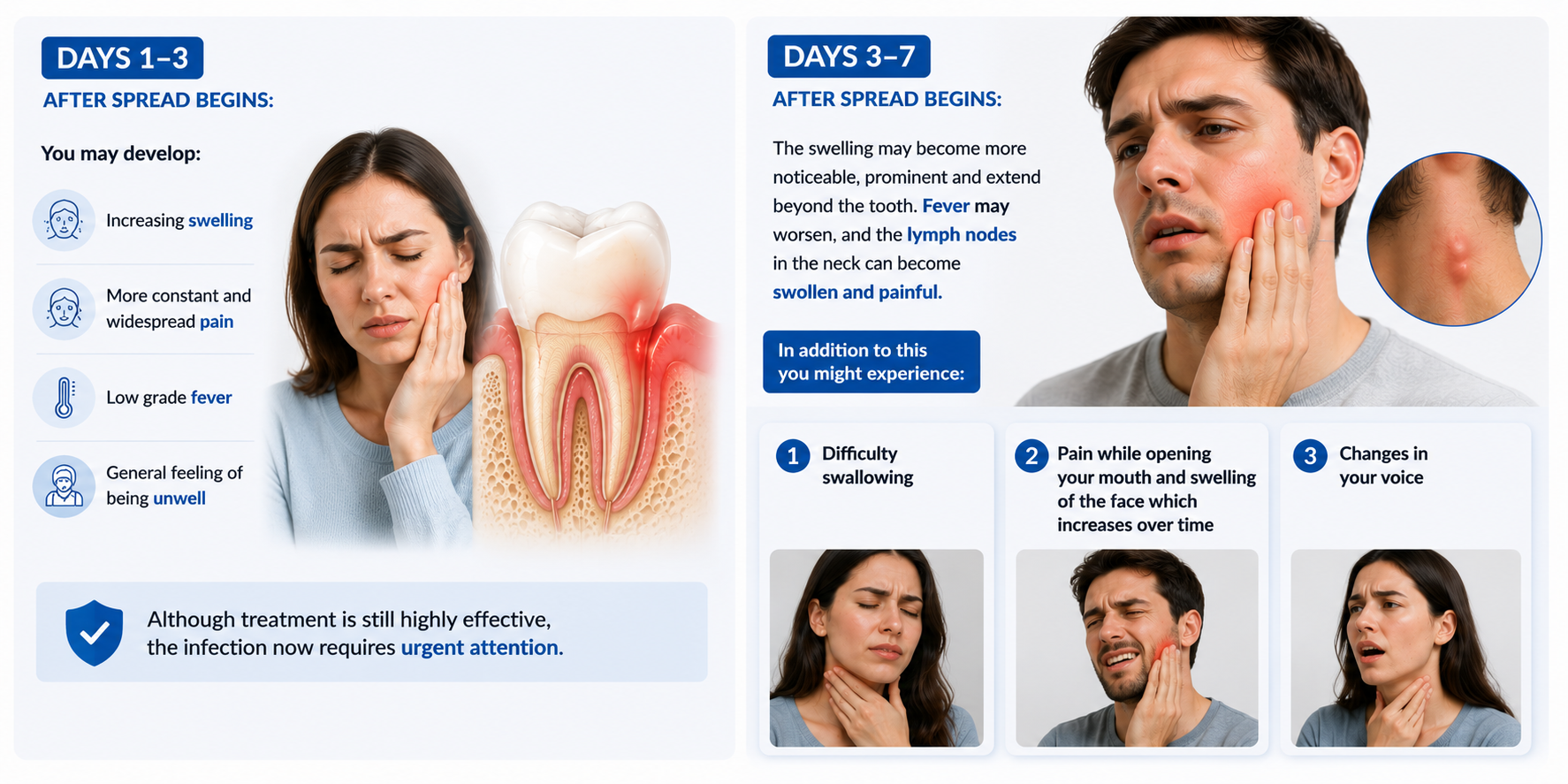
These symptoms should never be ignored. They should be considered as red flags for worsening of the situation and warrant prompt dental or medical evaluation and management.
- Day 7 and beyond:
If still left untreated, severe dental infection can now spread into deeper tissues of the head and neck. Although rare, in a few patients it can lead to blocked airway that makes breathing difficult , serious infections of the chest, or damage to multiple organs and require immediate medical treatment. (sepsis). This is a medical emergency that requires immediate hospitalization and may cause death if not managed immediately. People with diabetes, weakened immune systems, cancer, or advanced age may experience faster progression and should seek care as soon as symptoms appear.
Life - Threatening Complications of an Untreated Tooth Infection
1. Ludwig's Angina: A Breathing Emergency
Infection usually starts from an infected lower molar and spreads into the tissues beneath the tongue and jaw. Swelling increases rapidly, pushing the tongue upward and backward. thereby interfere with breathing. It is a medical emergency requiring hospitalization, intravenous antibiotics, and surgical drainage of the infection. In severe cases, doctors may need to secure the airway to help the patient breathe safely.
2. Tooth Infection reaches the Brain- meningitis, brain abscesses, or cavernous sinus thrombosis.
Although uncommon, infections from the upper teeth can occasionally spread into nearby structures within the head.
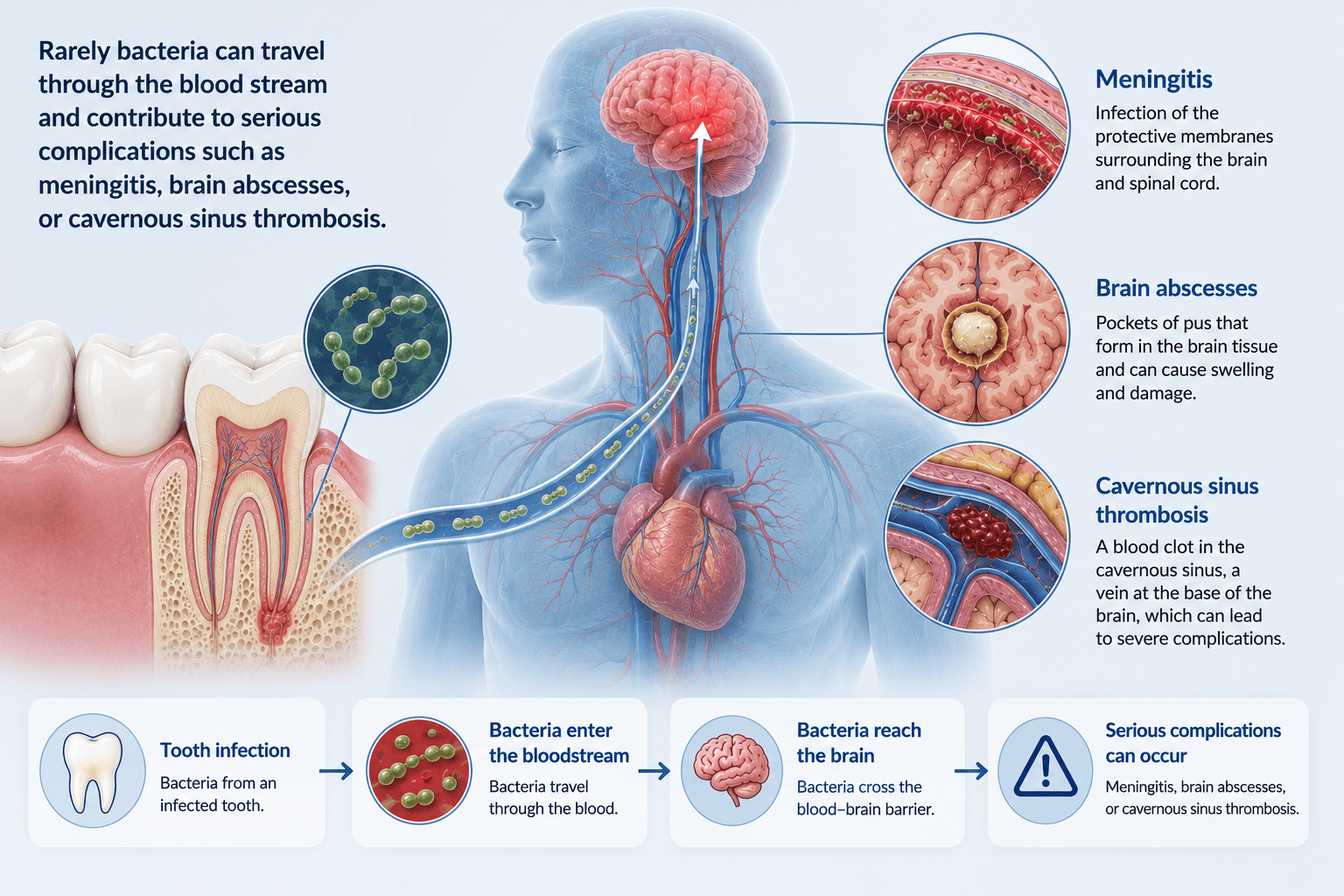
These conditions may cause symptoms such as:

The highest death rate is associated with this condition. Treatment requires surgical drainage and antibiotic courses.
3. When Infection Spreads Into the Chest-Descending necrotizing mediastinitis
Dental infections can also spread downward through the soft tissue spaces of the neck and might reach the chest causing a condition known as descending necrotizing mediastinitis. This is a rare yet severe infection involving the area between the lungs.Treatment typically requires emergency surgery, intensive care, and prolonged courses of antibiotics. Patients often become seriously ill and may develop:
- High fever
- Severe neck swelling
- Chest pain
- Difficulty breathing
- Signs of sepsis
Treatment requires emergency chest surgery, prolonged drainage, and extended ICU care.
4. Sepsis - The Whole-Body Infection
Sepsis occurs when bacteria or the toxins produced by the bacteria enter the blood stream though the tooth, triggering an immune response in the whole body. Instead of fighting the infection, the immune system starts attacking the body's own tissues and organs. It can lead to multiple organ damage and eventually death.
Who is at a higher risk?
People who have a weak or compromised immune system are at a higher risk of a more serious outcome. These include patients suffering with diabetes, heart conditions, old age and weak immunity. Such patients have more difficulty fighting infection and are thus at a higher risk . In children, infections can spread more quickly and are more prone to serious complications.
How Is a Tooth Infection Treated?
The treatment depends on what is the current status of infection, how far it has spread and at what stage you are going to the doctor. The earlier the treatment is done the better is the outcome and recovery.
If You See a Dentist Early
Most tooth infections can be treated quickly and effectively. Your dentist will drain the abscess to remove pus. Depending upon the condition of the tooth root canal treatment or tooth removal might be done. Antibiotics might be prescribed in order to control the infection Many people start feeling better within a few days after treatment.
If the Infection Has Spread and has become more serious
A severe dental infection that has become more complicated and spread into the body may require immediate hospital treatment. Treatment is more complex and can include Intravenous (IV) antibiotics, imaging scans to see the spread, surgery to drain infected areas and treatment to support breathing if swelling affects the airway,
Recovery
Early treatment of tooth pain along with timely dental check ups ensure that the disease is identified at an early stage, and recovery is good and complete. However, recovery can take longer if the infection has spread to deeper tissues or has caused serious complications. The key is simple: the earlier treatment begins, the easier and safer recovery is likely to be.
How to Prevent a Tooth Infection From Reaching This Stage?
Prevention is possible if timely steps are taken.
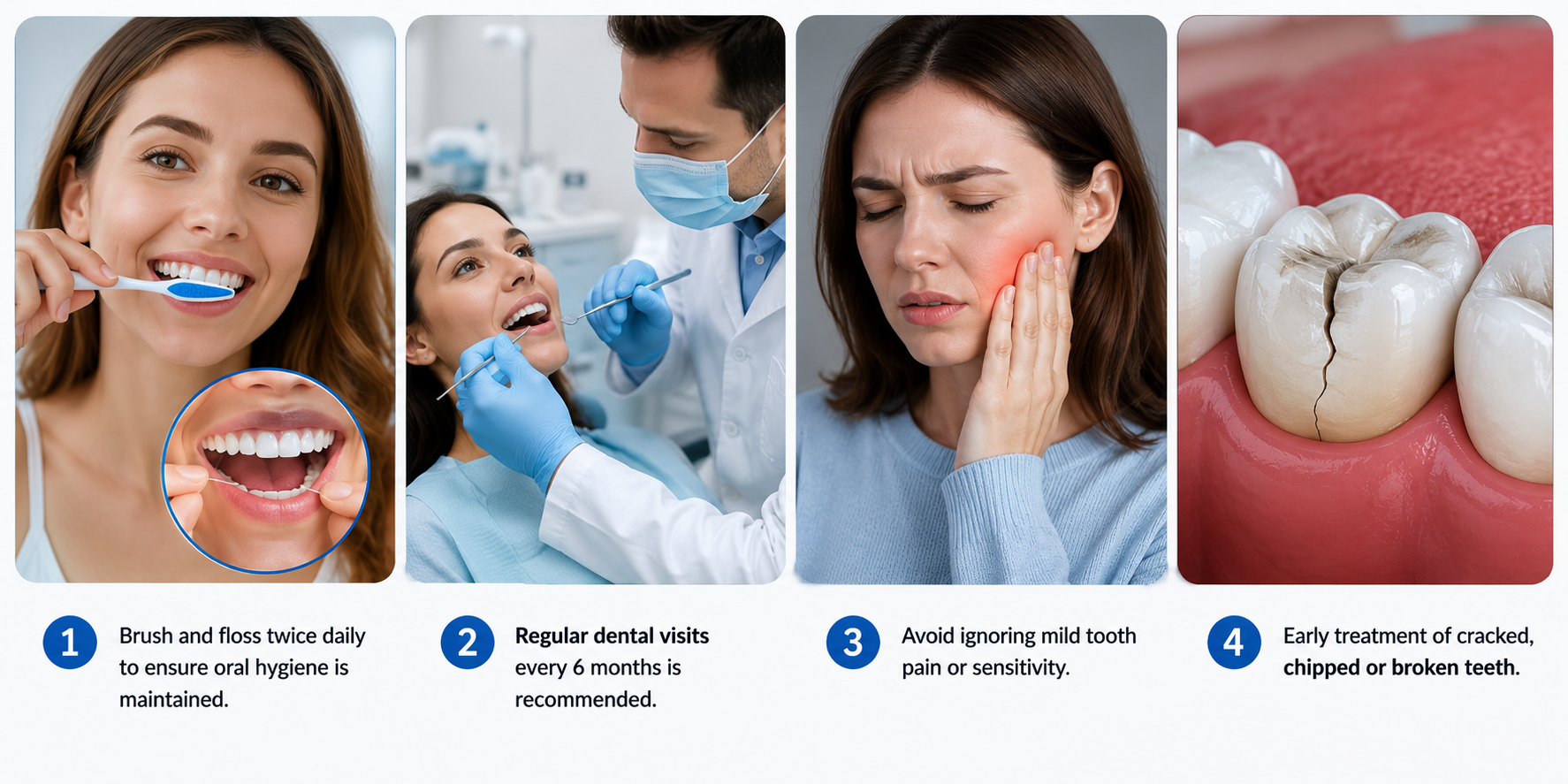
Key Takeaway's :
Toothaches are an extremely common problem. People visit their dentist, receive the appropriate timely treatment for toothaches, recover back fully, and get back to their normal lives. The concern is not the infection itself. The main problem arises when the treatment is delayed for too long. Serious complications, although rare, might prove fatal . In most cases, the infection begins as a relatively small problem in the form of a cavity or a toothache. Over time, if ignored, the infection can spread beyond the tooth and into areas where treatment becomes more complex and the risks become much greater and life threatening.
A tooth that has been hurting for weeks can suddenly be accompanied by swelling, fever, or difficulty swallowing. There is no warning signal that clearly guides you when a minor toothache is becoming something more serious. That's why it is always better to address a toothache early rather than wait for it to turn into something more complicated and deadly.

Ignoring wisdom tooth pain could cost you more than comfort.
Frequently Asked Questions
Can a tooth infection go away on its own?
No. Dead pulp has no blood supply. It means that the infection fighting cells cannot reach the infection site. Without physical drainage and treatment of the tooth, the infection remains indefinitely and risks spreading.
How do I know if my tooth infection is spreading to my jaw?
swelling that moves beyond the tooth area, difficulty fully opening the mouth), jaw stiffness, progressive fever, and swollen lymph nodes beneath the chin or in the neck are indicative of spread of the infection to jaws.
How quickly can a tooth abscess become life threatening?
It takes weeks to months for bacteria to establish themselves within the tooth and make it dead . But once the infection spreads into the surrounding tissue and enters the blood stream or into head and neck spaces, life-threatening complications may occur within 24 to 72 hours in a few cases.


Member discussion