


Is Sugar the Main Cause of Gum Disease? NO. The true answer sits somewhere in the middle and understanding it can genuinely change how you look after your mouth. Sugar is a major trigger that sets off a damaging reaction. But it works through a middleman. That middleman is plaque.
Plaque can be understood as a sticky film of bacteria that sticks around and below the gumline. Plaque is what actually causes gum disease. Once you understand how that chain works, you have real power to break it and free yourself from gum diseases.This article explains exactly what happens when sugar enters your mouth, where the true danger lies, what you can eat instead, and what small daily changes make the biggest difference for your gums.
What Is Gum Disease? Understanding the Infection Behind the Problem
Gum disease (formally called periodontal disease) is a bacterial infection that affects the soft tissue and bone supporting your teeth. It begins when dental plaque ( that is a sticky film of bacteria) builds up along the gumline and is not removed through regular and correct brushing and flossing.
Stages of Gum Disease
- Gingivitis : is the earliest and mildest stage. In this stage only the gum tissue itself is inflamed he underlying bone is not yet affected. This is important because gingivitis is reversible. With proper brushing, flossing, and a professional cleaning, the gums can return to full health. The problem is that gingivitis is often painless, so many people don't realize it's happening.
Common gingivitis symptoms
- Gums that bleed easily when brushing or flossing
- Redness, puffiness, or tenderness along the gumline
- Persistent bad breath (halitosis)
- Gums that look slightly swollen or shiny
- Periodontitis : is the advanced stage of gingivitis. It happens when the infection moves deeper, spreading into the bone and tissue that anchor your teeth. The gums begin to pull away from the teeth, forming gaps between the tooth and gum where bacteria thrive. Over time, the bone itself breaks down a process that is largely irreversible.
Symptoms of Periodontitis
Common warning signs include:
- Bleeding gums
- Persistent bad breath
- Gum swelling
- Deep pockets around teeth more than 4-5 mm
- Gum tenderness
- Loose teeth
- Changes in bite
How Sugar Sets Off a Chain Reaction in Your Mouth?
Let’s now understand what is the actual role of sugar in gum disease.
What Happens the Moment Sugar Touches Your Teeth?
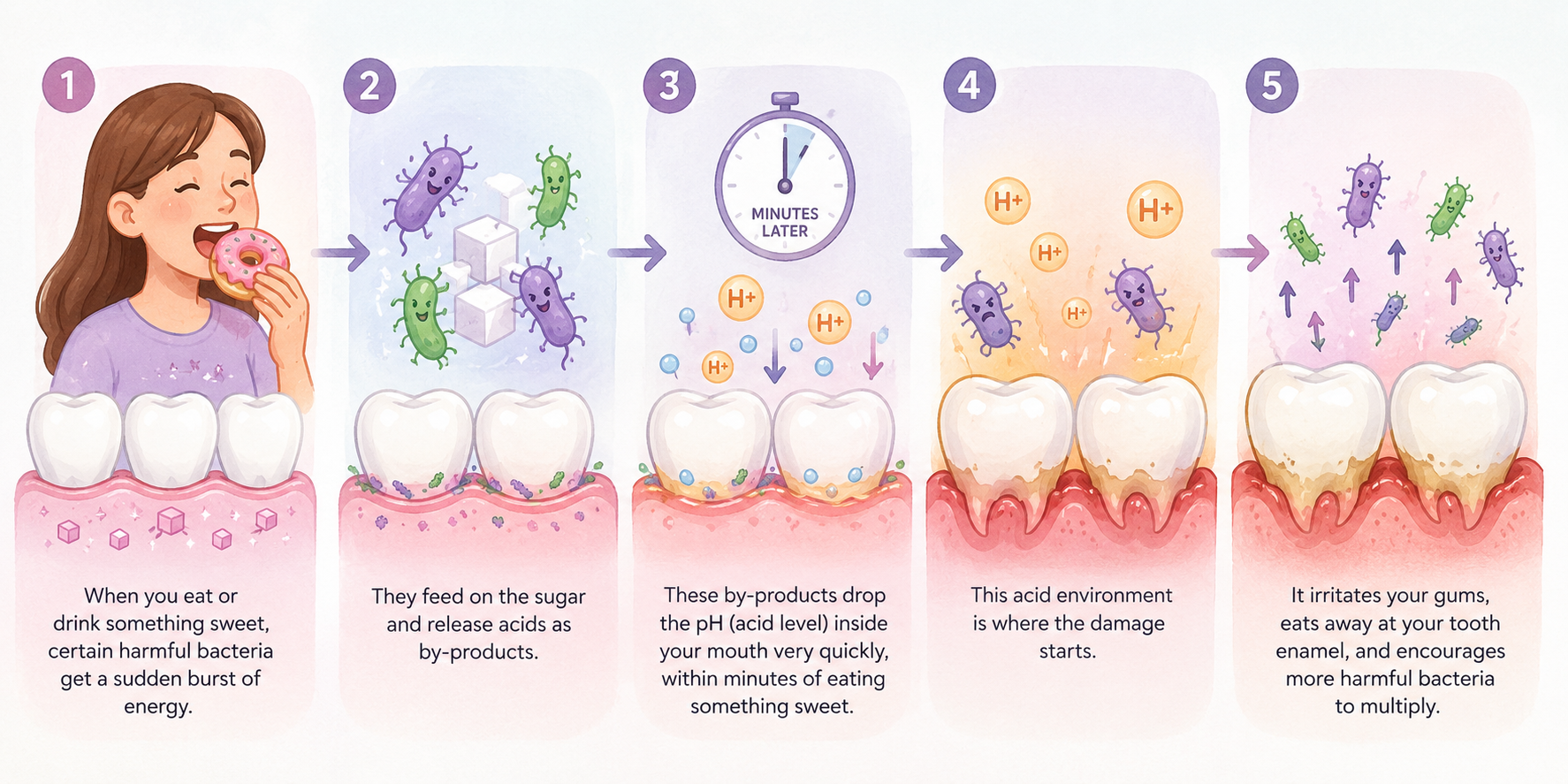
Your mouth is full of hundreds of species of bacteria. Most of them are completely harmless or even helpful. They live in close harmony with one another. However, when sugar enters your mouth it tends to trigger a chain reaction-
Two Main Bacteria That Sugar Feeds
The first is Streptococcus mutans, which feeds on sugar and produces a powerful acid that can break through tooth enamel. The second is Porphyromonas gingivalis, which is strongly linked to gum disease. Both of these bacteria multiply when sugar is regularly available in your mouth. Without a steady supply of sugar to feed on, their populations are much easier for your immune system to keep under control.
How the Acid Attack Damages Your Gums, Not Just Your Teeth?
Most people think sugar damage is only restricted to cavities. But the acid produced by bacteria does not just attack teeth it also irritates the gum tissue.
Repeated acid exposure inflames the gums, making them red, tender, and prone to bleeding. Over time, the bacteria and their by-products cause the gums to start pulling away from the teeth, creating small pockets. Those pockets become ideal hiding places for even more bacteria, and this is where gum disease really takes hold.
So What Is the Main Cause of Gum Disease?
Plaque: the Real Villain dnd Sugar's Role in Building It
Here is the clear answer to the key question: the main cause of gum disease is dental plaque a sticky, invisible film of bacteria that constantly forms on your teeth.
Sugar does not cause gum disease on its own. What it does is feed the bacteria in plaque, helping them grow faster, produce more acid, and cause more damage. Sugar accelerates and amplifies the problem. If we take sugar away from our diet, plaque composed of bacteria will still exist, but it is far less destructive.
How is this important?
- It matters because it means even people who eat very little sugar can develop gum disease if they do not manage plaque well.
- And people who eat moderate sugar but brush and floss consistently tend to have much healthier gums than those who eat little sugar but have poor oral hygiene.
When Plaque Becomes Tartar: Visit to the Dentist becomes Essential
- If plaque is not removed regularly through flossing and regular brushing, it hardens into tartar (a rough, yellowish deposit that clings to the base of your teeth).
- Tartar creates a protected environment where harmful bacteria gather right at the gumline, causing ongoing inflammation.
- Once tartar forms, you cannot remove it at home. Only a dentist can do that by professional dental cleaning.
Why the Frequency of Sugar Matters More Than the Total Amount
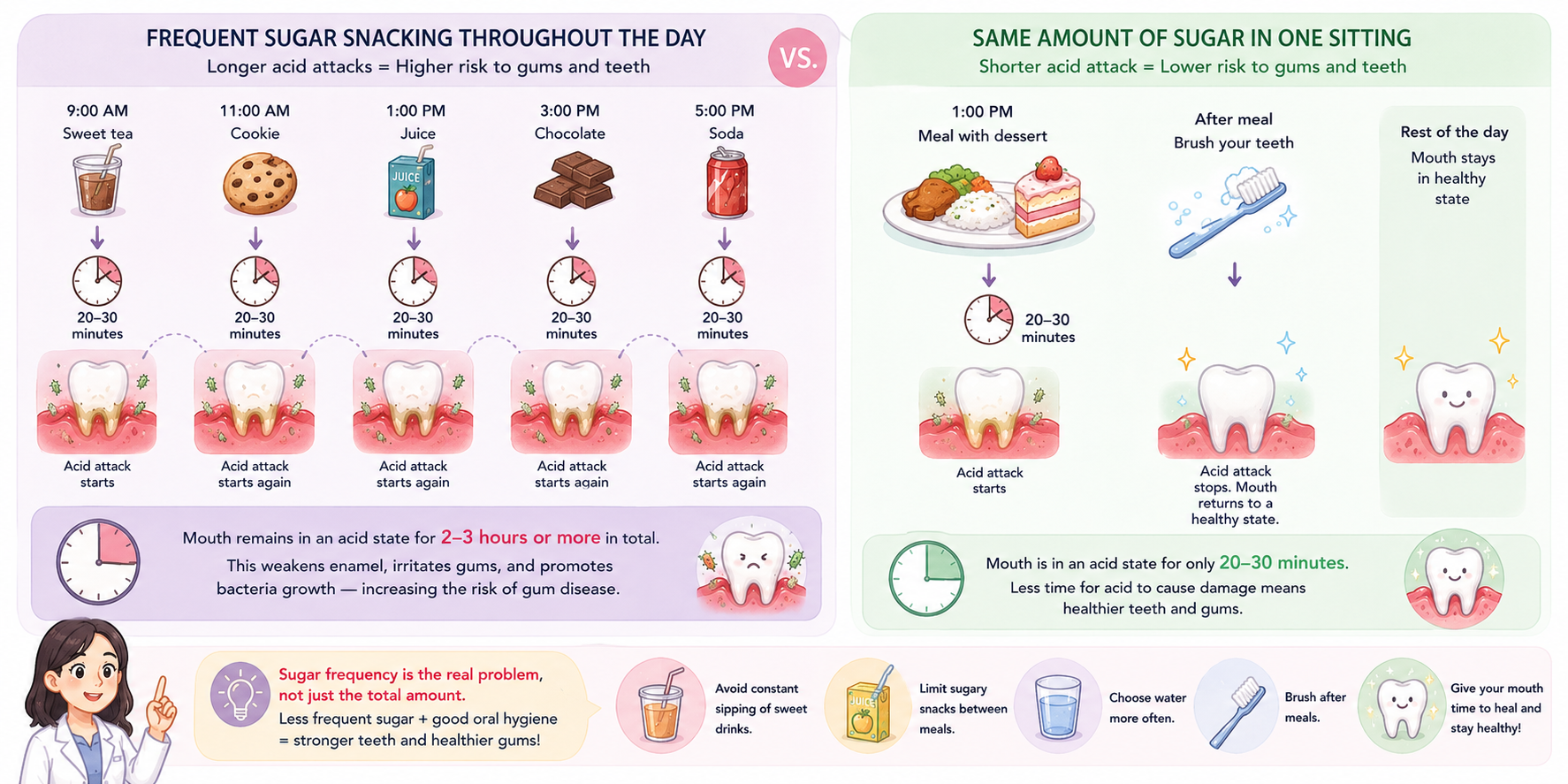
How often you eat sugar matters far more than how much you eat in a day. Surprised? Let’s try and understand this -
The Hidden Sugar Problem Most People Do Not Know About
Added Sugars vs. Natural Sugars: Is There a Difference for Your Gums?
Natural sugars : found in whole fruit, vegetables, and plain dairy products are much less harmful than added sugars. The fibre in whole fruit slows down how quickly sugar reaches your teeth. The vitamins and antioxidants in fruit also actively support gum health.
Added sugars : (sucrose, fructose syrup) in processed foods and drinks, on the other hand, hit your teeth quickly and give bacteria exactly what they need to thrive.
Thus, eating an apple is very different from drinking a glass of apple juice, even though both contain fructose. The whole fruit is far kinder to your gums.
Where Sugar Hides in Foods You Think Are Healthy
Awareness of hidden sugars is one of the most practical steps patients can take. Many everyday foods contain significant amounts of added sugar without tasting obviously sweet.
Few examples include -
- flavoured yoghurts which can contain as much sugar as a small chocolate bar
- shop-bought pasta sauces and ketchup
- granola and cereal bars marketed as healthy options
- low-fat salad dressings; flavoured oat milks; and fruit-flavoured drinks
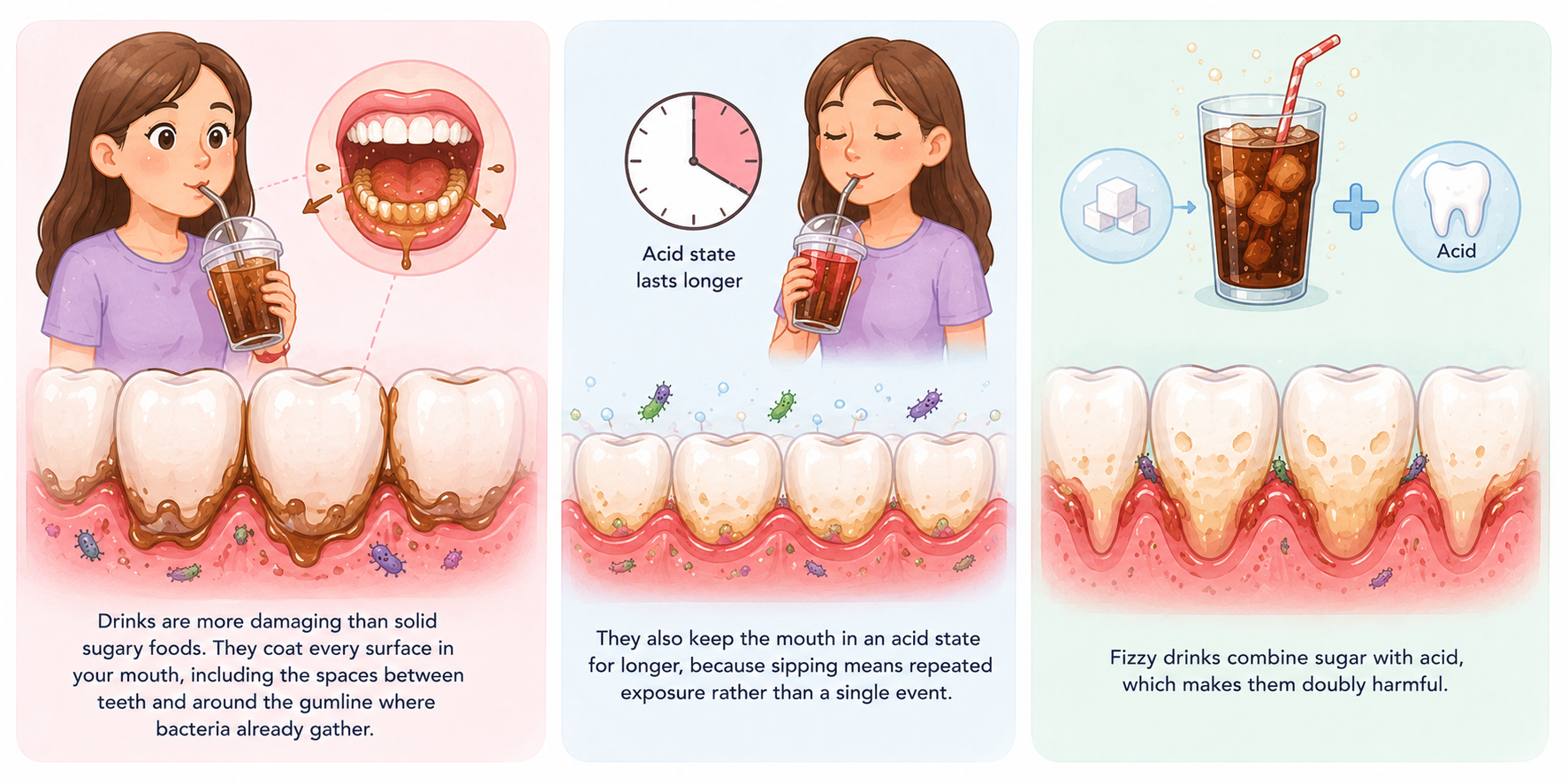
How Sugary Drinks Are Especially Damaging?
Your Mouth's Natural Defence and How Sugar Affects It?
What Saliva Actually Does for Your Gum Health?
Saliva neutralises acids, washes away food particles and bacteria, delivers minerals that help remineralise tooth enamel, and contains proteins that fight harmful bacteria. A healthy flow of saliva is one of the most important protectors of both your teeth and gums.
How a High-Sugar Diet Weakens This Natural Protection?
When the mouth is constantly bombarded with sugar, the acid load overwhelms what saliva can neutralise. Sugary diets are also associated with dry mouth in some cases, further reducing saliva's protective effect. Conditions like diabetes which are worsened by high sugar consumption also reduce saliva quality and flow, making gum disease worse. This is another way in which sugar indirectly but significantly harms your gums.
The Oral Microbiome: The Community of Bacteria in Your Mouth?
Your mouth contains over 700 different species of bacteria, and this community is in constant balance. When you regularly eat sugar, you tip that balance. Acid-producing, harmful bacteria multiply faster. The friendlier, protective bacteria struggle to compete.
Foods That Protect Your Gums
Changing what you eat is not just about cutting things out. Certain foods actively support gum health and help your body fight the bacteria that cause gum disease.
Leafy Greens and Vitamin C-Rich Vegetables
Spinach, kale, broccoli, and peppers are rich in vitamin C, which is essential for collagen production the structural protein that keeps gum tissue strong.
Dairy Products, Calcium, and Gum Strength
Cheese, plain yoghurt, and milk are excellent for gum health. They are rich in calcium, which strengthens the jawbone that supports your teeth.
Green Tea:
Green tea contains compounds called catechins, which have been shown to inhibit the growth of bacteria associated with gum disease and reduce gum inflammation.
Omega-3 Fatty Acids
Foods rich in omega-3 fatty acids like oily fish like salmon and mackerel, walnuts, chia seeds, and flaxseed have well-established anti-inflammatory properties.
Probiotics and Fermented Foods
Introducing more beneficial bacteria through diet may help crowd out the harmful species that cause gum disease, although more research is still being done in this area.
Xylitol : The Sugar Substitute That Fights Bacteria
Xylitol is a natural sugar alcohol found in many sugar-free chewing gums and some oral care products. Unlike regular sugar, xylitol cannot be metabolised by the harmful bacteria in your mouth. Chewing sugar-free gum containing xylitol after meals is a practical, evidence-based step that stimulates saliva production and cuts the bacterial load in your mouth.
Practical Steps to Cut Sugar for Better Gum Health
Simple Daily Swaps You Can Start Today
- Try replacing fizzy drinks with water, green tea, or sparkling water with a slice of lemon.
- Swap flavoured yoghurt for plain yoghurt with a small amount of fresh fruit.
- Choose whole fruit over fruit juice
- Swap white bread and crackers for whole-grain versions.
Why Timing and Rinsing Matter as Much as What You Eat
- If you do eat something sweet, try to do it as part of a meal rather than as a snack.
- Rinse your mouth with water straight after eating anything sweet
- Wait at least 30 minutes before brushing after eating acidic foods, as brushing too soon can spread softened enamel damage.
Combining Diet Changes With Good Brushing and Flossing
- Diet changes work best as part of a consistent oral hygiene routine.
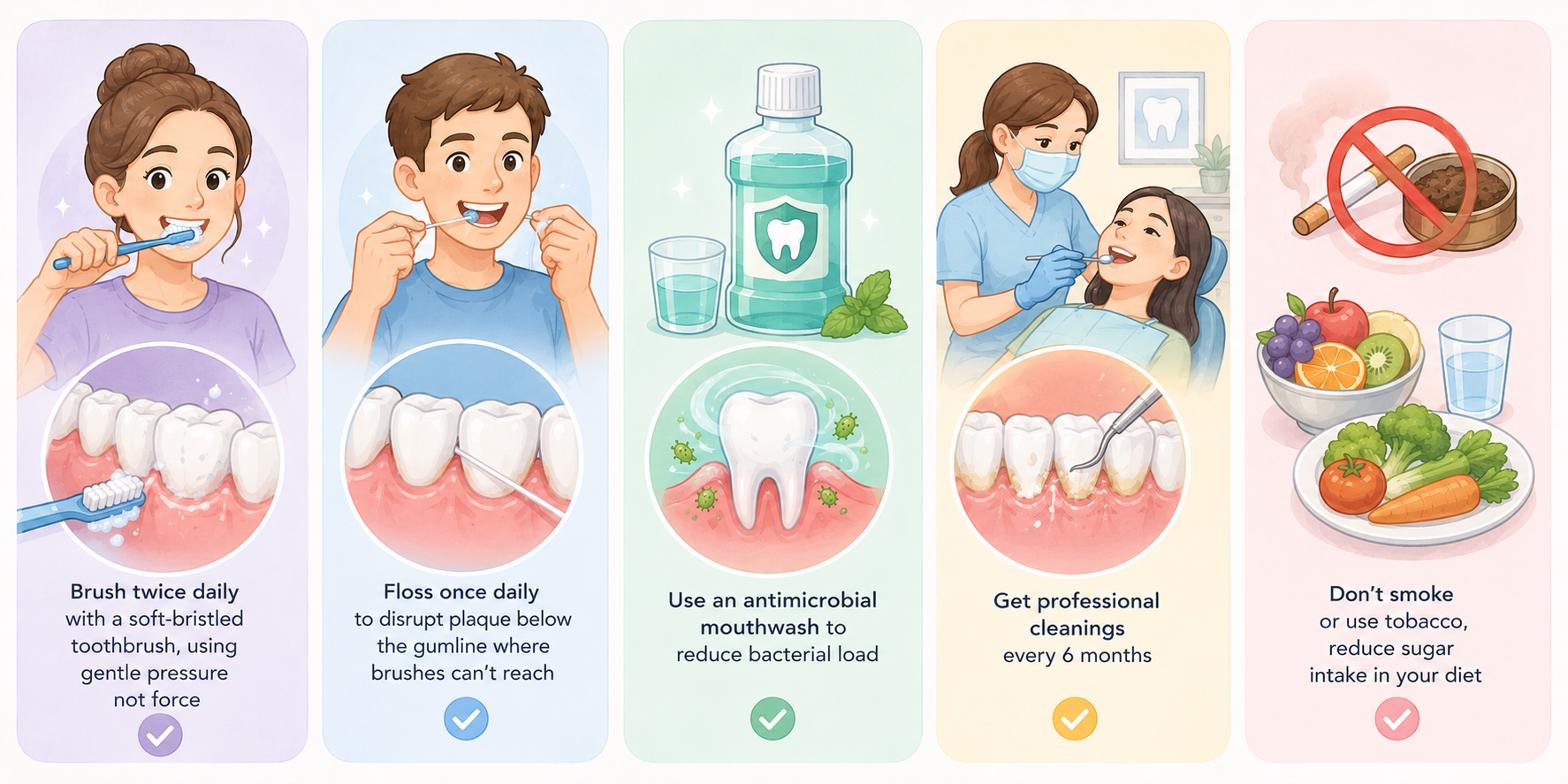
- Brush your teeth twice a day for at least two minutes with fluoride toothpaste once in the morning and once last thing at night.
- Floss at least once a day to remove plaque from between the teeth where your toothbrush cannot reach.
- Visit your dentist for a professional clean at least twice a year.
Prevention of Gum Disease: What Actually Works?
Whether you're trying to prevent gum disease, the fundamentals are consistent:
Key takeaway’s: Sugar Is a Big Part of the Problem and You Have Real Control
- Sugar is not the single main cause of gum disease, but it is one of the most powerful triggers.
- It feeds the bacteria that build plaque.
- The good news is that this is one of the most changeable risk factors in your life.
- You do not need a perfect diet. Cutting back on sugary drinks, reducing between-meal snacking on sweets, eating more of the foods that actively protect your gums, and keeping up with brushing, flossing, and regular dental visits these steps together can make a real and lasting difference.
- Small changes, made consistently, are what shift the odds in your favour. Start with one swap this week and build from there.
- Your gums will feel the benefit sooner than you might expect.

Learning the truth about sugar's role in gum disease often encourages broader dietary awareness. If you're looking to cut back on excess calories and sugars, exploring low-calorie alcohol options is a natural next step.
Frequently Asked Questions
Is honey bad for my gums?
Yes, honey is a sugar and feeds the same harmful bacteria as any other sugar. It has some antibacterial properties, but these do not offset the damage sugar causes in your mouth. Use it sparingly and rinse with water afterwards.
Can I eat fruit if I have gum disease?
Yes. The whole fruit is fine in normal amounts. The fibre slows sugar release and the vitamins support gum health. What to avoid is fruit juice, dried fruit, and fruit-based sweets, which are high in concentrated sugar without the protective fibre.
Does cutting sugar alone reverse gum disease?
If you have early gingivitis, improving your diet combined with better brushing and flossing can help reverse it. But if gum disease has progressed to periodontitis, diet changes alone are not enough, you will need professional dental treatment. Diet improvements support treatment and prevent further damage, but they are not a substitute for seeing a dentist.
Are artificial sweeteners safe for my gums?
Most artificial sweeteners (such as aspartame, saccharin, and stevia) do not feed the harmful bacteria in your mouth and are much safer for your teeth and gums than regular sugar. Xylitol is the most beneficial of the sugar substitutes, as it actively discourages bacterial growth.
How long does it take to see a difference in my gums after cutting sugar?
Some patients notice an improvement in gum bleeding and sensitivity within a few weeks of reducing sugar, improving their brushing and flossing routine, and attending a professional cleaning. Full recovery from gingivitis typically takes four to eight weeks with consistent effort.
Refrence's :
- American Heart Association. Added Sugars. Updated 2024.
- Shanmug asunduram S, Karmakar S. Excess dietary sugar and its impact on periodontal inflammation: a narrative review. BDJ Open. 2024;10(1):78.
- Kusama T, Nakazawa N, Takeuchi K, Kiuchi S, Osaka K. Free Sugar Intake and Periodontal Diseases: A Systematic Review. Nutrients. 2022;14(21):4444. Gupta V, Dawar A, Bhadauria US, Purohit BM, Nilima N. Sugar-sweetened beverages and periodontal disease: a systematic review. Oral Dis. 2023;29:3078–90.


Member discussion