


Burning gums when eating is a surprisingly common complaint that most people experience at some point in their lives. It is mostly assumed that it is either due to consumption of something very spicy or something that is very hot. Most of the time this is true. The feeling is temporary, and resolves on its own. However at times, this burning sensation in gums might be persistent and might show cyclical recurrences. In such cases, immediate attention is required as it might indicate a more serious underlying health issue.
Understanding why gums burn when you eat can help find relief and determine whether a visit to the dentist is necessary. In this article, we'll explore the causes behind burning gums, the symptoms to watch for, treatment options, and home remedies to soothe discomfort and protect your oral health.
What Do Health Gums Feel Like?
Healthy gums usually feel firm, comfortable, and painless and do not cause any discomfort.
Healthy gums have the following features:
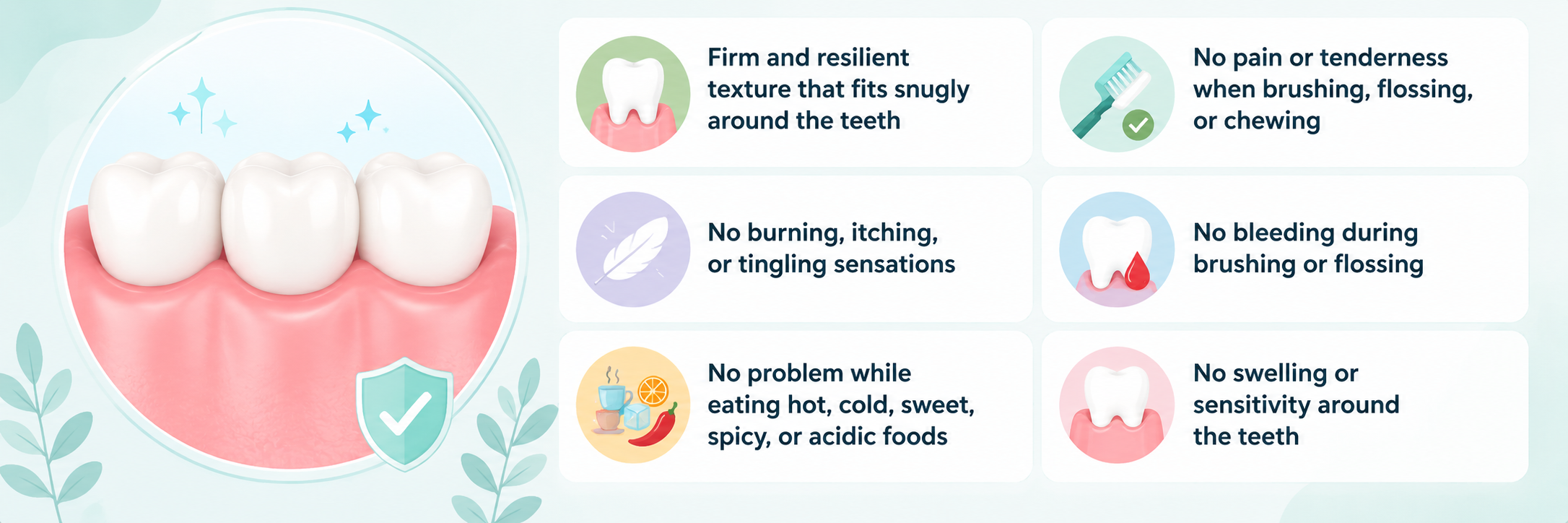
If gums start feeling sore, swollen, itchy, or burn while eating certain foods, it may be a sign of irritation, inflammation, or an underlying oral health problem that should be evaluated by a dentist if it persists.
What Does Burning in Gums While Eating Feels Like?
Burning gums may feel like:
- A tingling or stinging sensation
- A mild warmth or heat in the gums
- Sharp pain when food touches certain areas
- Soreness that worsens during meals
- Sensitivity to hot, cold, sweet, or acidic foods
The sensation may last only a few minutes or continue for hours after eating depending upon its cause.
Why Do My Gums Burn When I Eat?
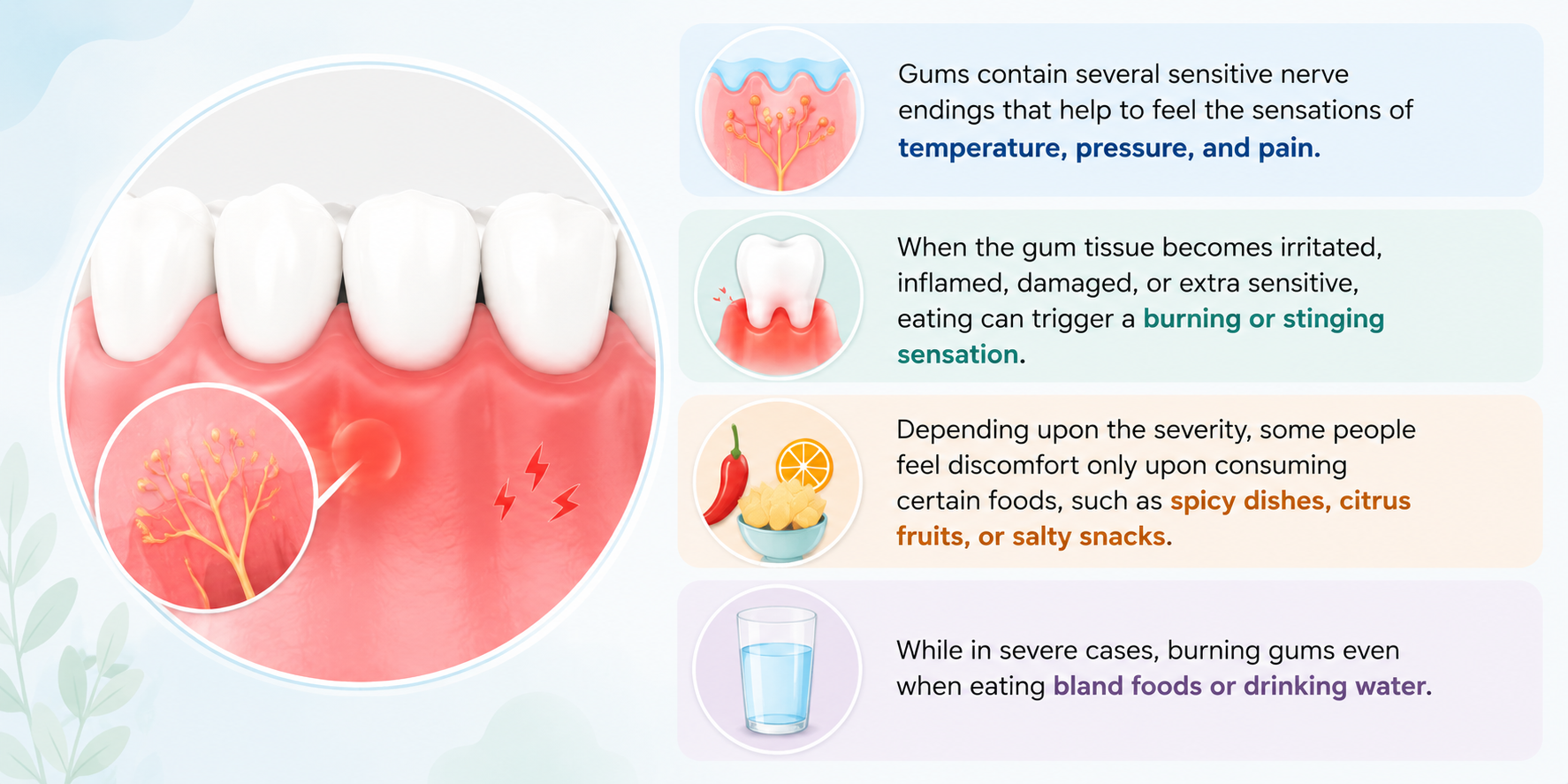
Common Causes of Burning Gums While Eating
1. Eating Spicy, Acidic, or Hot Foods
Certain foods like acidic, spicy or hot can temporarily irritate the gums, especially if they are already sensitive. The feeling of burning is mostly temporary and commonly resolves on its own within a span of few minutes to hours.
Few examples which irritate gums include:
- Chili and spicy curries
- Citrus fruits such as oranges, pineapple and lemons
- Tomatoes
- Very hot beverages
2. Minor Gum Irritation or Injury
The gums can become irritated from everyday activities, such as:
- Brushing too hard and aggressively
- Using a hard-bristled toothbrush
- Accidentally biting the gums
- Sharp edges of broken teeth or dental restorations
Burning is often localized to one area and resolves once the causative agent is removed.
3. Dry Mouth (Xerostomia)
Saliva protects the oral tissues by keeping it moist and hydrated. It helps reduce friction during eating. When saliva production decreases, the gums may become sore and burn when exposed to certain foods this condition is known as Xerotomia.
Dry mouth may be caused by:
- Dehydration, aging and Diabetes
- Mouth breathing
- Medications such as antidepressants and antihistamines
4. Food Allergies and Sensitivities (Oral Allergy Syndrome)
- Some people experience itching, tingling, or burning in the mouth immediately after eating specific foods which act as triggers for allergic reaction.
- This condition is termed as Oral Allergy Syndrome which occurs due to cross-reactions between pollen allergies and certain raw fruits or vegetables.
- Few examples of such food include: apples, peaches, tomatoes etc.
5. Gingivitis
Gingivitis is the earliest stage of gum disease which is fully reversible. It is the most common dental cause of burning gums. Plaque accumulation along the gumline causes inflammation, making the gums more sensitive to spicy, acidic, or hot foods.
Other symptoms include:
- Red or swollen gums
- Bleeding during brushing or flossing
- Persistent bad breath
- Gum tenderness
Serious Causes of Burning Gums
Periodontitis
- Untreated gingivitis can progress to periodontitis which is the advanced stage of gum disease.
- The gum infection spreads to involve the bone supporting the teeth.
Symptoms may include:
- Gum recession
- Loose teeth
- Pain while chewing
- Pus discharge
- Persistent burning or soreness
2. Mouth Ulcers
- Canker sores and other oral ulcers expose sensitive nerve endings
- This can cause the gums to burn while eating. Thus making eating painful.
- Ulcers may develop due to:
- Stress and traumatic injury to gums (hard brushing)
- Hormonal fluctuations, Vitamin deficiencies
- Certain medications
- Spicy, salty, and acidic foods can aggravate the discomfort.
3. Oral Thrush (Oral Candiadiasis)
- Oral thrush is a fungal infection of the oral cavity caused by an overgrowth of Candida albicans.
- People at higher risk include those who:
- Wear dentures
- Use inhaled corticosteroids
- Have diabetes, weakened immune systems
Symptoms include:
- White creamy patches
- Redness beneath the patches
- Altered taste sensation
- Burning while eating
4. Nutritional Deficiencies
Deficiencies in certain vitamins and minerals can affect the health of the oral tissues and nerves. Common deficiencies associated with burning sensations in gums include:
- Vitamin B12
- Iron
- Folate
- Zinc
Other symptoms may include fatigue, pale skin, mouth ulcers, and a smooth or sore tongue.
5. Burning Mouth Syndrome
- Burning Mouth Syndrome is a medical condition which is characterized by a persistent chronic pain along with burning sensation in the mouth despite the absence of visible abnormalities.
- More common in females between the ages of 50-70 years.
- The discomfort often worsens as the day progresses and may involve the gums, tongue, lips, or palate.
Other symptoms include:
- Dry mouth sensation
- Metallic or bitter taste
- Increased thirst
- Altered taste perception
6. Acid Reflux
Stomach acid that reaches the mouth can irritate the gums and other oral tissues. This condition is termed as Gastro esophageal reflux disease( GERD)
People with acid reflux may also experience:
- Heartburn
- Sour taste in the mouth
- Hoarseness
- Chronic cough
- Burning sensations after meals
7. Oral Lichen Planus
It is a chronic inflammatory condition that affects the lining of the mouth, including the gums. It occurs when the immune system mistakenly attacks the cells of the oral mucosa. (Auto immune disease)
Symptoms may vary from person to person and can include:
- A burning or painful sensation in the gums
- Sensitivity to spicy, acidic, or hot foods
- White, lace-like lines or patches inside the cheeks or on the gums
- Red, swollen, or shiny gums
- Painful ulcers
- Bleeding while brushing teeth
- A metallic taste or altered sense of taste
8. Hormonal Changes
Hormonal fluctuations during pregnancy, menstruation, or menopause can make the gums significantly more sensitive.
During these periods, gums may respond more strongly to the bacteria normally present in the mouth, leading to increased inflammation, tenderness, and burning sensations.
9. Oral Potentially Malignant Disorders and Oral Cancer
Persistent burning gums accompanied by visible changes, difficulty in swallowing,painful lymph nodes should not be ignored.
Warning signs include:
- White or red patches
- Non-healing ulcers
- Unexplained bleeding
- Difficulty swallowing
- Numbness or persistent pain
Any lesion lasting longer than two weeks should be evaluated by a dentist or oral medicine specialist.
Symptoms Associated With Burning Gums while Eating
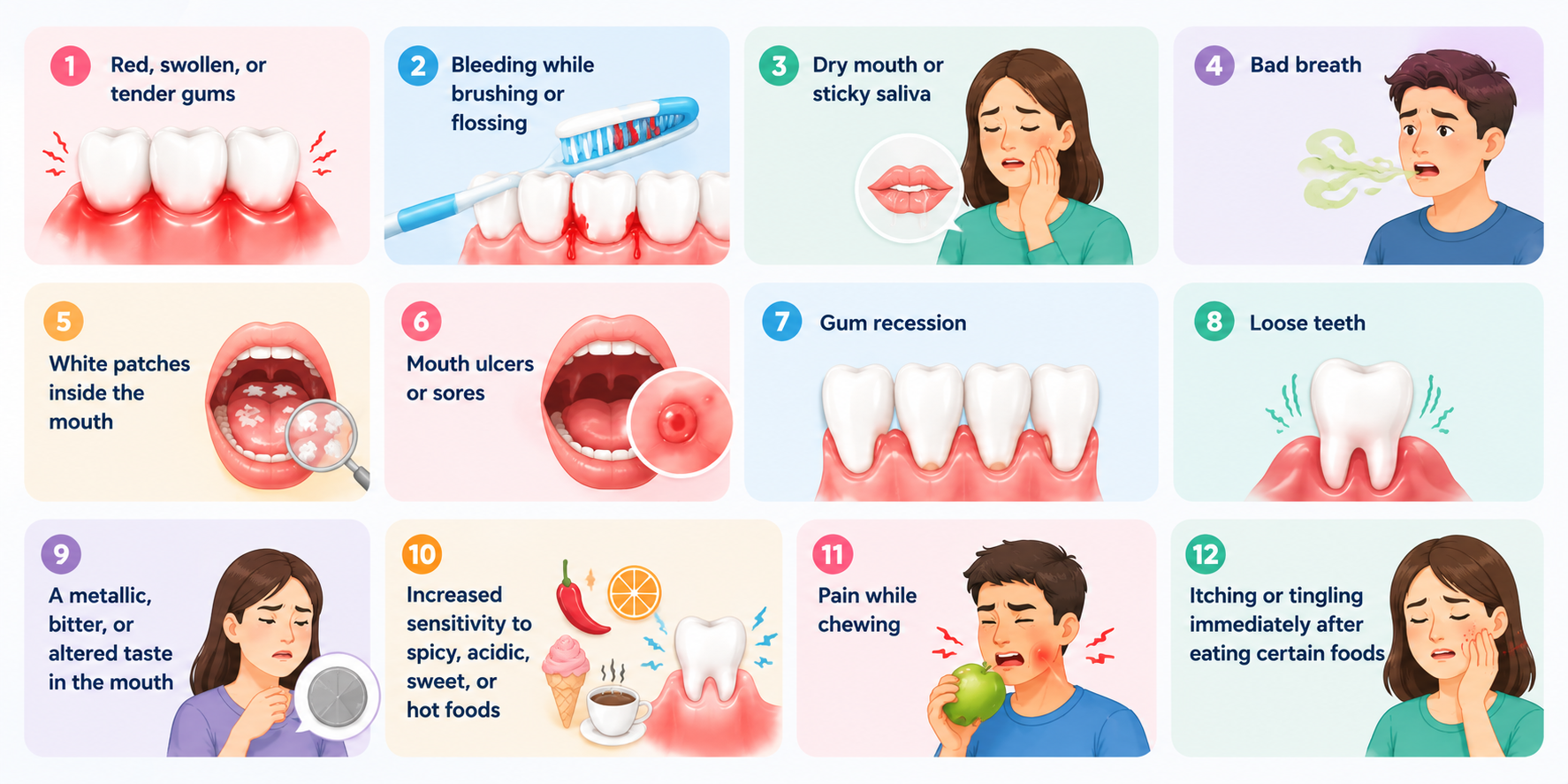
Burning gums is itself a symptom rather than a disease. It may occur alone or alongside other symptoms that can provide clues about the underlying cause. Other common symptoms include:
Home Remedies for Burning Gums while Eating
If symptoms are mild and temporary, several simple measures may help soothe irritated gums.
- Rinse with warm salt water
- Drinking plenty of water helps maintain saliva production and prevents dryness that may worsen burning sensations.
- Avoid trigger foods that irritate sensitive gums
- Use a Soft-Bristled toothbrush
- Switch to a mild toothpaste as prescribed by your dentist to prevent irritation and burning of gums.
- Apply a cold compress to reduce discomfort and inflammation.
- Manage stress by incorporating relaxation techniques, meditation, regular exercise, and adequate sleep may help improve symptoms.
When Should You See a Dentist for Burning Gums while Eating?
Occasional burning after eating spicy or acidic foods is usually not a cause for concern. They tend to resolve after a few minutes to an hour. However, long standing persistent symptoms should be evaluated by a dental professional.
Schedule a dental visit immediately if:
- The burning sensation lasts longer than two weeks
- Your gums bleed frequently
- You notice swelling or pus discharge
- Eating becomes painful
- You develop mouth sores that do not heal
- The symptoms keep returning
- Over-the-counter remedies do not provide relief
When Should You Worry about Burning Gums while Eating?
Immediate medical attention is required in cases where symptoms worsen and may indicate a more serious condition requiring further evaluation. These worsening symptoms include:
- Persistent white, red, or mixed-colored patches
- An ulcer that does not heal within two weeks
- Difficulty swallowing
- Unexplained weight loss
- Facial swelling
- Loose teeth
- Numbness in the mouth
- Fever or enlarged lymph nodes
How do Dentists Diagnose the Cause of Burning Gums while Eating?
Diagnosing the cause of burning gums involves identifying the underlying condition responsible for the discomfort.
- The dentist will ask questions related to the onset of burning sensation and associated symptoms.
- History: A clear medical and dental history will help to ensure any history of allergy to certain food or medications.
- Clinical Examination: is performed by the dentist to look for signs that may contribute to symptoms. These include
- Mouth ulcers
- Dry mouth
- Oral thrush
- Allergic reactions
- White or red patches suggestive of oral lichen planus or other mucosal disorders
- Sharp teeth, broken restorations, or ill-fitting dentures that may irritate the gums
- Pocket assessment: The dentist may gently measure the spaces between the teeth and gums using a periodontal probe to assess gum health and detect periodontal disease.
- Dental X-Rays Dental radiographs may be recommended to evaluate bone health.
- Laboratory Tests: Few additional investigations may be suggested by the dentist, including:
- Blood tests to check for vitamin B12, iron, folate, or zinc deficiencies
- Blood glucose testing to screen for diabetes
- Salivary flow tests to assess dry mouth
- Allergy testing if a food allergy or contact sensitivity is suspected
- Biopsy: If a dentist notices persistent white patches, red areas, ulcers, or lesions suspicious for conditions a small tissue sample (biopsy) may be taken for microscopic examination.
Treatment for Burning Gums While Eating
The treatment for burning gums depends on the underlying cause.
Gingivitis
- Professional dental cleaning (scaling) to remove plaque and tartar.
- Brushing twice daily with fluoride toothpaste.
- Daily flossing or use of interdental cleaners.
- Regular dental checkups and cleanings.
Periodontitis
- Professional dental cleaning (scaling and root planing) to remove plaque and tartar.
- Brushing twice daily with fluoride toothpaste.
- Daily flossing or use of interdental cleaners.
- Regular dental checkups and cleanings.
- Antimicrobial mouthwashes and medication
Oral Thrush
- Immediate dental evaluation.
- Antifungal medications (e.g., nystatin or fluconazole) as prescribed by the dentist.
- Good oral hygiene and denture cleaning.
- Management of underlying risk factors.
Mouth Ulcers
- Usually heal within 1–2 weeks without treatment.
- Topical pain-relief gels or protective pastes as advised by a dentist.
- Saltwater rinses to reduce irritation.
- Avoid spicy, acidic, or abrasive foods during healing.
Dry Mouth
- Drinking plenty of water
- Chewing sugar-free gum and using saliva substitutes
- Reviewing medications with your healthcare professional to relieve symptoms.
Vitamin and Mineral Deficiencies
- Dietary modifications and supplementation with nutrients such as vitamin B12, Iron, Folate, or Zinc.
Acid Reflux
- Lifestyle changes,including avoiding late-night meals, limiting acidic and spicy foods, maintaining a healthy weight, and elevating the head while sleeping.
- Medications prescribed by a physician may also help control reflux and reduce irritation in the mouth.
Food Allergies and Sensitivities
- Identifying and avoiding trigger foods.
- Allergy testing.
Burning Mouth Syndrome
- Medications to reduce nerve-related pain
- Saliva substitutes for dry mouth, nutritional supplements when deficiencies are present
- Stress-reduction techniques such as relaxation exercises or cognitive behavioral therapy.
Oral Lichen Planus
- Dental or medical assessment.
- Topical corticosteroids to reduce inflammation.
- Good oral hygiene and avoidance of irritants.
- Avoiding spicy, acidic, and irritating foods and maintaining good oral hygiene
How to Prevent Burning Gums while Eating?
Although not all causes can be prevented, maintaining good oral and overall health can reduce risk.
- Practice good oral hygiene including brushing twice daily with a soft bristled toothbrush.
- Eat a balanced diet rich in Iron, Vitamin B12, Folate and Zinc
- Visit your Dentist regularly at six monthly intervals for check ups
- Avoid Tobacco products
- Stay well hydrated
- Reduce stress by practicing meditation and relaxation techniques
Key Takeaways
- Burning gums while eating can result from simple, easily treatable causes like Gingivitis to complex causes like Burning Mouth Syndrome .
- Spicy, acidic, salty, and hot foods are common triggers for burning gums while eating.
- Burning gums may feel like tingling, stinging, soreness, or a scalded sensation.
- Persistent burning accompanied by swelling, ulcers, white patches, or bleeding should not be ignored.
- Treatment depends on the underlying cause and may range from simple home remedies to professional dental care.
- Maintaining good oral hygiene, eating a balanced diet, and attending regular dental visits can help keep your gums healthy and comfortable.

Gum pain after a hot meal isn't uncommon but don't forget to check for a burned tongue as well.
FAQ's
Is it normal for gums to burn after eating spicy food?
A mild, temporary burning sensation after eating very spicy food is relatively common which lasts for a few minutes to hours. However, if the sensation is severe and persistent it indicates something more severe.
Can stress cause my gums to burn?
Yes, but indirectly. Stress weakens the immune system, making the gums more vulnerable to and sensitive. Stress is also a contributing factor in Burning Mouth Syndrome which causes burning sensation in gums.
Could my medication be causing my gums to burn?
Yes, common medications like those of blood pressure, antidepressants, antihistamines, and some diabetes medications can cause dry mouth as a side effect, which in turn irritates the gums and causes burning sensation.
What vitamin deficiency causes burning gums?
Yes, deficiency of Vitamin B12, Iron, Folic Acid, Vitamin C, and Vitamin D have all been linked to burning, sensitive, or sore gum tissue.
Can poor oral hygiene cause gums to burn?
Yes. When plaque is allowed to build up along the gum line, it triggers inflammation (gingivitis), which makes the gums tender, raw, and reactive to food causing burning sensation.
Can burning gums be a sign of something serious?
In most cases, burning gums have simple causes which can be managed. However, persistent burning gums can indicate conditions like Oral Lichen Planus that need immediate attention.
Are there foods I should avoid if my gums feel like they are burning?
Yes. Spicy foods, highly acidic foods (tomatoes, citrus, vinegar), very hot beverages, carbonated drinks, and sharp-edged foods can all aggravate burning gums.
Refrences:
- American Dental Association. Mouth Ulcers.
- Mayo Clinic. Burning Mouth Syndrome – Symptoms and Causes.
- National Institute of Dental and Craniofacial Research. Burning Mouth Syndrome.
- Cleveland Clinic. Burning Mouth Syndrome: Symptoms, Causes & Treatment.


Member discussion