


Tongue Trauma that everyone has felt!
We have all faced a problem when we accidentally burn our tongue with hot meals and within seconds the feeling of sharp, stinging sensation on the tongue is unforgettable. We might treat burned tongue as a minor case, but the discomfort can stay for hours or even days if not handled properly.
The good news is that most tongue burns are mild and heal on their own. Still, the right care can reduce pain, speed healing, and prevent complications.
What Happens When You Burn Your Tongue?
The tongue is covered with delicate tissue and taste buds that are sensitive to heat and when we eat very hot food or drinks:
- The surface tissue gets irritated or damaged
- Inflammation develops
- Pain, redness, or swelling may occur
In serious burns you might see a white patch or feel increased sensitivity.
Immediate Steps to Soothe a Burned Tongue
1. Cool It Down
Just after getting your tongue burned, act quickly to reduce heat damage.
Helpful options:
- Sip cool (not icy) water
- Let an ice cube melt gently in your mouth
- Drink cold milk
Note: Make sure you don’t drink ice cubes in water directly on the burn as it can irritate sensitive tissues.
2. Rinse With Salt Water
A mild saltwater rinse may help keep the area clean.
How:
- Mix half a teaspoon of salt in a glass of lukewarm water
- Rinse gently
- Spit out (do not swallow)
3. Choose Soothing Foods
Stick to soft, cool foods:
- Yogurt
- Smoothies
- Chilled soups
- Pudding
Avoid spicy, acidic, or crunchy foods temporarily.
Important Facts About Tongue Burns
| Fact | Explanation |
|---|---|
| Most minor burns are mild | Superficial burns typically heal within a few days without complications. |
| Pain may persist longer than expected | Oral tissues are highly sensitive due to dense nerve supply. |
| White patches may develop | This is often part of the normal healing and tissue regeneration process. |
| Irritating foods can delay recovery | Spicy, acidic, or very hot foods may aggravate inflamed tissue. |
| Proper care reduces complications | Gentle hygiene and avoidance of further irritation support healing. |
What to Avoid After a Tongue Burn
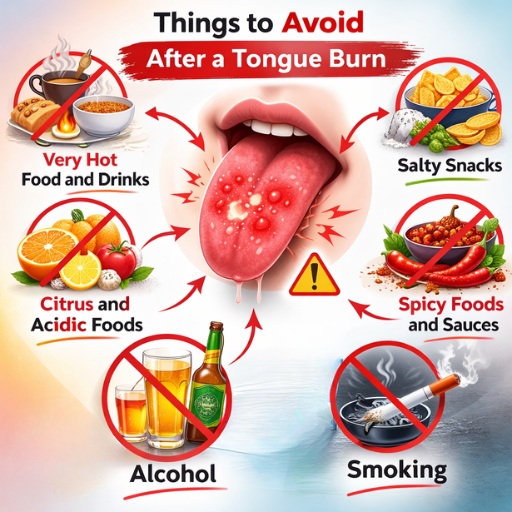
When we burn our tongue with hot food or drinks, our parents often become doctors and suggest things to reduce that stingy sensation. But blindly following those tips can make things worse. So, it’s important to keep in mind what not to do after getting your tongue burnt.
Can You Use Medication?
For continuous discomfort:
- Over-the-counter oral gels may provide temporary relief
- Pain usually subsides naturally
Use products as directed and avoid overuse.
How Long Does a Burned Tongue Take to Heal?
Typical recovery:
- Mild burns: normally stays for 2-5 days
- Moderate irritation: It stays up to 1-2 weeks
Healing time varies depending on severity and care.
When Should You See a Doctor?
Seek medical advice if you notice:
- Severe pain lasting more than a week
- Blistering
- Difficulty eating or drinking
- Signs of infection (pus, increasing redness)
- Repeated unexplained burning
FAQs
Is a burned tongue serious?
Most tongue burns are minor and heal without treatment.
Why does my tongue look white after burning?
A white coating or patch can be part of the healing process.
Can I brush my tongue after a burn?
Be gentle. Aggressive brushing may worsen irritation.
Does ice help with burned tongue?
Cool relief helps, but avoid pressing ice directly onto the burn.
References
1. Mayo Clinic (Burns and oral injuries)
2. NHS (UK) (Mouth burns and ulcers)
3. American Dental Association (ADA) (Oral tissue care)
4. National Institutes of Health (NIH) (Oral mucosal healing)


Member discussion