


How does collagen improve skin?
Collagen improves skin by providing structural support, maintaining elasticity, and enabling continuous repair. It strengthens the dermis, reduces wrinkles, improves hydration, and maintains firmness. Higher collagen levels result in stronger, smoother, and more resilient skin.
- Improves skin elasticity and firmness
- Reduces wrinkles and fine lines
- Strengthens skin structure
- Improves hydration retention
- Supports continuous skin repair
What is collagen and why skin depends on it
Collagen is the primary structural protein in skin. It forms the framework that gives skin its strength, thickness, and elasticity.
Approximately 70-80% of the dermis consists of collagen. It acts as a scaffold that holds skin together and maintains structural integrity.
Collagen determines key skin properties:
- Firmness
- Elasticity
- Thickness
- Resistance to damage
- Healing capacity
Why collagen declines with age
Collagen production declines naturally over time.
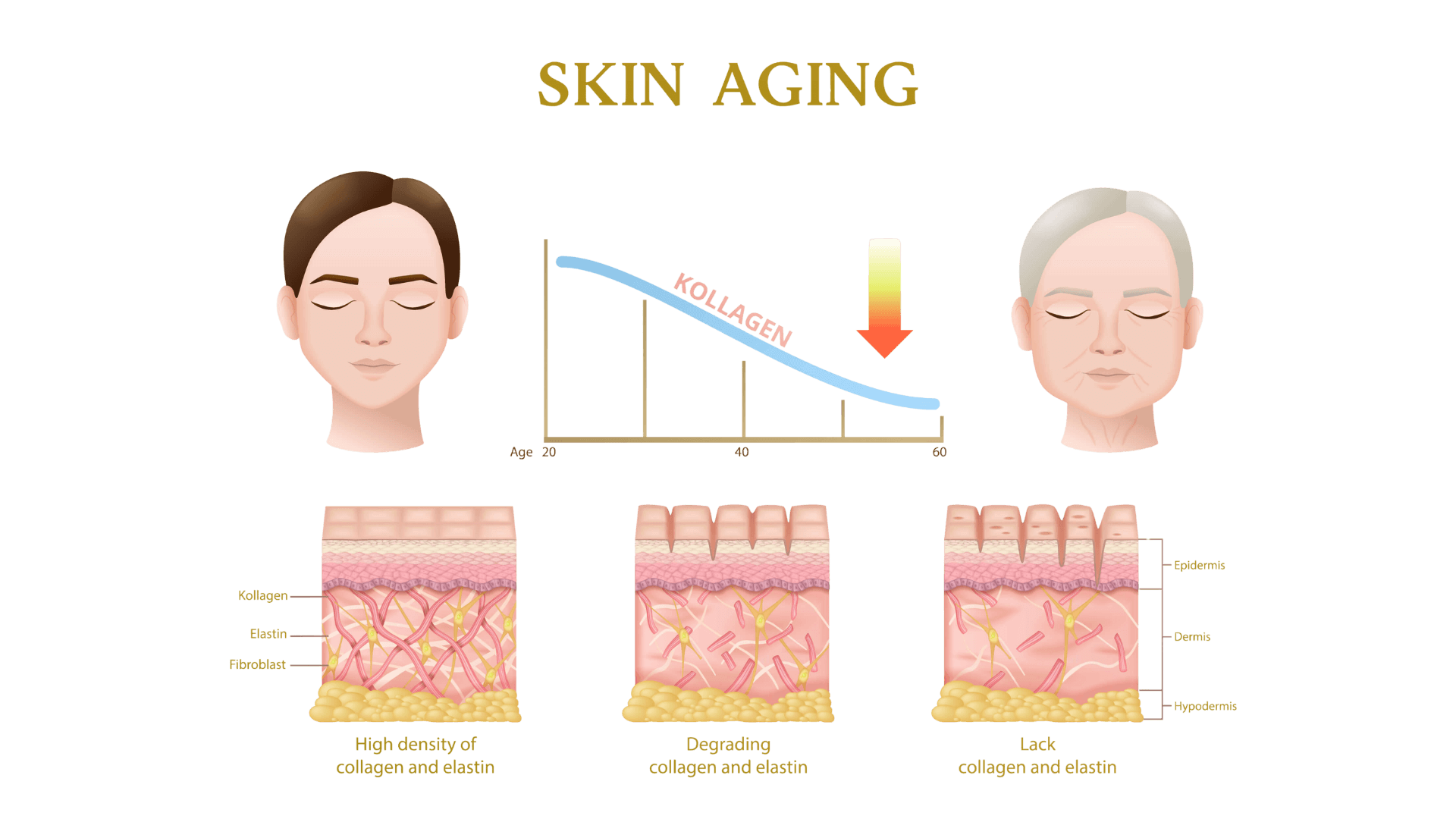
| Age | Collagen Production Change | Visible Effect |
|---|---|---|
| 20-30 | Peak production | Firm, smooth skin |
| 30-40 | Gradual decline | Early fine lines |
| 40-50 | Significant decline | Wrinkles and reduced firmness |
| 50+ | Accelerated loss | Thinner, weaker skin |
After age 30, collagen production decreases approximately 1% per year.
Benefits of collagen for skin
1. Improves skin elasticity
Collagen provides flexibility and prevents sagging.
2. Reduces wrinkles
Higher collagen levels improve structural integrity, reducing wrinkle formation.
3. Improves skin hydration
Collagen strengthens the barrier that prevents water loss.
4. Improves skin thickness
Thicker skin is more resistant to damage.
5. Supports continuous repair
Collagen enables faster healing and structural restoration.
How collagen improves skin structure
Collagen fibers form a structural network in the dermis.
This network:
- Maintains skin shape
- Resists mechanical stress
- Supports cellular regeneration
- Maintains elasticity
Collagen degradation weakens this network, causing aging signs.
How collagen supplements improve skin
Collagen supplements provide amino acids required for collagen synthesis.
These amino acids stimulate fibroblasts, the cells that produce collagen.
| Supplement Effect | Biological Result |
|---|---|
| Provides amino acids | Supports collagen production |
| Stimulates fibroblasts | Improves collagen synthesis |
| Improves dermal structure | Improves firmness |
how long collagen takes to improve skin
- 2-4 weeks: Improved hydration
- 4-8 weeks: Improved elasticity
- 8-12 weeks: Reduced wrinkles
- 3-6 months: Maximum structural improvement
Factors that accelerate collagen loss
- Aging
- UV exposure
- Smoking
- Nutritional deficiencies
- Oxidative stress
 Raj Laxmi
Nutrition strongly influences collagen production. See also: Vitamins for Skin Health
Frequently asked questions
Does collagen improve skin?
Yes. Collagen improves elasticity, firmness, and structural strength of skin.
How long does collagen take to improve skin?
Visible improvements typically occur within 8-12 weeks.
Does collagen reduce wrinkles?
Yes. Collagen improves structural integrity, reducing wrinkles.
Scientific references
- Journal of Investigative Dermatology. Collagen and skin structure.
- Clinical Nutrition Journal. Collagen supplementation studies.
- National Institutes of Health. Protein and collagen synthesis.


Member discussion