


That sharp pang on a run; aching in the foot after a long walk; swelling that just won't go down. It's easy to dismiss these symptoms as just a minor injury. They could actually be the early warning signs of a hairline fracture-a small break in the bone that often develops slowly over time as a result of repetitive pressure and stress on the area. While hairline fractures occur frequently in athletes and others engaged in strenuous physical activities, they can affect anyone, particularly if they are ignored.
The good news is that hairline fractures, when diagnosed properly, most heal quite well. Let's learn about their cause, recognize the signs, and identify the treatment that is required for optimal healing and the prevention of further fractures. In this detailed guide, we will discuss all there is to know about hairline fractures-their causes, symptoms, diagnoses, healing duration and treatments, as well as practical tips to help decrease the occurrence of future hairline fractures.
What is a hairline fracture?
Hairline fracture-often referred to as stress fracture-is a small crack in the bone from overuse or repetitive impact/trauma rather than from an acute traumatic injury.
Why it is also called a stress fracture?
A hairline fracture is often called a stress fracture because it typically develops from repeated stress or strain placed on a bone over time, rather than from a single sudden injury. This continuous stress creates tiny cracks in the bone when it does not have enough time to repair itself between periods of activity.
Hairline fracture vs stress fracture
| Feature | Hairline Fracture | Stress Fracture |
|---|---|---|
| Definition | A common term used to describe a tiny crack in a bone. | The medical term for a small crack in a bone caused by repetitive stress. |
| Cause | Usually results from repeated stress or overuse. | Develops when bones are subjected to repetitive force without adequate recovery time. |
| Medical Usage | Informal, non-technical term frequently used by the public. | Preferred term used by healthcare professionals. |
| Meaning | Describes the thin, "hairline-like" appearance of the crack. | Describes the mechanism of injury caused by repetitive stress. |
| Common Locations | Feet, ankles, shins, hips, and other weight-bearing bones. | Feet, ankles, shins, hips, and other weight-bearing bones. |
| Symptoms | Pain, tenderness, swelling, and discomfort during activity. | Pain, tenderness, swelling, and discomfort during activity. |
| Treatment | Rest, activity modification, protective devices, and rehabilitation. | Rest, activity modification, protective devices, and rehabilitation. |
| Are They Different? | Generally considered the same injury in everyday language. | The medically accurate term for the same condition. |
How is hairline fracture develops :
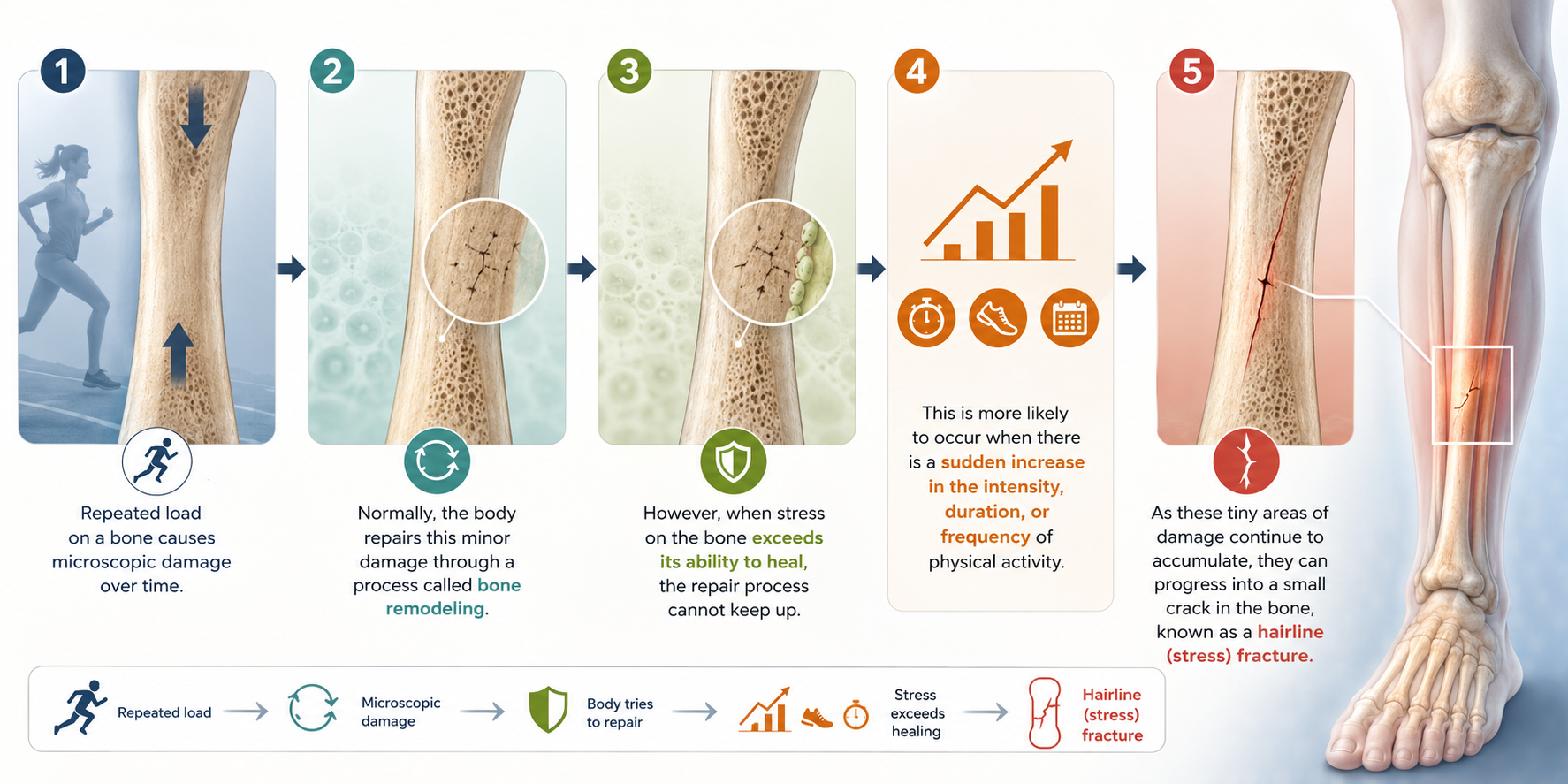
Repeated stress + inadequate recovery = microscopic bone damage → hairline fracture.
Common Causes of Hairline Fracture
Overuse and repetitive impact
- Running, jumping, dancing, and high-impact training.
- Sudden increase in distance, frequency, or intensity.
- Hard surfaces and repetitive training patterns.
Bone weakness and health factors
- Osteoporosis or bone mass deficiency
- Vitamin D and calcium deficiency
- Eating disorders and nutritional deprivation
Biomechanics and equipment
- Flat feet, high or rigid arches.
- Unsuitable shoes or shoes that are too worn.
- Altered playing surface or training conditions.
Symptoms to Watch For Hairline Fracture
Early warning signs :
- Discreta pain in the affected area only.
- Pain that is activity induced but improved at rest.
- Swell, tender and bruise.
Signs it may be getting worse
- Pain arriving earlier during physical activity.
- Inability to sustain any weight on the affected limb.
- Pain is still evident even after ceasing to move, which may indicate a more severe problem.
Danger signals
- Severe swelling
- Inability to walk normally.
- Pain in a weight-bearing bone like the shin.
- more painful after resting.
Common Locations of Hairline Fractures
Hairline Fracture in the Foot :
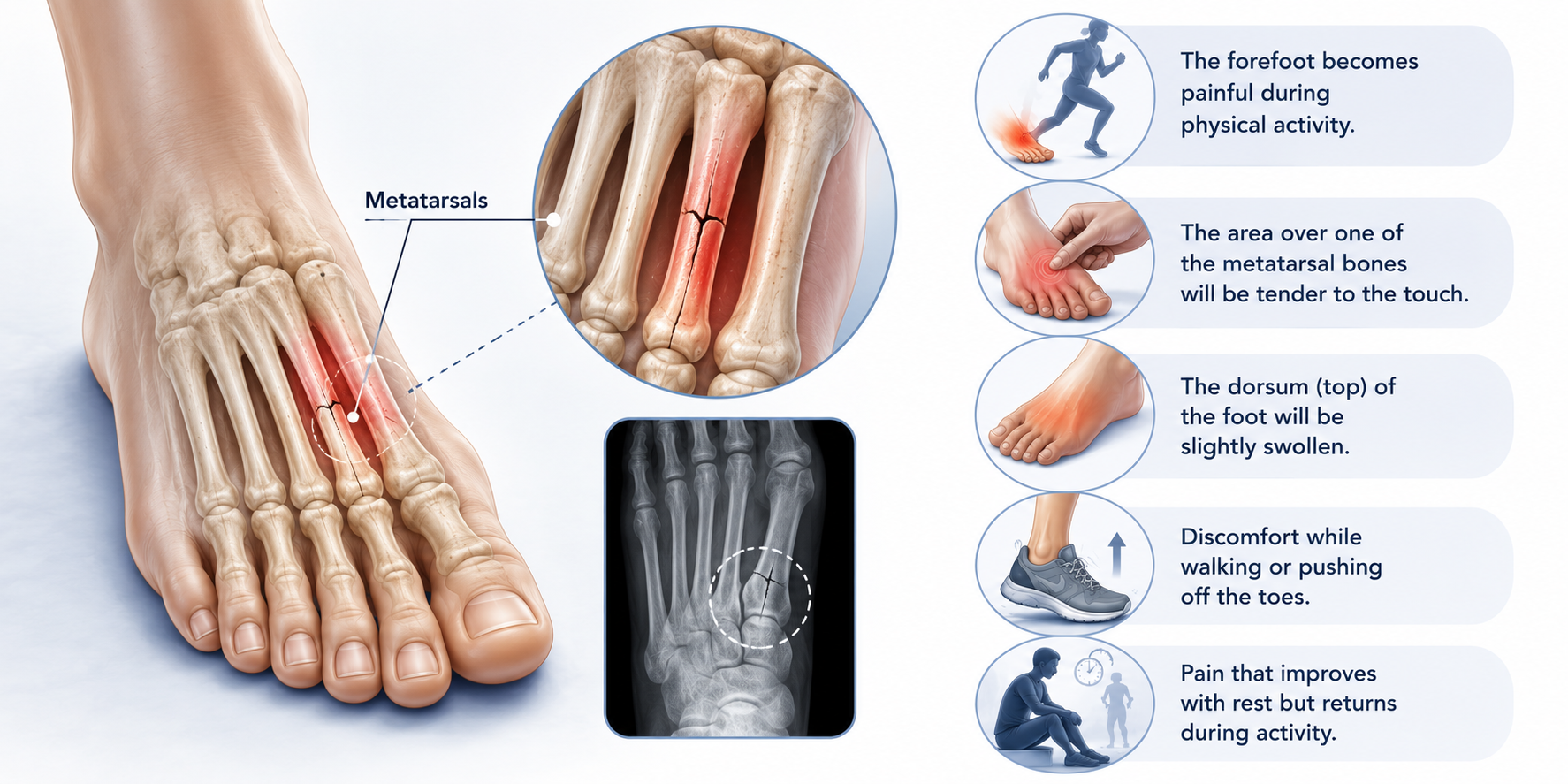
Metatarsals : The five long bones situated between the toes and the midfoot are called the metatarsals. Stress fractures predominantly occur in the second and third metatarsals as the majority of the body's weight is transmitted through these two long bones during activities such as walking or running.
Symptoms may include :
Heel bone : The calcaneus (heel bone) is also prone to a hairline fracture, particularly in runners, members of the military or people who have had a recent increase in activity. Every step lands on the heel which has to absorb the shock, and in time, constant stress will cause the bone to weaken.
Symptoms may include :
- Deep heel pain, which often worsens with walking or weight bearing.
- Soreness when the sides of the heel are pressed.
- Inflammation or swelling around the heel.
- Limping, inability to walk for long distances.
- Pain worsens with exercise or standing.
Hairline Fracture in the Ankle :
A hairline fracture to the ankle is the smallest of fractures and typically occurs to the fibula which is the thinner bone on the outer aspect of the lower leg. Fractures to the ankle are typically caused by repetitive stress such as running, jumping, dancing or any other sporting activity involving frequent change of direction. However they can be caused by minor trauma or over-use.
Common symptoms of an ankle hairline fracture include :
- Localized pain on the ankle when performing an action
- Tenderness upon touching the region of pain
- Mild swelling on the ankle area
- Pain while walking/weight-bearing
- Rest relieves pain; exercise exacerbates pain
- Unable to participate in sports/vigorous activities
Hairline Fracture in the Shin (Tibia)
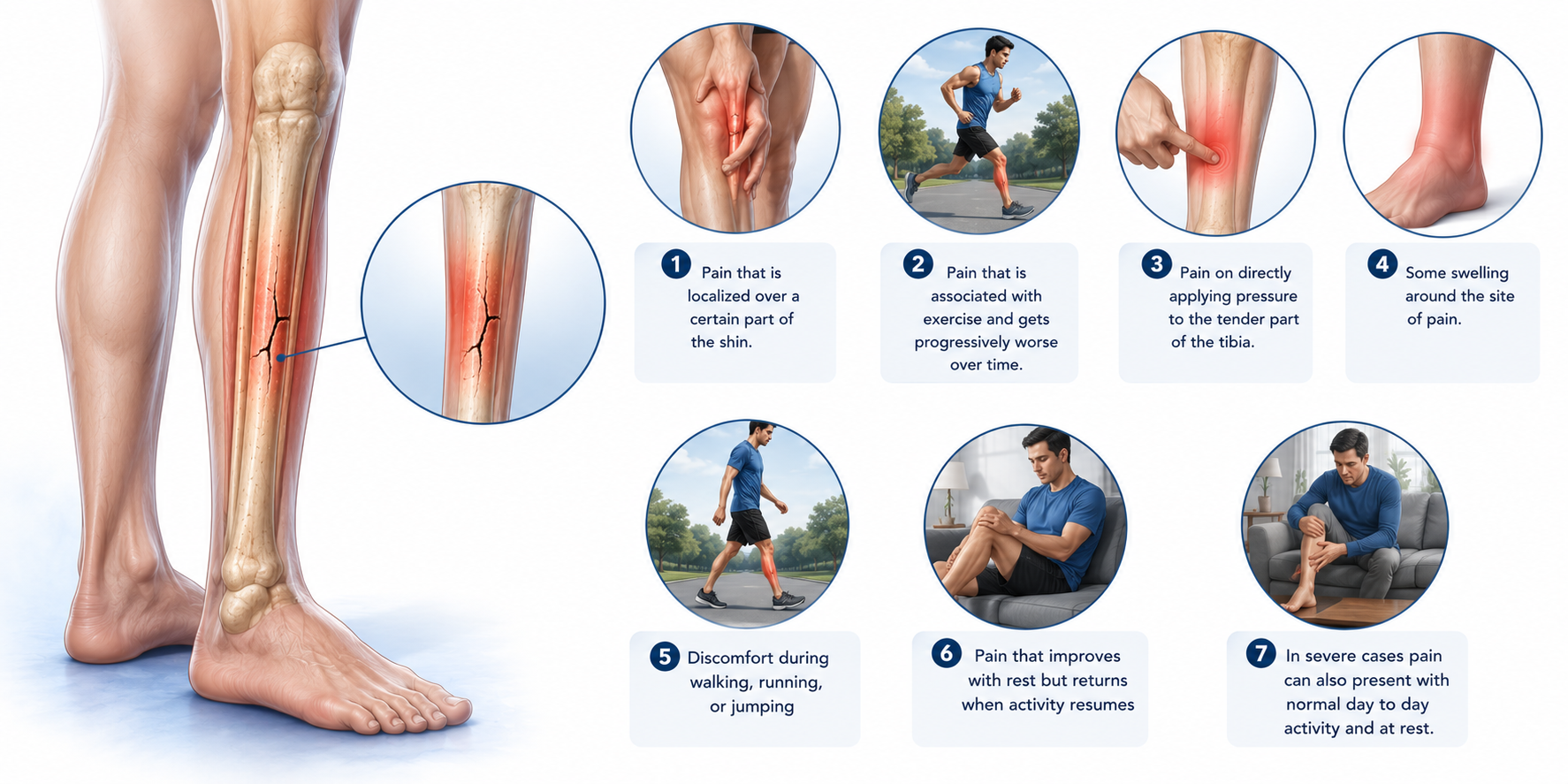
The tibia (shinbone) is also another of the most common locations for hairline fractures. Hairline fractures are common in runners, military recruits, dancers, and those who significantly increase training levels over a short period. This is because the tibia carries much of the body's weight when performing weight-bearing activities like walking, running, and jumping.
Common symptoms of Shin (Tibia) hairline fracture :
Hairline Fracture in the Hip
Hairline hip fractures typically affect the femoral neck, which is the narrow part of the thigh bone just below the ball of the hip socket. Although rarer than foot or shin stress fractures, hip hairline fractures are high-risk injuries due to potential complications from diagnosis delay. Common among distance runners, the military, older people with decreased bone density, and those who unexpectedly step up their activity level.
Common symptoms of hip hairline fracture :
- Dull aching pain in the groin or front of the hip
- Pain increases with walking, running and weight bearing
- Discomfort may spread to the thigh or buttocks
- Limitation of movement in the hip joint
- Limping or difficulty walking
- Initial relief with rest, increasing pain with activity
- In severe cases there will be pain at rest or at night
Hairline Fracture in the Wrist or Hand
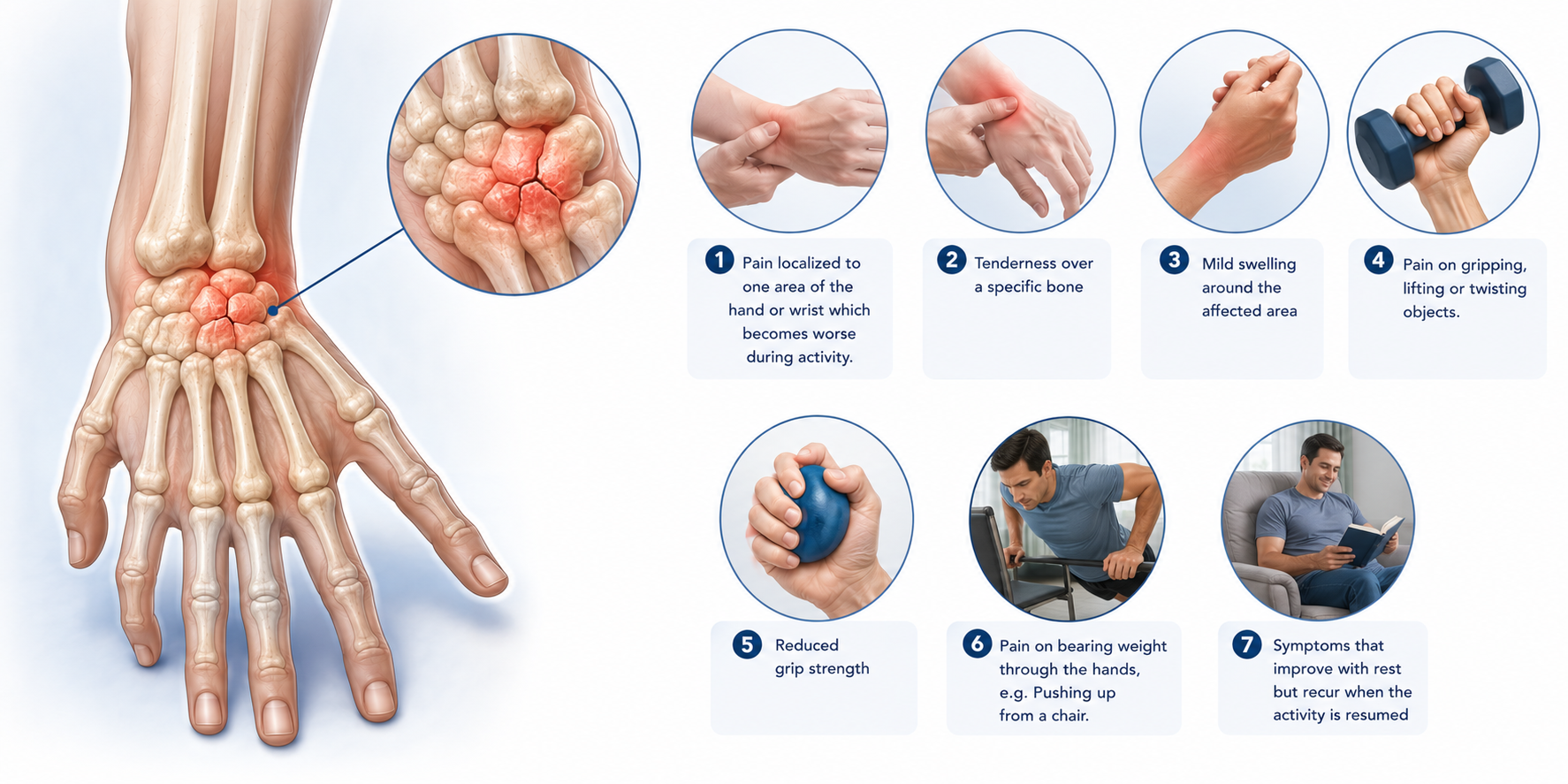
Although less frequent than those in the lower limbs, hairline fractures may occur in the wrist and the hand, especially where there is repeated strain applied to these structures. Thus, they are common in gymnasts, tennis players, golfers, people playing racquet sports, and people in vocations involving repetitive hand motions. The scaphoid bone in the wrist and the metacarpals in the hand are two of the most common bones that may be affected.
Common symptoms of a wrist or hand hairline fracture :
Fracture location matters :
shin fractures are more serious than some other sites :
Shin hairline stress fractures may cause more anxiety than some other stress fractures because the tibia is the main weight bearing bone and carries about two-thirds of the body's weight during normal daily activities, as well as with running, walking, and jumping. Placing a stress on an injured tibia will further impede healing and exacerbate the stress fracture.
Several factors contribute to their seriousness :
- The tibia is exposed to impact forces and hence total rest is impractical.
- Non-intervention can lead to progression of the stress fracture to a full fracture.
- Continued pain severely restricts mobility and everyday activity.
- Return to exercise will necessitate long periods of activity restriction and gradual return to sport.
- Late diagnosis can lead to protracted periods of rehabilitation and potential morbidity.
For these reasons, persistent shin pain that does not improve with rest should never be dismissed as "just shin splints" and should be evaluated by a healthcare professional.
Risk of Complications: Foot, Ankle, Shin, and Hip Hairline Fractures :
| Location | Risk Level | Why? |
|---|---|---|
| Foot (Metatarsals) | Low to Moderate | Most foot hairline fractures heal well with rest and activity modification, although continued walking can delay recovery. |
| Ankle | Moderate | Ankle fractures can be mistaken for sprains. Ongoing stress may worsen symptoms and affect mobility. |
| Shin (Tibia) | Moderate to High | The tibia bears most of the body's weight. Ignoring the injury can lead to a complete fracture and prolonged healing. |
| Hip (Femoral Neck) | High | Hip stress fractures carry a greater risk of complications and may progress to a complete fracture if not treated promptly. |
Who Is Most at Risk? [High-risk groups]
- Runners and endurance athletes
- Dancers and gymnasts
- Military recruits
- People who suddenly increase their activity level
- Individuals returning to sports after a break
- Those with improper footwear
- People with flat feet or high arches
- Older adults with weaker bones
- Individuals with low calcium or vitamin D levels
- People with a history of previous stress fractures
Complete Fracture vs Hairline Fracture
| Feature | Hairline Fracture | Complete Fracture |
|---|---|---|
| Definition | A small crack in the bone that does not extend through the entire bone. | A break that extends completely through the bone, separating it into two or more pieces. |
| Cause | Usually caused by repetitive stress, overuse, or minor trauma. | Commonly results from significant trauma, such as falls, accidents, or direct impact. |
| Bone Stability | The bone generally remains stable and maintains its alignment. | The bone may become unstable and displaced from its normal position. |
| Symptoms | Gradual onset of pain, tenderness, mild swelling, and discomfort during activity. | Sudden severe pain, noticeable swelling, bruising, deformity, and inability to use the affected limb. |
| Ability to Bear Weight | Some individuals may still be able to walk or use the affected area, although it is painful. | Weight-bearing or movement is often extremely painful or impossible. |
| Diagnosis | May not appear on early X-rays; MRI or bone scans may be needed. | Usually visible on standard X-rays. |
| Treatment | Typically managed with rest, activity modification, protective footwear or bracing, and rehabilitation. | May require casting, splinting, reduction, or surgery depending on the severity and location. |
| Healing Time | Often heals within 6–8 weeks with appropriate care. | Healing can take several weeks to months, depending on the type of fracture. |
| Risk if Ignored | Can progress into a complete fracture. | Can lead to improper healing, long-term disability, or complications if untreated. |
A hairline fracture is a small, stable crack in the bone, whereas a complete fracture is a full-thickness break that often causes significant pain, instability, and may require more intensive treatment.
Hairline Fracture vs Sprain: How to Tell the Difference
| Feature | Hairline Fracture | Sprain |
|---|---|---|
| Definition | A small crack in the bone caused by repetitive stress or overuse. | An injury involving stretching or tearing of ligaments around a joint. |
| Cause | Repeated impact, overuse, or sudden increase in activity. | Twisting, rolling, or sudden force applied to a joint. |
| Pain Pattern | Localized pain that worsens with activity and improves with rest. | Pain around the joint, often occurring immediately after the injury. |
| Tenderness | Tenderness over a specific bone. | Tenderness over the affected ligament and surrounding joint. |
| Swelling & Bruising | Mild swelling; bruising is less common. | Swelling and bruising are more common and may appear quickly. |
| Ability to Bear Weight | May still be possible, but usually painful. | Depends on severity; mild sprains allow walking, severe sprains may not. |
| Diagnosis | X-rays, MRI, or bone scans may be needed. | Usually diagnosed through physical examination; imaging may be used to rule out fractures. |
| Treatment | Rest, activity modification, protective support, and rehabilitation. | RICE (Rest, Ice, Compression, Elevation), bracing, and rehabilitation exercises. |
| Healing Time | Typically 6–8 weeks or longer. | Usually 2–8 weeks depending on the severity of the sprain. |
A hairline fracture affects the bone, whereas a sprain affects the ligaments. Persistent pain over a specific bone, especially after repetitive activity, should be evaluated to rule out a hairline fracture.
When Should You See a Doctor?
Seek Medical Attention If :
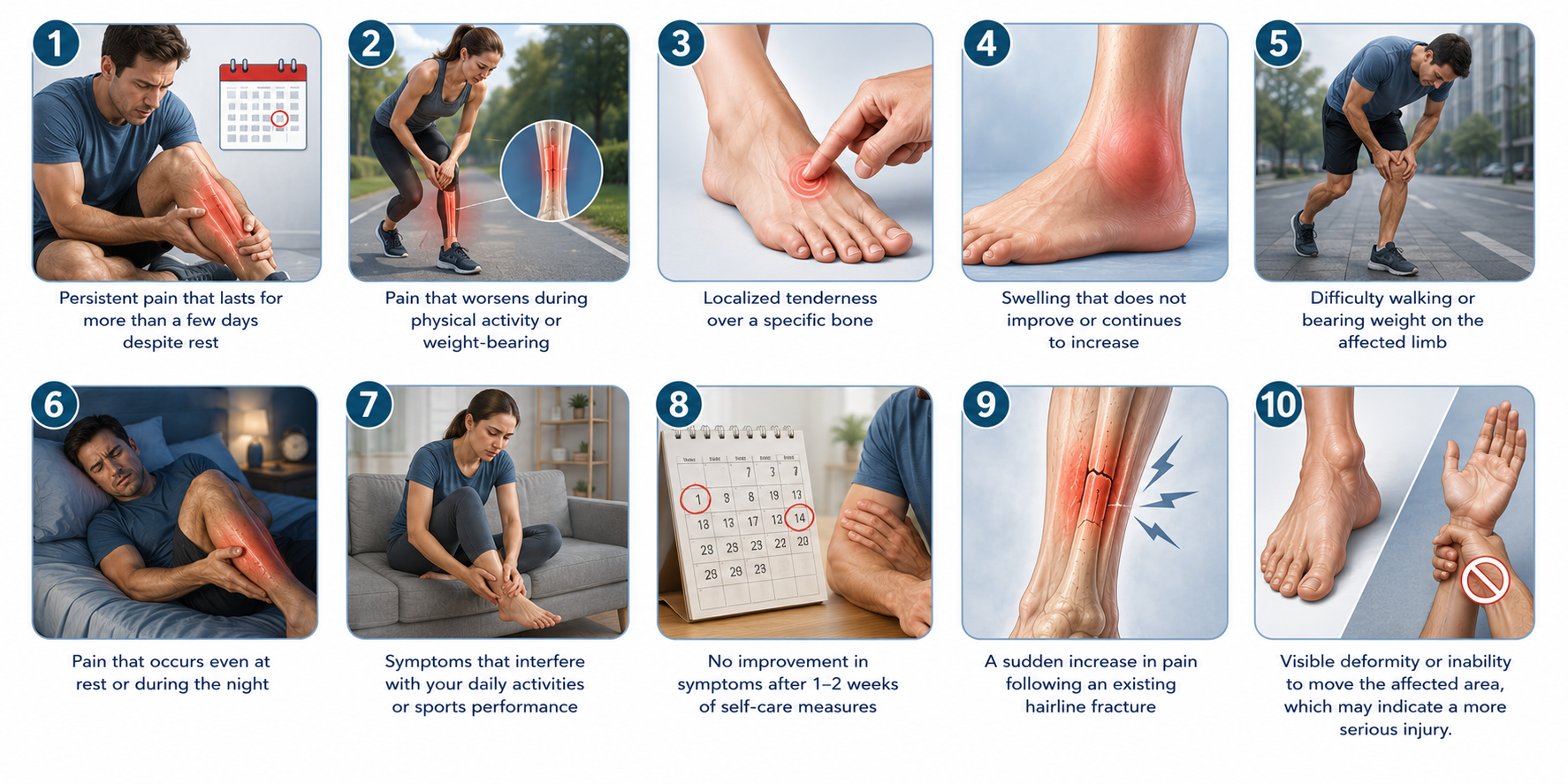
Early evaluation and treatment can help prevent a hairline fracture from progressing into a complete fracture and may reduce recovery time.
What Happens If a Hairline Fracture Is Left Untreated?
- Stress fracture can worsen into a complete break
- Delayed healing can lead to chronic pain or longer downtime.
- Untreated pain may change movement patterns and cause new injuries.
How Is a Hairline Fracture Diagnosed?
Physical exam
- Doctor checks for pinpoint tenderness and pain with pressure.
- Review of activity changes, diet, footwear, and medical history.
Imaging tests
- X-rays may miss early hairline fractures.
- MRI is the most useful test for early detection.
- CT scan or bone scan may be used when needed.
Hairline Fracture Treatment Options
Immediate First Aid (RICE Method) :
- Rest
- Ice
- Compression
- Elevation
Activity Modification :
- Avoid high-impact activities
- Switch to low-impact exercises
Protective Devices :
- Walking boots
- Braces
- Crutches to reduce weight-bearing.
Medications :
- Pain relief options
- Importance of medical advice before using NSAIDs
Physical Therapy
- Restoring strength and mobility
- Correcting movement patterns
When Is Surgery Needed?
- Surgery only for severe cases, non-healing fractures, or high-risk bones.
- Delayed healing
- Elite athletes requiring faster return
- High-risk fractures
Hairline Fracture Healing Time
Typical recovery timeline :
- Many cases heal in about 6 to 8 weeks with proper rest and treatment.
- Some can take 2 to 6 weeks of crutches plus several more weeks for full resolution.
- More serious cases may take 3 to 4 months.
Factors that slow healing :
- Age
- Overall health
- Smoking
- Nutrition
- Compliance with treatment
Can You Walk on a Hairline Fracture?
- Depends on the fracture location
- Pain levels vary
- Walking can aggravate the injury
Return to Activity
Signs You May Be Ready :
- Pain-free movement
- Medical clearance
- Restored strength
How to restart safely
- Resume activity gradually, not all at once.
- Choose low-impact exercise first, such as swimming or cycling.
- Reintroduce running, jumping, or sport only after pain-free movement and medical clearance.
- Gradual progression
- Cross-training
- Monitoring symptoms
How to Prevent Hairline Fractures
Training Tips :
- Increase activity gradually
- Schedule rest days
Footwear Recommendations :
- Proper fit
- Activity-specific shoes
Nutrition for Bone Health :
- Calcium-rich foods
- Vitamin D sources
- Adequate protein intake
Strength and Conditioning :
- Resistance training
- Balance exercises
Underlying Health Conditions
Taking care of any existing health conditions may prevent hairline fractures and encourage good bone healing. It is important to identify and treat any condition that has the potential to weaken bone or impair the healing process. These can be:
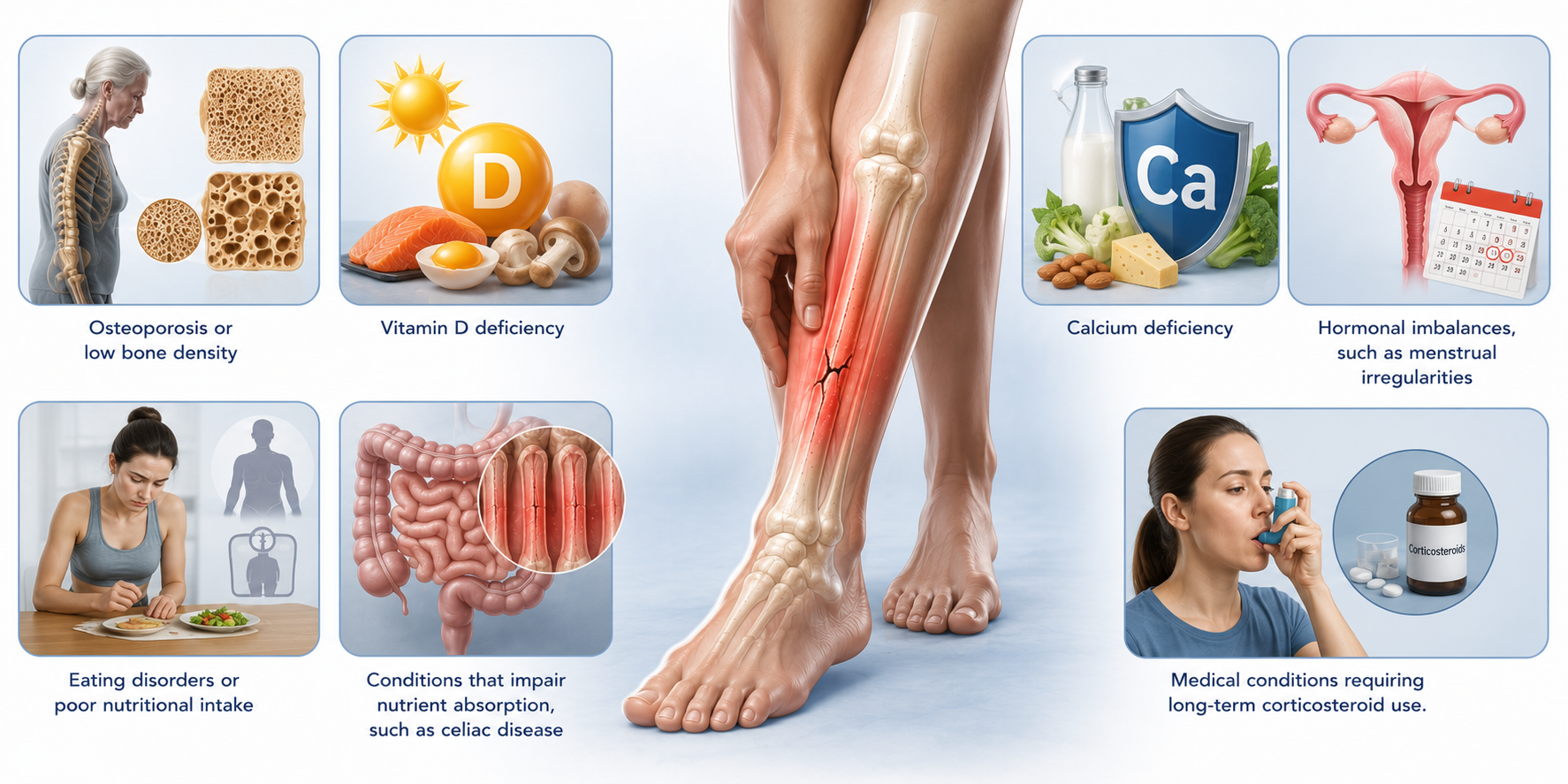
Treating the underlying cause is just as important as treating the fracture itself to prevent future injuries.
Conclusion
Hairline fractures are a small break in the bone that are often caused by overuse. Early symptoms can be identified with prompt medical treatment so that the bone is allowed to heal correctly and the injury does not advance. Good bone health is important and with rest, gradual increase in activity it is normally possible to return to normal activity and prevent reoccurrence.
Key Takeaways :
- Hairline fractures are small cracks that should not be ignored.
- Early diagnosis helps prevent complications.
- Most cases heal with rest and proper management.
- A gradual return to activity is essential for long-term recovery.
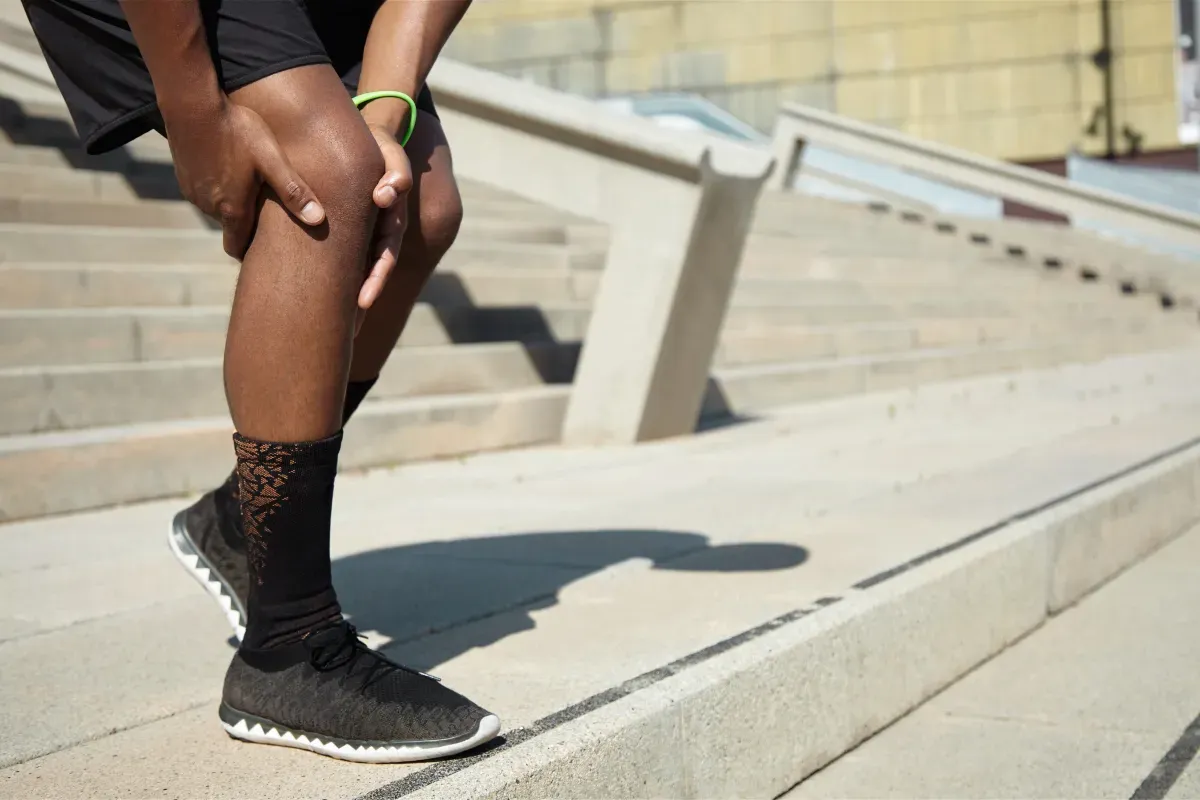
Hairline fractures aren't the only sports injuries to watch for. Find out how a hyperextended knee can affect recovery and mobility.
Frequently Asked Questions
How serious is a hairline fracture?
A hairline fracture is usually not life-threatening, but it should not be ignored. Without proper treatment, it can worsen into a complete fracture and lead to a longer recovery period.
Can a hairline fracture heal on its own?
Yes. Many hairline fractures heal on their own with adequate rest and avoidance of activities that place stress on the affected bone, although medical evaluation is recommended to ensure proper healing.
Is a hairline fracture visible on an X-ray?
Not always. Early hairline fractures may not appear on X-rays, and additional imaging tests such as an MRI, CT scan, or bone scan may be needed if symptoms persist despite normal X-ray results.
Should I massage a hairline fracture?
No. Massaging directly over a hairline fracture is not recommended, as it may worsen pain and delay healing. Always consult a healthcare professional before trying any form of massage during recovery.
Can I exercise with a hairline fracture?
High-impact activities should be avoided until the fracture heals. However, your doctor may recommend low-impact exercises, such as swimming or cycling, to maintain fitness during recovery.
What foods help heal fractures faster?
Foods rich in calcium, vitamin D, protein, vitamin C, and magnesium can support bone healing. Include dairy products, leafy greens, eggs, fish, lean meats, beans, nuts, citrus fruits, and fortified foods in your diet.
Can children develop hairline fractures?
Yes. Children and adolescents can develop hairline fractures, especially if they participate in high-impact sports or repetitive physical activities without adequate rest and recovery.
Can a hairline fracture heal without a cast?
Yes. Many hairline fractures heal with rest, activity modification, and protective support such as a walking boot or brace, although some cases may require a cast depending on the fracture's location and severity.
How do I know if it is a fracture or just a bruise?
A fracture usually causes localized pain, tenderness over a specific bone, swelling, and pain that worsens with movement or weight-bearing, whereas a bruise typically improves within a few days and is associated with skin discoloration.
Member discussion