


Oral health is very important and shouldn't be ignored. As we all know that our looks are also defined by our jaw, teeth and the structure of our lower mouth. Apart from looks, oral health is also important for overall well being because all the nutrients go through our mouth first and if there is a problem with oral health then our daily tasks like eating feels impossible and difficult.
Such oral health practices involve bone graft for tooth implant which basically replaces the missing or lost bone in the jaw. Bone grafts are helpful in promoting bone healing, so if you were also told to have bone grafting done before dental treatment by your dentist then it's best for you to know more about the procedure beforehand.
What is bone grafting?
A bone grafting is a dental procedure done to replace bone in the jaw areas with bone loss. It is done to increase the volume and density of the jaw where bone is not left. Dental bone grafting acts as a substitute that helps your body to do the repair work. In this process, bone is taken from another part of your body and added to the jaw area where there is bone loss , this way the bone tissues will regenerate and grow.
There are four types of bone grafting
- Allograft: In this process, human bone is purchased from a licensed donor.
- Alloplast: In this process, dental bone is made in the lab from hydroxyapatite which is a naturally occurring mineral.
- Autogenous: In this process, your own one is used from another part of the body.
- Xenograft: In this process, animal bone mainly of cow or pig is purchased from a licensed donor.
Why bone grafting is important ?
Bone grafting can be helpful for those who have one loss in the jaw area. Another factors which make bone grafting important are:
- To fill the empty socket after an extraction
- Increase the density or volume of jaw area
- To add bone to the upper jaw to make space for dental implants
- Regenerate or grow bone tissues after dental trauma
- Treat bone loss due to gum disease
- Stabilize and support loose teeth
- Rebuild jaw before getting dentures
Is bone grating for dental implants painful?
By hearing about the bone grafting and the procedures many patients feel anxious about the treatment. Some even avoid it by thinking it must be painful. Meanwhile this is the treatment which is done by giving you anesthesia which means you will not feel any kind of discomfort or pain during the treatment.
After treatment you might have:
- Bleeding
- Swelling
- Bruising
- Slight Pain
But all these after treatment effects can be managed by the medication that you will be provided with, from your dentist.
What happens during, after and before the procedure?
Your dentist cares for your dental health and always looks forward to solving the problems related to it. They will let you know if it is suitable for you beforehand by examining your condition. So if your dentist suggests bone grafting for dental implants then you should consider it.
During dental bone grafting:
- They will first numb your gums with local anesthetic
- Make a cut in your gums
- Gently move your gums away from your jawbone
- Then they will clean and disinfect the area
- Add dental bone grafting material to the area where there is bone loss
- After this they will cover the area with a membrane to protect it.
- Reposition your gum
- Close the cuts with stitches
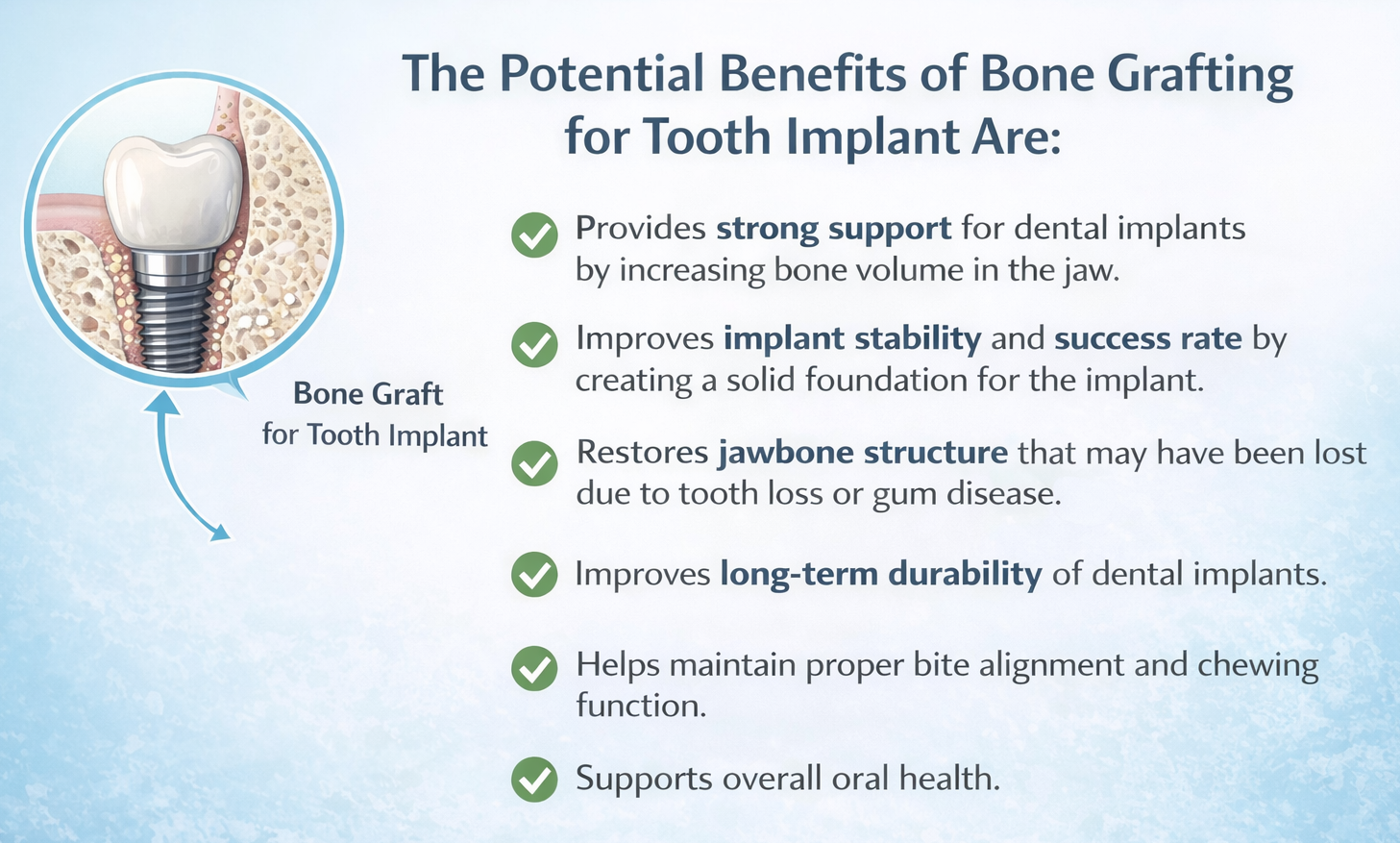
Potential Benefits of Bone grafting
Risks related to bone grafting for dental Implants
Bone grafting is safe if done by professionals but as it is a surgery there can be potential risks related to it like:
- Infection
- Anesthesia Complications
- Nerve damage
- Severe Bleeding
How long does it take to recover?
Recovery time needs proper care and rest , most importantly patience. After getting your bone grafting done take proper care of yourself and don’t rush things as it will only make things complicated. You can expect to recover at the initial stage in a week but the bone graft needs at least three months for recovery. However, this case is different for large bone graft, as it might take nine to twelve months to heal.
Do’s and Don’t during the treatment
Some strategies that you can follow to make your treatment journey easier will help you a lot.
Do:
- Apply ice packs to your outer jaw to reduce swelling.
- Eat soft foods for a few days.
- Lift your head to reduce swelling.
- Follow your provider’s post-op instructions.
- Keep the surgical area clean.
- Take all medications as prescribed.
Don’t:
- Smoke or vape
- Disturb the area where surgery is done
- Exercise within 48 hours after surgery
- Drink alcohol for at least two weeks
Final Thought
Bone grafting can play an important role in making dental implants possible for people who have experienced bone loss in their jaw. By rebuilding and strengthening the bone, the procedure helps create a stable base for implants and improves the chances of long-term success. While the idea of a bone graft may sound painful at first, it is a common and well-established dental procedure that has helped many patients restore their smile and oral function. If you’re considering dental implants but have been told you have low bone density, a bone graft may be a helpful step toward achieving a healthier and more confident smile.
Frequently asked questions
How to speed up bone graft healing?
You can speed up bone graft healing by keeping the area clean and undisturbed, following dentist instructions, avoiding smoking, taking prescribed medicines and eating easy food.
Do I need a bone graft if I’m not getting an implant?
It’s not necessary if you are not getting an implant unless you have bone loss or a large extraction socket.
Is a bone graft painful?
You will not feel any kind of discomfort or pain during the procedure because of anaesthesia.
References
- Cleveland Clinic (Dental bone graft: Process, Healing and Purpose)
- National Institute of Health ( Bone grafts and substitutes in dentistry)
- Stephen J. Spencer (Bone grafting? Will it hurt and what should I expect)


Member discussion