


Are you also planning to quit smoking? Well, quitting smoking is an important step toward better health. One of the most common questions people ask after their last cigarette is, How long will nicotine remain in my body? The answer depends on how nicotine is processed, how much you used, and individual factors like metabolism.
What Happens to Nicotine in the Body?
When you smoke, nicotine enters the bloodstream and quickly reaches the brain. The body then breaks it down, mainly in the liver, into a substance called cotinine.
Key points:
- Nicotine acts quickly but leaves the body relatively fast
- Cotinine stays longer and is commonly measured in tests
- Both are eventually eliminated through urine
How Long Does Nicotine Last?
Nicotine has a half-life which means it lasts in the body for almost 2 hours and can be cleared within 3 days or sometime if you are lucky then in just 1 day.
Whereas, cotinine which is the main byproduct of nicotine lasts for 16 to 20 hours and takes up to 7-10 days to detect in many people. But the case can be different for heavy smokers.
How is Detection done?
| Test Type | Nicotine / Cotinine Detection Window |
|---|---|
| Blood | Nicotine: up to ~3 days; Cotinine: typically detectable for several days longer. |
| Urine | Approximately 3–10 days, depending on frequency of use and metabolism. |
| Saliva | Up to about 4 days in most individuals. |
| Hair | Detectable for weeks to months, reflecting longer-term exposure. |
Detection times vary based on smoking intensity and body chemistry.
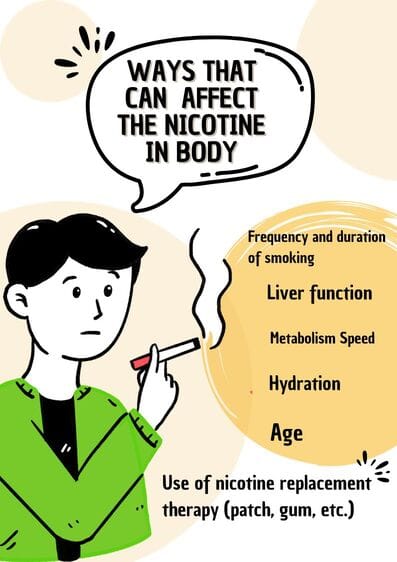
Factors That Affect Nicotine Clearance
Nicotine does not leave everyone’s body at the same rate.
Influencing factors include:
Why Do Cravings Last Longer Than Nicotine?
Even after nicotine has physically left the body, cravings can continue due to:
- Brain having habit of nicotine
- Habitual triggers (coffee, stress, social settings)
- Psychological dependence
This is why quitting involves both physical detox and behavioral adjustment.
Important Facts After Quitting
| Time After Quitting | Physiological Changes |
|---|---|
| 20 minutes | Heart rate and blood pressure begin to return toward baseline levels. |
| 24 hours | Nicotine levels drop significantly; carbon monoxide levels normalize. |
| 48–72 hours | Most nicotine is cleared from the body; withdrawal symptoms may peak. |
| More than 1 week | Cotinine (nicotine metabolite) is largely eliminated in most individuals. |
| Weeks to months | Lung function and circulation gradually improve as tissue repair progresses. |
Can You Speed Up Nicotine Removal?
There is no instant detox method, but you can support your body’s natural elimination:
- Stay well hydrated
- Eat a balanced diet
- Exercise regularly
- Sleep adequately
Time remains the most important factor.
FAQs
How long does nicotine stay in your body after quitting?
Nicotine is usually cleared within 1 to 3 days, while cotinine may remain detectable for about 7 to 10 days.
Why do I still crave cigarettes after a week?
Cravings are linked to brain chemistry and habits, not just nicotine levels.
Can drinking water flush out nicotine faster?
Hydration supports elimination but does not dramatically speed up the process.
Does heavy smoking affect clearance time?
Yes. Long-term or heavy smokers may take longer to eliminate cotinine.
References
1. Centers for Disease Control and Prevention (CDC) (Nicotine and smoking cessation)
2. National Institutes of Health (NIH) (Nicotine metabolism and cotinine)
3. Mayo Clinic (Nicotine dependence and withdrawal)
4. MedlinePlus (Nicotine and cotinine testing)


Member discussion