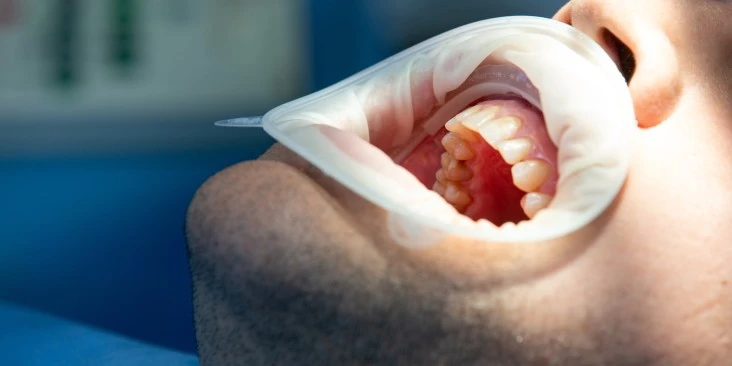
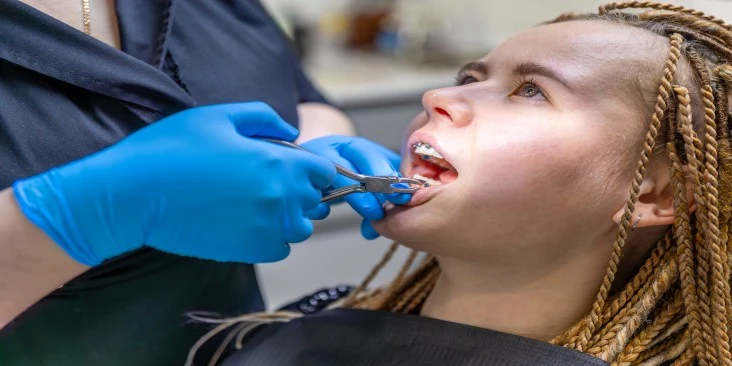
Lingual braces are braces applied to the inside of your teeth.
Lingual braces are fixed braces that are attached to the back of the teeth to straighten crooked teeth and correct bite issues. They function like traditional metal braces, but the difference is that they are glued behind your teeth as opposed to the front.
Lingual means "tongue side of the teeth." The brackets and wires are concealed at the back of the teeth, making them hard to see when you are smiling, talking, or laughing.
The appliances are very popular among adults who wish to get their teeth straightened without showing any metal brackets.
They understand tooth structure and enamel, such as:
Overcrowding or overbites of teeth.
Gaps between teeth.
Rotated or crooked teeth.
Some overbite and underbite issues.
Some other bite alignment problems.
However, depending on the teeth, jaw relationship, and treatment objectives, they may not be suitable for everyone.
How Do Lingual Braces Work?
With gentle and steady pressure, lingual braces gently guide teeth into the desired positions.
Using dental adhesive, the orthodontist affixes tiny brackets to the inside of your teeth. These brackets are fitted with a specially designed wire that provides controlled pressure.
This pressure, over time, causes alterations in the bone around the root of the tooth. Teeth slowly shift into the desired position.
Steps Involved in Lingual Braces Treatment
Typically, the following steps are taken:
1. Initial Dental Examination
Your orthodontist examines your teeth, gums, and bite. X-rays and digital scans of your teeth may be taken, along with photographs of your teeth, to understand your orthodontic condition.
2. Custom Treatment Planning
The dentist designs a strategy for the orthodontist to follow. Brackets and wires can be custom-made based on your appliance system.
3. Placement of Brackets
Brackets are attached to the inside surface of the teeth with dental bonding material. The orthodontist then secures the archwire to the brackets.
4. Regular Adjustments
Regular appointments are necessary to ensure that the teeth move correctly and to make adjustments if needed.
5. Removal and Retention
When the teeth have been placed in the desired position, the appliance will be taken out. Retainers are typically needed to hold the teeth in place and prevent tooth movement.
Advantages of Lingual Braces
People have several reasons to opt for this orthodontic treatment.
1. Almost Invisible Appearance
The largest benefit is their discreet placement. Brackets are attached to the back of the teeth, making them less visible once they are in place.
This makes them an ideal choice for adults who do not want to wear traditional metal braces at their workplaces or social events.
2. Effective Tooth Movement
These appliances are permanently attached to the teeth and operate continuously. With a skilled orthodontist's expert planning, they can correct many alignment and bite issues.
3. They Don't Need to Be Removed
These are not removable clear braces but are bonded to the teeth during treatment.
You don't need to keep an eye on them before eating or after eating.
4. Less Visible Marks on Front Tooth Surfaces
The brackets are secured to the inside of the teeth, so the front surfaces are not covered by the brackets.
Some studies also indicate that white spot lesions may not be as apparent on the tongue's surface, but they can still be prevented with a proper oral care routine.
Disadvantages of Lingual Braces
These appliances have a number of advantages, but they also have some drawbacks.
1. Tongue Discomfort
The brackets are located near the tongue. Therefore, they may cause irritation, soreness, or small ulcers, especially during the initial adjustment period.
Your tongue will get used to the appliance over time, but for some people, it might be uncomfortable for a longer duration.
2. Speech Difficulties
The brackets are also behind the teeth and may hinder tongue movement.
A lisp or trouble with the pronunciation of sounds like "s" and "t" may be noticeable for a short period of time. You can adapt by reading aloud and practising regular speech.
3. Difficult Oral Hygiene
It can be difficult to clean your teeth with brackets and wires in place.
Food particles and plaque can pile up around brackets if you don't brush well. This can cause gum irritation and cavities.
4. Higher Treatment Cost
This treatment may be more costly than traditional metal braces because the appliances are custom-made, the placement techniques are different, additional laboratory work is required, and the skills needed to install them are specialised.
You might also have to travel to find experienced orthodontists in your area.
5. Not Suitable for Everyone
Lingual treatment can be challenging for permanent dentures and tooth replacement options. Your orthodontist will have to review your teeth and let you know if it is appropriate.


Consult a dental surgeon
Lingual Braces vs. Traditional Braces
Both appliances work by applying controlled pressure to move teeth. However, their placement and patient experience are different.
Comparison Between Lingual Braces and Traditional Metal Braces
Feature |
Lingual Braces |
Traditional Metal Braces |
Placement |
Back of teeth |
Front of teeth |
Appearance |
Almost invisible |
Easily visible |
Comfort |
May irritate the tongue |
May irritate lips and cheeks |
Speech |
Temporary speech changes may occur |
Usually less interference with tongue movement |
Cleaning |
More difficult to access |
Easier to see brackets while cleaning |
Cost |
Generally more expensive |
Generally more affordable |
Suitability |
Depends on dental condition |
Suitable for a wide range of cases |
The right option depends on your orthodontic needs, budget, and personal preferences.
How Many Treatments Are Needed for Lingual Orthodontics?
The length of treatment will vary depending on the amount of tooth movement needed and the type of bite issue.
There are minor corrections that can be completed in less than a year, and more complicated cases may take around two years or more.
Factors That Affect the Duration of Lingual Braces Treatment
Treatment may last for as long as required, depending on:
The amount of crowding or spacing.
The type of bite problem.
The effort needed to straighten the teeth.
How you react to orthodontic treatment.
Attendance at follow-up appointments.
Your orthodontist will be able to provide a more accurate estimate once he or she examines your teeth.
What Is the Price of Lingual Braces?
The price of lingual orthodontic therapy will differ based on the appliance system, orthodontist's experience, complexity of orthodontic therapy, and location.
Also, there can be a price difference between private dental clinics and larger orthodontic clinics.
The entire cost may be higher than that of traditional metal braces due to the use of custom-made brackets and extra laboratory work.
Tell your orthodontist before treatment begins and ask for a comprehensive breakdown of the treatment cost. This should include the placement of the appliances, follow-up appointments, emergency visits, removal, and retainers.
How to Maintain Oral Hygiene With Lingual Braces?
The brackets are located on hard-to-see and hard-to-clean surfaces, so good oral hygiene is of particular importance.
Steps to Maintain Oral Hygiene With Lingual Braces
There are steps to take for everyone:
1. Brush Twice a Day
Brush with a soft-bristled toothbrush and fluoride toothpaste.
2. Clean Around the Brackets
Clean around the brackets and look for the areas where brackets and wires touch your teeth.
3. Use Interdental Brushes
These are small brushes that are designed to clean food debris between orthodontic wires.
4. Floss Often
Use orthodontic floss threaders or other appropriate flossing devices.
5. Rinse After Eating
Rinse your mouth with water flossers for effective cleaning.
6. Get Regular Dental Check-ups
Your dentist will be able to keep an eye on your gums and teeth while you are being treated.
Also, refrain from sticky sweets, hard candy, and foods that can harm orthodontic appliances.
Frequently asked questions
Are lingual braces painful?
You may experience soreness or tongue irritation after getting them fitted. This discomfort usually improves as your mouth adjusts to the appliance. Some soreness may also occur after adjustment appointments.
Can you eat normally with lingual braces?
Yes, you can eat most foods after adjusting to the appliance. However, avoid hard, sticky and chewy foods that may damage the brackets or wires. Cutting food into smaller pieces can make eating easier.
Are lingual braces better than clear aligners?
Neither option is better for everyone. Lingual appliances are fixed and remain attached to your teeth, while clear aligners are removable. The choice depends on your bite problem, treatment requirements, lifestyle and preferences.