Are Teeth Bones?
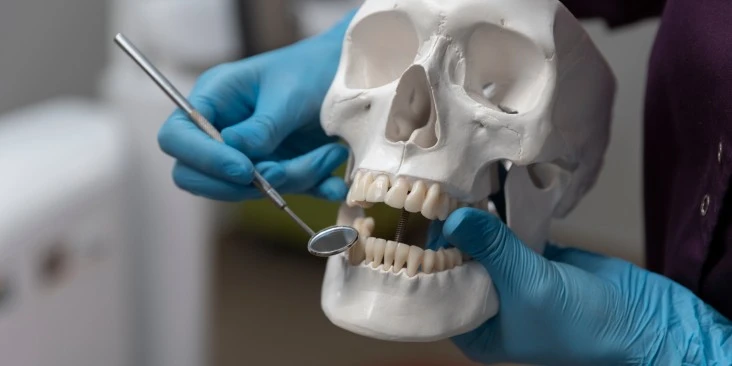
Our teeth enable us to chew apples, eat bread, and enjoy food. They are firm, white, and remain attached to our mouths. These characteristics could lead you to think that are teeth bones. The answer is NO, although they do have minerals in them, like calcium and phosphorus. They are designed to have diverse structures and serve different functions in the body.
The skeleton of the body is made up of bones. They provide support and protection to your body and enable you to move. Teeth have a more specific function. They chew food to make it easier to swallow and digest. Another important difference exists. Your bones can heal most damage when you break them. A damaged tooth, of course, can't heal in the same way, especially if you've lost the outer layer.
What Are Teeth Made Of?
So let's examine the difference between teeth and bones, find out are teeth bones and how to protect your teeth.
The tooth may appear to be one solid structure, but is actually multilayered. Each of these layers is responsible for maintaining the strength and health of the tooth.
Enamel
The outermost layer is Enamel. The crown is the part of the tooth which is exposed above the gum line and is covered with enamel. It helps to keep the inner portions of the tooth safe when you bite and chew.
The hardest substance in the human body is enamel. It contains a high amount of minerals, mainly hydroxyapatite, which gives it its hardness.
Enamel, however, does not contain any living cells. Once a tooth is chipped from the enamel part, it can't grow back the lost enamel.
That's why dentists advise you to avoid injuries to your teeth, and to treat any damage as soon as possible.
Dentin
The layer under the enamel is the dentin.
The dentin is directly under enamel and forms the bulk of the tooth.
It's softer than enamel and has tiny channels that lead to the inner part of the tooth. These channels are one of the reasons that dentin can be sensitive when exposed.
If enamel has worn away or gums have receded, for example, there may be a sharp feeling when consuming cold water.
Pulp
The soft inner part of a tooth is called the pulp. Includes nerves, blood vessels If the problem is serious, gum disease can hurt the tissue and bone that hold the teeth in place.and connective tissue.
The nerves allow you to feel pain and the blood vessels bring nourishment to the tissue.
Severe pain or infestation can occur if the tooth decay reaches the pulp.
Your dentist may recommend root canal treatment to remove the infected tissue and save the tooth.
Cementum
The rest of the root of the tooth is protected by a layer called cementum. This works to secure the root to the surrounding periodontal ligament (tooth socket).
This is a link that helps to stabilize your teeth when you chew.
What is the difference between teeth and bones?
These 4 tissues act together but they do not have the same structure as bone. This is one of the key differences why teeth are not considered bones. Several things make teeth and bones different from one another, although they do share some minerals.
Feature |
Teeth |
Bones |
Main purpose |
Biting and chewing food |
Supporting the body and protecting organs |
Outer layer |
Enamel covers the crown |
Cortical bone forms a strong outer layer |
Main tissues |
Enamel, dentin, pulp, and cementum |
Bone tissue containing living cells and a mineral framework |
Healing ability |
Lost enamel cannot grow back |
Many broken bones can heal naturally |
Bone marrow |
Absent |
Present in many bones |
Location |
Attached to the jawbone |
Form the body's skeleton |
Calcium and Phosphorus are present in teeth and bones. These minerals help make them hard enough to perform their jobs.
But two body parts with the same minerals are not the same. They have different tissue organization, as well as differing responses to injury.
Why are teeth not as hard as bone?
Imagine that you fall while playing badminton and break a bone in your arm. Your body begins the repair process. New tissue is formed by cells and the damaged area gradually mends.
Now suppose that you chipped a front tooth during the same fall. A new layer of enamel will not regenerate over the damaged area of the tooth. Depending on the degree of damage, the tooth may require a filling or dental bonding or other treatment.
Why is this so?
Bone is a living tissue. It contains cells which are helpful in maintaining and repairing it. Enamel, however, is formed without the inclusion of living cells.
But there is an exception that one must be aware of. In cases of early enamel loss due to the loss of minerals it is possible to reverse it. Saliva and fluoride toothpaste can help replenish and repair lost minerals, and reinforce weakened enamel before cavities develop. This is known as the remineralization process.
However, remineralisation is not able to restore a large chip or regenerate lost enamel.
This is why it is important to seek vessels,. A small cavity might be less difficult to treat than a cavity that has grown into deeper parts of the tooth.


Consult a orthopedist
Is Teeth Stronger Than Bones?
Enamel has a very high concentration of minerals and is harder than bone.
Consider eating a raw carrot. You use your front teeth to slice apart the carrot, and your back teeth to break it down into even tinier bits. Enamel protects your teeth from the pressure that's put on during this process. Hardness does not imply that a material cannot break, however.
Hard biting objects, teeth grinding and injuries to the mouth can cause teeth to crack. Tooth decay if left untreated can also weaken the tooth and make it more susceptible to breaking.
Bones are not as structured. They include collagen, a protein which gives flexibility and resists a few forces. So the external surfaces of the teeth may be tougher, but they are not impenetrable. They are strong when they are built and in good condition.
How are teeth related to the jawbone?
The teeth are not bones, but they need to be supported by a jawbone and bone grafting for dental implants.
Tooth roots are embedded in sockets of the jawbones. The root is surrounded by the periodontal ligament that aids in anchoring the tooth in the surrounding bone.
The healthy gums help to safeguard the soft tissues that surround the roots.
Gum disease can cause the tissue and bone that hold the teeth in place to be hurt if the problem is serious. With time, the affected teeth can loosen.
This is why, in the case of persistent gum issues, it's advisable to use a toothpaste that includes antimicrobial agents. If gums bleed, swell or loosen, it is a matter for a dentist's attention.
What Can You Do To Keep That?
Proper gum care helps maintain the stability of the structures of your teeth. Prevention is key, as your teeth can't heal everything on their own.
Here are 5 habits which help to protect them:
1. Brush twice daily. Brush two times a day with fluoride toothpaste and brush for 2 minutes. Gently brush all surfaces of the teeth.
2. Floss in between teeth. Floss between the teeth or brush with an interdental brush to remove food particles and plaque that your toothbrush can't get.
3. Consume fewer sugary foods and beverages. Sugars are converted to acids by bacteria in dental plaque which can harm enamel.
4. Do not bite hard objects. Avoid using your teeth to open packets, chew ice and crack hard shells.
5. Go to the dentist for regular check-ups. Regular check-ups of the teeth are a great way to identify tooth decay, gum disease or other issues before they get worse.
Seek dental treatment if you chip a tooth, if the tooth is persistently painful or if there is swelling around the gum line. For common oral health problems dentist will be able to assess the damage and suggest the correct treatment.
Frequently asked questions
Are teeth bones or part of the skeleton?
Teeth are not bones. They are specialized structures which are attached to the jawbone. Though they are linked to the skeletal system, their tissues and structure are different from that of the bones.
Are teeth made of calcium?
Calcium and phosphorus are present in the teeth in mineral form, hydroxyapatite. Enamel minerals contribute to the hardness of enamel. Teeth also are composed of other tissues such as dentin, cementum, and the pulp.
Do baby teeth have bone in them?
NO, baby teeth are also composed of the same four dental tissues as the permanent teeth. Usually fall out in childhood and replaced by permanent teeth.
Do weak bones affect a person's teeth?
Not necessarily. Weak bones do not necessarily mean weak teeth; teeth and bones are different. Some health issues and disorders of the jaw bone may affect the support that teeth have. If you have any concerns, ask your health care professional or dentist.