What Are Permanent Dentures?
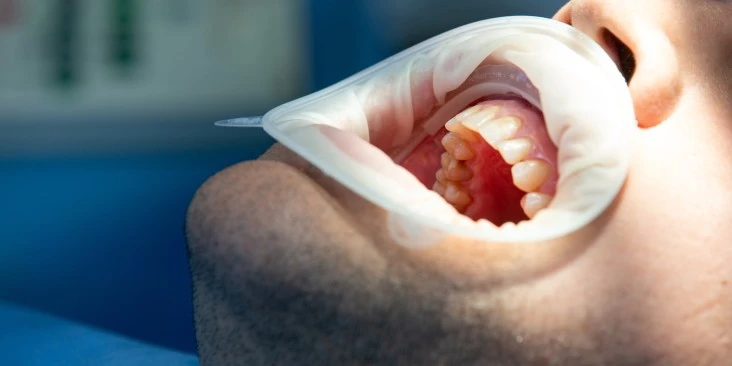
Permanent dentures are dentures that do not need to be taken out at night. It is often used to describe fixed (implanted) dentures. Dental implants are small posts formed of titanium, which are inserted into the jawbone by the dentist. They function as tooth root substitutes. After healing and solidifying, a set of replacement teeth can be attached to the implants.
Fixed implant-supported teeth are not removable which is different from regular removable dentures. A dentist can extract them if it is necessary for the cleaning or repair.
Remember, there are other types of long-term dentures, also called permanent dentures. That's why it's always important to ask your dentist what treatment they are suggesting.
What Are the Different Types of Permanent Dentures?
There are several types of permanent dentures. There are a number of options for replacing a missing tooth. Knowing the differences can help you ask better questions during your dental visit.
1. Fixed Implant-Supported Dentures
These dentures are fixed to dental implants.
These can replace the teeth in the upper, lower or both jaws.
They might be a good option for those who don't want to take out their teeth at home.
They should be cleaned carefully and have regular check-ups at the dentist.
2. Snap-In Dentures
Snap-in dentures are dentures that snap into implants but can be removed.
They are held into place with small connectors which make them more stable than many traditional dentures.
Although they both employ implants, they are not identical with fixed dentures.
They are easily detached which may simplify the cleaning process.
3. Traditional Complete Dentures
The traditional dentures fit on the gums and are used to replace an entire row of teeth.
They are not surgical implants and they could be a more affordable alternative to implant supported ones.
But sometimes they can move when eating or speaking. Any loose or uncomfortable adjustments may be suggested by your dentist.
The choice of the right depends on the number of teeth you have lost, the condition of your jaw bone, your budgets, and your needs.
What are the advantages of Permanent Dentures?
There are several advantages to a permanent denture.A big advantage of a permanent denture is stability. They are less likely to become dislodged during eating or talking, due to their attachment to implants.
Here are some other possible benefits.
More stable replacement teeth: This will allow you to eat a more varied diet.
Clear speech: Teeth that do not move will make speaking more natural.
Natural looking smile: Dentures can be fashioned to look like a tooth and can be set in your mouth.
Fixed dentures are not removed at night - except if instructed not to by your dentist.
Confidence: A comfortable smile makes social situations more comfortable.
However, each individual has unique responses to the results. Permanent Dentures do not feel exactly like natural teeth, and do not guarantee the ease with which you will eat every food.
Who Can Get Permanent Dentures?
There are a number of adults who could be an ideal candidate. But first you need to visit your dentist who will decide if you are a suitable candidate. Your dentist will examine your gums, any healthy teeth, jaw bone and overall health.
There should be sufficient healthy bone to support dental implants. In some cases, a bone graft may be required prior to treatment if the bone is too thin or weak. Healing and/or treatment planning may also be affected by smoking, uncontrolled diabetes, gum disease, or certain medications.
All of these factors do not necessarily exclude implants but do warrant consultation with your dentist. For instance, someone with severe tooth loss and healthy bone density could be a candidate for the fixed implant-supported teeth. A person with limited bone might require extra therapy, or might want to get dentures that fit in the mouth and can be taken in and out.
How Much Do Permanent Dentures Cost?
The cost of permanent dentures can vary greatly. No single price is applicable to all patients. Your bill could be affected by a number of factors like:
The number of implants to be used.
If it's to be done for one jaw or both.
The material used to make the replacement teeth.
If tooth extractions or bone grafting is required.
The experience of the dentist and the location of the dental practice.
Follow-up visits, repairs and maintenance.
The overall expenses for fixed implant supported dentures are higher than that of the traditional removable dentures due to the use of implants, surgery and custom-made replacement teeth.
Whenever planning a permanent denture, always request a written price estimate. Be sure to include what it covers, including scans, surgical procedure, temporary teeth, final denture, medication, and follow-up visits. Don't select a clinic solely for the lowest fee. Quality planning, materials used, insurance and followups are also important.
What is the treatment process?
The process for obtaining permanent dentures typically has some steps. The entire process can take months, depending on your dental condition and your healing time.
Step 1: Dental examination
Your dentist inspects your oral cavity, comes to know about your medical history and might perform a 3D scan or x-rays. This assists them in making plans for the placement of the implants.
Step 2: Implant placement
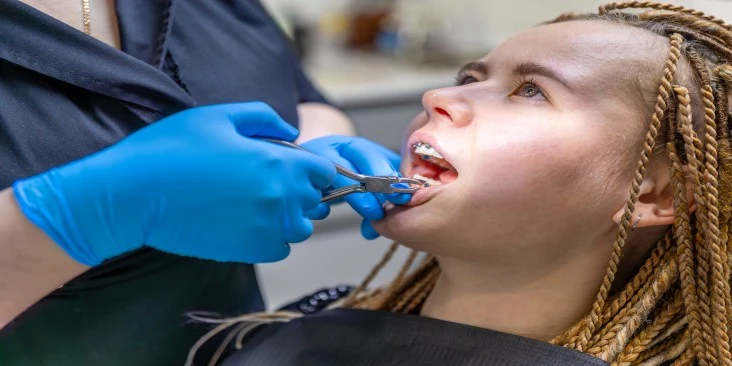
The dentist/oral surgeon implants the implants into your jawbone. This typically is performed under local anesthesia, but sometimes another type may be available.
Step 3: Healing period
It takes time for the bone to secure to the implants. This may be for several months. Depending on their treatment, some patients are able to have temporary teeth during this time.
Step 4: Fitting the new teeth
When the implants are in place, your dentist affixes the custom-made replacement teeth and tests your bite. Minor modifications may be required for comfort.
Step 5: Follow-up care
Your dentist examines the healing, fit and health of your gums. These visits can help to detect issues early.


Consult a dental surgeon
What are any risks?
While permanent dentures can provide numerous advantages, they aren't without risk.
The surgery to load the implant could lead to swelling, pain, bleeding or infection. An implant may not adhere well to the bone in some instances.
Depending on the location of the implant, there can also be damage to adjacent nerves or other structures.
Fixed dentures need to be repaired if there is a loose screw or a chip in a tooth.
They also can result in food and plaque entrapment which requires good oral hygiene to keep clean.
The price is another worry. The treatment may cost a lot of money and future maintenance may contribute to this.
Before you start, check with your dentist about issues that may arise in your case, what will be done if an implant fails, and how it will be fixed.
How to Take Care Of Permanent Dentures?
Maintain gums, implants and replacement teeth with good care and oral hygiene practices.
Brush dentures at least twice a day with an appropriate denture brush.
Use either special brushes or floss threaders that your dentist has recommended to clean around the gum line and under the fixed teeth.
Wash tongue and the rest of your mouth.
Take your dentist's recommendation about flossing and cleaning items.
Go for routine appointments to get your oral health checked and teeth cleaned.
Do not use sharp objects to dislodge the stuck food.
If you have pain, swelling, bleeding, looseness or a change in your bite, please call your dentist.
Although permanent dentures are non-cavitating, the gums and tissues surrounding an implant may become unhealthy. Cleaning is not an option, it's a MUST.
How do you decide which option you take?
When considering permanent dentures, consider what is important to you.
Do you prefer to have your teeth in perfect alignment?
Would you like a removable one that is easier to clean?
What is your budget for treatment?
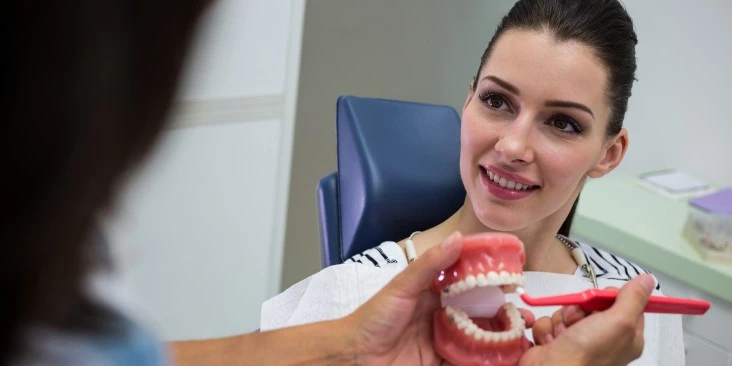
Make a list of questions for your dentist. Inquire about the number of implants required, the length of treatment, if bone grafting is needed, and the cost of the treatment. Consider asking the dentist about his or her experience in cases similar to yours and any special training in implant-supported dentures. If in doubt, it's not a bad idea to get a second professional opinion.
Not all the best treatments are the most costly. This is the one you feel is best for your health, your lifestyle and your future.
Frequently asked questions
How long do permanent dentures last?
The implants may last many years, but the replacement teeth and their parts can wear out, chip, or need repair. Their lifespan depends on materials, oral hygiene, bite forces, and regular maintenance.
Are permanent dentures better than removable dentures?
Neither option is best for everyone. Fixed dentures can offer greater stability, while removable dentures are often easier to take out for cleaning and may cost less. Your dentist can help compare them based on your needs.
Is getting permanent dentures painful?
Implant placement is usually performed with anesthesia, so you should not feel sharp pain during the procedure. Some soreness and swelling afterward are common. Your dentist will explain how to manage discomfort during healing.
References
- Cleveland Clinic. Implant-Supported Dentures. Explains fixed and removable implant-supported dentures, their uses, and care. · source
- American Dental Association. Denture Care and Maintenance. Provides guidance on denture cleaning, oral hygiene, and professional follow-up. · source
- Cleveland Clinic. What Are Dentures? Types, Care & Benefits. Covers complete, partial, and implant-supported dentures. · source