


What are the most important vitamins for skin health?
The most important vitamins for skin health are Vitamin C, Vitamin A, Vitamin E, Vitamin D, Vitamin B3, and Omega-3 fatty acids. These nutrients enable collagen production, protect against cellular damage, improve hydration, and maintain structural integrity of the skin.
- Vitamin C builds collagen and improves firmness
- Vitamin A accelerates skin repair and renewal
- Vitamin E protects against oxidative damage
- Vitamin D regulates immune and barrier function
- Vitamin B3 improves elasticity and reduces inflammation
- Omega-3 fatty acids improve hydration and barrier stability
Without these nutrients, skin gradually becomes weaker, thinner, and more prone to aging and damage.
Why skin depends on vitamins: the biological foundation
Skin is not a passive covering. It is a metabolically active organ that constantly rebuilds itself. Every day, millions of skin cells die and are replaced. This process requires structural proteins, antioxidants, and regulatory molecules, all of which depend on vitamins and nutrients.
Three biological systems determine skin quality:
- Collagen matrix: provides strength and elasticity
- Cellular turnover system: replaces damaged cells
- Barrier system: prevents water loss and protects against environmental damage
Vitamins directly control these systems at the cellular level.
Vitamin C: the primary driver of collagen production
Vitamin C is essential for collagen synthesis. Without it, the body cannot produce stable collagen fibers.
Uneven tone and dullness are signs of oxidative damage.
— Zerunio (@zerunio) February 16, 2026
Healthy skin requires protection and repair.
Vitamin C does both. 🍊https://t.co/7MG1NsytWE pic.twitter.com/VKuF46PqPW
Benefits of Vitamin C for Healthy Skin
Cellular mechanism
Vitamin C activates enzymes called prolyl and lysyl hydroxylase. These enzymes stabilize collagen molecules, allowing them to form strong structural networks.
Observable skin benefits
- Improved firmness
- Reduced wrinkle depth
- Improved skin brightness
- Faster wound healing
Deficiency effects
Severe deficiency causes fragile skin, slow healing, and structural weakness.
Vitamin A: regulator of skin renewal and repair
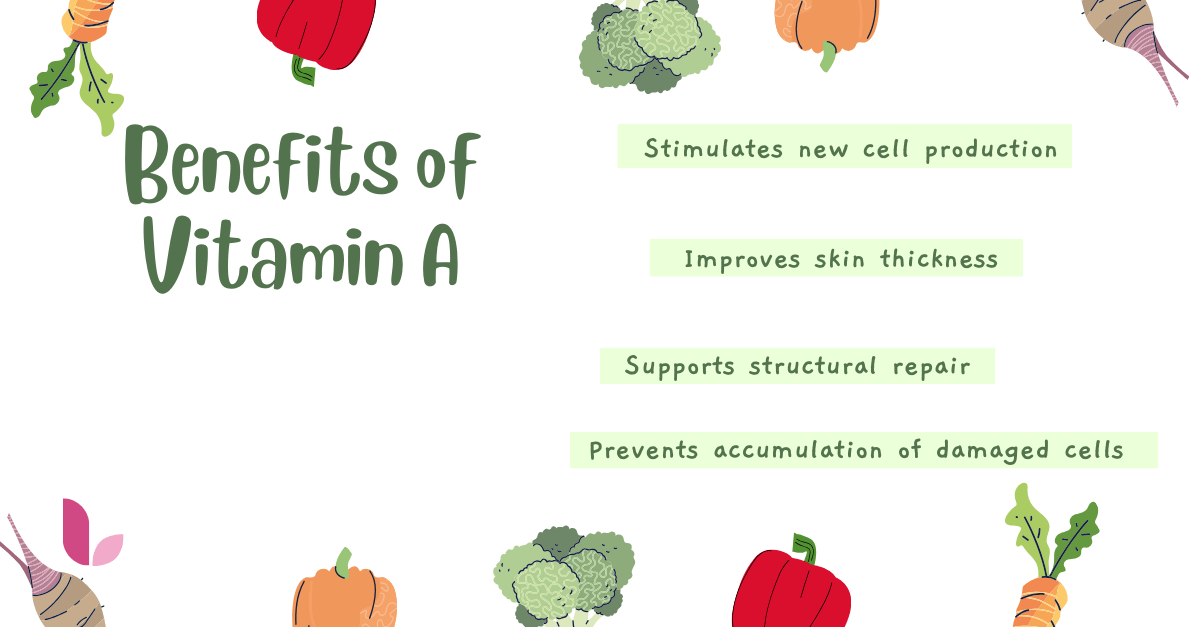
Vitamin A controls the rate at which skin cells are produced and replaced.
Core functions
- Stimulates new cell production
- Prevents accumulation of damaged cells
- Improves skin thickness
- Supports structural repair
This is why Vitamin A derivatives are widely used in dermatology.
Vitamin E: structural protection against oxidative damage
Skin is constantly exposed to oxidative stress from ultraviolet radiation and pollution.
Vitamin E protects cell membranes from oxidative destruction.
Benefits
- Protects structural proteins
- Reduces cellular damage
- Supports barrier function
- Improves moisture retention
Vitamin D: regulator of immune and barrier function
Vitamin D controls immune activity in skin and supports barrier integrity.
Skin barrier strength determines hydration, resistance to irritation, and resilience.
Omega-3 fatty acids: structural support for hydration and stability
Omega-3 fatty acids are structural components of cell membranes.
They improve membrane stability, hydration retention, and reduce inflammation.
Comparison table: functional roles of skin nutrients
| Nutrient | Primary biological function | Structural impact | Clinical importance |
|---|---|---|---|
| Vitamin C | Collagen synthesis | Strength and firmness | Critical |
| Vitamin A | Cellular renewal | Repair and regeneration | Critical |
| Vitamin E | Antioxidant protection | Structural preservation | High |
| Vitamin D | Barrier and immune regulation | Barrier strength | High |
| Omega-3 | Membrane structure | Hydration stability | High |
Timeline of improvement after correcting nutritional deficiencies
- 2-4 weeks: improved hydration and barrier stability
- 4-8 weeks: improved skin texture and resilience
- 8-12 weeks: visible structural improvements
- 3-6 months: measurable collagen improvement
This timeline reflects biological turnover cycles.
Factors that accelerate skin aging
- Nutritional deficiencies
- Ultraviolet radiation exposure
- Smoking
- Chronic inflammation
- Oxidative stress
Nutrition directly influences resistance to these stressors.
Frequently asked questions
Which vitamin is most important for skin?
Vitamin C is the most important because it is required for collagen synthesis.
Do vitamins actually improve skin quality?
Yes. Vitamins directly regulate collagen production, repair, and cellular function.
How long does it take for vitamins to improve skin?
Structural improvements typically appear within 8-12 weeks.
Scientific references
- US Department of Veterans Affairs. Supplements for Skin Health
- National Institutes of Health nutritional database
- Journal of Investigative Dermatology
- Clinical Nutrition and Skin Health studies


Member discussion