


As we age our body changes as well and something shifts around age 45 for many men. The body filled with energy feels like it has no energy left and every task feels tiring. Sleep schedule changes and you don't feel like sleeping most of the time. The drive to exercise, get physically involved with your partner, or even socialise quietly fades. You get mood swings without warning.
Most men quietly accept this as just getting older and they often ignore these symptoms but it has a name which is menopause which is also known as andropause. Let’s know the truth about menopause no one talks about.
What is manopause?
It describes the condition when men experience testosterone falls with age. This condition has medical terms like:
- Andropause: general term for age-related hormone decline in men
- Late-onset hypogonadism (LOH): a specific diagnosis where testosterone falls below a threshold causing clear symptoms
- Androgen decline in the aging male (ADAM): a research term capturing the broader hormonal picture
How it differs from female menopause
The comparison to female menopause is both useful and misleading. Useful, because it gives men a recognisable frame of reference for a real biological transition. Misleading, because the two experiences are completely different from each other.
| Female Menopause | Male "Manopause" |
|---|---|
| Affects every woman | Does not affect every man |
| Relatively abrupt hormone drop, often within a few years | Very gradual hormone changes |
| Ovulation and reproduction end completely | Reproduction can continue into older age |
| Defined as 12 months without a menstrual period | No clear biological endpoint |
| Driven by estrogen and progesterone depletion | Driven by declining testosterone, influenced by lifestyle and health factors |
What actually causes it
It’s very difficult to tell the cause for manopause as it is caused by decline in testosterone but doctors do not believe that age-related testosterone decline can be the real reason behind it. Because if it did, then every man over 50 would suffer noticeably and that isn't the case.
Biological causes
The primary reason behind andropause is the natural ageing of the testes, which gradually produce less testosterone. The pituitary gland, which signals the testes to produce testosterone, may also become less efficient. In some men, hypogonadism develops later in life and causes more symptoms.
Lifestyle and health risk factors
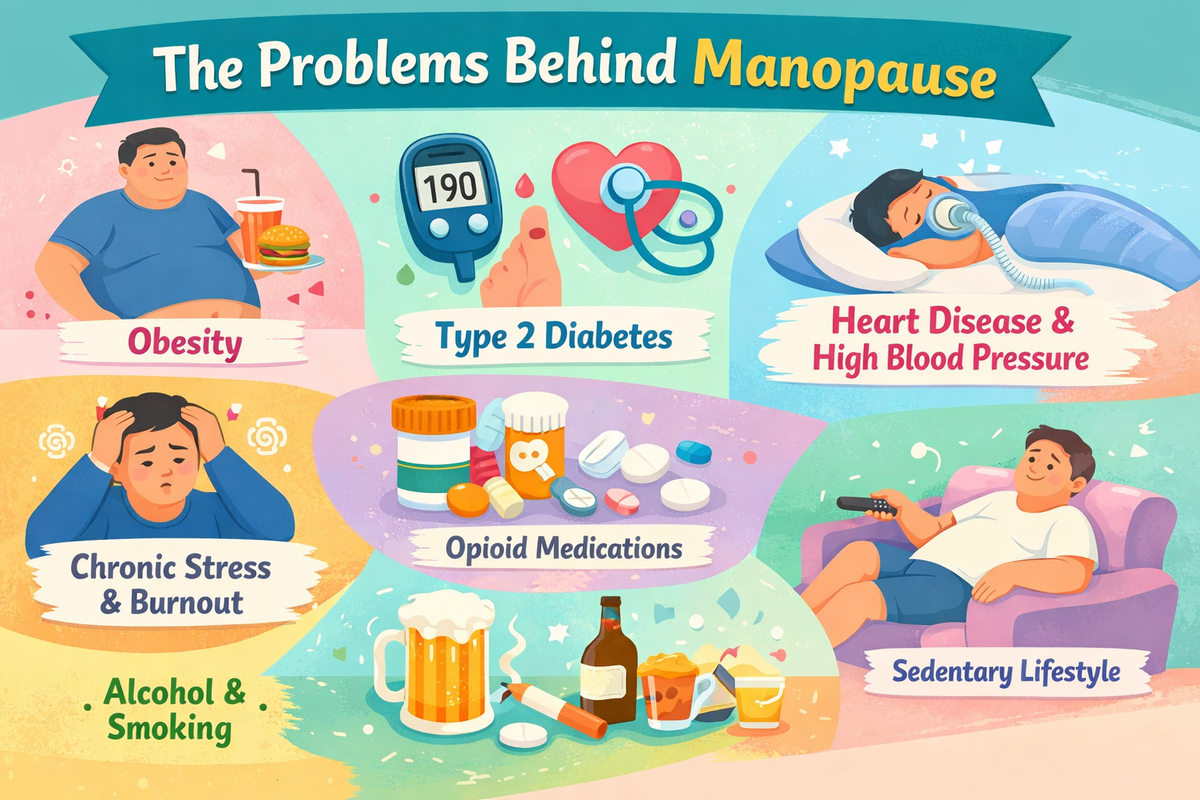
The lifestyle factors matter a lot, sometimes what you choose for yourself can also be the reason behind many problems. So it’s important for you to follow healthy habits.
The problems that can be the reason behind it:
Psychological and social causes
According to the report of the NHS, many symptoms that can be related to manopause are not hormonal at all.
The other reasons can be:
- Work stress
- Relationship breakdown
- Divorce
- Financial pressure
- Loss of purpose
The mental health nobody talks about
Sometimes mental health can also be the reason behind manopause and these symptoms are often overlooked. The emotional symptoms that can be more dangerous than physical problems are:
- Depression
- Anxiety
- Irritability
- Loss of confidence
Men don’t talk about the emotional pain they go through and don’t seek help sometimes but it’s important to speak about your emotions and get therapy on time.
Because we don't talk about this openly, men often suffer in silence, thinking they're just stressed or ageing poorly. We need to normalise these conversations.
During Diagnosis
Diagnosis is not as simple as a single blood test but it is a clinical process of checking out other causes and confirming that testosterone deficiency is genuinely contributing to your symptoms.
The diagnosis involves:
- Symptom review and health history: This step is important because the doctor will ask about the nature, duration, and impact of your symptoms, medications and lifestyle factors to evaluate your case properly.
- Blood test for serum testosterone: A morning blood test measures your total testosterone. Because levels fluctuate, experts recommend confirming a low result with a second test before acting on it.
- Clinical threshold for late-onset hypogonadism: A formal diagnosis is typically considered when a man presents with three or more sexual symptoms and testosterone below 11 nmol/L.
- Investigation of underlying causes: Your doctor may screen for sleep apnoea, obesity, type 2 diabetes, and hypothyroidism. Treating these root conditions can itself normalise testosterone.
Treatment options
- Testosterone replacement therapy (TRT): TRT is the most direct medical treatment for clinically confirmed low testosterone. It can be checked by using gels, injections, patches or implants.
- Treating the root causes: When low testosterone is secondary to obesity, diabetes, or sleep apnoea, treating those conditions first is often safer and more effective than jumping straight to TRT. Weight loss alone can meaningfully raise testosterone levels.
- Psychological and therapeutic support: For men whose symptoms are primarily mood-related, antidepressants, cognitive behavioural therapy (CBT), and counselling have strong evidence behind them. For some men, these will be more effective than any hormonal intervention.
Lifestyle changes that actually work
Sometimes lifestyle changes matter a lot and if you choose good habits it helps you to recover from health conditions. Lifestyle changes that actually work are:
- Resistance training like weightlifting and bodyweight exercises
- Achieve and maintain a healthy weight
- Prioritise sleep quality
- Reduce alcohol and quit smoking
- Manage stress and build social connection
- Eat a nutrient-dense, whole-food diet
Final Thoughts
Male menopause is a real condition which is different from female menopause. This condition happens when testosterone in ale falls down. There can be many reasons behind it which include lifestyle habits. Andropause is often confused with the condition which happen with females that men will also stop reproducing but it's not true. There is no clear biological endpoint. Get your evaluation on time and treat your mental health o a serious note.
Frequently asked Questions
What are the worst symptoms of manopause?
The worst symptoms of male andropause are typically low energy, reduced sex drive, depression or mood swings, and loss of muscle mass.
Is manopause real?
Yes, it is real, but it’s known as andropause, a gradual drop in testosterone levels rather than a sudden change like menopause in women.
How do I know I’m pre-manopause?
Early andropause may show as low energy, low libido, and mood changes are confirmed by a testosterone test.
References
- Mayo Clinic (Male Menopause: Myth or Reality?)
- NHS (Male Menopause: Symptoms, Causes, Diagnosis and Treatments)
- ColumbiaDoctors (How Testosterone Changes Affect Men's Health)
- Henry Ford Health (What You Should Know About Male Menopause)
- Medical News Today (Male Menopause: Symptoms, Causes, Diagnosis and Treatment)
Member discussion