


Noticing a small bump in the genital area can be stressful. Many people immediately worry about sexually transmitted infections, especially HPV. But not every bump is a wart. Sometimes, it’s simply a harmless skin tag. Understanding the difference between HPV warts and skin tags can help reduce anxiety and guide you toward the right next steps.
What Are HPV Warts?
HPV warts, also called genital warts, are caused by certain strains of the human papillomavirus (HPV), most commonly types 6 and 11. HPV is very common, and many sexually active people are exposed to it at some point in their lives. According to the Centers for Disease Control and Prevention, HPV is the most common sexually transmitted infection in the United States.
Genital warts may appear:
- Weeks to months after exposure
- As small, flesh-colored or gray growths
- Flat or raised
- In clusters that resemble cauliflower
- On the vulva, vagina, cervix, penis, scrotum, or around the anus
They may itch, but they are often painless.
What Are Skin Tags?
Skin tags which are medically called acrochordons are small, soft, benign (non-cancerous) growths that hang off the skin. They are not caused by HPV and are not sexually transmitted.
Skin tags commonly appear:
- In areas of friction (neck, armpits, groin)
- As soft, smooth, flesh-colored growths
- Attached by a thin stalk
- Usually painless
They are very common and tend to increase with age, weight gain, pregnancy, or friction.
Key Differences Between HPV Warts and Skin Tags
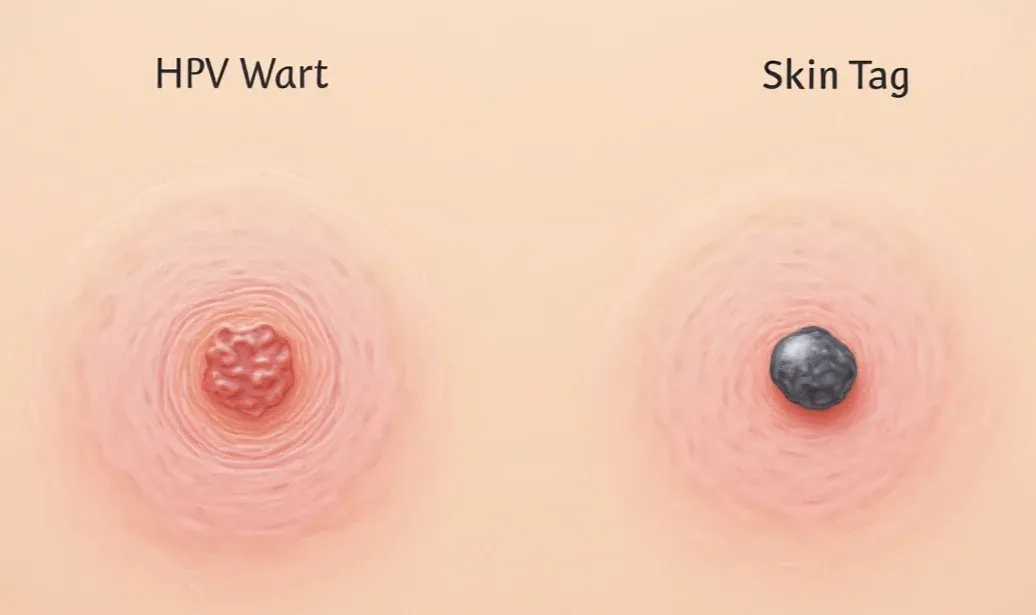
Here’s how they typically differ:
1. Cause
- HPV warts are caused by a viral infection (HPV).
- Skin tags are caused by skin friction and other non-infectious factors.
2. Appearance
- HPV warts often look rough, uneven, or cauliflower-like.
- Skin tags are usually smooth, soft, and hang from a small stalk.
3. Texture
- HPV warts may feel firm or slightly rough.
- Skin tags are soft and movable.
4. Spread
- HPV warts can multiply or spread.
- Skin tags do not spread from person to person.
5. Location Pattern
- HPV warts may appear in clusters.
- Skin tags are often isolated and found in areas where skin rubs together.
Can You Tell the Difference at Home?
Sometimes, but not always. Genital skin can vary naturally in texture and appearance. Conditions like molluscum contagiosum, sebaceous glands, or even small cysts can also resemble warts. Because appearance alone can be misleading, a healthcare provider should evaluate any new or changing growth in the genital area.
When to See a Doctor
You should seek medical evaluation if:
- A bump appears after a new sexual partner
- The growth is spreading
- There is bleeding, pain, or rapid change
- You are unsure what it is
- You have never been screened for STIs
A clinician can usually diagnose genital warts by visual examination. In some cases, additional testing may be recommended.
Are HPV Warts Dangerous?
Genital warts are generally caused by low-risk HPV types, meaning they do not typically cause cancer. However, other high-risk HPV strains can increase the risk of cervical, anal, penile, or throat cancers.
The World Health Organization notes that HPV vaccination significantly reduces the risk of both genital warts and HPV-related cancers.
Treatment Options For HPV Warts:
- Prescription topical medications
- Cryotherapy (freezing)
- Surgical removal
- Laser treatment
Warts may recur because the virus can remain in the body.
For Skin Tags:
- Simple in-office removal
- Snipping
- Freezing
- Cauterization
Skin tags usually do not return once removed.
For those considering removal options, you can also read Skin Tag Removal: Medical Treatments vs Home Remedies – What Works Best? to understand the safest and most effective ways to treat skin tags.
Can You Prevent HPV Warts?
Prevention strategies include:
- HPV vaccination
- Condom use (reduces risk but does not eliminate it)
- Regular health screenings
The HPV vaccine is highly effective at preventing the strains that cause most genital warts and HPV-related cancers.
Final Takeaway
Not every genital bump is an STI. Skin tags are common and harmless, while HPV warts are caused by a viral infection and may require treatment. If you’re unsure, don’t self-diagnose. A quick medical visit can provide clarity and peace of mind.
FAQs
1. How can I tell if a bump is an HPV wart or a skin tag?
HPV warts often look rough, slightly raised, or cauliflower-like and may appear in clusters, while skin tags are usually soft, smooth, and hang from the skin by a small stalk. However, it can be difficult to tell the difference without a medical exam.
2. Are HPV warts sexually transmitted?
Yes, HPV warts are caused by certain types of the human papillomavirus and are transmitted through skin-to-skin sexual contact. The Centers for Disease Control and Prevention states that HPV is the most common sexually transmitted infection.
3. Are skin tags caused by HPV?
No, skin tags are not caused by HPV and are not sexually transmitted. They typically develop due to friction, genetics, aging, or hormonal changes.


Member discussion