


Ever noticed those tiny, stubborn white bumps on your face that just won't go away no matter what you do? Don’t worry because you're not alone. These tiny bumps are called milia, and they're way more common than you might think. The good news? They're completely harmless. The frustrating part? They can stick around for months if you don't know how to deal with them properly.
Let's understand everything you need to know about milia removal and what causes them, how to get rid of them safely, and most importantly, how to keep them from coming back.
What Exactly is Milia?
Milia are small, round bumps that appear just beneath the skin's surface. They're typically white or yellowish in color and range from 1 to 2 millimeters in size. Unlike pimples, they don't have any redness or inflammation around them, and they're not filled with pus.
The difference between milia and acne is that milia are actually tiny cysts filled with keratin, a protein naturally found in your skin, hair, and nails. When dead skin cells get trapped instead of shedding normally, they form these hard little bumps under a thin layer of skin.
You'll most often find milia around the:
- Eyes and eyelids
- Cheeks
- Nose
- Forehead
- Chin
But they can show up pretty much anywhere on your body, including your chest, arms, and even genital area. But don’t worry because milia removal treatment is available.
Who Gets Milia?
Anyone can get milia irrespective of their age and gender, it can even be seen in newborns but there is no need to take tension because it is completely harmless. In fact, roughly half of all newborns develop what's called neonatal milia which are tiny white bumps you might notice on a baby's nose or cheeks. These usually disappear on their own within a few weeks without any treatment.
For adults, primary milia tend to show up more frequently between ages 40 and 50, though they can occur at any age.
They're more common in people who:
The Different Types of Milia
Not all milia are the same so understanding the type you're dealing with can help you figure out the best approach for treatment.
- Neonatal milia: This appears in newborns and resolves on their own within weeks. No treatment is needed, just gentle cleansing with warm water.
- Primary milia: This happens when keratin gets trapped under the skin surface. This is the most common type in adults and can be addressed with various treatments.
- Secondary milia: This develops after some kind of skin trauma like burns, blisters, rashes, or even cosmetic procedures like chemical peels and laser treatments. These form during the healing process.
- Miliaen plaque: This is a rarer form that appears as clusters of milia on raised, inflamed patches of skin. It's often associated with autoimmune conditions like lupus.
- Multiple eruptive milia: This shows up in crops of bumps, usually on the face, chest, and upper arms. These appear over weeks or months.
What Causes Milia to Form?
Several factors can trigger milia development:
- Dead skin buildup: When your skin doesn't shed dead cells efficiently, they can become trapped beneath the surface and form keratin-filled cysts.
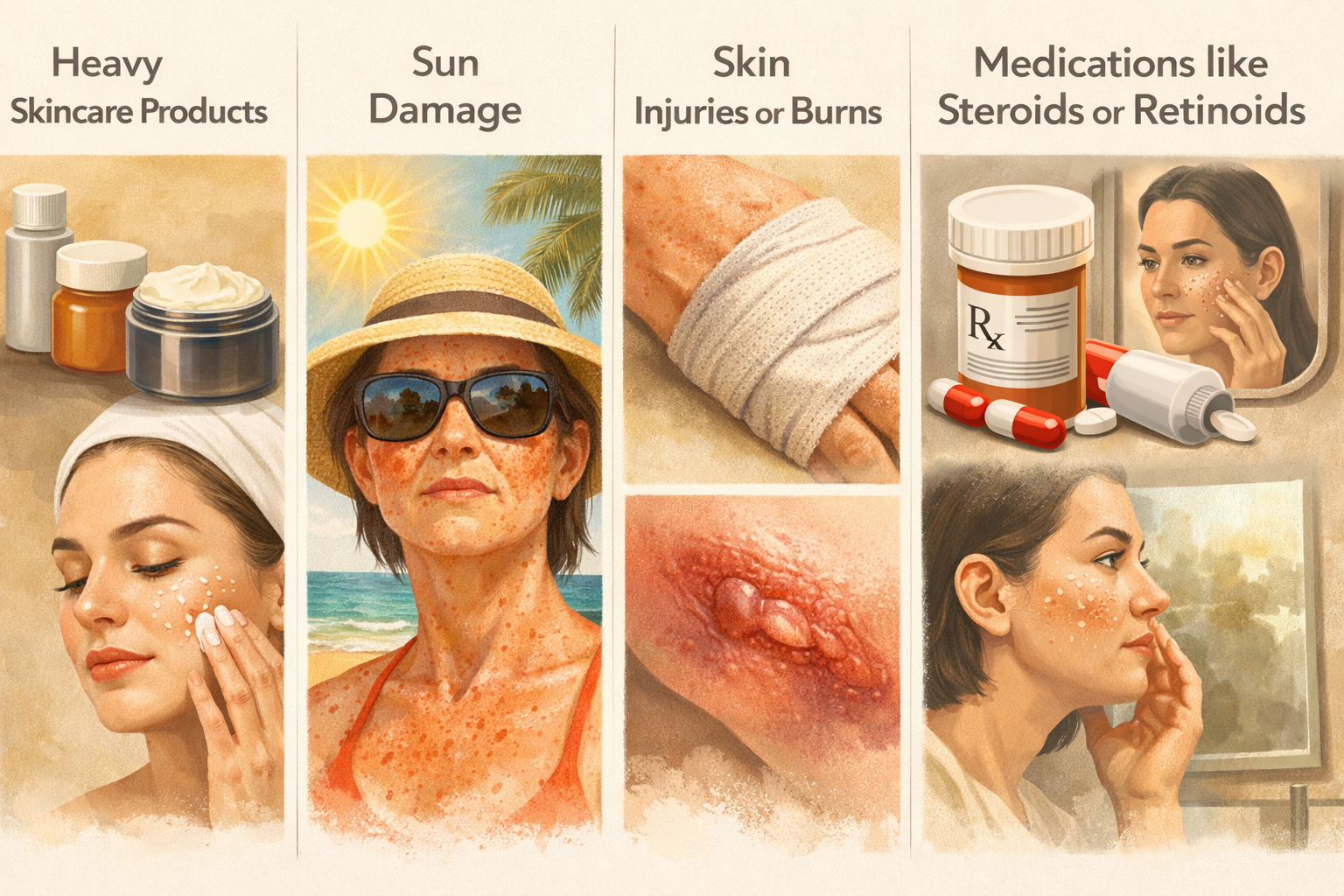
- Heavy skincare products: Thick creams, occlusive moisturizers, and oil-based products can clog the skin and prevent natural exfoliation, especially around the delicate eye area.
- Sun damage: Long-term sun exposure thickens the outer layer of skin, making it harder for dead cells to shed properly.
- Skin injuries: Burns, blisters, rashes, and even aggressive cosmetic procedures can damage the small pockets where dead skin cells accumulate.
- Certain medications: Steroids (both topical and oral), some retinoids, and lithium have been linked to milia formation.
- Genetics: Some people are simply more prone to developing milia than others.
How to Get Rid of Milia
If you want these tiny bumps to go away from your skin then the first step is do not try to pop or squeeze milia. We want milia removal not an add up skin problem. Unlike pimples, milia don't have an opening in the skin. There's no pore so you can’t just pop it and if you do so it will only harm your skin and cause infection or even leave permanent scars.
So let’s understand what actually works for Milia removal.
Home Treatment Options
For mild cases with just a few bumps, you might be able to manage milia with consistent skincare:
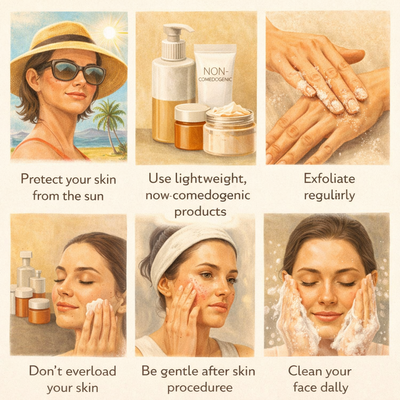
- Gentle exfoliation: Products having alpha hydroxy acids (AHAs) like glycolic acid or lactic acid can help dissolve the bonds between dead skin cells and encourage natural shedding. Salicylic acid, a beta hydroxy acid (BHA), also works well. Use these products regularly but don't overdo it as daily exfoliation can irritate your skin.
- Use retinoids. Adapalene (sold as Differin) is available without a prescription and can help with milia removal. This loosens the keratin plugs over time. But you need to be patient with the results.
- Warm compresses: Applying a warm, damp cloth to your face can help soften the trapped keratin and open up pores, making it easier for milia to resolve naturally.
- Keeping skin clean: Wash your face daily with a mild cleanser and lukewarm water. This helps prevent new milia from forming while supporting the skin's natural exfoliation process.
- Lightweight products: Switch to non-comedogenic, oil-free moisturizers that won't trap keratin under your skin. This is especially important for the area around your eyes.
Professional Treatment Options
If home remedies aren't working for milia removal or if you have a lot of milia on your face which you want to go away but it keeps returning back then you should consult a dermatologist. The professional treatment options will include:
- Manual extraction (de-roofing): In this a dermatologist uses a sterile needle to create a tiny opening in the skin, then gently extracts the keratin plug using their fingers or a tool. It's quick and painless, and results are immediate.
- Prescription retinoids: Stronger than over-the-counter options, prescription-strength topical retinoids can be more effective for stubborn or recurring milia.
- Chemical peels: Professional-grade peels containing glycolic acid or other AHAs remove the outer layer of skin, helping to clear milia and prevent new ones from forming.
- Cryotherapy: Liquid nitrogen is used to freeze the milia, destroying the cysts. This is less common but may be used for certain cases.
- Laser ablation: A focused laser beam removes the milia. This can be effective for multiple milia or those that haven't responded to other treatments.
Will Milia Go Away on Their Own?
Milia go away within a weeks or months and this is very common for milia in babies but in case of adults it might come back later. If your milia are bothering you or affecting your confidence, there's no reason to wait around as there are many effective treatments available.
How to Prevent Milia From Coming Back
You can prevent milia from coming back by:
When to See a Doctor
Most milia are harmless and purely a cosmetic concern. But consider seeing a dermatologist if:
- You have many milia or they cover a large area
- They're located on your eyelids or other sensitive areas
- They don't respond to home treatment after several weeks
- They keep coming back despite preventive measures
- You're unsure whether the bumps are actually milia
A dermatologist can confirm the diagnosis, rule out other conditions, and recommend the most effective treatment for your specific situation.
Final Thoughts
Milia are common, harmless, and nothing to be embarrassed about. They happen to people of all ages and skin types. While they can be frustrating, especially when they're stubborn but don’t take stress because there are plenty of effective ways to deal with them.
Start with gentle exfoliation and lightweight skincare products. If that's not enough, a quick trip to the dermatologist can clear things up fast. And whatever you do, just don’t pop them and for this your skin will thank you.
Frequently Asked Questions
How to remove milia at home with needle?
It’s not safe to use a needle to remove milia as it can irritate your skin and leave permanent scars instead you can follow safe practices like steam, gentle exploitation and using sunscreen.
Milia on eyelid removal at home?
Do not try to remove milia on the eyelid at home as this area is very delicate, so use gentle skincare
Best cream or milia?
The best cream for milia is a gentle retinol-based cream (or salicylic acid), which helps renew skin and gradually clear the tiny cysts.
References
- Verywell Health (How to get rid of milia, 8 ways)
- MedicalNewsToday (How to get rid of milia: Treatment, prevention, and causes)
- FOREO (Milia Removal at Home: How to get rid of them without scarring


Member discussion