


The Marks That Stay After the Breakout Clears!
Getting through an acne breakout is hard enough on its own. But for many people, the real frustration begins once the acne is gone with a long lasting scar left behind. Your skin have new guests like:
- Pits
- dark spots
- uneven texture
- raised bumps
Acne scars can affect anyone whether it’s a teenager or adult. But don’t worry because these acne scars are not permanent. With the evolution of technology anything is possible and now you can get it fixed by visiting your dermatologist. So, let’s understand in depth about how to get rid of acne scars.
Why Acne Leaves Scars Behind
Understanding what actually causes a scar changes how you approach treating it. Acne scars are not simply stains on the surface but they are the result of a disrupted healing process deep within the skin. So before answering the question how to get rid of acne scars, let's understand how it happens.
The acne happens because:
- When bacteria, oil, and dead skin clog pores.
- Pores are tiny openings in the skin through which oil and sweat reach the surface.
- This blockage leads to inflammation and swelling.
Scars happen because your body is trying to repair the damage. How your unique body responds to a wound shows if and how much scarring you will have. The process of repair includes the creation of collagen. If there is too much collagen, raised scars appear. Other scarring is caused by the loss of tissue, which creates pits or indentations in the skin.
The Role of Picking and Popping
One major cause of post-acne marks is picking or popping pimples. When you squeeze or pick at a breakout, you drive bacteria and debris deeper into the skin, intensify inflammation, and it results in an increase of scarring. It’s better to avoid popping to prevent scarring.
The Different Types of Acne Scars
There are different types of acne scars which need different treatment. So, it’s important to understand different types of acne scars for better and effective treatment.
Atrophic Scars
These are the most common type and are caused by a loss of tissue during healing. They come in three different forms:
- Ice Pick Scars: these are narrow, deep puncture-like holes in the skin.
- Boxcar Scars: they are wider, round or oval depressions with sharply defined vertical edges which gives them a box-like appearance.
- Rolling Scars: these scars create a wave-like, undulating appearance on the skin's surface, caused by fibrous tissue.
Hypertrophic and Keloid Scars
The main types of acne scars are atrophic and hypertrophic scars. Hypertrophic scars occur when the body produces too much collagen during repair which creates a raised, firm scar that stays within the boundary of the original lesion. Keloid scars go further, growing beyond the original wound site and continuing to expand over time. Both types are more common in people with darker skin tones and tend to appear on the chest, shoulders, and jawline.
Post-Inflammatory Hyperpigmentation (PIH) and Erythema (PIE)
These are often mistaken for scars but are technically a form of discolouration rather than structural skin damage. Post-inflammatory erythema mostly happens in individuals with fair skin and post-inflammatory hyperpigmentation is more typical in individuals with dark skin. PIH appears as flat brown or dark spots, while PIE shows as pink or red marks. Both can stay for months and both respond well to topical treatment which is faster than true structural scars.
Home Treatment for Acne scar
Know how to get rid of acne scars by understanding various home treatments that have actually worked for many individuals. So, before you book an appointment with your dermatologist it’s better to try a good skincare routine and if it does not work then you might consider visiting a healthcare professional. The skincare routine for acne are:
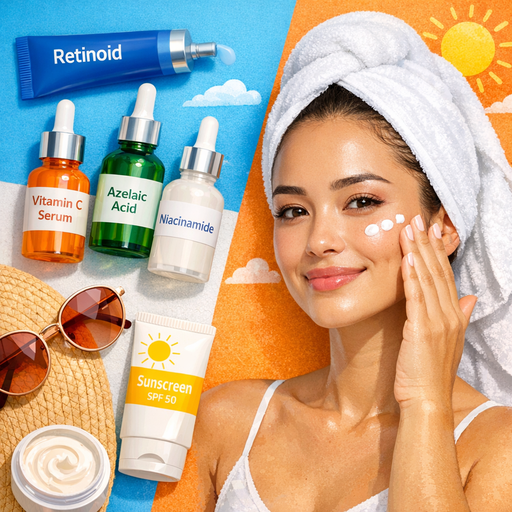
Professional Treatments
If that stubborn scar of acne is still there and comes back every time you have acne then you should consider some professional treatments that can really help you with scarring. Get it done by a trusted healthcare professional for safety and effective results.
- Fractional Laser Resurfacing: this procedure provides natural healing and stimulates the production of new collagen.
- Microneedling: this procedure is done with fine needles to create thousands of tiny punctures across the skin’s surface. It helps in improving the skin texture.
- Chemical Peels: this process helps in improving skin texture and tone.
- Subcision: this procedure provides help by treating atrophic acne scars which are pits and holes caused by acne.
- Dermal Fillers: In this procedure hyaluronic acid is injected in depressed scars that create dip in the skin. The results are temporary and only last for 6 to 18 months.
After Professional Treatment: What to Do Next
Getting the procedure done is only part of the process. The care after that treatment matters a lot for better results. So after the treatment do this:
- Apply sunscreen every day to the treated skin as the sun can damage your treated skin.
- Return for all the treatments your dermatologist recommends.
- Follow a proper skincare routine after the treatment.
How to Prevent Acne Scars
- Treat acne early and consistently
- Do not pick, squeeze, or pop acne if you see one on your skin
- Use sunscreen daily
- Use retinol and sunscreen consistently
- Avoid harsh physical scrubbing of active breakouts
- See a dermatologist on time if you notice scars
When to See a Dermatologist
Rather than asking how to get rid of acne scars later it’s better to see a dermatologist if:
- Your acne is active and severe, and you are concerned about the scarring it will leave behind.
- You have noticeable atrophic (pitted) or raised (hypertrophic/keloid) scarring.
- You have tried topical treatments for three or more months without meaningful improvement.
- Your skin tone is deeper and you are unsure which treatments carry appropriate safety profiles for your complexion.
- Your scars are significantly affecting your confidence or quality of life.
Final Thoughts
Acne scars are very common and can happen to anyone. There are many treatments for acne available in the market. People often search how to get rid of ace scars overnight but it is not something magical which will go in seconds it needs proper care and treatment. If you follow proper skincare routine you can get rid of your acne scars within months. But if no single skin care product is working for you then you should consult a dermatologist and have a proper session about it. It will make you understand your skin and the cause of acne with proper treatment. The marks left behind by acne do not have to be permanent. With the right information, the right ingredients, and where appropriate the right professional support, meaningful improvement is achievable at every stage.
Frequently Asked Questions
Q1. How to get rid of acne scars naturally?
Acne scars can be reduced naturally by using remedies like aloe vera, honey, turmeric, and oils, along with gentle exfoliation and sun protection, which help heal skin and improve its appearance over time.
Q2. How to fade scars fast?
To fade scars fast, keep your skin moisturized, use sunscreen daily, and apply healing ingredients like aloe vera or vitamin C regularly.
Q3. How long do acne scars last?
Acne scars can last from a few weeks to several months, while deeper scars may take years to fade or can be permanent without treatment.
References
- Mayo Clinic (Acne scars: What’s the best treatment)
- Cleveland Clinic (Acne scars: Causes,Diagnosis, Types and Treatment)
- National Institute of Health (Methods for the improvement of Acne scars)


Member discussion