


Nowadays, every other person loves eating chicken and apart from its taste it carries health benefits as well, which makes it a win- win situation for a person. Chicken is one of the most famous meats eaten worldwide. There are a wide range of options available when it comes to chicken. It makes every meet-up special and grand. The overall chicken is healthy but you can also get it in different parts like chicken breasts, thighs, and wings and is available boneless and skinless. Anyway chicken is healthy both ways but let’s know more about chicken thigh nutrition.
What Makes Chicken Thighs Different from Other Cuts?
Chicken thighs come from the upper leg of the bird. Because chickens constantly use their legs for movement, this muscle group is rich in myoglobin which is an oxygen-carrying protein that gives dark meat its deeper colour. This is the reason why thighs are nutritionally different from white meat cuts like the breast.
The higher myoglobin content means thighs naturally carry more iron, zinc, and certain B vitamins than chicken breast. Meanwhile, the fat of the thighs gives the rich and juicy flavor which enhances the taste.
Chicken Thigh Nutrition Facts (Per 100g, Cooked, Skinless)
Based on USDA FoodData Central data the nutritional values are:
| Nutrient | Amount per 100g |
|---|---|
| Calories | 179–209 kcal |
| Protein | 24.8–26 g |
| Total Fat | 8.2–10.9 g |
| Saturated Fat | 2.3 g |
| Monounsaturated Fat | 3.6 g |
| Carbohydrates | 0 g |
| Cholesterol | 105 mg |
| Sodium | 84 mg |
| Iron | 0.9 mg |
| Zinc | 2.4 mg |
Calorie Breakdown: Skin-On vs Skinless
Some people often get confused between skin-on and skinless chicken and question whether there’s any difference in their nutritional value or not. The short answer is yes, but not dramatically.
| Type | Calories (per 100g) | Fat (per 100g) |
|---|---|---|
| Skinless, cooked | 179–209 kcal | 8–11 g |
| Skin-on, cooked | 220–250 kcal | 13–16 g |
| Raw, skinless | 121 kcal | 4.3 g |
Protein in Chicken Thighs: Quality Matters as Much as Quantity
Chicken thighs are a complete protein source, delivering all nine essential amino acids your body cannot produce on its own. A single 100g cooked serving covers roughly 40 to 50% of the average adult's daily protein requirement.
What makes this especially valuable is protein digestibility. Poultry scores very highly on the Protein Digestibility-Corrected Amino Acid Score (PDCAAS), meaning your body absorbs and uses nearly all the protein it receives.
This makes it an excellent choice for
- Athletes needing muscle repair
- Older adults preserving lean muscle mass
- People recovering from illness
- Anyone following a high-protein or keto diet.
Key Vitamins and Minerals in Chicken Thighs
- Iron: Thigh meat contains more heme iron than chicken breast. Heme iron is only found in animal foods which is far more bioavailable than the non-heme iron in plants, making thighs especially valuable for women of childbearing age and people with anaemia.
- Zinc: Zinc is very important for immune defence and hormone Health. In chicken thighs you get 2.4mg per 100g (22% DV), which helps in supporting immune function, wound healing, testosterone production, and healthy skin and cell growth.
- Selenium: Selenium is known to be the antioxidant powerhouse and chicken thighs have 27 micrograms per 100g of selenium which covers your daily requirement. Selenium powers antioxidant enzymes that protect your cells from oxidative damage and support thyroid function.
- B Vitamins: The presence of B vitamins helps in giving your body energy and supports brain function. Niacin (B3), pantothenic acid (B5), B6, and B12 are all present in meaningful quantities. Dark meat contains significantly more vitamin B12 than white meat, making thighs the smarter choice for neurological and metabolic support.
- Phosphorus: The phosphorus in it helps in supporting bone and muscle health. Thighs have 195mg per 100g, which contribute to bone density, kidney function, and muscle contractions.
Health Benefits of Eating Chicken Thighs
Chicken is overall very beneficial for health and is enjoyed in different parts. Each part of chicken is very nutritious. Similarly, thighs have their own benefits in health.
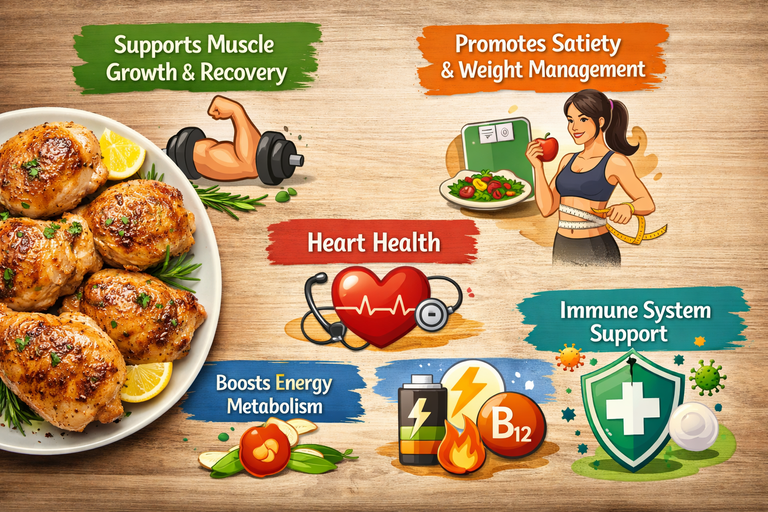
Chicken Thigh vs Chicken Breast: Which Should You Choose?
Chicken breast has more protein with minimum calories than thighs. But for most people, thighs offer a richer micronutrient profile, better satiety, more cooking versatility, and lower cost, making them the smarter everyday choice. So, it completely depends on you what you are looking for.
Best Ways to Cook Chicken Thighs to Preserve Nutrition
The cooking style matters a lot. So if you want full nutrition try to cook it in a proper way so that you can enjoy full nutrition.
Your best options are:
- Grilling this will have no added fat, and will lock in flavour,
- Baking or roasting
- Air frying (crispy skin with far less fat than deep frying)
- Poaching or steaming (the leanest method, ideal for meal prep).
- Avoid deep frying as it can increase the calorie count by 30% or more and introduces harmful trans fats.
Are Chicken Thighs Suitable for Special Diets?
Keto and low-carb diets are a perfect fit and thighs have zero carbohydrates with a natural fat-protein balance. It can be good choice if you want high-protein diets as they have 25g complete protein per 100g. Weight loss plans work well with skinless preparation and portion control. Chicken thighs are naturally gluten-free, and they align well with paleo and whole-food approaches as a minimally processed, nutrient-dense protein.
Final Thoughts
Chicken thighs deserve far more credit than they typically receive. They are not just a cheaper alternative to breast meat but they are a genuinely superior source of iron, zinc, selenium, and vitamin B12, while still delivering impressive protein content and a healthier fat profile than most people assume.
Whether you are bulking up, managing your weight, or simply trying to eat better without spending more, thighs belong in your regular meal rotation.
Frequently Asked Questions
Is chicken thigh more protein?
They are more flavorful but higher in fat and calories.
Is chicken thigh better than egg nutrition?
They provide more protein and calories, while eggs offer a more balanced mix of protein, healthy fats, and essential nutrients like vitamins and minerals.
Are chicken thighs better for you than a steak?
They are generally healthier than steak because they have less saturated fat, though steak provides more iron and certain nutrients.
References
- USDA FoodData Central (Chicken, Thigh, Boneless, Skinless, Cooked, Roasted)
- Healthline (How Many Calories in Chicken?)
- SnapCalorie (Cooked Chicken Thigh Nutrition)
- HealthcareOnTime (Chicken Calories, Protein & Nutrition)


Member discussion