


Implantation bleeding and a menstrual period can look surprisingly similar, making it difficult to tell them apart especially for women trying to conceive. Both may involve light vaginal bleeding around the time a period is expected, but they occur for very different reasons. While implantation bleeding happens when a fertilized egg attaches to the lining of the uterus, a period marks the shedding of the uterine lining when pregnancy does not occur.
Understanding the differences between implantation bleeding vs period can help you recognize the early signs of pregnancy and know when to take a pregnancy test or seek medical advice. In this guide, we'll compare their timing, color, flow, duration, symptoms, and key differences so you can better identify what your body may be experiencing.
What Is Implantation Bleeding?
Implantation bleeding is light spotting that can occur when a fertilized egg attaches to the lining of the uterus, usually 6–12 days after ovulation. It is one of the earliest possible signs of pregnancy, though not everyone experiences it.
Unlike a regular period, implantation bleeding is usually lighter, lasts only 1–2 days, and appears pink, brown, or light red instead of a heavy bright-red flow.
Why Does Implantation Bleeding Happen?
Implantation bleeding happens when a fertilized egg attaches to the lining of the uterus during early pregnancy. As the embryo burrows into the uterine lining, tiny blood vessels may break, causing light spotting or mild bleeding. This is a normal process and is not harmful to the pregnancy.It is generally a normal early-pregnancy sign, not a complication.
Not everyone experiences implantation bleeding, and when it does occur, it is usually much lighter and shorter than a menstrual period. It typically appears 6–12 days after ovulation and may last from a few hours to two days.
Common Signs to Watch for Implantation Bleeding
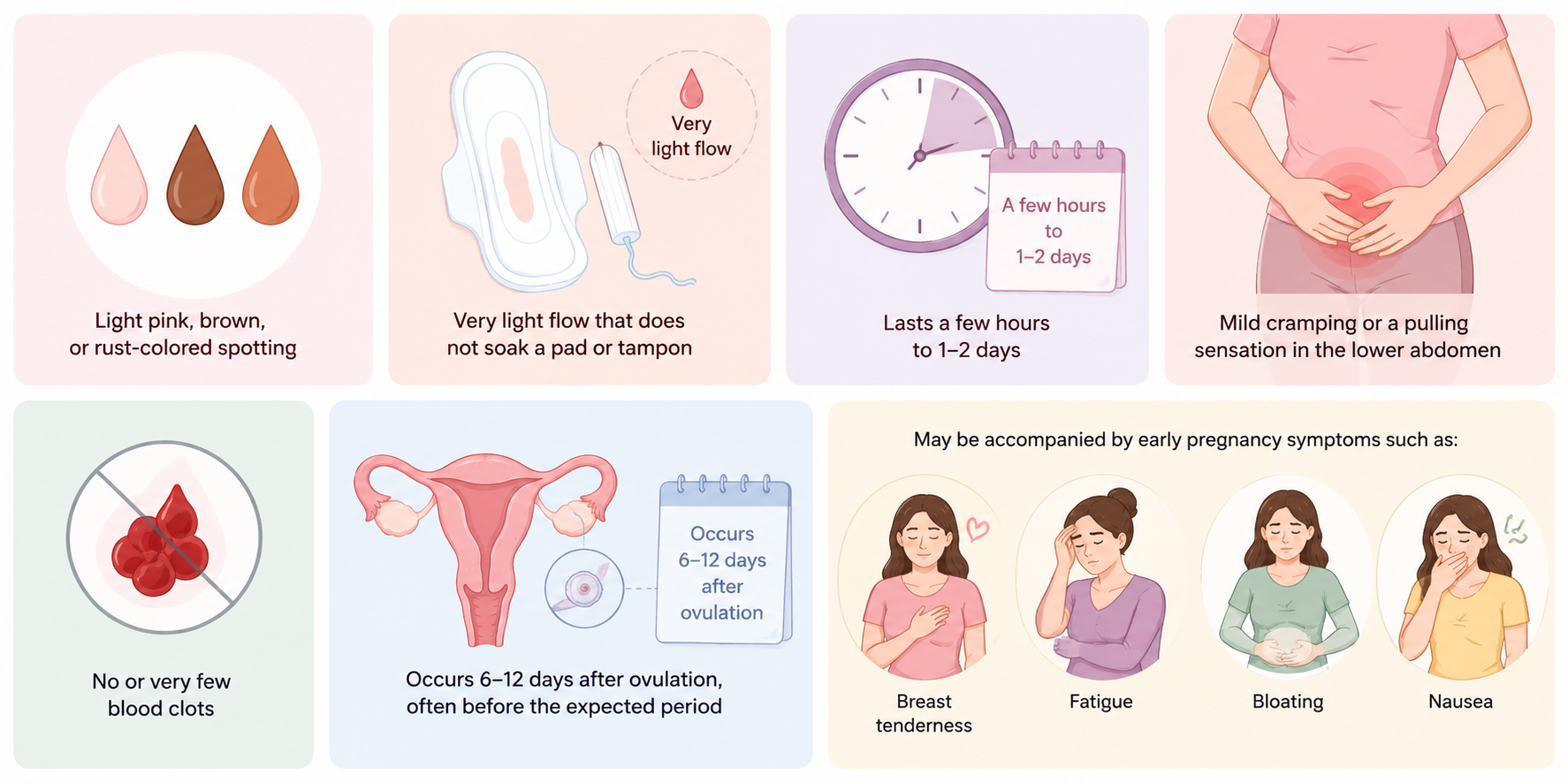
Implantation bleeding is usually mild and short-lived. While not everyone experiences it, common signs include:
What Is a Period?
A period, also known as menstruation, is the monthly shedding of the uterine lining when pregnancy does not occur. It is a normal part of the menstrual cycle and usually lasts 3–7 days, with bleeding that ranges from light to heavy.
Unlike implantation bleeding, a period typically starts with a heavier flow, is bright to dark red in color, and may be accompanied by cramps, bloating, fatigue, and mood changes.
Why Does Period Happen?
A period happens when pregnancy does not occur after ovulation. Each month, the uterus builds a thick lining to prepare for a possible pregnancy. If the egg is not fertilized, hormone levels drop, causing the uterine lining to break down and leave the body through the vagina as menstrual bleeding.
This monthly shedding of the uterine lining is a normal part of the menstrual cycle and usually lasts 3–7 days. After the period ends, the body begins preparing a new uterine lining for the next cycle.
Common Signs to Watch for a Period
A menstrual period is a normal part of the menstrual cycle and is often accompanied by several common symptoms, including:
- Steady flow that may start light and become heavier
- Bright red to dark red blood, sometimes with small clots
- Bleeding lasting 3–7 days
- Moderate to severe cramps in the lower abdomen
- Bloating and water retention
- Mood swings or irritability
- Lower back pain and fatigue
- Acne breakouts or headaches in some women
Implantation Bleeding vs Period
Implantation bleeding and a menstrual period can appear similar, making it difficult to tell them apart. However, they differ in timing, flow, color, duration, and associated symptoms. The table below highlights the key differences to help you better understand what your bleeding may indicate.
| Feature | Implantation Bleeding | Period (Menstrual Bleeding) |
|---|---|---|
| Cause | Occurs when a fertilized egg implants into the uterine lining. | Occurs when the uterine lining sheds because pregnancy has not occurred. |
| Timing | Usually 6–12 days after ovulation, around the expected period. | Occurs about 14 days after ovulation if pregnancy does not occur. |
| Flow | Very light spotting. | Light to heavy menstrual flow. |
| Color | Pink, light brown, or dark brown. | Bright red to dark red. |
| Duration | A few hours to 1–2 days. | Usually 3–7 days. |
| Amount of Bleeding | Very light; may only appear as a few drops or spots. | Moderate to heavy; may require pads or tampons. |
| Clots | Typically no blood clots. | Small blood clots may be present. |
| Consistency | Thin and watery. | Thicker and may contain tissue. |
| Cramping | Mild, brief cramping. | Moderate to severe cramps are common. |
| Other Symptoms | Breast tenderness, fatigue, bloating, nausea (early pregnancy symptoms). | Bloating, mood swings, headaches, acne, fatigue, back pain. |
| Pregnancy Indicator | May be an early sign of pregnancy. | Indicates pregnancy has not occurred. |
| When to Take a Pregnancy Test | Wait until your missed period or at least 2–3 days after spotting stops. | Not necessary unless the period is unusually light or pregnancy is suspected. |
| Medical Attention Needed | See a doctor if bleeding becomes heavy, painful, or is accompanied by dizziness. | Seek medical advice if bleeding is extremely heavy, lasts longer than 7 days, or is unusually painful. |
Common Causes of Spotting Besides Implantation Bleeding
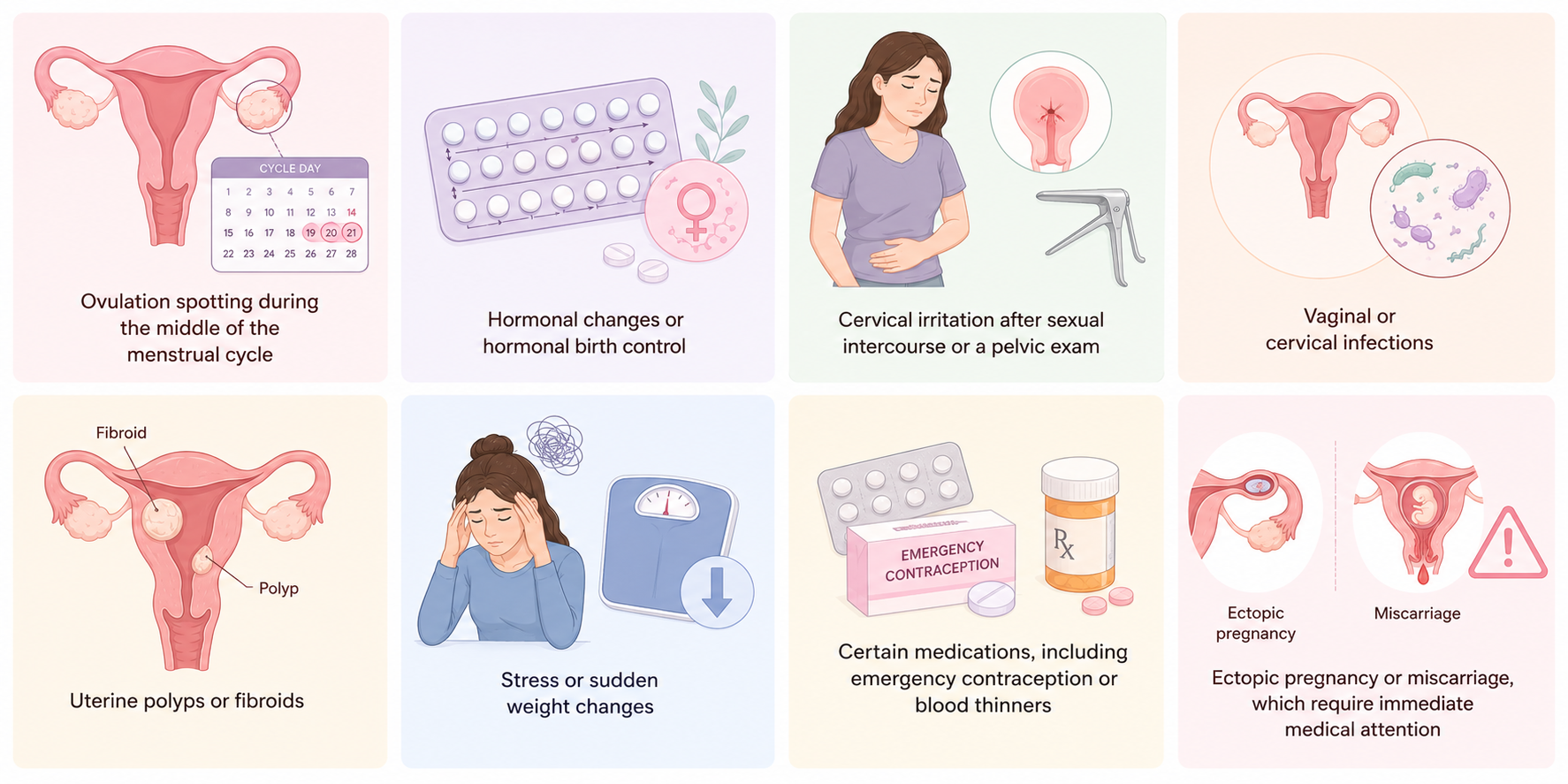
Not all spotting before a period is caused by implantation bleeding. Light vaginal bleeding can occur for several reasons, many of which are unrelated to pregnancy. Identifying the cause is important, especially if spotting is frequent, heavy, or accompanied by pain.
Common causes of spotting include:
Spotting Isn't Always Implantation Bleeding
Light spotting isn't always caused by implantation bleeding. It can also occur due to hormonal changes, ovulation, birth control, cervical irritation, infections, or certain medical conditions. If the bleeding is heavy, persistent, accompanied by severe pain, or you're unsure of the cause, consult a healthcare provider for proper evaluation.
Some common examples include:
- Ovulation spotting – Light bleeding that may occur around the middle of your menstrual cycle when an egg is released.
- Hormonal changes – Fluctuations in estrogen and progesterone levels can cause unexpected spotting.
- Birth control use – Starting, stopping, or missing hormonal contraceptives can lead to breakthrough bleeding.
- Cervical irritation – Sexual intercourse, a pelvic exam, or a Pap smear can sometimes cause light spotting.
- Infections – Vaginal or sexually transmitted infections (STIs) may cause spotting along with unusual discharge or discomfort.
- Uterine fibroids or polyps – These non-cancerous growths can lead to irregular bleeding between periods.
- Early pregnancy complications – In some cases, spotting may be linked to a miscarriage or an ectopic pregnancy and should be evaluated promptly.
- Perimenopause – Hormonal changes before menopause can result in irregular spotting or bleeding.
Menstrual Cycle Timeline
It consists of four phases menstruation, the follicular phase, ovulation, and the luteal phase each regulated by hormonal changes. The timeline below shows what typically happens during a 28-day menstrual cycle and when fertility is at its highest.
| Menstrual Cycle Phase | Typical Days* | What Happens? | Pregnancy Relevance |
|---|---|---|---|
| Menstrual Phase | Days 1–5 | The uterine lining sheds, causing menstrual bleeding. | Pregnancy has not occurred. |
| Follicular Phase | Days 1–13 | Hormones stimulate egg development, and the uterine lining begins to rebuild. | Body prepares for possible pregnancy. |
| Ovulation | Around Day 14 | A mature egg is released from the ovary and can be fertilized. | Most fertile time of the cycle. |
| Implantation (If Fertilization Occurs) | Days 20–26 | The fertilized egg attaches to the uterine lining. Light implantation bleeding may occur. | Early sign of pregnancy in some women. |
| Luteal Phase | Days 15–28 | Progesterone maintains the uterine lining while the body waits for implantation. | If implantation doesn't occur, hormone levels drop. |
| Next Period | Day 28+ (if not pregnant) | The uterine lining breaks down and a new menstrual cycle begins. | Indicates pregnancy has not occurred. |
*Note: This timeline is based on a typical 28-day menstrual cycle. Cycle length and ovulation timing can vary from person to person.
Implantation Bleeding Timeline
It typically happens 6–12 days after ovulation, when a fertilized egg attaches to the uterine lining. The timeline below outlines the key stages from ovulation to implantation and highlights when spotting may occur as an early sign of pregnancy.
| Timeline | What Happens? | What You May Notice |
|---|---|---|
| Day 0 | Ovulation occurs and the egg is released from the ovary. | No implantation bleeding. |
| Day 0–1 | If sperm fertilizes the egg, conception takes place in the fallopian tube. | No noticeable symptoms. |
| Days 1–5 | The fertilized egg divides into multiple cells while traveling toward the uterus. | Usually no symptoms. |
| Days 6–12 | The embryo reaches the uterus and begins attaching to the uterine lining (implantation). | Some women experience light pink or brown spotting known as implantation bleeding. |
| Days 7–14 | Implantation is completed, and pregnancy hormones (hCG) begin to rise. | Mild cramping, breast tenderness, fatigue, or no symptoms at all. |
| Expected Period Date | If implantation is successful, the menstrual period usually does not occur. | A missed period may be the first clear sign of pregnancy. |
Note: Implantation bleeding typically occurs 6–12 days after ovulation, lasts a few hours to 2 days, and not everyone experiences it.
When Bleeding Is Normal vs When It Needs Urgent Medical Attention
Use this checklist to help determine whether your bleeding may be part of a normal cycle or whether it's time to seek medical care.
Bleeding Is More Likely to Be Normal If:
- Light pink, brown, or very light red spotting
- Lasts only a few hours to 2 days
- Does not become heavy or contain large blood clots
- Causes little to no pain, or only mild cramping
- Occurs around the expected time of implantation (6–12 days after ovulation)
- Stops on its own without worsening
- You feel otherwise well with no fever or dizziness
Seek Urgent Medical Attention If:
- Bleeding is heavy enough to soak a pad every hour
- You pass large blood clots or tissue
- You have severe abdominal or pelvic pain
- You experience one-sided pelvic pain, especially with dizziness or fainting
- Bleeding continues for several days or becomes progressively heavier
- You have a positive pregnancy test along with bleeding and pain
- You develop fever, chills, or foul-smelling vaginal discharge
- You feel weak, lightheaded, or faint due to blood loss
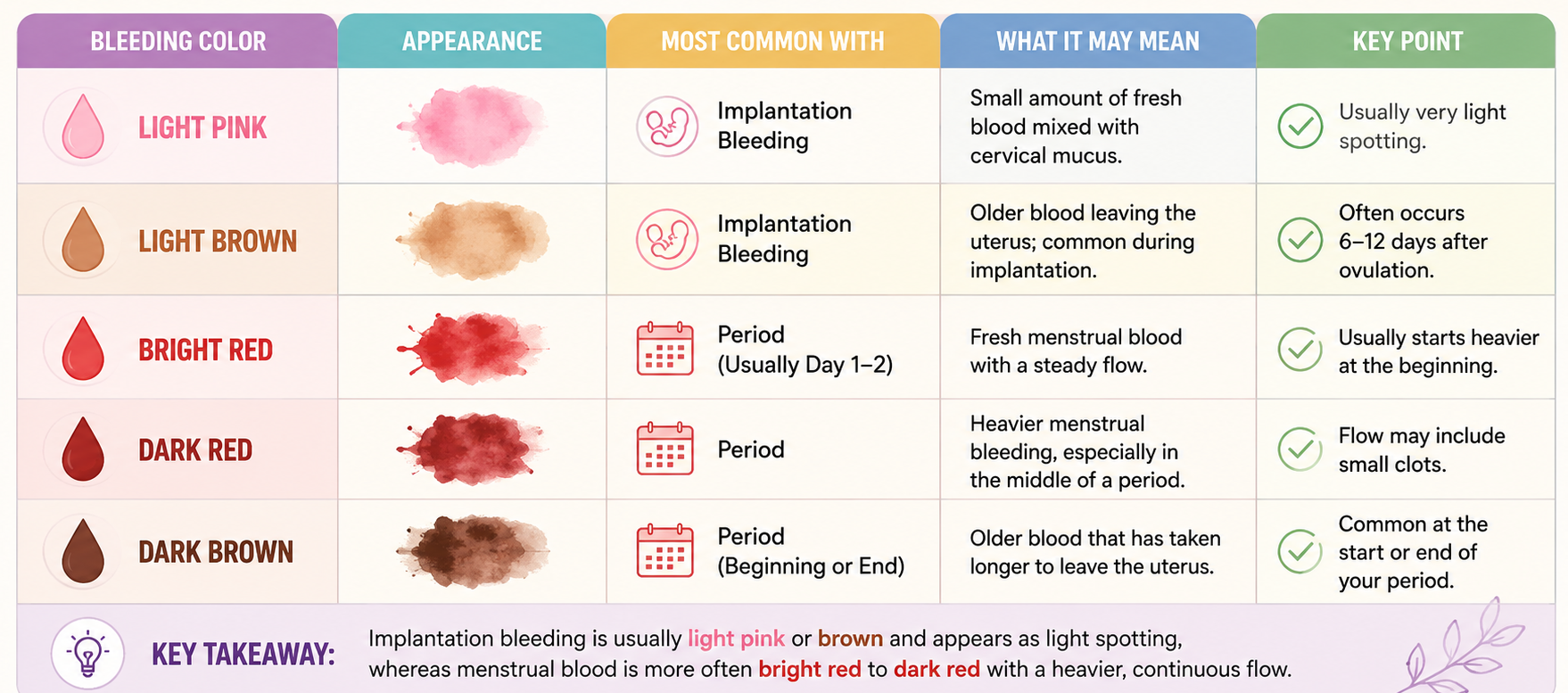
Color comparison: Implantation Bleeding vs Period
When to Take a Pregnancy Test
Knowing when to take a pregnancy test is just as important as recognizing implantation bleeding. Since pregnancy tests detect the hormone hCG, testing too early may result in a false-negative. The guide below explains the best time to test based on your bleeding, missed period, and rising hCG levels for the most accurate results.
If you think your spotting may be implantation bleeding, it's best to wait until the first day of your missed period before taking a home pregnancy test. By this time, levels of the pregnancy hormone hCG (human chorionic gonadotropin) are usually high enough to provide a more accurate result.
Testing too early can lead to a false-negative result because hCG levels may not yet be detectable. If your test is negative but your period still doesn't arrive, repeat the test 48–72 hours later or consult a healthcare provider for further evaluation.
Keep these points in mind:
- Wait until the first day of your missed period for the most reliable result.
- Avoid testing immediately after spotting, as hCG levels may still be too low.
- Use your first-morning urine, which contains the highest concentration of hCG.
- Repeat the test after 48–72 hours if the first result is negative but your period hasn't started.
- See a healthcare provider if you have persistent spotting, severe pain, or conflicting test results.
Care Tips for Implantation Bleeding
Implantation bleeding is usually a normal part of early pregnancy and doesn't require specific treatment. However, taking a few simple precautions can help support your health.
- Monitor the bleeding. Light spotting that lasts a few hours to 2 days is usually normal.
- Use a panty liner if needed. Avoid tampons or menstrual cups if you think you may be pregnant.
- Get plenty of rest. Allow your body time to adjust to early pregnancy changes.
- Stay hydrated. Drink enough water throughout the day.
- Eat a balanced diet. Include fruits, vegetables, whole grains, lean proteins, and iron-rich foods.
- Avoid smoking, alcohol, and recreational drugs, as these can affect early pregnancy.
- Wait to take a pregnancy test. For the most accurate result, test after your missed period.
- Start taking a prenatal vitamin with folic acid if you're trying to conceive or think you may be pregnant (after consulting your healthcare provider if needed).
- Keep track of your symptoms. Note the color, amount, and duration of the spotting.
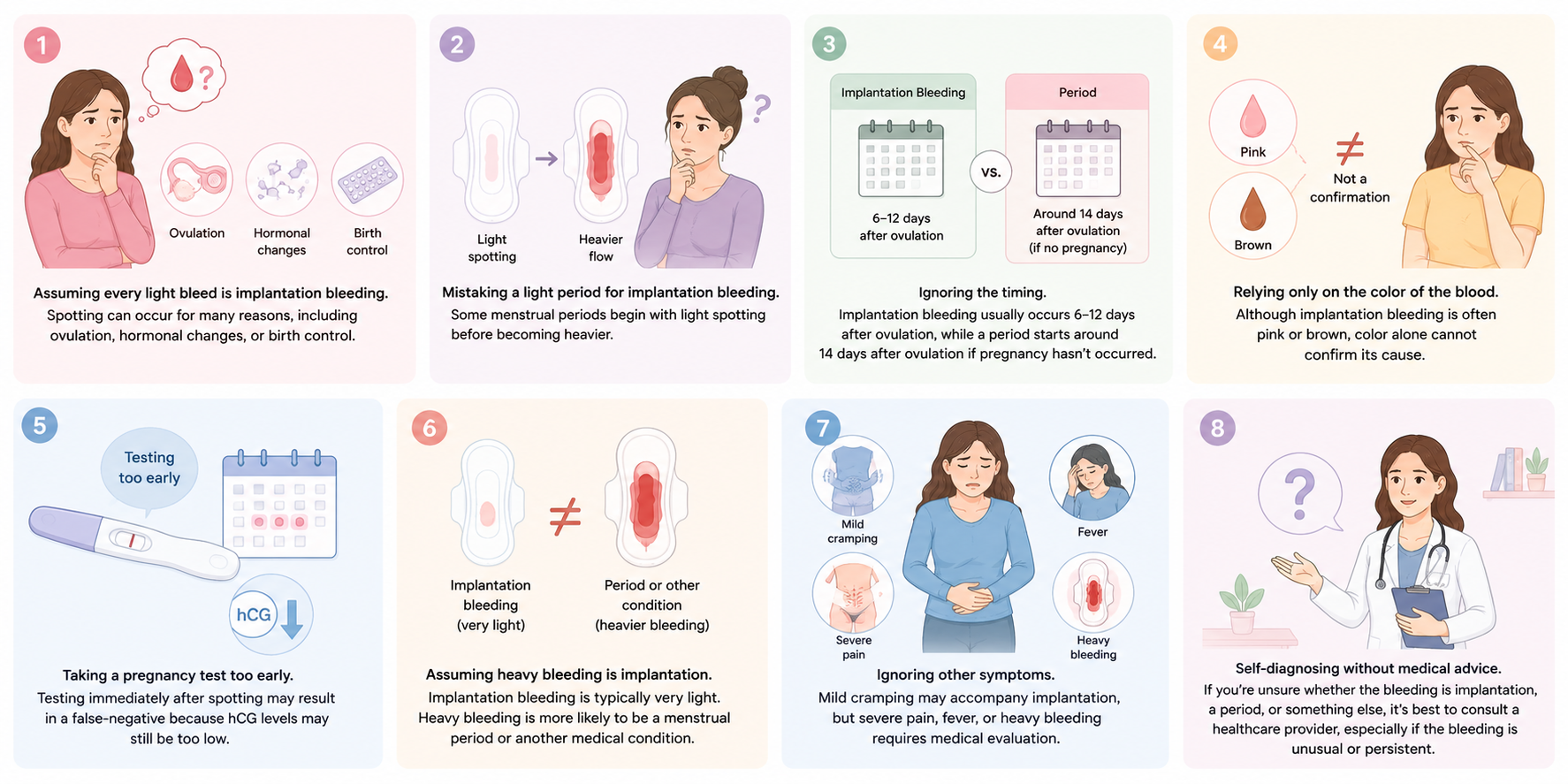
Common Mistakes People Make When Identifying Implantation Bleeding
Many people confuse implantation bleeding with other types of vaginal bleeding. Avoid these common mistakes when trying to identify it:
When to See a Doctor
Light spotting can be normal, but you should seek medical attention if the bleeding is heavy, prolonged, or accompanied by concerning symptoms. Prompt evaluation can help rule out complications such as an ectopic pregnancy, miscarriage, infection, or other underlying conditions.
See a doctor immediately if you experience:
- Heavy bleeding that soaks a pad within an hour
- Severe abdominal or pelvic pain
- Large blood clots or persistent heavy bleeding
- Dizziness, fainting, or weakness
- Fever, chills, or foul-smelling vaginal discharge
- Spotting during pregnancy with increasing pain or bleeding
- A positive pregnancy test followed by heavy bleeding or severe cramping
- Bleeding lasting longer than a few days or occurring repeatedly without a clear cause
Key Takeaway's
- Implantation bleeding is lighter, shorter, and usually pink or brown.
- A period is heavier, lasts longer, and is typically bright to dark red.
- Implantation bleeding occurs 6–12 days after ovulation.
- Take a pregnancy test after a missed period for the most accurate result.
- Not all spotting means pregnancy, it can have many other causes.
- Seek medical care if bleeding is heavy, painful, or accompanied by dizziness or fever.

Passed a large, tissue-like clot? It may not be a miscarriage, learn what a decidual cast is.
Faq's
What is the difference between implantation bleeding and a period?
Implantation bleeding is usually lighter, shorter, and more like spotting, while a period is typically heavier and lasts longer.
How can I tell if it’s implantation bleeding or my period?
Check the timing, flow, color, and cramps; implantation bleeding often happens about 6 to 14 days after fertilization and does not usually get heavier.healthline+2
What does implantation bleeding look like
It often looks like light pink, brown, or dull red spotting rather than a full menstrual flow.dexeus+1
How long does implantation bleeding last?
It may last a few hours to about 3 days, and it is usually much shorter than a normal period
Is implantation bleeding lighter than a period?
Yes, it is typically much lighter and may not even require a pad.flo+1
Does implantation bleeding have clots?
It usually does not have clots.dexeus
Does implantation bleeding cause cramps?
It can cause mild discomfort or light cramps, but severe pain is not typical.
When should I take a pregnancy test after spotting?
Take a test after the bleeding stops or around the time of a missed period for a more reliable result
Can implantation bleeding happen when my period is due?
Yes, it can happen around the time your period is expected, which is why it is often confused with one.
When should I see a doctor for bleeding in early pregnancy?
Seek medical advice if bleeding becomes heavy, includes clots, or comes with severe pain or worsening symptoms.
Refrence's
- Mayo Clinic - Implantation bleeding: Common in early pregnancy?mayoclinic
- Cleveland Clinic - Implantation Bleeding: Causes, Symptoms & What To Expectclevelandclinic
- Flo Health - Implantation bleeding vs. period bleeding: The differencesflo
- Healthline - Implantation Bleeding vs. Period: How to Tell the Difference


Member discussion