


There is a lot of social stigma associated with Eczema. People often think that coming in close contact with Eczematous patients can result in the spread of the disease to them. However this is not the truth. If the question: Is Eczema contagious? ever crossed your mind then this article will clear all your doubts.
Eczema is a non-contagious, common chronic inflammatory skin condition that causes dry, itchy, red, and irritated skin. Due to its active appearance some people might become afraid and falsely assume it to be contagious.
It is important to understand that eczema cannot spread from person to person through touching, hugging, kissing, sharing towels, or other everyday contact.
What is Eczema?
Eczema is a group of conditions that cause inflammation of the skin. Eczema is a chronic (long-lasting with episodes of flare up) skin condition that causes dry, itchy, and inflamed skin. It occurs due to a weakened skin barrier and an overactive immune response. It's not an infection which means it is not caused by a virus, bacteria, or fungus. The most common type of Eczema is atopic dermatitis.
It is a long-term condition that can affect people of all ages, but it is most common in infants and young children. It shows periods of flare-ups and remission, it is not contagious. With proper skincare, trigger avoidance, and appropriate treatment, most people can effectively manage their symptoms and improve their quality of life.
People with eczema usually have:
- Dry skin
- Itchy patches
- Red or darker-colored rashes
- Rough or thickened skin
- Cracks in the skin
- Oozing or crusting during flare-ups
What are the causes of Eczema?
Eczema is multi-factorial in origin i.e. there is an interplay of several causes rather than a single cause. Few factors like food allergies and hormonal imbalances act as triggers worsening the condition or contributing to flare ups. Eczema develops due to a combination of genetic, immune, and environmental factors that affect the skin's ability to protect itself. These factors can damage the skin's protective barrier, allowing moisture to escape and irritants or allergens to enter the body, leading to inflammation and itching.
1. Genetics
- If one or both parents have eczema, their children are more likely to develop eczema which means the disease runs in the families.
- It is caused by a defect in the Filaggrin (FLG) gene, which can weaken the skin's protective barrier, making the skin more prone to dryness and irritation.
2. Immune System Hyperactivity
- At times the immune system of the body can shown an overactive response to substances that are usually harmless, such as dust, or pollens
- This exaggerated immune response causes inflammation, leading to itchy, red, and swollen skin.
3. Weak Protective Skin Barrier
- Healthy skin acts as a protective barrier that locks in moisture and prevents the entry of irritants, allergens, and germs.
- In eczema, this protective skin barrier is weakened. It causes the skin to lose moisture easily and become dry, cracked, and more susceptible to irritation and infection.
4. Environmental Triggers
Environmental factors do not directly cause eczema, they can trigger or worsen flare-ups. Common triggers include:
- Harsh soaps, detergents, fragrances and perfumes
- Dust mites, pollen, pet dander, mold
- Hot or cold weather, sweating
- Wool or synthetic fabrics
- Cigarette smoke, air pollution
5. Stress
Stress may increase itching and trigger flare-ups as cortisol makes the body more sensitive to react to triggering substances.
6. Food Allergies
Food Allergies (peanuts, cashews etc)may trigger flare-ups in infants and young children with moderate to severe eczema, However, food allergies are not the cause of eczema in most people.
7. Hormonal Changes
Some people notice that their eczema worsens during hormonal changes, such as pregnancy or around menstruation. Hormonal fluctuations can affect the skin barrier and immune response, leading to flare-ups.
Is Eczema Contagious?
One of the biggest myths about eczema is that it can spread from one person to another through close contact. However, this is not true. Eczema is NON-CONTAGIOUS. This means that you cannot catch the disease from an eczematous patient by:
- Touching them
- Hugging
- Kissing
- Holding hands
- Sharing food
- Sharing utensils
- Going to school together
- Working together
- Swimming together
- Sitting next to someone
Unlike infectious skin conditions such as ringworm, scabies, or impetigo, eczema is not caused by bacteria, viruses, fungi, or parasites that is it is non-infectious. Instead, it is an inflammatory condition caused by a combination of genetics, immune system changes, and a weakened skin barrier.
Is Infected Eczema Contagious?
As previously discussed, eczema itself is not a contagious disease. However, if the person with the damaged skin barrier (due to eczema) acquires a skin infection, then that infection can sometimes spread.
To make this more clear, let's take an example. In an eczema patient, scratching can break the skin and allow bacteria such as Staphylococcus aureus or certain viruses to enter and cause an infection. So , the bacteria or virus (and not the eczema itself) may be passed through direct contact with infected skin or via contaminated items.
Understanding that eczema is not contagious can help reduce fear, challenge common myths and stigmas, and encourage empathy toward those living with this chronic skin condition.
What are the Types of Eczema?
Eczema can be classified into seven broad categories amongst which the most common is Atopic Dermatitis. A person can simultaneously be affected by more than one type of eczema.
Each type is characterised by different symptoms but it is important to remember that none of them is contagious. Identification of the type of eczema is important as it helps the doctors to provide a treatment with better recovery.
| Type of Eczema | What It Is | Common Symptoms | Commonly Affected Areas |
|---|---|---|---|
| Atopic Dermatitis | The most common type of eczema, often linked to allergies, asthma, and a family history of eczema. | Dry, itchy, inflamed skin with recurring flare-ups. | Face, neck, elbows, knees, hands, wrists, and ankles. |
| Contact Dermatitis | Occurs when the skin reacts to an irritant or allergen after direct contact. | Redness, itching, burning, swelling, and sometimes blisters. | Hands, face, neck, or any area exposed to the trigger. |
| Dyshidrotic Eczema | Characterized by small, itchy, fluid-filled blisters, often triggered by stress, sweating, or metal allergies. | Painful or itchy blisters, peeling, and cracked skin. | Palms, fingers, sides of the fingers, and soles of the feet. |
| Nummular (Discoid) Eczema | A chronic form of eczema that causes round or coin-shaped patches of irritated skin. | Intensely itchy, scaly, well-defined circular patches. | Arms, legs, hands, and torso. |
| Seborrheic Dermatitis | A type of eczema affecting oil-rich areas of the body, often associated with an overgrowth of yeast on the skin. | Greasy scales, dandruff, redness, and itching. | Scalp, eyebrows, sides of the nose, ears, chest, and upper back. |
| Stasis Dermatitis | Develops due to poor blood circulation, usually in people with chronic venous insufficiency or varicose veins. | Swelling, itching, discoloration, dry skin, and leg ulcers in severe cases. | Lower legs and ankles. |
| Neurodermatitis (Lichen Simplex Chronicus) | Develops from repeated scratching or rubbing of a localized area of skin. | Thick, leathery, intensely itchy patches. | Neck, wrists, forearms, ankles, scalp, or genital area. |
Symptoms Of Eczema
Eczema symptoms are not universal in each patient. They can vary based on the type of eczema, age, skin tone, and the severity of the condition.
The symptoms can range from mild or occasional flare-ups, to persistent symptoms that can hamper daily work activities. There can be alternate cycles when the symptoms show up followed by periods of improvement.
The most common symptoms include:
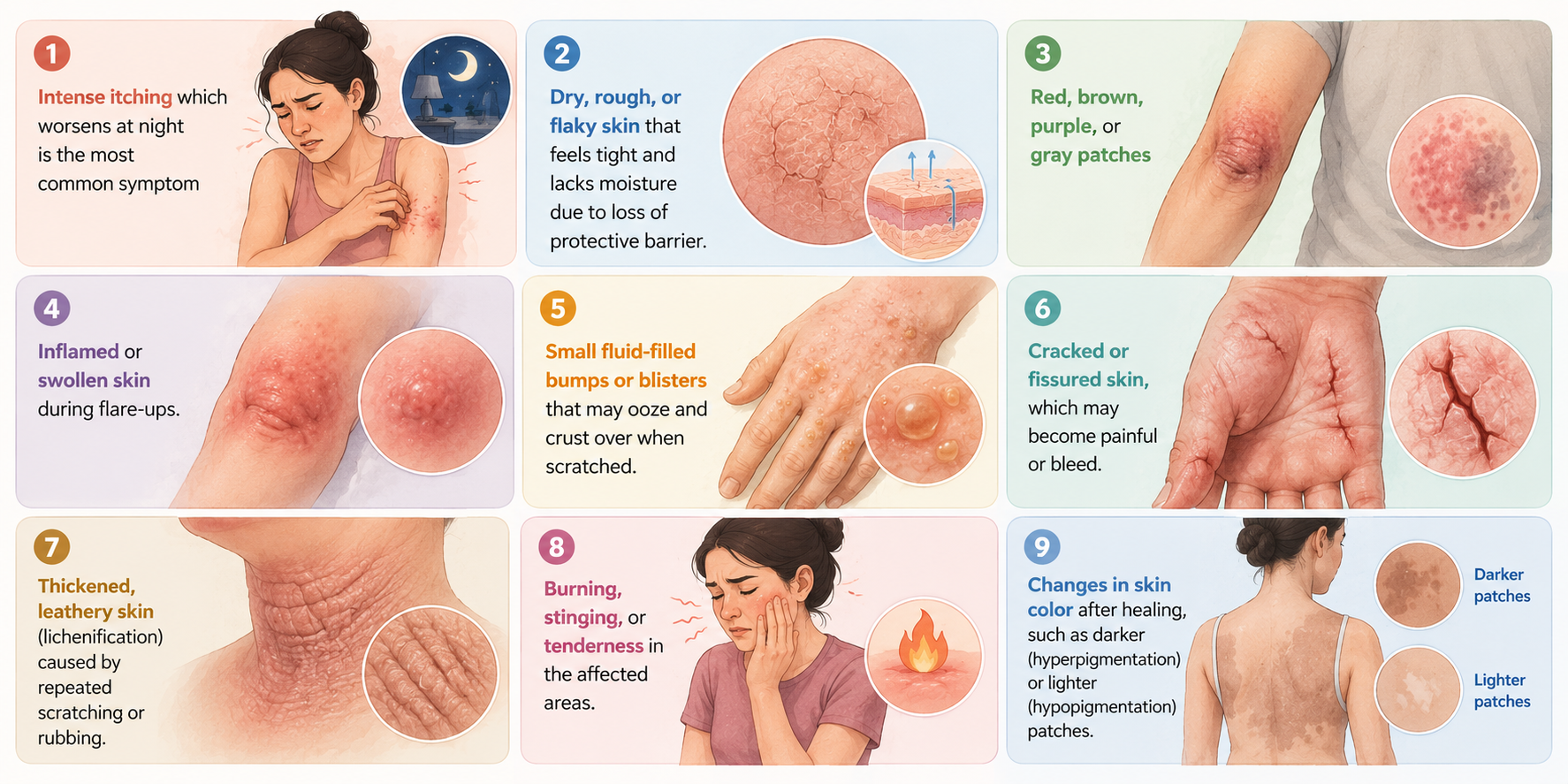
Age Specific Eczema Symptoms
Babies (Under 2 Years)
- Symptoms commonly appear on cheeks, forehead ,scalp, arms and legs
- Babies may rub their skin against bedding because of intense itching
- Babies are irritable and have difficulty sleeping.
Children
- In older children, eczema often affects elbows, knees , wrists, ankles, neck and hands
- The skin may become thickened due to frequent scratching.
Adults
- Adults commonly develop eczema on the hands, face, neck eyelids, feet and skin folds
- Hand eczema is particularly common in people who frequently wash their hands or work with chemicals, detergents, or cleaning products.
Symptoms During an Eczema Flare-Up
A flareup is marked by severe symptoms like:
- Severe itching
- Increased redness or discoloration
- Swelling, weeping blisters
- Crusting of the skin
- Painful cracks or sores
Symptoms of Infected Eczema
Symptoms of infected eczema include:
- Increased redness or warmth, swelling
- Yellow or honey-colored crusts
- Pus or fluid leaking from the rash
- Increased pain or tenderness
- Fever
Can Eczema Spread?
It is one one the most common doubts among the population. No, eczema cannot spread from one person to another.
Can Eczema Spread on Your Own Body from one part to another?
No this is not true. New patches of eczema in different parts of body can develop because:
- Different areas of the skin are exposed to triggers.
- The skin barrier becomes weakened in multiple locations.
- Scratching damages healthy skin and triggers inflammation.
- Allergens or irritants come into contact with other areas of the body.
Can Scratching Spread Eczema?
Scratching does not spread eczema from one person to another. But it can worsen existing condition and trigger flareup.Frequent scratching can:
- Damage the skin barrier
- Increase inflammation
- Cause bleeding
- Lead to skin thickening
- Increase the risk of bacterial infection
Can Eczema Spread Through Towels or Clothing?
No. Sharing towels, clothes, or bedding does not spread eczema. However, an infected eczema might spread the skin infection to others.
Can Eczema Spread Through Kissing?
No. Kissing cannot transmit eczema because it is not an infectious disease.
Can Eczema Spread During Pregnancy?
Pregnant women cannot pass eczema to their unborn baby through the womb. However, it runs in families and the child is genetically predisposed to occurrence of eczema later in life.
Can Pets Catch Eczema?
Human eczema cannot spread to dogs, cats, or other pets.
Can Baby Eczema Spread to Parents?
No, caregivers cannot catch eczema from a baby.
What Are Eczema Flare-Ups?
An eczema flare-up refers to periods where certain triggers can worsen eczema or symptoms become more severe. During a flare-up, the skin becomes more inflamed, leading to increased itching, redness or discoloration, dryness, and irritation. Flare-ups can last from a few days to several weeks, depending on their severity and how quickly treatment is started.
When Should You See a Doctor for Eczema?
Mild cases can be managed with over the counter medications however in cases where symptoms of eczema worsen immediately visit your doctor.
- At home treatment is not causing relief
- The itching is affecting your sleep or daily activities.
- The rash becomes painful or starts developing pus.
- Yellow crusts over rashes or a fever.
- It spreads covering several parts of the body .
- Difficulty in sleeping because of itching.
- Skin infection is suspected, fever and pain
Seek urgent medical attention if you develop painful blisters, rapidly worsening skin, fever, or widespread sores, as these may indicate eczema herpeticum or another serious infection.
How Is Eczema Diagnosed?
Your doctor may ask you several questions to reach a diagnosis.
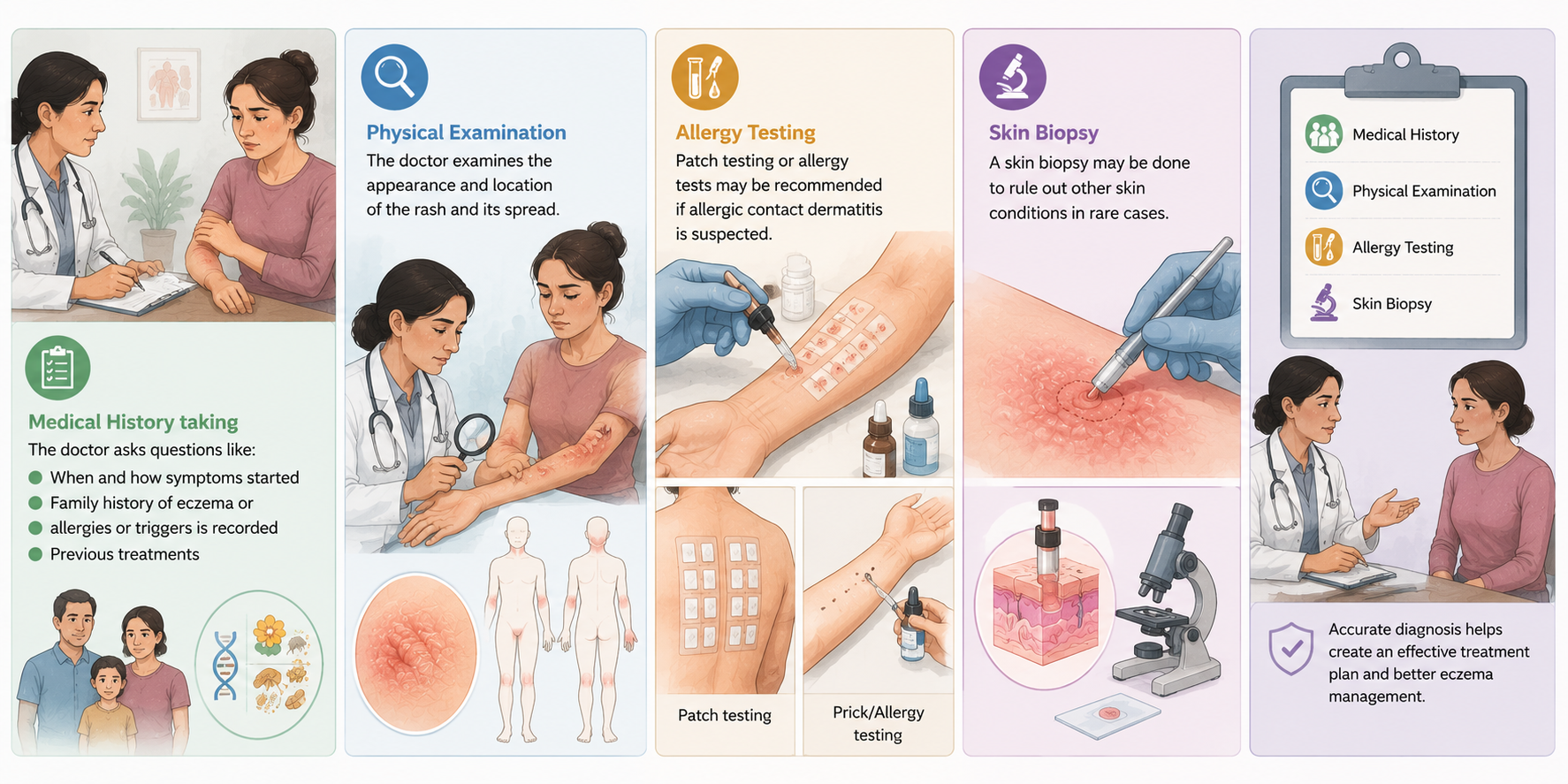
Treatment for Eczema
Although eczema cannot be cured, treatment can effectively control symptoms and reduce flare-ups.
1. Moisturize Frequently
Moisturizers are the main components of eczema treatment. However it is important to choose fragrance-free creams or ointments and apply them:
- Immediately after bathing
- Before bedtime
- Whenever the skin feels dry
This helps restore the skin barrier and reduce itching.
2. Topical Corticosteroids
Steroid creams reduce inflammation during flare-ups. They should be as advised by your doctor. It's because prolonged or inappropriate use may cause side effects like skin thinning.They should be applied in a thin layer to the affected areas. Stopped or reduced once the flare-up improves to minimize the risk of side effects.
3. Non-Steroid Prescription Creams
Doctors might prescribe you with topical calcineurin inhibitors, PDE-4 inhibitors, to regulate the overactivity of the immune system. This is specific particularly for sensitive areas of the body or for the purpose of long-term management.These medications help reduce inflammation without the side effects associated with prolonged steroid use.
4. Antihistamines
These are anti allergy medications which are prescribed to reduce itchiness specially during night.
5. Antibiotics
If eczema becomes infected, your doctor may prescribe topical or oral antibiotics in order to manage the spread of the infection.
6. Phototherapy
Controlled ultraviolet (UV) light therapy can help people with moderate to severe eczema that does not respond to topical treatments.
7. Biologic and Oral Medicines
For severe eczema, newer biologic medications and oral immunomodulators may be recommended. These treatments target the immune system and are usually prescribed by a dermatologist. They may be recommended for people with moderate to severe eczema that has not improved with conventional treatments. Biologics are usually given as injections under the guidance of a dermatologist.
Treatment for Eczema
There is currently no permanent cure for eczema, but the condition can be effectively managed with the right treatment and skincare routine. The goals of treatment are to relieve itching, reduce inflammation, repair the skin barrier, prevent flare-ups, and lower the risk of skin infections.
Your healthcare provider may recommend one or more of the following treatments based on the type and severity of your eczema.
1. Moisturizers (Emollients)
Moisturizers are the foundation of eczema treatment. They help restore the skin barrier, prevent moisture loss, and reduce dryness and itching.
For best results:
- Apply a fragrance-free moisturizer at least twice a day.
- Moisturize within three minutes after bathing to lock in moisture.
- Reapply whenever your skin feels dry.
- Choose thick creams or ointments if you have very dry skin.
2. Topical Corticosteroids
Topical corticosteroids, also known as steroid creams or ointments, are commonly prescribed to reduce inflammation and itching during eczema flare-ups.
These medications should be:
- Used only as directed by your healthcare provider.
- Applied in a thin layer to the affected areas.
- Stopped or reduced once the flare-up improves to minimize the risk of side effects.
3. Non-Steroidal Topical Medications
For sensitive areas such as the face, eyelids, or skin folds—or for long-term management—your healthcare provider may prescribe non-steroidal medications, including:
- Topical calcineurin inhibitors
- Topical phosphodiesterase-4 (PDE-4) inhibitors
- Topical Janus kinase (JAK) inhibitors
These medications help reduce inflammation without the side effects associated with prolonged steroid use.
4. Oral Medications
If eczema is severe or does not respond to topical treatments, oral medications may be recommended. These may include:
- Antihistamines to help relieve itching and improve sleep
- Oral corticosteroids for short-term treatment of severe flare-ups (used only in selected cases)
- Immunosuppressive medications for difficult-to-control eczema
These medicines should only be taken under medical supervision.
5. Biologic Therapies
Biologic medicines target specific parts of the immune system responsible for eczema-related inflammation. They may be recommended for people with moderate to severe eczema that has not improved with conventional treatments.
Biologics are usually given as injections under the guidance of a dermatologist.
6. Phototherapy (Light Therapy)
Phototherapy uses controlled doses of ultraviolet (UV) light to reduce inflammation and itching.
It may be recommended for people with moderate to severe eczema who do not respond adequately to topical treatments.
7. Treatment for Infected Eczema
Damaged skin can sometimes become infected with bacteria, viruses, or fungi.
If an infection develops, your healthcare provider may prescribe:
- Antibiotics for bacterial infections
- Antiviral medications for viral infections, such as eczema herpeticum
- Antifungal medications if a fungal infection is present
Seek medical attention promptly if you notice pus, yellow crusts, increasing redness, warmth, swelling, or fever.
8. Wet Wrap Therapy
Wet wrap therapy may be recommended during severe eczema flare-ups. This involves:
- Applying moisturizer and prescribed medication to the affected skin.
- Covering the area with a damp layer of clothing or bandages.
- Placing a dry layer over the top.
This technique helps improve skin hydration, reduces itching, and enhances the effectiveness of topical medications. It should be used under the guidance of a healthcare professional.
9. Lifestyle and Home Care
Simple self-care measures can make a significant difference in controlling eczema.
- Take short, lukewarm showers instead of hot baths.
- Use gentle, fragrance-free cleansers.
- Wear soft, breathable cotton clothing.
- Keep your fingernails short to reduce skin damage from scratching.
- Identify and avoid your personal triggers.
- Manage stress through relaxation techniques, regular exercise, or meditation.
- Stay well hydrated and maintain a healthy lifestyle.
Treatment by Severity of Eczema
| Severity | Recommended Treatment |
|---|---|
| Mild Eczema | Daily moisturizers, trigger avoidance, and a gentle skincare routine. |
| Moderate Eczema | Regular moisturizers, topical corticosteroids or non-steroidal creams, and prescription medications if needed. |
| Severe Eczema | Biologic therapies, oral medications, phototherapy, wet wrap therapy, and care from a dermatologist or eczema specialist. |
Complications of Eczema
Eczema itself is not a life-threatening condition, persistent itching, inflammation, and damage to the skin barrier can lead to several complications if left untreated.
1. Skin Infections
One of the most common complications of eczema is a skin infection. Constant scratching can break the skin, allowing bacteria, viruses, or fungi to enter which can result in an infectious eczema. Signs of an Infected Eczema Rash are:
- Increased redness or warmth
- Swelling
- Yellow or honey-colored crusts
- Pus or fluid draining from the rash
- Pain or tenderness
- Fever or chills
- Rapidly worsening eczema
The most common bacterial infection is caused by Staphylococcus aureus, while viral infections such as eczema herpeticum (caused by the herpes simplex virus) require urgent medical attention.
2. Sleep Disturbances
Intense itching often becomes worse at night, making it difficult to fall asleep or stay asleep. Poor sleep can lead to:
- Daytime tiredness
- Difficulty concentrating
- Mood changes
- Reduced productivity at school or work
3. Thickened Skin (Lichenification)
Repeated scratching causes the skin to become thick, leathery, and darker or lighter than the surrounding skin. This is known as lichenification.
4. Scarring and Skin Color Changes
Severe eczema or repeated scratching may leave temporary or long-lasting changes in skin color. After a flare-up heals, the affected skin may appear darker (post-inflammatory hyperpigmentation) or lighter (post-inflammatory hypopigmentation), especially in people with darker skin tones.
5. Emotional and Mental Health Effects
Living with eczema can affect more than just the skin. Persistent itching, visible rashes, and frequent flare-ups may impact emotional well-being. People with eczema may experience:
- Low self-esteem
- Anxiety
- Depression
- Social withdrawal
- Embarrassment
- Reduced quality of life
6. Hand and Foot Problems
People with chronic eczema affecting the hands or feet may find everyday activities difficult.
Prevention Of Eczema
Proper treatment and protective measures can help reduce these limitations. Some simple steps that might prevent the eczema from occurring include:
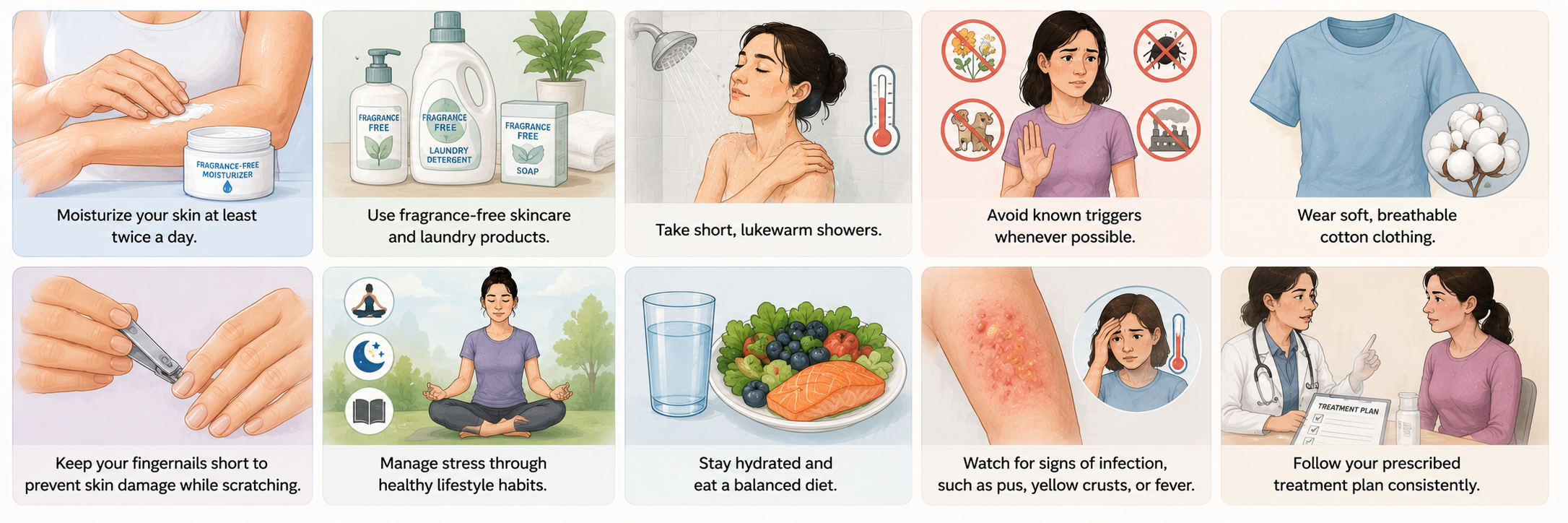
Living with Eczema
Although eczema is a chronic skin condition with no permanent cure, the prognosis is generally good. With regular moisturizing, proper treatment, trigger avoidance, and a consistent skincare routine, most people can successfully manage their symptoms and reduce the frequency of flare-ups.
While some children outgrow eczema, others may continue to experience it into adulthood. Living with eczema also involves caring for your emotional well-being, as persistent itching and visible skin changes can affect confidence and quality of life.
Key Takeaway's
- Eczema is a long-term inflammatory skin condition that causes dry, itchy, and inflamed skin.
- Eczema is not contagious and cannot spread through touching, hugging, kissing, swimming, or sharing food.
- It develops due to a combination of genetics, immune system changes, and a weakened skin barrier.
- Common triggers include harsh soaps, allergens, stress, weather changes, and irritants.
- Regular moisturizing, gentle skincare, and avoiding triggers are the foundation of eczema management.
- Although eczema itself is not contagious, infected eczema may require prompt treatment to prevent the spread of infection.
- Seek medical advice if your symptoms worsen, become infected, or interfere with your daily life.
Curious about natural remedies for dry, itchy skin?
Learn how Batana Oil for Eczema & Psoriasis is used and what the evidence says.
FAQ’s
Is eczema contagious?
No. Eczema is not contagious. You cannot catch it through touching, hugging, kissing, or sharing everyday items.
Can eczema spread by scratching?
No. Scratching does not spread eczema to another person. However, it can damage your skin, worsen inflammation, and increase the risk of infection.
Is eczema caused by poor hygiene?
No. Eczema is not caused by poor hygiene. In fact, excessive washing with harsh soaps can worsen symptoms by drying out the skin.
Can stress trigger eczema?
Yes. Stress does not cause eczema, but it can trigger or worsen flare-ups in many people.
Is eczema curable?
There is currently no permanent cure for eczema. However, with proper treatment, regular moisturizing, and trigger avoidance, most people can successfully manage their symptoms and reduce flare-ups.
Can diet cure eczema?
No single diet can cure eczema. Some people may notice that certain foods trigger flare-ups, particularly if they have a food allergy. Always speak to your healthcare provider before making significant dietary changes.
Reference's
- American Academy of Dermatology. Atopic Dermatitis (Eczema): Overview.
- National Eczema Association. Understanding Eczema and Atopic Dermatitis.
- National Health Service (NHS). Atopic Eczema.
- National Institute for Health and Care Excellence (NICE). Atopic Eczema: Diagnosis and Management.
- American Academy of Allergy, Asthma & Immunology (AAAAI). Atopic Dermatitis.


Member discussion