


The body sends signals whenever something different is happening in our body. It tries to communicate and keep warning us by giving signals such as fever, pain or something like spotting before periods.
This guide addresses all the most common causes, helps to determine what is normal and what's not normal, and tells you when to call a doctor.
What Is Spotting Before a Period?
Spotting before periods is when the vagina sheds blood other than the regular period. It is generally lighter in color than a period, and you may notice a small spot of blood on underwear or on toilet paper. Usually, a panty liner is sufficient. The pad/tampon is not generally required.
The premenstrual symptoms are usually not harmful if they are recognized in advance. It may be due to a pregnancy, ovulation, perimenopause or due to polyps or some other health problem.
The blood spots may be of different colors:
Pink spotting before period - Typically light, fresh bleeding, and often associated with ovulation and may be because of hormonal changes that happen at that time.
Brown spotting before period - if the blood has oxidized, it looks the same as a cut apple turning brown, but it may be older blood, and it may take longer to come out of the body.
Light red spotting before period - it may be implantation bleeding or the beginning of your period.
Is Spotting Before Period Normal?
Yes, in many cases, spotting before your period is actually normal.There are many causes for spotting. It can sometimes be an indication of an underlying problem, but not often.
If light spotting before periods happens once or twice and is not associated with any symptoms is not a cause for concern. If spotting occurs during each cycle or increases to heavier spotting over time and is accompanied by pain, abnormal discharge or other symptoms needs medical assistance.
Spotting Before Period vs Period - How to Tell the Difference
Many people get confused between their period and spotting before their period. Both are completely different from each other lets understand how:
| Factors | Spotting | Period |
|---|---|---|
| Amount | Light flow or a few drops | Moderate to heavy flow |
| Duration | Few hours to 2 days | 3 to 7 days |
| Color | Pink, brown, or light red | Red to dark red |
| Timing | Days before the expected period | On or near the expected date |
| Cramping | Mild or none | Moderate to strong |
| Protection Needed | Panty liner only | Pad or tampon |
If you are soaking a panty liner with blood and you are bleeding for more than 2 days before your period date, that is probably the beginning of your period or a sign that something else is happening.
9 Common Causes of Spotting Before Your Period
The most common causes of premenstrual bleeding are listed below:
1. Hormonal Imbalance
When you have a hormone imbalance, your hormone levels are not properly balanced with each other, and sometimes functions in your menstrual cycle do not occur as they should. Some symptoms can be experienced, such as spotting before periods.
2. Ovulation Spotting
Approximately 4.8% of menstruating women have ovulation-related spotting, which happens around 14 days before menstruation.
This spotting is usually pink or light brown and will only last a few hours. It has no side effects and is very beneficial, it tells you when you are ovulating.
3. Implantation Bleeding
Light spotting 6-12 days after ovulation may be implantation bleeding if you have had unprotected sex recently. This occurs when a fertilized egg sticks to the uterine lining. The spotting occurs a few days before the normal period date, causing light pink to dark brown spotting. It is lighter and lasts 1-2 days. If not sure, then go for a pregnancy test.
4. Birth Control
Spotting may also occur with hormonal birth control methods such as pills, patches, injections, rings or implants, particularly when the methods are new, switched between one another or when doses are not taken as scheduled.
This type of spotting is called breakthrough bleeding, and it usually settles within 3 months as your body adjusts if it doesn't, ask your doctor for other ways.
5. Perimenopause
Perimenopause is a time of hormonal fluctuations, and as hormones fluctuate, so do cycles. One of the early symptoms is spotting before period perimenopause or prior to the regular or irregular cycles.
This may be the reason if you are in your late 30s or 40s and have irregular spotting. This is normal, but you should consult with your doctor to check other causes.
6. PCOS (Polycystic Ovary Syndrome)
PCOS causes irregular ovulation and creates a hormonal imbalance, which causes unusual bleeding patterns. Women with PCOS may experience spotting between periods. Other symptoms of PCOS include irregular periods, excess hair growth and acne.
7. Endometriosis
In endometriosis, the lining of the uterus (endometrium) forms outside the uterus. This tissue is subject to the period, but this tissue has nowhere to go and can lead to spotting, pelvic pain and heavy periods. Spotting between periods can be a symptom of endometriosis
8. Uterine Fibroids or Polyps.
Polyps in the cervix or uterus can lead to spotting, light bleeding after sex or unusual discharge. Fibroids are growths in the uterus which are not cancerous but may affect the normal pattern of menstruation. They are both quite common and easily treated.
9. Thyroid Disorders
Your thyroid is responsible for controlling hormones all over your body, including hormones that control your menstruation. Your period may be irregular due to thyroid conditions, and the spotting may occur in the lead-up to the period. If you are also experiencing fatigue, weight gain or hair loss, ask your doctor to do a thyroid checkup.
What is Brown Spotting Before Your Periods?
One of the most common queries women look for is brown spotting before period, which is typically not a cause of concern.
Old blood is brown blood. It takes a long time to leave the uterus, and it oxidizes on the way and becomes brown like an apple that has been left in the open. This frequently occurs when:
- Your uterus is shedding its lining a bit too soon.
- When progesterone declines irregularly prior to your period.
- If you are on a hormonal contraceptive.
- When ovulation bleeding takes a few days to exit.
What is Pink Spotting Before Your Period?
Pink spotting is a small amount of blood which is light in color and fresher than the brown color spotting. It is a pink blood which gets mixed with vaginal or cervical fluid.
Any of the following can cause pink spotting before period:
- Ovulation bleeding.
- Implantation bleeding (if you could be pregnant).
- Changes in hormones just before your period.
- Having cervix sensitivity after intercourse.
Prolonged spotting (more than 2 days), heavy spotting or spotting accompanied by cramping or discharge should be discussed with your doctor.
Spotting Before Period Could You Be Pregnant?
One of the first signs of pregnancy is spotting before periods, but only if it's implantation bleeding.
The following are signs to differentiate implantation bleeding from before period spotting:
- Symptoms: Implantation bleeding occurs about 6 to 12 days after ovulation and before .
- Duration: Lasts 1-2 days (maximum)
- Color: Looks light pink/brown (not red)
- Amount: Very light, only one panty liner is enough
When confused, get a home pregnancy test done with the kit. Take the test 5-6 days prior to the expected period or on the day for the best results.
When Is Spotting Before Your Period Not Normal?
If you are pregnant or have a strong doubt of being pregnant, if you have other symptoms such as pelvic pain, abdominal pain, abnormal discharge or foul odor, and if it occurs regularly for several months, the spotting may be abnormal.
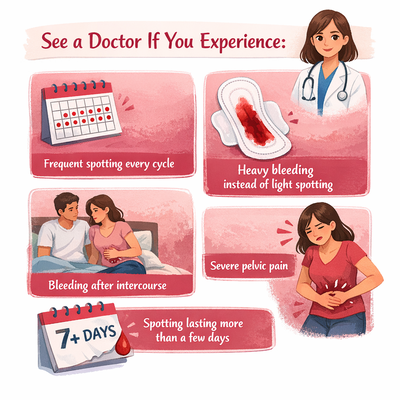
Consult your doctor if you notice:
- Three months of spotting on a regular basis.
- Spotting occurs more than 4 days prior to the period.
- Abnormal bleeding between periods.
- Regularly getting spots after intercourse.
- Spotting after menopause should always be evaluated.
- Spotting with pain, fever or unusual discharge
Any woman who has never had a spotting before and suddenly has one or begins four days before your period, then it is worth visiting a gynecologist.
How Doctors Diagnose the Cause of Spotting
During your visit to the doctor, for spotting, they will probably:
- Discuss your past cycle and contraceptive history, as well as sexual activity in the past three months.
- Do a pelvic examination
- Have your blood tests done to monitor hormones, thyroid function, or pregnancy.
- Ask for an ultrasound to look for fibroids, polyps or ovarian cysts.
- Test for STIs if there is a risk of infection
Treatment will vary depending on the cause of the spotting. If spotting is due to a hormonal imbalance, doctors may recommend hormone medications. If a bacteria cause the infection, antibiotics may be prescribed.
Tips to Track and Manage Spotting
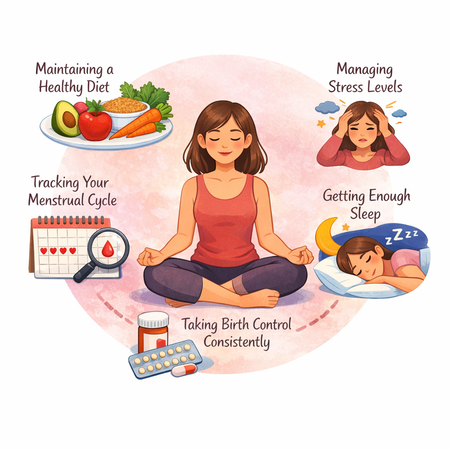
One of the most helpful things you can do is to follow these tips and monitor your cycle, for both your own comfort and to provide your doctor with the correct information.
Use a period tracking app- To see the color, the duration and other symptoms using a period tracking application.
Note your birth control status- As spotting can be common and harmless if you are taking hormonal contraceptives.
Track stress levels- Stress fluctuates cortisol levels, also affects estrogen and progesterone, which causes spotting.
Eating a complete balanced diet- Ignoring nutritional deficiencies, can impact the production of hormones.
Keep a symptom diary- Record if spotting occurs after sex and before a period or at a particular time of cycle. This allows your doctor to check patterns.
Final Thoughts
Spotting before periods is very common and harmless in most of the cases. The most common causes are hormonal changes, ovulation, birth control and natural cycle changes.
Your body knows when something is not normal, so do you. However, if spotting occurs regularly, gets heavier, or persists with other symptoms, then do not wait and see the doctor.
Just one appointment with your gynecologist can provide answers, peace of mind, and a direction. Keep a record of your cycle, know your normal cycle, and always ask questions to your doctor.

Spotting before periods can sometimes be confused with symptoms of a decidual cast. Learn the difference here.
Frequently Asked Questions
Is spotting before my period normal?
Yes, it is normal for many women to experience light, rare spotting before or during periods. It commonly happens because of hormonal changes, ovulation or birth control changes. If it happens in every cycle or occurs with other symptoms, then consult your doctor.
What does spotting before a period look like?
A spot is much lighter than a period. It can look like a few blood drops on your underwear or toilet paper, which can be pink, brown or light red. Usually, a panty liner is sufficient, a pad or tampon should not be needed.
Can spotting before my period mean I am pregnant?
Maybe. Bleeding that occurs 6-12 days after ovulation, called implantation bleeding, is of light pink or brown color and almost lasts for 1-2 days. If there is a possibility that you can get pregnant. Take a home pregnancy test to check for pregnancy.
How long before a period can spotting start?
The signs of spotting start 1 to 3 days prior to your period. Spotting that begins over 4 days before the expected period date, you should track it and talk to your gynecologist.
Does PCOS cause spotting before a period?
Yes. PCOS creates imbalance in the functioning of hormones and ovulation, it also causes irregular period and spotting in between or before period. Consult a gynaecologist about PCOS testing if spotting, irregular period, acne, or excessive hair growth occurs.
Can stress cause spotting before a period?
Yes. Stress increases cortisol, which can imbalance your hormones, estrogen and progesterone that control hormones and help in period. This may lead to early, late period or spotting before periods.
When should I see a doctor about spotting before my period?
Suppose spotting occurs during every period, regularly for more than 3 months. If it begins more than 4 days early, vaginal or pelvic pain or discharge. Also, if it happens regularly after sex or menopause, then for all these reasons, consult your doctor.


Member discussion