


Eucalyptus oil for congestion has been used to relieve stuffy noses since ages. Eucalyptus oil is an essential oil which is used to clear the blocked sinuses and make breathing more comfortable providing relief. It can be inhaled via a variety of mechanisms ranging from adding it to steam inhalers or incorporating it into diffusers. Several people know the benefits of this essential oil but it is also important to understand how to use eucalyptus oil for congestion safely.
If the correct technique is not used it can irritate the skin, eyes, or airways, especially in children and people with certain medical conditions.
What Is Eucalyptus Oil?
Eucalyptus oil is extracted from leaves of eucalyptus trees, particularly Eucalyptus globulus.It has been a part of traditional medicine, aromatherapy, and over-the-counter natural remedy for nasal and chest congestion. It is an essential oil that contains several natural compounds. Amongst them the most active compound is 1,8-cineole (Eucalyptol). This compound gives eucalyptus oil its fresh, cooling scent and contributes to many of its therapeutic properties.
Today, eucalyptus essential oil for congestion is found in:
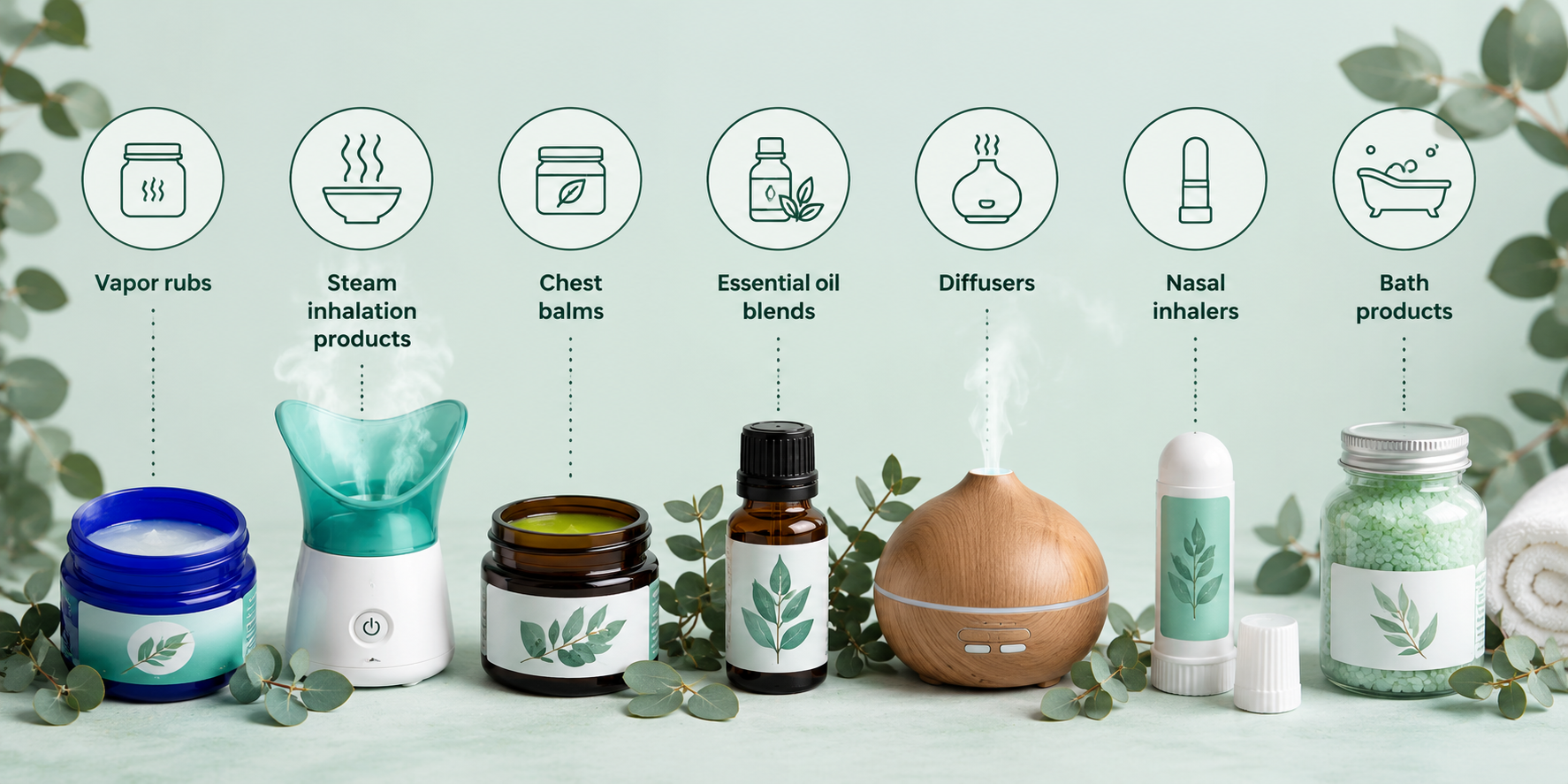
Being a natural remedy, it is important to understand that Eucalyptus oil is only used to relieve the symptoms. It does not cure the underlying infection or cause of congestion.
Can Eucalyptus Oil Help with Congestion?
Yes it is helpful in relieving congestion. Studies suggest that Eucalyptus oil can help in relieving congestion through its:
- Mild anti-inflammatory properties which reduce inflammation in the sinuses and airways. This provides relief from the sensation of chest tightness that comes with chest congestion
- Open blocked nasal passages by reducing swelling in the mucous membranes
- Mucus-thinning effects which loosens the mucus, making it easier to blow your nose or cough it up clearing the nasal pathways.
- Antioxidant activity promotes quicker recovery.
- Antimicrobial properties which help fight bacteria and viruses that cause secondary infections (like sinusitis after a cold)
Upon inhalation the cooling aroma of Eucalyptus oil stimulates receptors in the nose. Stimulation of these receptors stimulates the sensation of the air flow through the nasal passages. This is why many people feel like their nose has opened up after breathing in eucalyptus vapors. However ,nasal passages haven't physically widened.
This is why breathing feels easier for several hours after inhalation of Eucalyptus oil.
How Does Eucalyptus Oil Help In Congestion?
Eucalyptus Oil helps in relieving congestion through the following mechanisms:
1. Creates a Cooling Sensation
Eucalyptol, the active ingredient in Eucalyptus oil activates cold-sensitive receptors inside your nasal passages. The brain interprets this as improved airflow, making breathing feel easier. So even without actually physically widening the nasal passage there is a sensation of an improved air flow providing relief to the patients.
2. Helps Loosen Thick Mucus
Eucalyptus oil has a mucous thinning and loosening property. Warm steam combined with eucalyptus oil may help thin mucus, making it easier to clear your nose and sinuses. This relieves chest tightness and congestion.
3. Reduces Mild Inflammation
Some studies suggest eucalyptol has anti-inflammatory properties that may reduce irritation in the respiratory tract.
4. Supports Respiratory Comfort
People with colds, sinus infections, or upper respiratory illnesses often report feeling less congested after inhaling eucalyptus vapors due to stimulation of nasal nasal receptors which provide a sense of improved air flow.
What Is Congestion?
Congestion is the feeling of blocked or stuffy airways and sinuses caused by inflammation, swelling, or excess mucus in the nose, sinuses, or chest.Congestion is itself not a disease, and can occur with conditions such as the common cold, allergies, sinus infections, influenza, or other respiratory illnesses. It is a symptom.
There are two main types of congestion:
Nasal Congestion
Nasal congestion occurs when the tissues inside the nose become swollen and produce extra mucus. This can make it difficult to breathe through your nose and may be accompanied by:
- A stuffy or blocked nose
- Difficulty in breathing through nose
- Runny nose with or without sneezing
- Sinus pressure or headache
- Reduced or altered sense of smell or taste
Chest Congestion
Chest congestion happens when mucus builds up in the lungs and airways. Common symptoms include:
- A cough that produces mucus (phlegm)
- A feeling of heaviness or tightness in the chest
- Difficulty clearing mucus
- Mild shortness of breath or noisy breathing
What Are The Causes Of Congestion?
- The common cold
- Influenza
- Seasonal allergies
- Sinus infections
- Dry indoor air
- COVID-19 and other viral illnesses.
- Nasal polyps
How to Use Eucalyptus Oil for Congestion?
There are several techniques which can be used to extract benefits of eucalyptus oil for nasal and chest congestion. Each has its benefits and shortcomings.
1. Steam Inhalation of eucalyptus oil
It is the most common and widely used method. It is very effective to take benefits from eucalyptus oil.
Steps
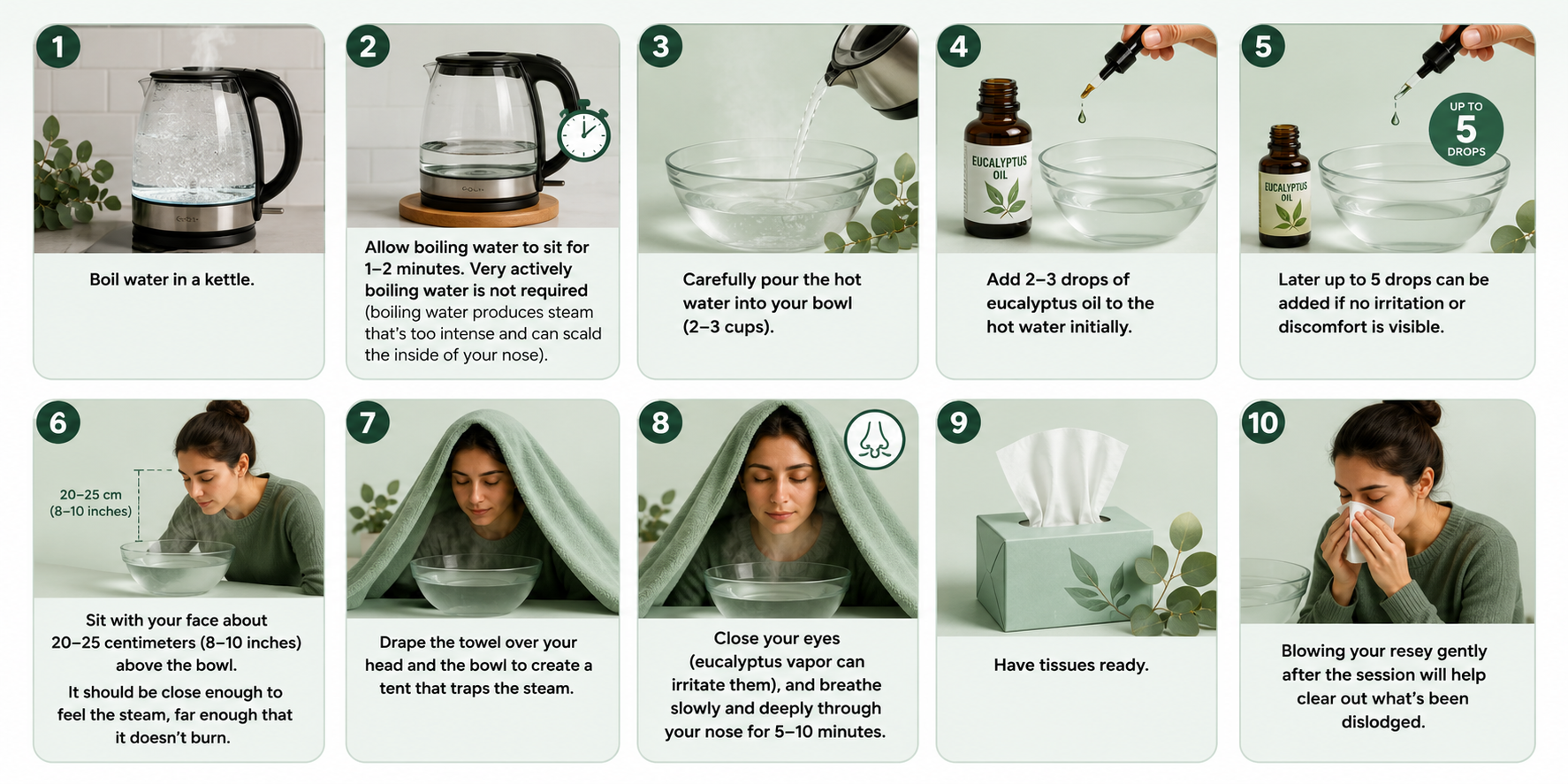
Safety Tips
- Never use boiling water as it causes scalding.
- Keep your eyes closed to avoid irritation.
- Do not allow children to perform steam inhalation unsupervised.
- Stop immediately if you feel dizzy or short of breath.
This is one of the most commonly recommended methods for how to use eucalyptus oil for sinus congestion.
2. Using a Diffuser
A diffuser disperses tiny droplets of eucalyptus oil into the air throughout the day, allowing you to inhale the aroma gradually. A diffuser is ideal for:
- Keeping airways gently open throughout the day
- Nighttime breathing support while you sleep
- Preventive use during cold and flu season
How to Use A Diffuser?
- Add 3–5 drops of the essential oil to diffuser per 100ml of water
- Run the diffuser for 30–60 minute sessions, not continuously for hours
- Keep the room ventilated . It prevents air from becoming oversaturated
- Not useful for small unventilated spaces
Safety Tips
- Prolonged exposure may cause headaches or irritation in some individuals.
- Not useful for small unventilated spaces
3. Adding Eucalyptus Oil to a Warm Shower
A hot shower creates steam that carries the scent of eucalyptus oil. You Can use any of the following methods while showering to extract its scent:
Steps
- Pace 2–3 drops on the shower floor, away from direct water flow. As the warm water runs, the steam releases the aroma into the bathroom.
- Put a few drops on a damp washcloth and hang it near (but not directly under) the showerhead. The steam will activate the oil without it washing away immediately.
- Tie a small bundle of fresh eucalyptus branches (if available) to your showerhead with twine. As the hot water hits the leaves, the oils release naturally. This is a gentler, longer-lasting option.
Safety Tips
Never apply undiluted eucalyptus oil directly to your skin while showering.
4. Applying a Diluted Eucalyptus Oil Chest Rub
When congestion has settled deep in the chest, a eucalyptus oil chest rub can bring significant relief. Chest congestion is characterized by tight, heavy feeling with a phlegmy cough. The warmth of skin helps release eucalyptus vapors continuously.
Most beneficial when applied just before bed . Some people find relief by applying diluted eucalyptus oil to the chest.
How to Dilute It?
Mix:
- 2–3 drops eucalyptus oil
- 1 tablespoon coconut, almond, or jojoba oil (carrier oil)
- Adding a few drops of Lavender essential oil to these benefits in sleep. Similarly if peppermint oil is added it can benefit in providing additional cooling benefit.
Massage gently onto the chest or upper back and near the throat region.
Safety Tips
- Never apply essential oils inside the nostrils or near the eyes.
- Never apply undiluted eucalyptus oil directly to skin as it can cause burning, redness, and irritation
- Keep it away from broken or irritated skin
5. Using Eucalyptus Oil as Personal Inhaler
Personal aromatherapy inhalers contain absorbent material infused with essential oils. These portable inhalers allow you to breathe in eucalyptus oil when congestion occurs without exposing others nearby.
How to Use a Personal Inhaler?
- Remove the wick from the inhaler tube
- Add 10–15 drops of eucalyptus oil to the wick
- Reassemble and cap it
- When you need relief, uncap it and hold it just below one nostril, close the other nostril, and inhale slowly 3–4 times. Switch nostrils.
6. Warm Bath with Eucalyptus Oil
When congestion is accompanied by body aches, fatigue,, a warm eucalyptus bath addresses multiple symptoms at once.
Steps
- Add 6–8 drops of eucalyptus oil to a tablespoon of carrier oil or a cup of Epsom salts first, then add that mixture to your bathwater.
- Never drop undiluted essential oil directly into bathwater as it floats on top and can come into contact with sensitive skin or mucous membranes.
- Soak for 15–20 minutes.
- The steam from the bath carries eucalyptol vapors, while the warm water relaxes tense muscles and supports your immune system's response.
How to Choose the Safest Method for Using Eucalyptus Oil for Congestion ?
| Method | Best For | How to Use It | Safety Tips |
|---|---|---|---|
| Steam Inhalation | Sinus congestion, blocked nose, and thick mucus | Add a few drops of eucalyptus oil to a bowl of hot (not boiling) water. Lean over the bowl, cover your head with a towel, and inhale the steam for 5–10 minutes. | Keep your eyes closed, avoid boiling water, and never leave children unattended during steam inhalation. |
| Diffuser | Mild congestion, nighttime relief, and dry indoor air | Add eucalyptus oil to an essential oil diffuser and inhale the mist according to the manufacturer's instructions. | Use for short periods in a well-ventilated room. Stop if you experience headaches or irritation. |
| Warm Shower | Quick relief when you don't have a diffuser or steam bowl | Place a few drops of eucalyptus oil on the shower floor, away from direct water flow, so the steam releases its aroma. | Do not apply undiluted eucalyptus oil directly to your skin, and avoid contact with your eyes. |
| Diluted Chest Rub | Chest congestion, cough, and bedtime comfort | Mix eucalyptus oil with a carrier oil before gently massaging it onto your chest or upper back. | Always dilute before applying to the skin, perform a patch test first, and avoid broken or irritated skin. |
| Personal Aromatherapy Inhaler | Relief while traveling, at work, or on the go | Use a personal inhaler containing eucalyptus oil according to the product instructions. | Do not share inhalers, avoid excessive use, and keep them out of reach of children. |
Can You Put Eucalyptus Oil Directly in Your Nose?
It is not recommended to put Eucalyptus oil directly in the nose. It is suggested to use the aroma through steam, a diffuser, or an inhaler. Doing so can result in:
- Burning
- Irritation
- Allergic reactions
- Damage to delicate nasal tissues
How Many Drops of Eucalyptus Oil Should You Use?
Overuse of Eucalyptus oil can cause more damage than benefits. On the basis of the technique being used:
- Steam inhalation: 2–4 drops
- Diffuser: 3–5 drops
- Massage oil: 2–3 drops per tablespoon of carrier oil
- Shower: 2–3 drops
How Often Can You Use Eucalyptus Oil for Congestion?
Most healthy adults can safely use eucalyptus oil one to three times daily for short-term symptom relief, depending on the method used. If your symptoms persist beyond 10 days or worsen to include severe headache, vomiting etc despite home care, consult a healthcare professional rather than increasing the frequency or amount of eucalyptus oil.
Benefits of Eucalyptus Oil for Congestion
Here are some of its benefits:
1. Reduces the congestion
It stimulates the receptors in the nose causing a cooling sensation. This can make breathing feel easier, especially during a cold or mild sinus congestion.
2. Help to loosen and thin the mucus
Warm steam combined with eucalyptus oil may help thin thick mucus, making it easier to clear the air passages and breathe easier
3. Reduces sinus tension and pressure buildup indirectly
Congestion often causes pressure around the forehead, cheeks, and eyes. While eucalyptus oil doesn't directly drain the sinuses, its soothing aroma may make sinus discomfort.
4. May soothe irritated airway
Some studies suggest that eucalyptol has mild anti-inflammatory effects that may help reduce irritation in the upper respiratory tract.
5. Can Promote Relaxation
Its aroma may promote relaxation and help when recovering from a cold.
Who Should Avoid Using Eucalyptus Oil for Congestion ?
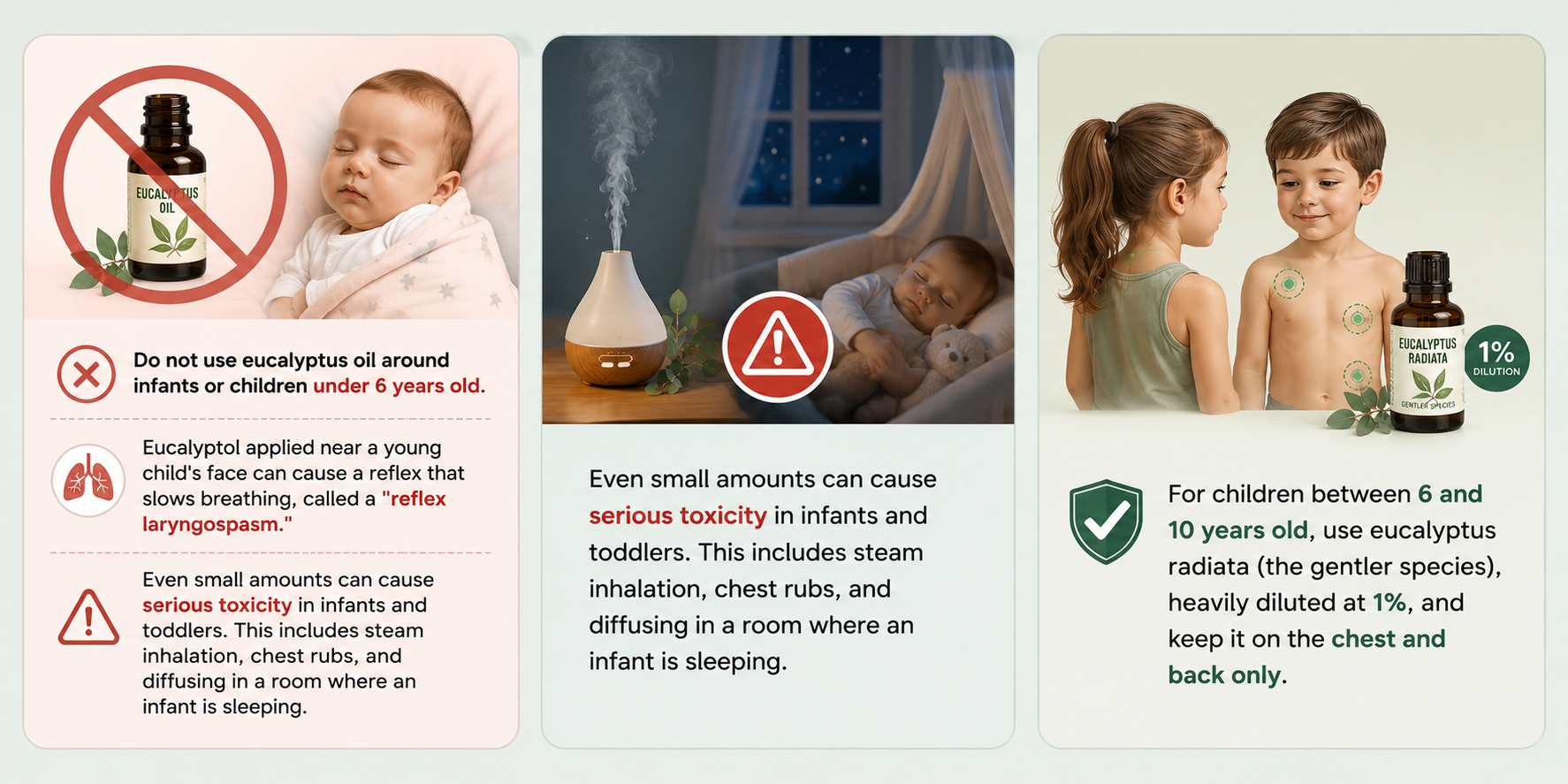
Do not use eucalyptus oil around infants or children under 6 years old.
Pregnant and Breastfeeding Women
Eucalyptus oil is generally considered best avoided during pregnancy, especially in the first trimester.
People with Asthma
- In few asthmatic patients it might trigger airway spasm.
- Patients can start with very low exposure and monitor how your airways respond.
People on Certain Medications
Eucalyptus oil may affect how your liver processes some medications(diabetes medication, blood pressure medication, or any drugs that affect liver enzymes), potentially altering their effectiveness.
Patients with Diabetes and Epilepsy
Some traditional herbal medicine sources advise caution with eucalyptus oil in people with epilepsy or poorly controlled high blood pressure.
Sensitive Skin
Always do a patch test before applying any diluted eucalyptus preparation to a large area of skin.
Side Effects of Eucalyptus Oil for Congestion
Common Side Effects
Some people may experience mild side effects, including:
- Skin irritation, redness, or itching
- Burning or stinging sensation after topical application
- Eye irritation if the vapors or oil come into contact with the eyes
- Headache from prolonged exposure to strong aromas
- Dizziness or lightheadedness
- Nausea due to the strong scent
- Coughing or throat irritation in sensitive individuals
These symptoms are usually mild and improve once you stop using the oil.
Serious Side Effects of Eucalyptus Oil
1. Severe Allergic Reaction (Anaphylaxis)
In rare cases, eucalyptus oil can trigger a severe allergic reaction, which is a medical emergency.
2. Breathing Problems
Strong eucalyptus vapors may irritate the airways in some individuals, particularly those with asthma or chronic lung disease.
3. Eucalyptus Oil Poisoning
Swallowing eucalyptus oil can be toxic, even in small amounts, especially for children. Keep it out of reach from children. In case of ingestion immediately visit your nearby hospital.
5. Eye Injury
Eye contact with eucalyptus oil can cause pain, burning, light sensitivity, and blurring of vision. Wash eyes thoroughly and visit a doctor immediately.
Who Should Use Eucalyptus Oil For Congestion with Caution?
While eucalyptus oil for congestion is generally safe when used correctly, some people may be more sensitive to its effects or have a higher risk of side effects.
- Eucalyptus oil should be used cautiously during pregnancy (avoid in the first trimester ). It is generally not recommended for children under 6 years of age, especially for steam inhalation or direct application, unless advised by a healthcare professional.
- Most healthy older adults can safely use diluted eucalyptus oil. However, extra caution is advised because they may have:
- More sensitive skin
- Chronic respiratory conditions
- Multiple medications that could affect overall health
- Pet owners as essential oils can be harmful to some pets, especially cats.
When Should You See a Doctor for Congestion?
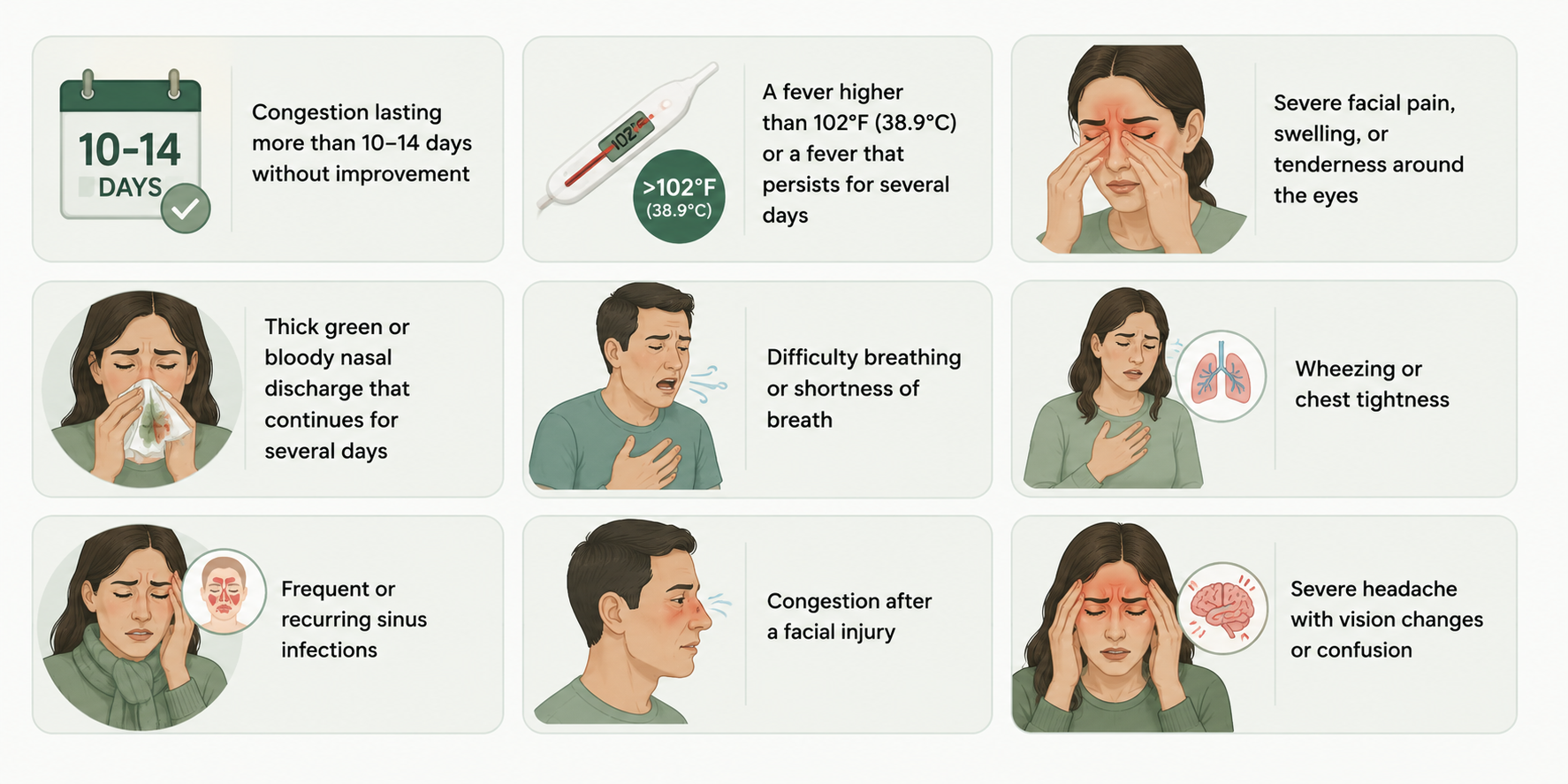
Most cases of nasal congestion caused by the common cold or seasonal allergies improve within 7–10 days with rest, fluids, and supportive care. However, if the signs worsen it might be indicative of a serious medical problem which requires immediate medical treatment.
Visit your doctor immediately if:
Safe Relief Tips for Using Eucalyptus Oil for Congestion
- Never swallow eucalyptus oil.
- Always dilute before applying to the skin.
- Avoid contact with the eyes, nose, and mouth.
- Use hot, not boiling water for steam inhalation.
- Perform a patch test before skin rub use.
- Use diffusers in a well-ventilated room.
- Keep out of reach of children and pets.
- Avoid use during pregnancy unless advised by a healthcare provider.
- Do not use it in children under 6 years unless recommended by a healthcare professional.
- Stop use if irritation or breathing problems occur.
- Seek medical care if congestion persists for more than 10 days or is accompanied by high fever or difficulty breathing.

You've heard about eucalyptus oil, now explore the growing buzz around RSO oil.
FAQ's
Does eucalyptus oil actually clear congestion?
No, Eucalyptus oil creates a cooling sensation that can make breathing feel easier. Combined with steam, it may also help loosen mucus. It does not physically open blocked nasal passages or cure the underlying illness.
How do you use eucalyptus oil for congestion?
Safe methods to use eucalyptus oil include:
- Steam inhalation
- Diffusers
- Personal inhalers
- Chest massage
- Adding a few drops to a warm shower
- Adding it to bath water
Can eucalyptus oil help sinus congestion?
Yes. It helps to reduce the feeling of facial pressure and makes breathing more comfortable.
Can I sleep with a eucalyptus oil diffuser?
Yes, but it is generally best to run the diffuser for 30–60 minutes before bedtime or use an intermittent setting if your diffuser has one. Avoid in small under ventilated rooms.
Can eucalyptus oil help chest congestion?
It may help create a soothing sensation and make breathing feel more comfortable. However, chest congestion caused by pneumonia, asthma, or chronic lung disease requires medical evaluation and treatment.
Can eucalyptus oil be used every day?
Short-term daily use during a cold or allergy is generally considered safe for most healthy adults when used correctly. Long-term or excessive use is not recommended without professional advice.
What if eucalyptus oil doesn't help?
If symptoms are severe, persistent, or accompanied by fever, facial swelling, or difficulty breathing, consult a healthcare provider for further evaluation.
Key Takeaways
- Eucalyptus oil for congestion may help you feel less congested by creating a cooling sensation and supporting mucus clearance.
- Although eucalyptus oil may provide temporary symptom relief, it does not cure colds, sinus infections, or allergies.
- Children, pregnant individuals, people with asthma, and those with allergies should use eucalyptus oil cautiously and seek medical advice if needed.
- Persistent or worsening congestion should be evaluated by a healthcare professional.
References
- U.S. National Center for Complementary and Integrative Health (NCCIH). Essential Oils.
- National Institutes of Health (NIH). Aromatherapy and Essential Oils.
- American Academy of Pediatrics. Guidance on the safe use of essential oils in children.


Member discussion