


Sexually transmitted diseases (STDs), also known as sexually transmitted infections (STIs), are more common than many people realize. What makes them concerned is that early symptoms in women can look normal, unusual, or even completely absent. Because of this, infections may go unnoticed and lead to complications if not treated in time.
Understanding the early warning signs can help you seek care sooner, protect your reproductive health, and prevent long-term problems.
Why Early Detection Matters
According to the Centers for Disease Control and Prevention (CDC), millions of new STD cases occur each year, and young women are particularly at risk. Many infections such as chlamydia and gonorrhea may not cause obvious symptoms initially. However, untreated infections can spread to the uterus and fallopian tubes, leading to pelvic inflammatory disease (PID), which can cause infertility or ectopic pregnancy. Early testing and treatment can prevent these complications.
Common Early STD Symptoms in Women
1. Unusual Vaginal Discharge
Changes in discharge are often one of the first signs. Have a look on your discharge whether it’s:
- Yellow, green, or gray discharge
- Strong or foul odor
- Frothy or unusually thick texture
For example:
- Chlamydia and gonorrhea may cause yellow discharge.
- Trichomoniasis may cause greenish, frothy discharge with odor.
However, discharge alone does not confirm an STD. Other infections like yeast infections or bacterial vaginosis can cause similar changes.
2. Burning or Pain During Urination
A burning sensation while urinating may be mistaken for a urinary tract infection (UTI). But it can also be an early sign of:
- Chlamydia
- Gonorrhea
- Trichomoniasis
If burning urination comes with unusual discharge or pelvic pain, testing is important.
3. Pelvic or Lower Abdominal Pain
Persistent lower abdominal pain, especially if it worsens during sex, could indicate:
- Pelvic inflammatory disease (a complication of untreated STDs)
- Advanced chlamydia or gonorrhea infection
Pelvic pain should never be ignored, especially if accompanied by fever or abnormal bleeding.
4. Pain During Intercourse
Discomfort or pain during sex may be linked to:
- Inflammation of reproductive organs
- Cervical infection
- Vaginal sores or irritation
While mild discomfort can have many causes, persistent or sharp pain deserves medical evaluation.
5. Sores, Blisters, or Bumps
Small painless sores may appear in:
- Genital area
- Around the anus
- Mouth (after oral sex)
Examples:
- Genital herpes often causes painful blisters.
- Syphilis typically starts with a painless sore called a chancre.
- HPV (human papillomavirus) may cause genital warts.
Any unexplained sore should be examined by a healthcare provider.
6. Irregular Vaginal Bleeding
Bleeding between periods or after sex can be an early sign of:
- Chlamydia
- Gonorrhea
- Cervical inflammation
Spotting may seem minor but can indicate infection of the cervix.
7. Itching or Irritation in the Genital Area
Persistent itching, redness, or swelling may occur with:
- Trichomoniasis
- Herpes
- Other infections
Itching alone does not always mean an STD, but when combined with discharge or sores, testing is recommended.
STDs That Commonly Affect Women
Here are some of the most common infections and their early patterns:
| STD | Early Symptoms | Notes |
|---|---|---|
| Chlamydia | Often no symptoms, mild discharge, burning during urination | Can cause infertility if untreated |
| Gonorrhea | Abnormal discharge, pelvic pain, burning urination | May spread to bloodstream if severe |
| Genital Herpes | Painful blisters or sores, flu-like symptoms | Virus remains in the body long-term |
| HPV | Often no symptoms, genital warts | Some types linked to cervical cancer |
| Syphilis | Painless sore (chancre) in early stage | Progresses in stages if untreated |
| Trichomoniasis | Frothy discharge, itching, discomfort during urination | Treatable with medication |
Can You Have an STD Without Symptoms?
Yes. Many women have no noticeable symptoms, especially in early stages. That is why routine screening is strongly recommended for:
- Sexually active women under 25
- Women with new or multiple partners
- Women who do not consistently use condoms
- Pregnant women (as part of prenatal care)
The CDC recommends regular screening for chlamydia and gonorrhea in sexually active young women.
When Should You See a Doctor?
Make an appointment if:
- You notice unusual discharge or odor
- You experience pelvic pain or painful sex
- You develop sores or bumps
- You have bleeding between periods
- You had unprotected sex with a new partner
- Your partner has been diagnosed with an STD
Early treatment often involves antibiotics (for bacterial infections) or antiviral medication (for viral infections). Most bacterial STDs are curable if treated promptly.
Possible Complications If Ignored
Untreated STDs can lead to:
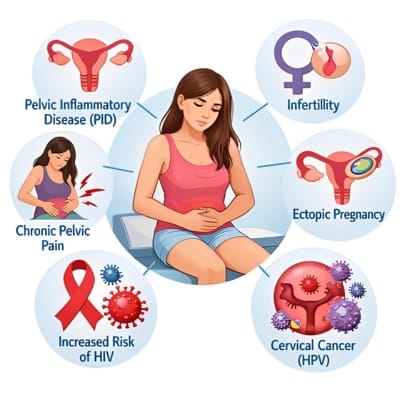
The earlier the diagnosis, the lower the risk of long-term damage.
Prevention Tips
Protecting your sexual health includes:
- Using condoms correctly and consistently
- Getting tested regularly
- Limiting multiple sexual partners
- Getting the HPV vaccine
- Having open communication with partners
Final Thoughts
Early STD symptoms in women can be normal, confusing, or even completely absent. That’s why listening to your body and not ignoring unusual changes is very important. Many infections are easily treatable, but only if detected in time.
Taking care of your sexual health is a form of self-respect. If something feels different or uncomfortable, seeking medical advice is always the right step.
 Himani Thakur
Separate myth from reality. Read More: Blue Waffle
References
1. Centers for Disease Control and Prevention (CDC). (Sexually Transmitted Infections (STIs) Women & STDs)
2. World Health Organization (WHO). (Sexually transmitted infections)
3. Mayo Clinic. (Sexually transmitted diseases (STDs): Symptoms and causes)


Member discussion