

Dental Implants for Seniors: A Complete Guide to Benefits, Risks, and Eligibility

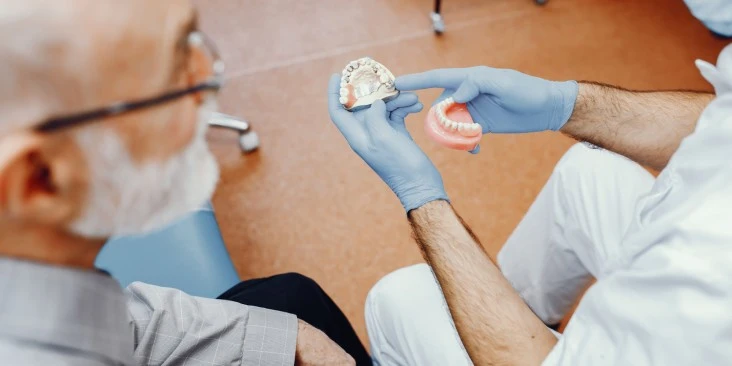
Dental implants for seniors can be a reliable option for adults who want to replace missing teeth and improve chewing stability. Missing teeth can make everyday activities such as eating, speaking, and smiling more difficult. Loose dentures may also cause discomfort or make it harder to enjoy certain foods.
The encouraging news is that age alone does not determine whether you can get dental implants. Many adults in their 70s and 80s may be suitable candidates, depending on their oral health, jawbone condition, medical history, and ability to maintain their implants.
Before choosing treatment, it is important to understand the benefits, possible risks, recovery process, cost, and alternatives. A qualified dentist or implant specialist can assess your individual needs and help you decide whether dental implants are appropriate for you.
What Is a Dental Implant?
A dental implant is a small post, usually made of titanium or another suitable material, that is placed in the jawbone to support a replacement tooth. After the implant integrates with the bone, it can support a crown, bridge, or denture.
Dental implants generally have three components:
Implant: The post placed in the jawbone to provide support.
Abutment: The connector between the implant and the replacement tooth
Crown: The visible artificial tooth that replaces the missing tooth.
A dental implant for seniors can therefore be used in several different situations. You may need one implant for one missing tooth. If you have many missing teeth, the dentist may suggest several implants to support a bridge or denture. You do not necessarily need one implant for every missing tooth.
The recommended treatment depends on the number of missing teeth, your jawbone condition, your oral health, and your budget.
Who Is a Good Candidate for Dental Implants?
Dental implants may be suitable for seniors who have one or more missing teeth and want a stable replacement. However, not everyone is ready for implant surgery immediately.
You may be a suitable candidate if:
Your gums are healthy, or existing gum disease has been treated.
You have enough jawbone to support the implant, or bone augmentation is feasible.
Your medical conditions are appropriately managed.
You can maintain daily oral hygiene and attend regular dental checkups.
You understand the treatment timeline, costs,implants and possible complications.
Some patients may need additional treatment before implant placement. For example, you may need to control gum disease, treat an infection, or consider bone grafting if the jawbone is insufficient.
Your dentist may also discuss non-surgical alternatives if implant surgery is unsuitable or does not match your preferences.
Some patients may need additional treatment before implant placement. For example, you may need to control gum disease, treat an infection, or consider bone grafting if the jawbone is insufficient.
What Should Seniors Check Before Getting Dental Implants?
1. Your gums
Healthy gums are important for the long-term success of dental implants for seniors. Untreated periodontal disease can increase the risk of inflammation and complications around implants. Signs that your gums may need attention include bleeding, swelling, persistent foul breath, gum recession, and loose teeth.
Your dentist may recommend periodontal treatment before proceeding with implant surgery.
2. Jawbone Density and Bone Loss
Dental implants need sufficient bone for stable support. When teeth have been missing for a long time, the jawbone in those areas may gradually shrink.
Your dentist may use dental X-rays and, when indicated, a cone-beam computed tomography (CBCT) scan to assess the available bone and nearby anatomical structures.
If bone support is insufficient, possible options include bone grafting, sinus augmentation in selected cases, or alternative implant designs and treatment plans.
3. General Health Conditions
Conditions such as diabetes, heart disease, kidney disease, and osteoporosis do not automatically prevent someone from getting dental implants. However, they may influence treatment planning, healing, or medication management.
Your dentist should understand your medical history and coordinate with your treating physician when necessary.
4. Current Medications
Many older adults take several medications. Some can affect bleeding, healing or bone metabolism.
Provide your dentist with a complete list of prescription medicines, over-the-counter products and supplements. Never stop blood thinners, osteoporosis medicines or other prescribed treatments without advice from the clinician managing them.
How Do Medical Conditions Affect Dental Implants for Seniors?
Dental Implants and Diabetes
People with diabetes may be eligible for dental implants, especially if they manage their blood glucose well. Poorly controlled diabetes can impair healing and increase the risk of infection or implant complications.
Your dentist may review your recent diabetes measurements and medical history before surgery. If your diabetes is not adequately controlled, treatment may need to be delayed while you and your physician work to improve control.
Here are some common examples.
Diabetes
Diabetes does not automatically rule out implant treatment.
The main problem that is associated with diabetes is whether the condition is well or poorly controlled.
Poorly controlled diabetes can affect healing and may increase the risk of infection. Your dentist may therefore want recent medical information before surgery.
If your blood sugar is not well controlled, it may be better to improve your medical control first after consulting a physician.
Osteoporosis
Osteoporosis causes bones to become weaker.
Having osteoporosis does not always mean that a dental implant for seniors is not possible in your case.
However, your dentist should know whether you have the condition and which medicines you take.
Some medicines used for bone diseases can affect the way the jaw responds to invasive dental treatment. A 2026 review describes the relationship between osteoporosis, periodontal disease, and implant treatment as an area requiring careful assessment. Do not stop an osteoporosis medicine without speaking with the doctor who prescribed it.
Heart disease
Many seniors have some form of heart disease.
Inform your dentist about your exact condition and all your medicines.
Some patients may need medical clearance before a surgical procedure. The need for this depends on the person's health and the type of treatment planned.
Blood thinners
Some older adults take blood-thinning medicines because of heart problems, atrial fibrillation, previous stroke, or a history of blood clots. These medicines can increase bleeding during dental surgery.
That does not necessarily mean that you cannot have a dental implant for seniors. Never stop a blood thinner by yourself. Your dentist and the doctor managing your medicine should decide whether any change is needed.
What If You Have Significant Jawbone Loss?
Jawbone loss is a common concern for people who have been missing teeth for several years or have worn dentures for a long time.
When a tooth is lost, the surrounding bone may gradually shrink. This can reduce the amount of bone available for implant placement.
Depending on your anatomy and treatment goals, your dentist may consider:
Bone grafting to increase available bone.
Sinus augmentation for selected upper-jaw cases.
Shorter or narrower implants when clinically appropriate
Shorter or narrower implants when clinically appropriate.
Different implant positions.
Implant-supported removable dentures.
Conventional dentures without implants.
Not every patient with bone loss needs a bone graft. The safest and most suitable option depends on the clinical examination and imaging findings.
Ask your dentist to explain the expected benefits, additional procedures, healing time,, and cost of each suitable option.
Benefits of Dental Implants for Seniors
Dental implants for seniors can offer several benefits, depending on the person's needs.
Improved Chewing Stability
Missing teeth and loose dentures can make eating uncomfortable. A properly planned implant-supported restoration may provide greater chewing stability and help you enjoy a wider variety of foods.
However, chewing ability also depends on your bite, remaining teeth, muscle function and overall oral health.
Greater Denture Stability
Implants can help secure a removable denture, particularly when a conventional lower denture moves during eating or speaking.
An implant-supported denture can still be removable for cleaning, depending on its design. Your dentist can explain the available options.
Replacement of Missing Teeth
A single implant can replace a missing tooth without requiring the neighbouring teeth to serve as supports, unlike some conventional bridges.
Whether an implant or bridge is preferable depends on the condition of the adjacent teeth, available bone, cost and your treatment goals.
A Long-Term Tooth Replacement Option
Dental implants can remain functional for many years with appropriate planning, daily cleaning, and professional maintenance. Research in older adults has reported high implant survival, although individual results can vary depending on health, smoking, oral hygiene, bone, and other factors.
Are Dental Implants Better Than Dentures?
Dentures and implants solve the same basic problem in different ways. A denture rests on the gums and can be removed. An implant is placed into the jawbone and can support a fixed tooth or a removable denture.
Feature |
Implants |
Dentures |
Surgery |
Yes |
No |
Removable |
Depends on restoration |
Yes |
Stability |
Usually high |
Can move |
Treatment time |
Usually longer |
Usually shorter |
Cost |
Usually higher |
Usually lower |
Bone support |
Implant is placed in bone |
Does not replace tooth root |
Cleaning |
Daily cleaning needed |
Remove and clean |
Maintenance |
Regular checkups |
Adjustments may be needed |
For someone who is medically fit and wants a stable replacement, a dental implant for seniors may be a good option. For someone who does not want surgery or has health problems that make surgery difficult, dentures may be more practical. Sometimes an implant-supported denture gives a middle option.


Consult a dental surgeon
What Is the Procedure Like?
The process for a dental implant for seniors usually happens in stages.
Step 1: Examination
The dentist checks your mouth, gums, teeth, bite, and missing tooth area.
If you have gum disease or an infection, this may need treatment first.
Step 2: Imaging
X-rays help the dentist look at the jaw.
A CBCT scan may be used when detailed information about bone height, width, or nearby structures is needed.
Step 3: Treatment planning
Your dentist decides where the implant should be placed and what type of restoration will be used.
At this stage, your medical conditions and medicines are also considered.
Step 4: Implant placement
The implant is placed into the jawbone under appropriate anesthesia.
The procedure is planned according to the tooth position and the available bone.
Step 5: Healing
The implant needs time to become stable in the bone.
This process is known as osseointegration.
The healing period can vary.
Step 6: Final tooth
After the implant has healed and the dentist confirms that it is stable, the final crown, bridge, or denture can be attached.
The entire treatment may take several months.
If you need a bone graft or another procedure, it may take longer.
Does a Dental Implant Hurt?
During implant placement, anesthesia is used so you should not feel the surgical procedure in the usual way. Afterward, you may have:
Mild pain
Swelling
Tenderness
Minor bleeding
A feeling of pressure
Your dentist will give you aftercare instructions. Older adults should be especially careful about taking pain medicines. Some medicines may not be suitable if you have kidney disease, stomach problems, heart disease, or take blood thinners. Ask your dentist or doctor if you are unsure.
Severe pain, increasing swelling, fever, persistent bleeding, or other unusual symptoms should be reported to your dental team.
What Are the Risks of Dental Implants for Senior Adults?
Dental implants are surgical treatments, so they have potential risks. The likelihood of complications depends on the patient's health, the complexity of the procedure, and the experience of the treating clinician.
Possible risks include:
Pain, swelling, bruising, or bleeding after surgery.
Infection at the surgical site.
Delayed healing or failure of the implant to integrate with the bone.
Injury to nearby nerves or anatomical structures.
Sinus-related complications in selected upper-jaw procedures.
Peri-implant disease is when the area around an implant becomes inflamed or loses bone.
The need for additional treatment or implant removal if complications occur.
The risk may increase when oral hygiene is poor, smoking continues, medical conditions are poorly controlled, or the patient cannot attend maintenance appointments. Recent research on older patients also stresses that frailty, multiple medicines, cognitive changes, and reduced physical ability can affect implant care.
This is an important point. A patient may have enough bone for an implant, but still struggle to clean it every day. That should be discussed before treatment.
Oral Care Becomes Very Important After Treatment
An implant may not develop a cavity like a natural tooth, but the tissues around it can still become unhealthy. Plaque can collect around the implant. If it is not cleaned properly, inflammation can develop around the implant and may eventually affect the supporting bone.
A dental implant for seniors therefore needs regular home care. You may need:
A soft toothbrush
Fluoride toothpaste
Interdental brushes
Dental floss or implant-specific floss
A water flosser when recommended
Professional cleaning
The exact cleaning method depends on your implant and restoration. If you have arthritis or weak hand movement, cleaning may become difficult. In this situation, your dentist can suggest easier tools. A family member or caregiver may also help when needed. A 2026 review specifically notes that caregiver involvement and planned maintenance can help reduce implant-related complications in older adults.
Smoking and Dental Implants
Smoking is an important risk factor to discuss. Tobacco can affect healing and the health of the tissues around an implant. If you smoke cigarettes, use bidi, or use other tobacco products, tell your dentist honestly. Stopping tobacco use before treatment can be beneficial for your oral and general health.
It also makes sense to continue avoiding tobacco after treatment, because an implant needs long-term care.
What About People Who Need Help With Daily Care?
This is an area that deserves more attention when discussing a dental implant for seniors. Some older adults live independently and manage their own oral care. Others may need help because of arthritis, reduced eyesight, memory problems, weakness, or other limitations. If someone cannot clean around an implant properly, the risk of problems may increase.
That does not automatically rule out treatment. Instead, the dental team should ask:
Who will help with daily cleaning?
Can the patient attend dental appointments?
Can the restoration be cleaned easily?
Is a removable option easier to maintain?
Would fewer implants make care simpler?
Recent prosthodontic research suggests that treatment designs which are easier to clean and maintain can be particularly useful in older adults. This can make a real difference over the years.
How Much Do Dental Implants Cost for Seniors?
The cost of dental implants depends on the number of teeth being replaced, the type of restoration, and the complexity of treatment.
Factors that may affect the total cost include:
The number and type of implants.
The crown, bridge, or denture attached to the implants.
Dental examinations and imaging.
Tooth extraction, if required.
Bone grafting or sinus augmentation.
The materials and laboratory work used.
Follow-up care and future maintenance.
A single implant replacing one tooth will generally have a different cost from treatment involving several missing teeth or a full-arch restoration.
Ask for a written treatment plan that separates the implant, restoration, imaging, additional procedures, and follow-up costs. This makes it easier to compare treatment options accurately.
When might an implant not be the right choice for you?
A dental implant for seniors is not the best option for everyone. Your dentist may suggest another treatment if:
Your medical condition is not well controlled
You have untreated gum disease
You have an active dental infection
You cannot maintain adequate oral hygiene
You have a high surgical risk
You do not want surgery
You cannot attend follow-up appointments
Your bone condition makes implant treatment unsuitable
Another option would work better for your needs
A decision can sometimes be revisited later. For example, gum disease can be treated, smoking can be stopped, and a medical condition can become better controlled.
Questions to Ask Before Getting an Implant
Before choosing a dental implant for seniors, take a few questions with you to your appointment. Ask:
Is an implant suitable for my overall health?
Is my gum health good enough?
Do I have enough bone?
Do I need a CBCT scan?
Will my medicines affect treatment?
Do I need medical clearance?
Will I need a bone graft?
How long will the complete treatment take?
What will the total cost be?
What alternatives do I have?
How will I clean the implant?
What happens if the implant fails?
If a family member helps with your healthcare, it can be useful to bring them to the consultation.
References
- Schimmel M, Srinivasan M, McKenna G, Müller F. Effect of advanced age and/or systemic medical conditions on dental implant survival: a systematic review and meta-analysis. Clin Oral Implants Res. 2018;29 Suppl 16:311-330. · source
- SeniorLiving.org. Are dental implants safe for seniors? What the research shows. 2026. · source
Frequently asked questions
Is a dental implant for seniors safe?
It can be safe when treatment is carefully planned. Your dentist should assess your health, medicines, bone, gums, and ability to maintain the implant.
Can seniors with diabetes get implants?
Many can. Good diabetes control is important because poorly controlled diabetes can affect healing and increase the risk of complications.
