

You wake up, walk to the bathroom, open your mouth in the mirror, and notice a white, filmy coating covering your tongue. Maybe it's been there for a couple of days or maybe it's been there so long you stopped thinking about it. Either way, you might be curious about the reason.
The good news? White patches on tongue can look alarming, but it's usually just a sign of trapped bacteria, debris, or dead cells on your tongue's surface. Most of the time, it clears up with simple lifestyle changes. But sometimes, it signals something that needs medical attention and knowing the difference matters.
Why Is My Tongue White?
Your tongue isn't smooth. It's covered in tiny bumps called papillae, which help you taste food and move it around your mouth. When these papillae become inflamed and swollen, bacteria, food debris, and dead cells can get trapped between them, giving the appearance of a white coating on your tongue.
White tongue is a term used to describe any area of the tongue that has a grayish-white coating on it. The coating may cover the entire tongue, or it may appear in patches. In most cases, it's harmless and temporary. But in a smaller number of cases, it can be dangerous and might need medical attention.
Common Causes of White Spots on Tongue
1. Poor Oral Hygiene
The most common cause of a white scrap on tongue is poor oral hygiene. Small bumps on the tongue called papillae can swell up and become inflamed in a mouth that is not cared for well.
Which can be covered with plenty of:
- Germs
- Debris
- Food particles
- Dead cells
If you brush your teeth but skip your tongue, you're leaving behind bacteria to grow on your tongue..
2. Dehydration and Dry Mouth
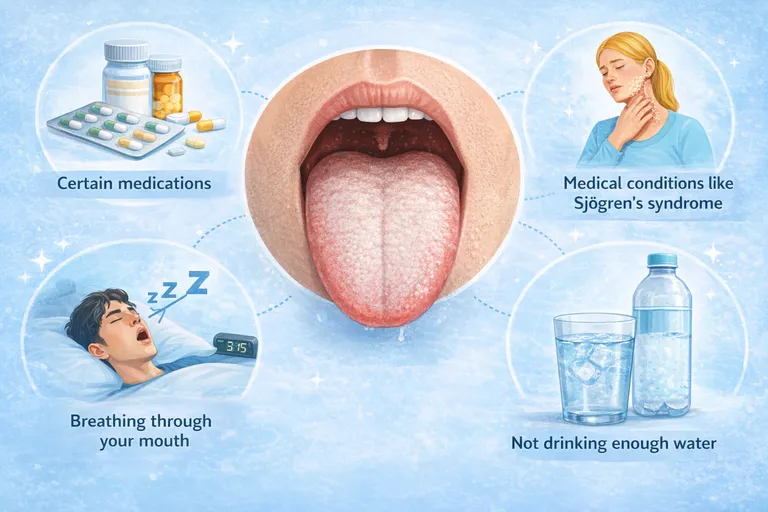
When the saliva is less in the mouth it increases the growth of bacteria because saliva helps in cleansing it. Saliva helps in washing away dead cells, neutralizing acids, and keeping bacterial populations in balance. When you're dehydrated or suffering from dry mouth, that protective system breaks down.
Reasons for dry mouth or tongue white:
3. Tobacco and Alcohol Use
Tobacco and alcohol use can disturb oral microbiota and lead to yeast overgrowth or keratosis. Smokers are at particularly higher risk not just for a white coating, but for more serious conditions like leukoplakia. Heavy alcohol consumption adds further irritation to the oral tissues.
4. Mouth Breathing
Frequent mouth breathing, particularly during sleep, can cause the white coating on the tongue. When your mouth stays open for hours each night, saliva evaporates, bacteria multiply, and the tongue surface becomes the perfect place for debris to collect and harden into that familiar white film.
5. Diet
Soft foods don’t have enough fibrous texture to provide the natural scraping of the tongue's surface. Fruits, vegetables, and whole grains naturally clean your tongue as you chew. But if you only eat soft foods then it will increase the growth of bacteria on the tongue.
6. Antibiotic Use
Prolonged use of antibiotics can increase the risk for fungal infections that cause a tongue to coat white layer, like oral thrush. Antibiotics kill harmful bacteria, but they also wipe out beneficial bacteria which leaves yeast free to overgrow.
7. Stress and Psychological Factors
A coated tongue can also be caused by psychological factors and is more common in people suffering from depression. Stress or trauma may also be the reason for the condition. This connection is often overlooked, but stress suppresses immune function and can alter the bacterial environment in your mouth.
Medical Conditions That Cause Tongue to turn white
Sometimes the coating isn't just about oral hygiene. These are the conditions most commonly associated with white coating on tongue that require a doctor's involvement.
Oral Thrush (Candidiasis)
Oral thrush is caused by an overgrowth of yeast fungus in the mouth. The white patches can be scraped off to expose a red surface on the tongue.
Causes of oral thrush are:
- Illnesses
- Medications
- Stress
- Antibiotic treatment
Thrush can happen in anyone, but it's more common in babies and toddlers, the elderly, and people with compromised immune systems.
Leukoplakia
Leukoplakia is characterized by white patches that cannot be scraped off and may be related to chronic irritation in the mouth. Tobacco use is the most common factor. Although leukoplakia is usually harmless, sometimes it can also lead to oral cancer. That’s why you should get it checked by a doctor if white patches are not going and are there for a long period of time.
Oral Lichen Planus
Lichen planus is an autoimmune disease that triggers inflammation in the lining of the mouth. It can frequently cause white patches to appear on the tongue or inside of the cheeks, as well as small wounds that look like canker sores. It is also common to feel burning in the mouth and excessive sensitivity to hot, spicy, or acidic food.
Syphilis
Syphilis is a sexually transmitted infection that can lead to symptoms in the mouth. Syphilis requires medical treatment with the antibiotic penicillin. White patches in the mouth are one of the early signs, so get it checked on time.
Vitamin Deficiencies
Vitamin deficiencies, particularly in B vitamins like B12 and riboflavin, can sometimes cause white coating on tongue. A painful, smooth, and red tongue may be the first sign of vitamin B12 deficiency anaemia. A deficiency of iron and folic acid can also lead to tongue changes.


Consult a dental surgeon
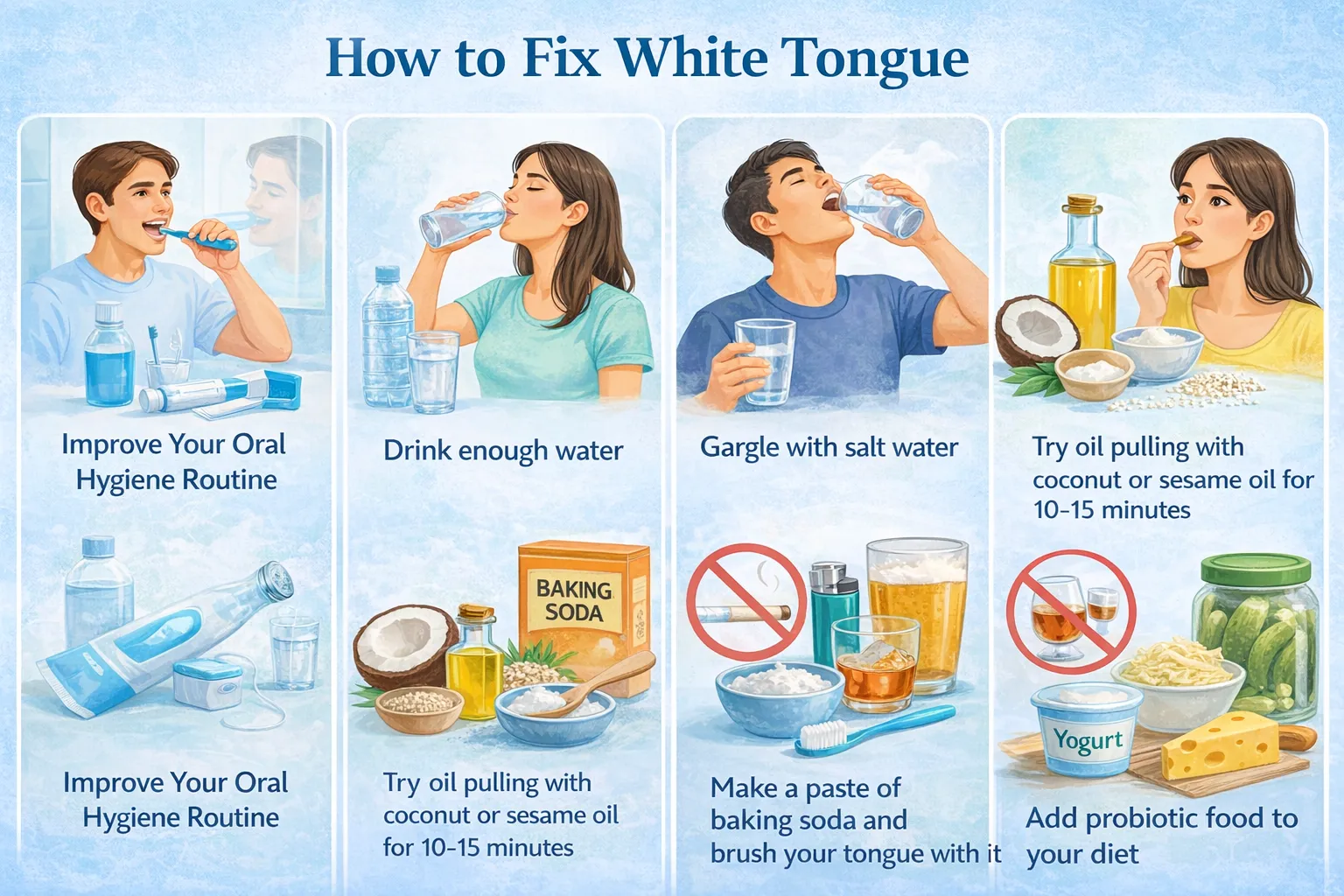
How to Fix White Patches on tongue
When Should You See a Doctor?
Most tongue white are harmless and can resolve within a couple of weeks with better oral hygiene and hydration. But see a healthcare provider if:
- The white coating doesn't improve with good oral hygiene for more than two weeks, or the white patches are thick, raised, or cannot be scraped off.
- You notice pain, burning, or sores accompanying the white patches.
- You have a weakened immune system due to HIV/AIDS or are undergoing chemotherapy.
- The coating spreads to your cheeks, gums, or the roof of your mouth.
Final Thoughts
A white coating on tongue is one of those things that's easy to fix in most cases. It can happen because of your daily lifestyle practices like not cleaning your tongue properly, not drinking enough water, or letting certain habits go unchecked. Start with the basics like buy a tongue scraper and clean your tongue after brushing teeth, drink more water, follow better oral hygiene and you'll likely see improvement within days.
But if it still continues and doesn't go away, don't just keep scraping and hoping. Your tongue is one of the most honest indicators of what's going on inside your body. Go see a doctor immediately.
References
- Cleveland Clinic. Spots on Tongue (incl. white tongue): Causes and Treatment. – Cleveland Clinic · source
- Mayo Clinic. White Tongue: Causes. – Mayo Clinic
Frequently asked questions
How to cure white tongue?
It can usually be improved by good oral hygiene by brushing your tongue, staying hydrated, and using a tongue scraper, but if it persists it may be due to conditions like oral thrush or poor oral health, so you may need medical treatment.
What does it mean when your tongue is white?
It usually means there’s a buildup of bacteria, dead cells, or debris on the surface, often due to poor oral hygiene, dehydration, or irritation.
How to get rid of white tongue permanently?
To permanently get rid of a it, keep good oral hygiene, stay hydrated, avoid smoking, and treat any underlying issues like oral thrush.
Why tongue is white with spots?
It usually means a buildup of bacteria, debris, or dead cells in certain areas, but it can also signal conditions like oral thrush, irritation, minor infections, or even geographic tongue.