


A cool childhood trick with different reason!
You were the coolest kid who could bend your thumb all the way back to your wrist and it was so cool back then. The one who always seemed to have a bruise somewhere but couldn't remember bumping into anything. The one who complained of knee pain at age nine, only to be told it was just growing pains. Looking back now, those weren't random causes happening with you but they were signs.
Ehlers-Danlos Syndrome (EDS) is a genetic condition that weakens your body's connective tissue like
- The proteins
- Primarily collagen
- That hold your joints
- Skin
- Blood vessels
- Organs.
The condition often goes underdiagnosed, because its signs in childhood look like clumsiness, anxiety, or just being dramatic.
If any of this sounds familiar, here are 23 signs you grew up with Ehlers-Danlo Syndrome.
1. You Were the "Double-Jointed" Kid
You might have amazed others with your ability to perform party tricks with hypermobile joints like bending your fingers backward or touching your toes to your forehead. What seemed like a fun talent was actually a sign of hypermobile EDS, the most common subtype.
2. You Bruised Without Knowing Why
If you were also the one who was always covered in bruises without having any memory of how they happened, you may have ignored this by thinking that it was your clumsiness. In reality, fragile blood vessels under the skin are part of how EDS presents, especially in children.
3. Gym Class Was Its Own Kind of Nightmare
In childhood when you used to skip physical education class because of pain which was not an excuse, it can also be the sign of EDS, that made your gym class a nightmare. Because you used to have joint pain from:
- Running
- Jumping
- Walking fast
- Performing any physical activity.
4. Your Joints "Popped Out" Doing Ordinary Things
Activities like simple sports or physical tasks sometimes resulted in sprains or dislocated joints, making everyday tasks risky. Joint dislocations can happen with even mild trauma in people with EDS.
5. You Had Chronic Back Pain as a Child
You may have experienced back pain since a young age, often ignored as just growing pains. Spinal and back pain in children can be the sign of EDS.
6. Wounds Took Forever to Heal
Cuts and scrapes seemed to take forever to heal, leaving you prone to scarring or reopening old wounds easily. Slow wound healing and easy bruising are signs of several EDS types.
7. You Got Dizzy Every Time You Stood Up
If you have felt dizzy just after standing up quickly then it is a common symptom of POTS (Postural Orthostatic Tachycardia Syndrome), which is closely related to EDS. Low blood pressure and head rushes upon standing are frequently seen in people with EDS.
8. You Had Unexplained Stomach Problems
EDS can affect the digestive system, leading to issues such as constipation, bloating, and food sensitivities. Many EDS kids go to gastroenterologists for years with no clear answers before anyone connects the dots.
9. Mornings Were Rough
Waking up stiff and sore was common, even as a child or teenager. Morning joint stiffness that takes time to loosen up is a recurring complaint among people who grew up with undiagnosed EDS.
10. You Were Told You Were Too Sensitive
Children with EDS may experience sensory processing issues, such as sensitivity to touch, sound, and light. If certain textures, sounds, or lights bothered you more than they bothered your classmates, this wasn't an overreaction but it was neurological.
11. Pull-Ups and Push-Ups Were Impossible
Some exercises were not only challenging but physically painful or impossible due to joint instability. When your joints can't hold their position reliably, standard strength exercises become genuinely risky rather than just hard.
12. You Had Frequent Nosebleeds
When your nosebleeds become a regular part of life, sometimes without a clear reason. Fragile blood vessels are a known feature of EDS which make nosebleeds more common and harder to stop.
13. You Walked Late or Struggled With Motor Milestones
Children with EDS may experience delayed milestones, such as walking and crawling, due to joint hypermobility and muscle weakness. Weak muscle tone from childhood is known as hypotonia which may cause a delay in sitting and walking, or difficulty walking as symptoms progress.
14. You Were Always Exhausted
People with EDS may experience chronic fatigue, which can be caused by the body's constant effort to stabilize joints and compensate for muscle weakness. This kind of tiredness isn't laziness. It's the result of your body working overtime just to keep you upright.
15. You Couldn't Sit Still Comfortably
Sitting at a desk or table felt uncomfortable without adjusting or shifting positions frequently. This is because your joints don't hold a stable position the way they should, so you're constantly, unconsciously, searching for one.
16. You Fainted or Felt Like You Might
For people with EDS, sometimes standing up can cause dizziness or even blackouts and fainting which is often linked with POTS. Initially that looked like anxiety attacks in school may have actually been dysautonomia, a nervous system dysfunction common in EDS.
17. Your Skin Was Unusually Soft or Stretchy
If you had soft and delicate skin, often giving a youthful appearance, is one of the less-talked-about features of EDS and while stretchy skin is the classic image, the softness alone is often overlooked in children.
18. You Had Dental Problems That Seemed Out of Proportion
Dental issues such as a high palate, overcrowded teeth, and periodontal disease are more common in people with EDS due to connective tissue involvement in the mouth and jaw. Many kids with EDS need extensive orthodontic work.
19. You Overheated Easily
Heat could cause rapid overheating or sweating more than others. Temperature dysregulation is a feature of dysautonomia, which frequently happens with those having EDS and often starts in childhood.
20. You Were Labeled Dramatic or Attention-Seeking
Often called dramatic or lazy for needing to rest frequently, this led to feelings of shame about physical limitations. This is one of the most damaging aspects of growing up undiagnosed being told your real symptoms aren't real.
21. You Had Constant Headaches
Chronic headaches are common in patients with EDS, whether related to dysautonomia, temporomandibular joint dysfunction, muscle tension, or craniocervical instability. Kids with EDS often cycle through headache specialists without anyone investigating a connective tissue cause.
22. You Had Anxiety
Living with a chronic condition like EDS can have a bad impact on mental health, leading to anxiety and depression. But for many, the anxiety itself may be partly physical which happens due to an overactive autonomic nervous system that's always on high alert.
23. You Avoided Activities Without Knowing Why
Whether consciously or subconsciously, you avoided activities that involved sudden movements or impact to protect your joints. It wasn't shyness or laziness your body had learned, through repeated pain and injury, what to stay away from.
Prevention
It's a genetic condition, which means you were born with it. No lifestyle choice caused it, and no diet or supplement could have stopped it from developing. If you've spent years blaming yourself for your body's struggles, you can let that go right now. But there are some prevention tips you can take:
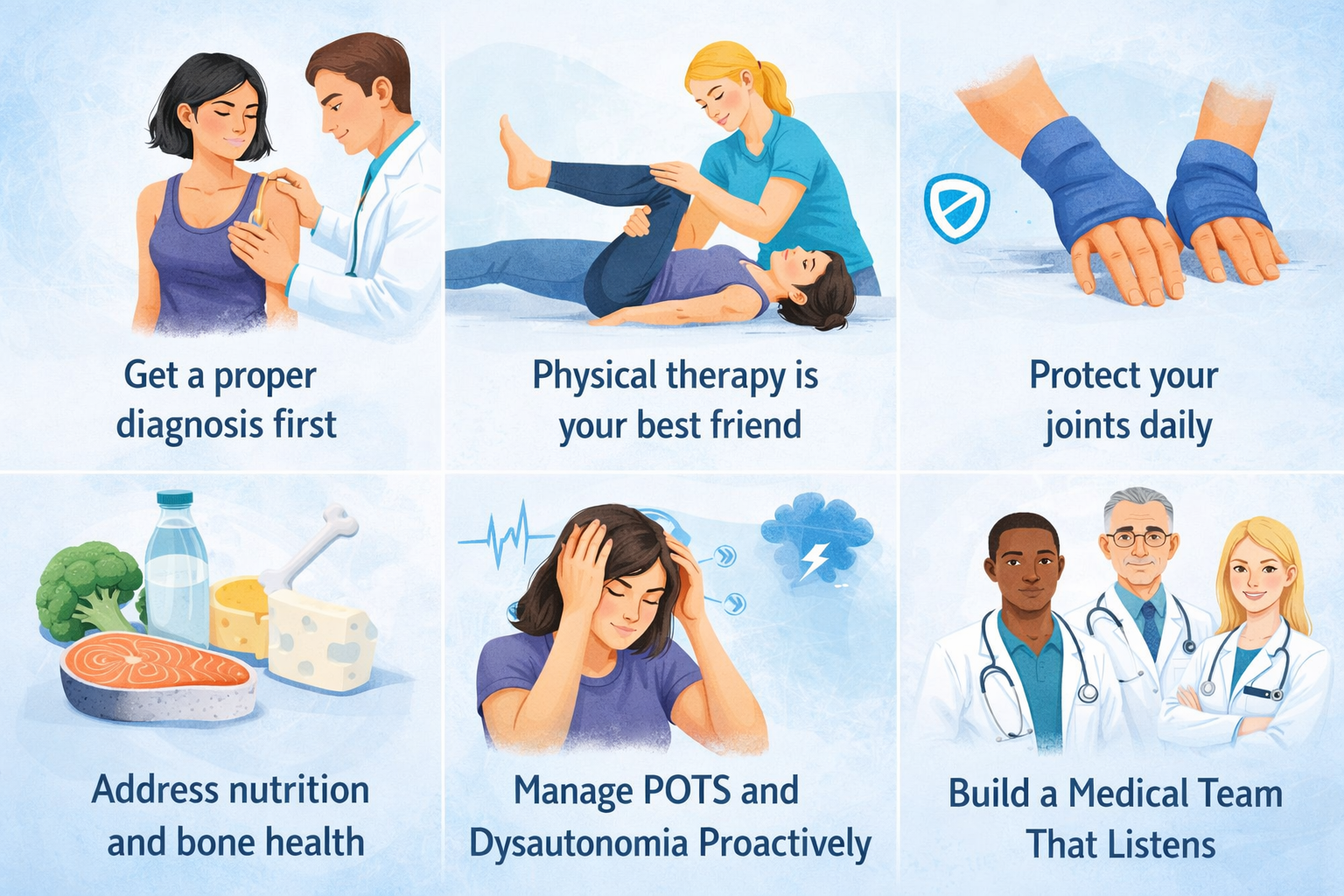
When to see a doctor
You should see a doctor if you face symptoms like;
- Joint hypermobility
- Problems with joints
- Skin hyperextensibility
- Tissue fragility (easy bruising, poor wound healing)
- Gastrointestinal issues
- Family history
Final Thoughts
Sometimes we ignore things by thinking they are common and because of clumsiness but there can be other reasons too which often go overlooked. It’s important to notice every change in your body and get it diagnosed before it is too late. In our childhood, we might show some tricks and think it is cool because no other person than you can do this but it is not something to be proud of as it can come up with many complications too. If you notice symptoms related to EDS get it diagnosed. The 23 signs you grew up with Ehlers-Danlos Syndrome can feel common but are not something that you should overlook.
Frequently asked questions
Uncommon symptoms of Ehlers-Danlos Syndrome?
Uncommon symptoms of it can include fragile or translucent skin, frequent bruising, digestive problems, dizziness from blood pressure issues, and unusual scarring.
Facial signs of Ehlers-Danlos Syndrome?
Facial signs of Ehlers-Danlos Syndrome can include soft or stretchy skin, thin lips, a small chin, prominent eyes, and a narrow nose.
Signs of Ehlers-Danlos Syndrome?
Common signs of Ehlers-Danlos Syndrome include overly flexible joints, stretchy or fragile skin, frequent joint dislocations, easy bruising, and slow wound healing.
References
- Dr. Jim Harris MD (23 Signs you grew up with Ehlers-Danlos Syndrome)
- Mayo Clinic (Ehlers-Danlos Syndrome: Causes and Symptoms)
- NHS UK (Ehlers-Danlos Syndrome)


Member discussion