


Many people might have gone through that sudden panic when they notice acne around mouth which doesn't go away easily. It feels dry, flaky, slightly swollen, and sometimes itchy and when you scratch it, it burns. In some cases, it doesn’t stop at the mouth, it spreads toward the nose or you can even notice red rash around eyes if not treated properly.
It can seem to be sudden allergy or acne but it's not and the habits that can trigger it more is surprising. Like who have guessed that chewing gum or using certain toothpaste can trigger it. So, to know more about this skin problem let's go through the Perioral Dermatitis Treatment options.
What Is Perioral Dermatitis?
Perioral-dermatitis is a common non-dangerous skin condition that can happen to anyone but most common in young and adult females which mainly affects the area around the mouth. It looks like red rashes around the mouth which can be confused with acne or allergy.
People who have this skin problem can face difficulties like:
- More tightness around mouth
- discomfort while eating and talking
- Pain while opening mouth or moving
How to define dermatitis perioral?
As the symptoms of dermatitis perioral can be confusing and look like allergy or rash in the beginning but you can define it by looking at some symptoms like:
- Red or pink bumps around the mouth
- Dry, scaly, or flaky skin
- Mild swelling and inflammation
- A burning or stinging sensation
- Occasional itching
It can also spread to:
- The sides of the nose
- The area around the eyes
Types of Perioral-Dermatitis
The skin problem can be different for different people so it's better to understand the types of dermatitis to understand the cause and treat it accordingly.
1. Classic Perioral-Dermatitis
This is the most common form, with red rashes, papules around the mouth which can be itchy and burning. Avoid scratching those red bumps and get it treated as soon as possible from trusted healthcare professional.
2. Granulomatous Perioral-Dermatitis
In this type, the bumps appear yellowish or skin-colored instead of red.
- More commonly seen in children
- Often less scaly but deeper and firmer
Most common areas to notice perioral rashes
You can eczema around mouth and rashes ca also spread:
- Around the nostrils
- On the eyelids
- Near the eyes
- It may spread to areas like the scalp, ears, or genital region, but these cases are uncommon.
Who Is Most at Risk?
Periorificial dermatitis condition can affect anyone, but it is most commonly seen in:
- Women between 25 and 45 years of age
- People using topical steroid creams on the face
- Individuals using inhaled or nasal steroid sprays
- Children and men (less common but possible)
Perioral Dermatitis Symptoms
Common symptoms to look for includes:
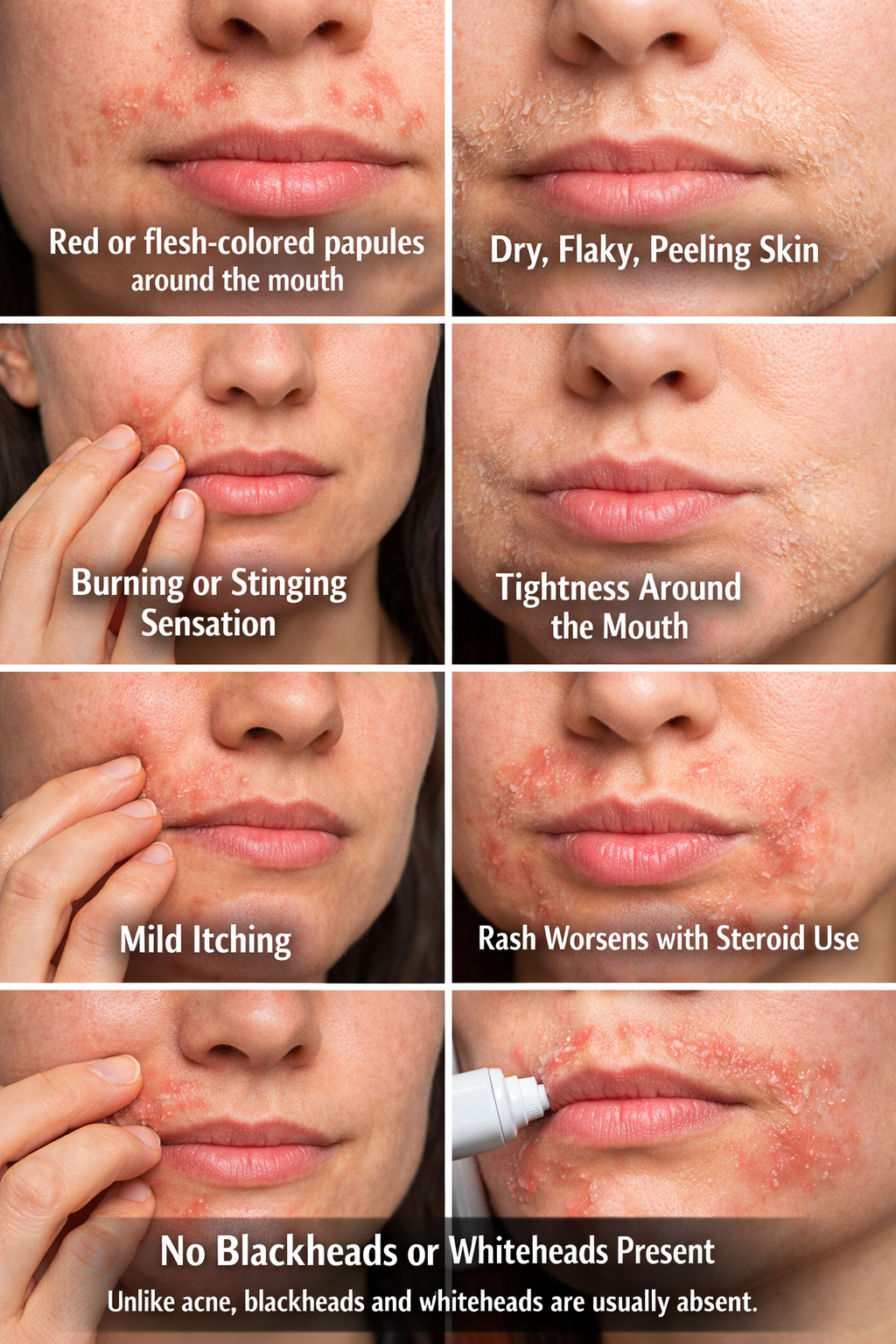
Perioral Dermatitis Causes
For now medical studies have not confirmed any single cause for dermatitis perioral but there are many factors that are related to it.
1. Topical Steroid Use
This is the most common trigger. Even mild steroid creams used for dryness or irritation can cause or worsen perioral-dermatitis.
2. Toothpaste and Chewing Gum
Fluorinated toothpaste, artificial sweeteners, and flavoring agents found in chewing gum may irritate the skin around the mouth and disrupt the skin barrier.
3. Heavy Face Creams and Moisturizers
Overuse of thick creams can trap bacteria and disturb the skin’s natural balance.
4. Hormonal Changes
Hormonal fluctuations can make the skin more reactive and prone to inflammation.
5. Altered Skin Microflora
Changes in normal skin bacteria or yeast including Candida species can be the reason but it's not proved yet.
Treatments and Management
Instead of treating your skin problem as common rash get it treated on time. Every problem has it's solution so does dermatitis, that can help you to get clear skin like before. Know more about perioral dermatitis cure.
1. Stop using Steroid creams
Try stopping topical steroids for perioral dermatitis treatment, but it should be done slowly and under medical supervision, as sudden withdrawal can worsen symptoms.
2. Simplify Your Skincare
This approach is said to be zero therapy because it involve practices like:
- Stop heavy creams
- Avoid harsh cleansers
- Use gentle, fragrance-free products
3. Prescription Topical Treatments
Dermatologists often prescribe some perioral dermatitis medication like:
- Metronidazole gel or cream
- Azelaic acid
- Clindamycin or erythromycin
These help reduce inflammation and control bacterial imbalance.
4. Oral Antibiotics (If Severe)
If your skin rashes are spreading all around your face and other methods are not helping much then you can visit dermatologist for perioral dermatits as soon as possible and try oral antibiotics prescribed by them. To know more about the oral medication that actually works for skin condition you can also read Ivermectin for skin conditions.
5. Avoid Triggers
- Switch to non-fluorinated toothpaste
- Avoid chewing gum
- Stop using cosmetic products around the mouth
When to see a Doctor
You should see your dermatologist for perioral dermatitis if you see rash or symptoms as soon as possible, so that it does not become severe before treatment. Also see your doctor if your rash in persistent and doesn't go after steroids.
Final Thoughts
Getting sudden rash around mouth can be alarming and discomforting but dealing with it patiently is more important. Don't panic and give time to your skin for healing. Visit your healthcare professional on time and get it treated. With proper diagnosis, patience, and the right medical guidance, this condition is completely manageable and in most cases, fully treatable.
FAQs
How to get rid of perioral dermatitis overnight?
You need to stop using topical steroids or harsh products on face, instead apply gentle moisturiser and mild cleanser. Also try for perioral-dermatitis treatment options prescribed by dermatologist.
How to treat perioral dermatitis treatment?
Using antibiotic creams, oral antibiotics and following gentle skincare routine can be best approach.
How to heal perioral-dermatitis fast?
To heal dermatitis fast, immediately stop using topical steroid creams and harsh, active skincare (retinoids, acids, heavy oils).
Signs perioral dermatitis is healing ?
Healing include reduced redness, fewer, smaller bumps, and decreased itching or burning sensations, often with an overall improvement in skin texture
Is perioral dermatitis contagious?
No, it is not contagious.
References
- Cleveland Clinic ( Perioral -dermatitis: Treatments, Symptoms and Causes)
- National Institute of Health (Perioral-Dermatitis)
- Harvard Health (Perioral-Dermatitis: Symptoms, treatment and prevention)


Member discussion