


You might have heard your favourite influencer talking about mold allergy on social media. How it’s affecting most of the people nowadays and how it can cause fatigue, brain fog and headaches. But some of the facts shared on social media are not based on clinical research and hence needs more research for that. Let’s understand what are these 10 warning signs of mold toxicity that everyone is talking about and is it really clinically based or just myths created on social media?
What is Mold Toxicity?
Mold toxicity is the condition when you are exposed to mold that is hazardous for health for a long time. Molds are of different types, some are normal and some can be dangerous. People who have weak immunity are more prone to have mold allergy or toxicity.
Mold is basically a fungus that grows in places where humidity is high like the bathroom, basement, roofs, pipes etc. Buildings with less ventilation have the most mold growth. Mold can also grow in water including tap sources and people can easily get exposed to it by showering, brushing teeth, or washing hands.
People who are at risk
Although mold toxicity can happen to anyone but the people who are at the most risk are:
- People with asthma or allergic rhinitis
- Children and elderly people
- People working at humid place or water damaged place
- People working at high dust exposure
- People with lung disease
- Anyone who spend their most of time indoor in low ventilated or damp place
10 Warning signs of mold toxicity
1. Feeling tired even after proper rest
Feeling tired after having a long nap is not common or normal, this can be the sign of mold toxicity. People dealing with mold toxicity often feel exhausted after waking up. This happens because mycotoxins, which are the harmful compounds produced by certain mold species that are thought to interfere with mitochondrial function, which is essentially how your cells generate energy. When that process gets disrupted, fatigue becomes a baseline, not a symptom that comes and goes.
2. Brain Fog and difficulty in concentration
Forgetting words in mid-sentence and then reading the same paragraph three times and remembering nothing. Losing track of simple tasks. This can be the signs of mold-related illness.
Don’t confuse it with stress or getting older because this isn't stress or getting older but it's a physiological response to ongoing inflammatory triggers.
3. Unexplained Respiratory Symptoms
Chronic coughing, wheezing, shortness of breath, frequent sinus congestion, or recurring respiratory infections that do not go away even with medicines, these can all be because of mold exposure.
The lungs are often the first point of contact with airborne mold spores. In sensitive individuals, even low-level ongoing exposure can trigger airway inflammation similar to asthma. So, it’s important to get diagnosed once.
4. Chronic Sinus Issues and Post-Nasal Drip
Some people never develop full respiratory symptoms but experience near-constant sinus problems like pressure, drainage, congestion, and a perpetual feeling that they're on the verge of a cold.
The nasal passages are particularly vulnerable because they're the first barrier mold spores encounter. There's also growing clinical interest in a condition called Fungal Sinusitis, where mold colonizes the nasal cavity directly which can be hard to address.
5. Sensitivity to Light, Sound, or Smells
An unusual but many people have noticed this sign in themselves. Bright lights become uncomfortable. Everyday sounds feel overwhelming. Perfumes or chemical smells trigger headaches just getting in contact. These can be the sign of mold toxicity as many research has shown that it can be the one of reason.
6. Joint Pain, Muscle Aches, and Unexplained Inflammation
Mold toxicity has a profound effect on the body's inflammatory pathways. Many people report shifting, migratory joint pain, basically a pain that moves from one location to another which makes every task difficult and painful.
Mycotoxins can activate the immune system's inflammatory response in a way that keeps it running even when there's no active infection. This is part of why mold-related illness so often gets mistaken for autoimmune conditions.
7. Mood Changes, Anxiety, and Depression
This one surprises most people but mycotoxins can directly affect mood regulation, stress response, and emotional resilience.
People with mold toxicity frequently report anxiety that feels physical rather than psychological, depressive episodes without obvious cause, and a general emotional flatness. When these mood symptoms occur alongside fatigue and cognitive issues, you should get it examined by health professionals, especially if there's been a recent move or prolonged time in a damp building.
8. Digestive Problems Without a Clear Diagnosis
Mold related illness also include:
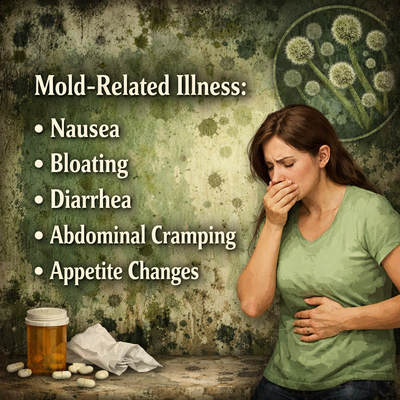
These can all be part of the picture with mold-related illness.
The gut microbiome is highly sensitive to mycotoxins, and disruption of the gut lining can impair nutrient absorption, trigger immune responses, and worsen overall systemic inflammation.
9. Night Sweats, Temperature Dysregulation, and Poor Sleep
Waking up drenched in sweat. Feeling cold when others are comfortable. Struggling to fall asleep despite exhaustion, or waking at 2-3 AM regularly, these are symptoms that don't get talked about much in the context of mold, but they show up consistently in patient histories.
10. Skin Issues like Rashes, Hives, and Unusual Itching
The skin is the body's largest detox organ, and when the internal burden becomes too high, it often shows up on the outside. Unexplained rashes, persistent itching without an obvious allergen, hives that come and go, or dermatitis that resists treatment can all signal mold sensitivity or toxicity.
How is it Diagnosed?
Before moving forward healthcare professionals will first check your medical history, have a proper look at your symptoms and perform a physical test. They may also suggest you consult an allergist.
Tests that are used to diagnose mold toxicity or allergy are:
- Allergy blood test: In this test health professionals will take your blood from a vein in your arm and get it tested.
- Skin Scratch test: In this test health professionals will keep droplets of mold allergens on your skin and after that they will scratch the same skin with a thin needle and look for the reactions. Reactions like itching, swelling or discoloration.
What can you do to prevent it?
Prevention tips include daily lifestyle changes and making few changes around your surroundings:
- Make sure you repair all the pipes that are leaking
- Have proper ventilation in the room
- Clean your home daily and look for mold growth
- Wear mask while cleaning your room
- Remove any musty carpets or rugs
Final thoughts
Mold toxicity can be treatable if diagnosed on time. Some symptoms of it can be really confusing but getting it examined for clarity can be really helpful. Understanding any problem is very important to cure it from its roots. Taking proper measures and avoiding things that can make your allergy worse is the best approach.
Frequently Asked Questions
Symptoms of mold poisoning in adults?
Symptoms of mold poisoning in adults may include coughing, sneezing, headaches, fatigue, breathing problems, skin irritation, and sinus congestion, especially after exposure to moldy environments.
What is mold toxicity treatment?
Treatment for mold toxicity usually involves removing exposure to mold, using medications like antihistamines or antifungals if needed, managing symptoms, and improving indoor air quality to prevent further exposure.
References
- Hope for Healing (10 warning signs of mold toxicity)
- Cleveland Clinic (Mold Allergy: Symptoms, Causes, Treatment and Prevention)
- Parsley Health (12 mold toxicity symptoms and signs you shouldn't ignore)


Member discussion