
Turkey neck, also called Turkey wattle neck, refers to the loose sagging skin that develops under the chin and along the front of the neck, giving it a wrinkled or drooping appearance. The appearance is in close resemblance with that of a turkey's neck therefore the name. It is a very common cause of saggy neck skin amongst the aging population, especially those above 40. However, some may experience it prematurely due to genetics, weight fluctuations, sun damage, or lifestyle habits.
While turkey neck is a natural part of the ageing process, several non-surgical and surgical treatments can help improve its appearance, and adopting healthy skincare practices may help slow its progression.
What Is Turkey Neck?
Turkey neck is a condition in which the neck skin loses its elasticity and at the same time there is the weakening of the muscles in the neck causing the skin to droop and fold. The front profile closely resembles the loose wattle of skin that dangles from a turkey's throat. That is why the terminology Turkey neck is often used.Turkey neck is sagging skin and loose muscle under the chin and neck. It often happens with age, but genetics, sun exposure, weight changes, and poor posture can make it worse.
It is characterized by:
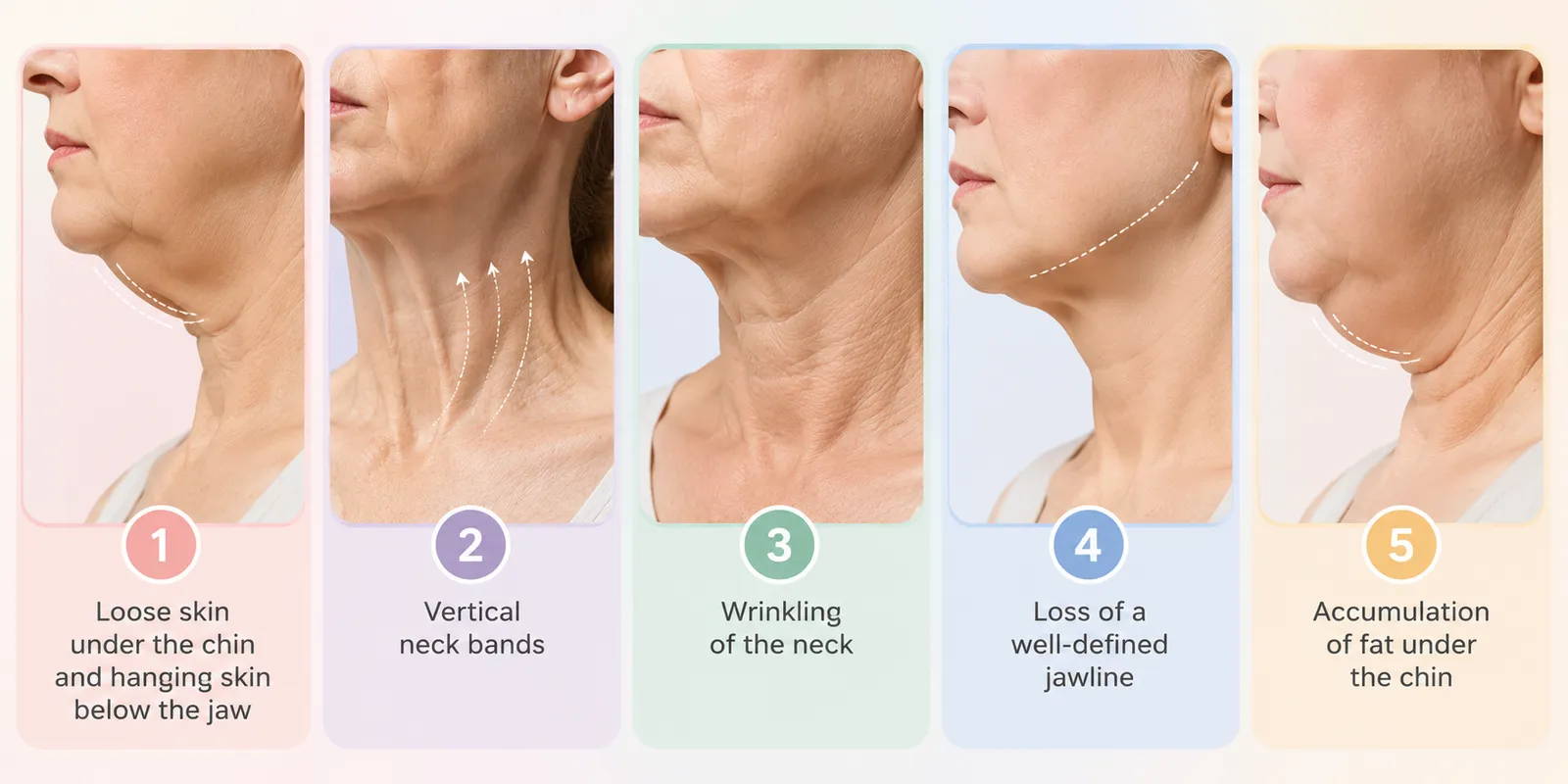
The problem is not restricted to skin but extends to fat, muscle and deeper tissues beneath the skin.
Normal Neck Anatomy and Changes Seen In Neck with Aging
The youthful appearance of the neck is maintained by healthy skin, underlying muscles, fat distribution, and supportive connective tissues. Several changes are seen in the neck structure with age.
Skin
The skin is composed of protein collagen and elastin. They provide firmness and elasticity.
With ageing,there is a decrease in both the proteins, causing skin to become thinner, less elastic, and prone to wrinkling and sagging.
Platysma Muscle
The platysma is a thin, broad muscle that runs from upper chest to the lower jaw.
With ageing the muscle weakens and may separate into two distinct bands, which become visible as vertical cords running down the front of the neck.
Fat Distribution
With ageing fat redistribution occurs. Fat is lost from the upper face, and accumulates below the chin, causing double chin. This causes loss of well defined jawline.
Connective Tissue and Ligaments
Ligaments and connective tissues act as a support framework for the skin and underlying structures. With age, neck tissue loses strength and elasticity, the skin and soft tissues sag, leading to the appearance of loose or hanging neck skin.
Bone Changes
Ageing causes bone loss and structural support for the overlying tissues decreases. This in turn contributes to sagging and an ill-defined neck contour.
What Causes Turkey Neck?
1. Natural Aging Process
The most common cause of Turkey neck is aging. Beginning in the late twenties , collagen and elastin production gradually declines. By forties:
- Skin becoming thinner
- Elasticity decreases
- Muscles weakens
- Fat distribution changes
These factors collectively contribute to sagging neck skin leading to Turkey neck experience.
Also, weakness of Platysma muscle due to tone loss with ageing is another contributing factor. The vertical bands (sometimes called "neck cords" or "platysmal bands") become more prominent, and the overall neck contour begins to soften and sag.
2. Genetics
Some individuals inherit thinner skin or weaker connective tissues. People with family members who developed turkey neck early may also notice similar changes at a younger age.
3. Weight Loss
Rapid or substantial weight loss may leave excess skin behind in the neck region. The skin may not retract completely, especially after:
- Pregnancy
- Bariatric surgery (Weightloss surgery)
- Significant dieting
This can cause neck sagging and turkey neck appearance.
4. Sun Damage
Ultraviolet radiation damages collagen fibers. Repeated exposure to the sun accelerates skin aging and wrinkling. Often sunscreen is missed on the neck and can lead to making it prone to sun damage.
5. Smoking and Lifestyle Factors
Smoking reduces blood supply to the skin. Chemicals in cigarettes increase collagen breakdown and contribute to premature aging and neck skin sagging.
High stress, dehydration and poor nutrition are also contributing factors to Turkey neck.
6. Poor Posture (Tech Neck Wrinkles)
Spending hours each day looking down at a phone, tablet, or laptop creates repeated creasing and strain in the neck skin. Over time, this accelerates both skin wrinkling and muscle weakening in the neck area.
Risk factors include:
- Age above 40 years
- Family history of neck sagging
- Significant weight loss history
- Excessive sun exposure with no UV protection for neck
- Smoking
- Sedentary lifestyle
- Poor skincare habits
Symptoms of Turkey Neck
Primary symptoms are cosmetic changes in the appearance of the neck region. It is not associated any pain You might notice:
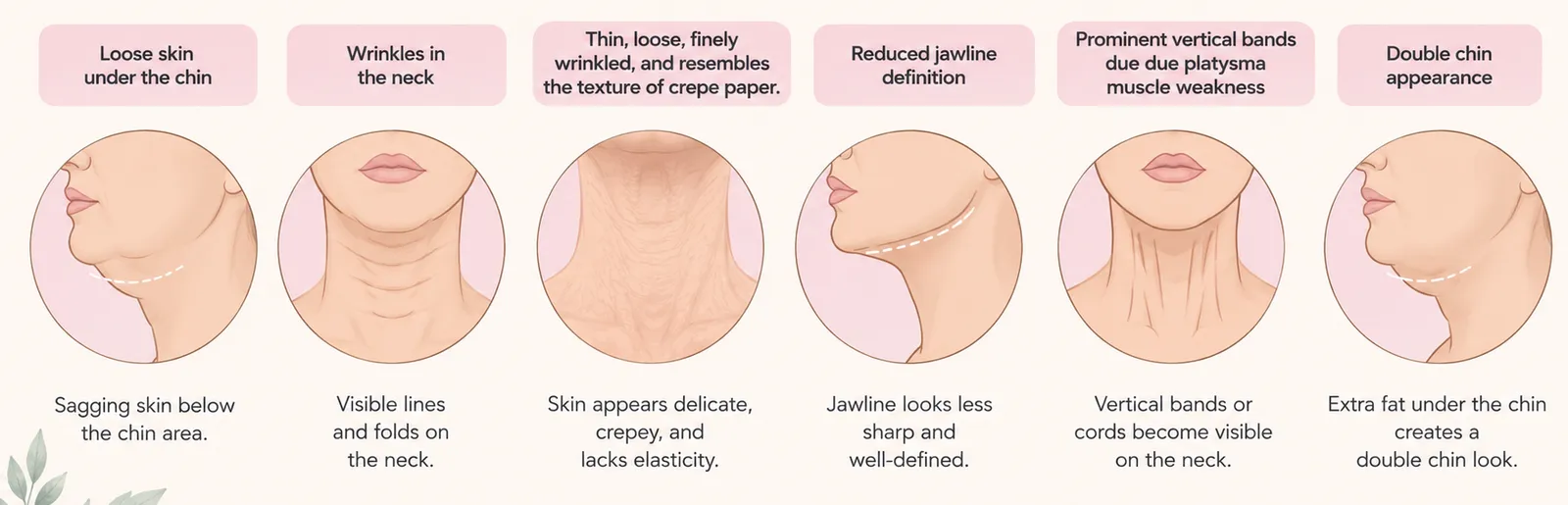
Can Turkey Neck Be Prevented?
Turkey neck is sagging skin and loose muscle under the chin and neck. It often happens with age, but genetics, sun exposure, weight changes, and poor posture can make it worse. Treatment depends on how severe it is. Mild cases may improve with skincare, posture correction, and non-surgical tightening treatments. More advanced cases may need a neck lift or facelift. It is a normal ageing process. It can be delayed but not completely prevented. While turkey neck cannot be fully reversed at home, learning how to tighten neck skin naturally through these measures can meaningfully slow its progression.
- Apply broad-spectrum sunscreen daily to prevent sun damage. Choose products with SPF 30 or higher with reapplication. Neck should not be skipped while application.
- Maintaining a healthy body weight may reduce skin laxity. Drastic weight changes in short periods cause skin sagging.
- Stopping smoking improves skin health as it slows collagen degradation and improves blood circulation..
- Maintain a healthy lifestyle. Include physical activity and avoid sedantry habits.
- Eat a healthy diet rich in nutrients. Antioxidants may support skin repair. Include citrus fruits,leafy vegetables, nuts and fish
- Adequate hydration helps maintain skin softness and elasticity.
- Use retinoids (vitamin A derivatives) on your neck at night. Retinoids stimulate collagen production and promote cell turnover.
- Practice good posture and take regular breaks from screen time.
Do Neck Exercises Help Turkey Neck?
It is important to understand that no amount of exercise will remove excess skin causing sagging. Exercise can improve muscle laxity, improve the contour and firmness of the neck by strengthening the neck muscles. In younger people or those in the early stages of turkey neck, consistent exercise can make a visible difference and is an adjunct to other treatments.
Try each of these exercises (Face Yoga) 3–4 times per week. Begin slowly and stop if you feel pain, dizziness, or tingling.
1. Chin Tuck
Sit or stand tall. Gently pull your chin straight back (as if making a double chin) without tilting your head. Hold for 5 seconds, release. Repeat 10 times. This strengthens the deep neck flexor muscles and improves posture.
2. Neck Tilt and Lip Pucker
Tilt your head back to look at the ceiling. Pucker your lips as if kissing the ceiling. Hold for 5 seconds, then slowly lower. Repeat 10–15 times. This engages the platysma and front neck muscles.
3. Jawline Scoop
Place the back of your fingers under your chin. With your mouth closed, slowly open your lower jaw and scoop it forward, like scooping something with your lower jaw. Hold for 10 seconds. Repeat 10 times. This targets the muscles along the jawline and upper neck.
4. Resistance Forehead Press
Place your palm against your forehead. Try to push your head forward while resisting with your hand so your head doesn't actually move. Hold for 10 seconds. Repeat 5 times. Then place your hand behind your head and resist backward movement. This strengthens both the front and back neck muscles.
5. Tongue Press
Tilt your head back slightly, press your tongue firmly to the roof of your mouth, and slowly bring your chin toward your chest while maintaining tongue pressure. You should feel the muscles under your jaw engage. Repeat 10 times.
Can Skincare Creams Tighten Turkey Neck?
No cream can reverse Turkey neck however few active skincare products in neck tightening creams can improve skin quality, hydration, texture and improve the appearance of mild laxity. The active ingredients in these creams cannot remove excess skin.
- Retinoids: These are vitamin A derivatives and are considered the gold standard in anti-aging skincare. They boost collagen production, accelerate cell turnover, and improve skin texture.
- Hyaluronic Acid: A natural humectant that draws moisture into the skin. It makes the skin well-hydrated, looks and feels plumper and firmer. It doesnt directly tighten the kin
- Peptide-based serums and neck creams: can provide firming effects over time with consistent use.
- Vitamin C: A powerful antioxidant that protects against free radical damage and is essential for collagen synthesis.
- N-Acetyl Glucosamine: Found in many neck-specific creams,is known to improve neck skin texture and reduce hyperpigmentation.


Consult a aesthetic and reconstructive surgeon
When Should You See a Doctor?
Consult a dermatologist or plastic surgeon if:
- Sagging skin below the chin is affecting your confidence
- Home remedies, skincare active ingredients and exercises fail to help
- You are considering cosmetic procedures like facelift
- You want personalized treatment recommendations or are confused between the various treatment options
A healthcare professional can determine whether fat accumulation, muscle laxity, or skin aging is the primary issue and accordingly decide the best treatment plan for you.
Can You Treat Turkey Neck?
Yes, turkey neck can be treated. The treatment depends upon the underlying cause. The treatment can be both surgical and non surgical depending upon the severity
Best Non-Surgical Treatments for Turkey Neck
These are suitable for mild to moderate cases. Many individuals prefer treatments that involve minimal downtime and want to avoid surgery. These are completely non-invasive or minimally invasive techniques. Best when the laxity is mild to moderate.
1. Radiofrequency Skin Tightening
Radiofrequency devices work on the principle of heating deeper layers of skin to promote collagen synthesis. Results are not immediate and require several sessions to be visible. Its benefits include:
- Firmer skin
- Gradual improvement
- Little recovery time
2. Ultrasound Therapy
Focused ultrasound energy targets tissues beneath the skin heating it to stimulate collagen production thus promoting skin tightening. Results slowly build over a period of 3-6 months.
Suitable for:
- Mild skin laxity
- Early turkey neck
3. Injectable Treatments
- Botox injections in the platysma muscle can relax these muscles and reduce the appearance of banding. When the injections are combined with the jawline injections, they provide a neck lift. Results last 3–6 months and require maintenance.
- Kybella Injections are used to destroy the fat cells under the chin This is most effective when the primary issue is fat rather than loose skin. Multiple sessions spaced weeks apart are required.
4. Microneedling
Microneedling creates tiny controlled injuries in the skin which stimulate blood flow and collagen formation. This stimulates natural healing processes. Benefits include:
- Improved texture
- Reduction in fine lines
- Enhanced collagen formation
5. Laser Resurfacing
Laser procedures remove damaged skin layers. More commonly used as an adjunct to other treatments. They may improve:
- Wrinkles
- Pigmentation
- Mild skin laxity
Surgical Treatment Options for Turkey Neck
Surgery offers the most dramatic and long-lasting results. Used in severe turkey neck cases where there is a significant skin sagging or when the platysma muscle has significantly separated.
Neck Lift Surgery
Gold standard for advanced turkey neck. A neck lift removes excess skin and tightens underlying muscles. It is often recommended for moderate to severe sagging.Recovery usually takes two to three weeks. Benefits include:
- Sharper jawline
- Smoother neck contour
- Long-lasting results
Platysmaplasty
It aims to target the separated platysma muscle. It tightens and repairs the platysma muscle reducing the visible neck bands.
Liposuction
Liposuction removes excess fat beneath the chin. It works best for younger individuals with good skin elasticity.
MST (Minimal Scar Tightening) Operation
The MST operation is a minimally invasive procedure that tightens loose neck tissues through small, strategically placed incisions, resulting in less visible scarring and a shorter recovery period. It is best suited for individuals with mild to moderate skin laxity.
Hyo Neck Lift
A hyo neck lift, also known as hyoid suspension, repositions the hyoid bone to improve neck contour and enhance jawline definition in carefully selected patients with a poorly defined neck angle and minimal excess skin.
Combination Procedures
Combining procedures may produce more balanced facial rejuvenation. Many plastic surgeons combine treatments such as:
- Facelift
- Neck lift
- Chin augmentation
- Liposuction
Choosing the Right Treatment for Turkey Neck
| Treatment Category | Procedures | Best Suited For | Advantages | Limitations |
|---|---|---|---|---|
| Lifestyle Changes & Neck Exercises | Sun protection, skincare routine, neck exercises, and a healthy diet | Early signs of aging and mild skin laxity | Non-invasive, affordable, and may help slow skin aging | Cannot remove excess skin or significantly tighten the neck |
| Topical Treatments (Skincare) | Retinoids, peptides, vitamin C serums, and hyaluronic acid creams | Mild crepey skin and fine neck wrinkles | Improves skin texture, hydration, and elasticity | Limited effectiveness for moderate to severe sagging |
| Minimally Invasive Treatments | Microneedling, laser resurfacing, radiofrequency, ultrasound therapy, and injectable treatments | Mild to moderate skin laxity and visible platysmal bands | Minimal downtime and stimulates collagen production | May require multiple sessions with gradual results |
| Fat Reduction Procedures | Fat-dissolving injections and neck liposuction | Excess fat under the chin with good skin elasticity | Enhances jawline definition and reduces fullness | Does not correct significant loose or sagging skin |
| Surgical Procedures | Neck lift, platysmaplasty, minimally scar neck lift (MST), and hyoid neck lift | Moderate to severe turkey neck, excess skin, and prominent neck bands | Provides the most dramatic and long-lasting results | Higher cost, surgical risks, and longer recovery period |
How Much Does Turkey Neck Treatment Cost?
The cost of turkey neck treatment can vary depending on several factors, including the type of procedure performed, the surgeon's expertise, location, and whether multiple treatments are combined.
Topical skincare products and neck exercises are the least expensive options, while minimally invasive procedures such as microneedling, laser resurfacing, radiofrequency, ultrasound therapy, and injectables tend to have moderate costs and may require multiple sessions to maintain results.
Surgical procedures have the highest cost but provide the most dramatic and long-lasting improvement.
It is best to consult a qualified dermatologist or plastic surgeon for a personalized assessment and cost estimate based on your specific concerns and aesthetic goals.
References
- Neck Lift (Lower Rhytidectomy) – American Society of Plastic Surgeons · source
- Many ways to firm sagging skin – American Academy of Dermatology · source
- Neck Rejuvenation (StatPearls) – StatPearls Publishing / NCBI Bookshelf (National Library of Medicine) · source
- Neck Aging and Rejuvenation: A Balanced Approach to Assessment and Treatment – Dermatological Reviews (Wiley), Roberts, 2024 · source
Frequently asked questions
Can turkey neck go away naturally?
Significant sagging usually does not disappear on its own. Mild cases may improve slightly with skincare and healthy lifestyle measures, but established laxity generally needs a procedure.
What age does turkey neck usually start?
Changes often begin during the forties and fifties, although some people notice them earlier due to genetics, sun exposure or smoking.
Does losing weight worsen turkey neck?
Rapid or major weight loss may make loose skin more noticeable, especially in older adults whose skin has less elasticity to retract.
What is the most effective treatment for turkey neck?
For severe turkey neck, neck lift surgery remains the most effective treatment. Milder cases can respond to non-surgical options such as radiofrequency, ultrasound or injectables.
Can men get turkey neck too?
Turkey neck affects both men and women. Men may notice it less on the lower face due to beard coverage, but neck sagging is equally common across genders.
Which turkey neck exercises can I do at home without equipment?
The chin tuck, neck tilt and lip pucker, and tongue press are all effective turkey neck exercises at home that require no equipment. These platysma muscle exercises take under 10 minutes and can be done daily.