


Olives are used in many things like pizza, pasta and many more but have you ever thought about what are the benefits of olives? If you have been treating olives as a garnish rather than a genuine health food, this article is about to change your perspective. From gut-healing probiotics to boosting immunity, here is everything you need to know about what green olives can do for your digestion, your immune system, and your overall health.
What Makes Green Olives Different from Black Olives?
All olives start out green and will turn black over time. Depending on how ripe the olive is when harvested, this affects the colour, texture, and flavour. Olive green are simply olives picked earlier in the ripening cycle and that early harvest has shocking nutritional consequences.
As an olive ripens on the branch it turns from green to black and the concentration of nutrition in it also decreases. The green olive colour has the highest nutritional value. The bitterness of a green olive, by the way, is a sign that the beneficial oleuropein and oleocanthal are present.
Important fact: Olive green are harvested earlier and contain high concentrations of a powerful antioxidant known as oleuropein, which is responsible for their bitter taste.
Olive Green Nutrition Facts
| Nutrient | Amount |
|---|---|
| Calories | 50–60 kcal |
| Total Fat | 4–5g |
| Monounsaturated Fat (Oleic Acid) | 3–4g |
| Carbohydrates | 2g |
| Fibre | 1.5g |
| Protein | 0.4g |
| Sodium | 350–500mg |
| Vitamin E | 1.5mg |
| Iron | 0.5mg |
| Calcium | 20mg |
| Copper | 0.1mg |
The Key Bioactive Compounds in Green Olive
- It has an antioxidant called Oleuropein, because of this compound olives are bitter in taste.
- It has Oleocanthal which is an anti-inflammatory compound. Regular consumption of olives may help reduce inflammation.
- It has Hydroxytyrosol which is the most powerful antioxidant in olives.
- Additionally, it has vitamin E which helps in the immune system, skin health. And cellular protection.
How Green Olive Support Digestion
Fermented olives have been used traditionally to support gut health. Many olives are fermented during their curing process, which can enhance their probiotic content. Probiotics are important for maintaining a balanced gut microbiome, which is linked to improved digestion, immune function, and overall health.
The Olive Green support the digestion in many ways like:
- It is rich in polyphenols that feed beneficial gut bacteria like Lactobacillus and Bifidobacterium.
- It encourages growth of good bacteria and reduces harmful microbes.
- Fibre content supports smooth digestion and regular bowel movements.
- It contains oleocanthal, which has anti-inflammatory properties that may ease issues like IBS.
- It promotes production of short-chain fatty acids that strengthen intestinal lining.
- It has healthy fats (oleic acid) that help maintain a strong gut lining and prevent leaky gut.
How Green Olive Boost Immunity
Olives strengthen the immune system by fighting free radicals that can interfere with the body's response to viruses, bacteria, fungi, and parasites.
Green olive help in boosting immunity by:
- Balancing a healthy microbiome that helps the body fight real threats while reducing inflammation, allergies, and autoimmune reactions.
- Encouraging growth of microbes like Faecalibacterium prausnitzii, linked to anti-inflammatory effects.
- Daily consumption may enhance overall microbiome diversity, supporting immunity and energy metabolism.
- Acting as an antioxidant and supports T-cell function for targeted immune defense.
- Containing oleuropein with antimicrobial properties against various pathogens.
- Reducing inflammation as antioxidants in it help lower inflammation, strengthening overall immune health.
Health benefits of olives
- Oleic acid in olives help in lowering bad cholesterol and reducing inflammation
- Olives contain anti-inflammatory properties which can help reduce inflammation and alleviates symptoms related to inflammatory conditions.
- The oleocanthal in olives and olive oil is linked to a reduced risk of Alzheimer's disease and other brain-related diseases.
- Olives contain the compound oleocanthal, which can kill cancer cells in petri dish experiments.
- The healthy fats and polyphenols in olive green slow glucose absorption, improving insulin sensitivity and reducing post-meal blood sugar spikes.
- Olives contain nutrients that are important for bone health, including calcium and vitamin K.
- Olives can help with weight management, as this fruit is high in fibre and healthy fats.
- Green olives have vitamin E, iron, and calcium, these nutrients are great for the skin, hair, and immune system.
Are black olives good for you?
Are black olives health? Yes, black olives are good for you when eaten in moderation. They’re rich in healthy monounsaturated fats, which support heart health, and contain antioxidants like vitamin E and polyphenols that help reduce inflammation. Black olives also provide small amounts of fiber, aiding digestion, and minerals like iron and copper.
The only downside is their high sodium content (especially in canned or brined olives), so it’s best to limit portion size if you’re watching your salt intake.
Bottom line: Nutritious and beneficial- just don’t overeat them.
Calorie content of olive oil
Olive oil is calorie-dense because it’s pure fat.
- 1 tablespoon (about 15 ml):- 119 calories
- 1 teaspoon (about 5 ml):- 40 calories
- 100 grams:- 884 calories
Even though it’s high in calories, it contains healthy monounsaturated fats, so it can be part of a balanced diet when used in moderation.
How to eat olives
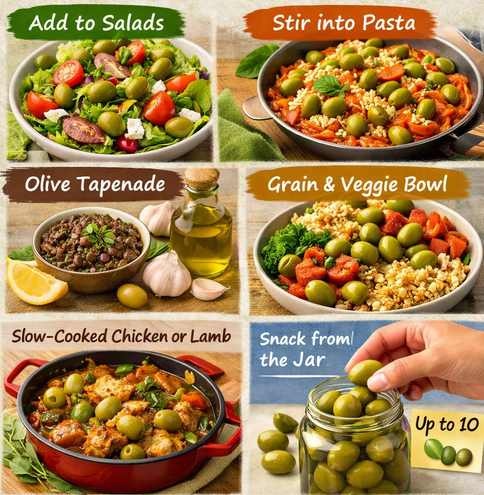
Who Should Not Eat Olives?
Green olives are safe and beneficial for most of the people, but a few groups should avoid them:
- People with high blood pressure or sodium-sensitive hypertension
- Those with olive or tree fruit allergies
- People following a strict low-sodium diet
- Infants and very young children
Final Thoughts
A daily handful of quality green olives is one of the simplest, most affordable additions you can make to a health-conscious diet. Your gut, your immune system, and your cardiovascular system will notice the difference. It’s bitter in taste but once you start having it you will be used to its taste. However, you should also keep in mind that it has sodium in it so it might bring some problems to those who are on their low sodium diet. So, it’s better to once ask your dietician before adding it in your diet.
Want to explore more? Check out our complete guide on golden berries health benefits and uses.
Frequently Asked Questions
Benefits of olives for females?
Olives benefit females by supporting hormonal balance, improving skin health, boosting heart health, aiding digestion, and providing antioxidants that help reduce inflammation and promote overall well-being.
How many olives should I eat a day?
A healthy daily portion is about 5–10 olives per day.
Are green olives good for you and stomach?
Yes, they are good for the stomach as they support digestion with fibre, promote healthy gut bacteria through polyphenols, reduce inflammation, and help maintain a strong intestinal lining.
Are green olives good for you?
Yes, they are good for yu health as they support gut health and immune system.
References
- WebMD (Health Benefits of Olives: Nutrition, Uses and Side Effects)
- Healthline (Olives 101: Nutrition Facts and Health Benefits)
- ECREEE (Health Benefits of Olives: Nature's Nutrient-Packed Superfood)
- Cleveland Clinic (7 Reasons Olives Are Good for You)


Member discussion