


Nowadays, everyone is talking about the health benefits of oleic sunflower oil. Many influencers on social media admit that this oil is similar to olive oil and it’s not regular sunflower oil. The key difference is that high oleic sunflower oil is predominantly monounsaturated fat rather than omega-6 polyunsaturated fat, making it much more stable when heated and less likely to generate harmful compounds.
Whether it’s good for your health or not , let’s know in depth.
What Is High Oleic Sunflower Oil and How Is It Different?
Oleic sunflower oil is made from sunflower seeds which is specially made to have more oleic acid, a monounsaturated fatty acid and low in linoleic acid, a polyunsaturated fatty acid. There is a minimum of 80% oleic acid in sunflower oil high oleic. In comparison, traditional sunflower oil has less oleic acid which is around 20% and more linoleic acid.
That single difference in fatty acid composition changes almost everything about how the oil behaves, both in the pan and inside your body.
The four types of sunflower oil compared:
Nutrition Facts of Sunflower Oil High Oleic
Benefits of high oleic sunflower oil
1. Cardiovascular Protection
- May reduce coronary heart disease.
- Monounsaturated fats such as those found in sunflower oil high oleic are good for heart health.
- Some studies suggest that consuming high-oleic sunflower oil may help reduce your risk of heart disease by lowering LDL bad cholesterol and raising HDL good cholesterol.
2. Oil doesn’t go bad easily and Safer at High Temperatures
This is the health benefit most people never think to look for in a cooking oil and it is one of the most important.
Because oleic acid has fewer double bonds in its chemical structure than linoleic acid, this oil is less likely to become bad. So this oil is more stable when used for cooking, including high-heat application.
High-oleic sunflower oil for frying is safe and also:
- Safe for sautéing, stir-frying, roasting, and deep frying
- Does not generate harmful aldehydes at cooking temperatures the way polyunsaturated oils can
- Longer shelf life, less likely to go rancid on the shelf
- Neutral flavour that does not transfer to food even at high temperatures
3. Powerful Vitamin E Content
Sunflower oil is also an excellent source for vitamin E. Many studies suggest that a healthy source of vitamin E in your diet could provide many health benefits.
Vitamin E helps the body by:
- Neutralising free radicals that damage cells and accelerate ageing
- Protecting lipid membranes in every cell of your body from oxidative damage
- Supporting T-cell immune function, directly boosting your immune response
- Helping the skin retain moisture and create a smoother, more youthful appearance.
4. Anti-Inflammatory Properties
When consumed in moderation, high-oleic sunflower oil does not cause inflammation and may actually reduce it but don’t over-consume it as it can also cause inflammation because it has omega-6 in it.
Inflammation-related conditions where sunflower oil high oleic may provide support:
- Cardiovascular inflammation and arterial stiffness
- Joint inflammation associated with inflammatory arthritis
- Metabolic syndrome and associated systemic inflammation
- Skin conditions driven by inflammatory pathways, including eczema and psoriasis
5. Skin Health
High-oleic sunflower oil benefits skin health:
- It absorbs quickly without clogging pores
- Strengthens the skin's natural barrier function through fatty acid support
- Vitamin E content protects against UV and pollution-related oxidative skin damage
- Suitable for sensitive skin types
- It’s light and non greasy to use
- Sunflower oil is good for the skin and hair growth due to its vitamin E and fatty acid content
- Supports skin hydration
6. Blood Sugar and Insulin Sensitivity Support
High-oleic sunflower oil types provide promising benefits for diabetes management due to their monounsaturated fats, which may assist in improving insulin sensitivity. It is a fat-only food that does not directly affect blood sugar levels, making it a good choice.
Practical guidance for people managing blood sugar:
- Choose high oleic oil not standard linoleic sunflower oil
- Use in place of saturated fats rather than adding to existing fat intake
- Combine with omega-3 rich foods like fish, flaxseeds, walnuts to maintain a healthy fatty acid balance
- Consult your healthcare provider before adding it into a diabetes management plan
7. Hair Health and Scalp Nourishment
Sunflower oil for hair helps hydrate, nourish and even thicken your locks. It has antioxidant effects, which work to reduce environmental damage to your hair. It also promotes circulation to the scalp, adds moisture and gives your hair a healthier, fresher look.
Its vitamin E content provides the same free radical protection to hair follicles that it delivers to skin cells.
Who can add Oleic Sunflower Oil for health benefits?
- People with more LDL bad cholesterol
- People conscious of omega-6 intake
- People with diabetes or metabolic syndrome
- Anyone seeking better skin nutrition
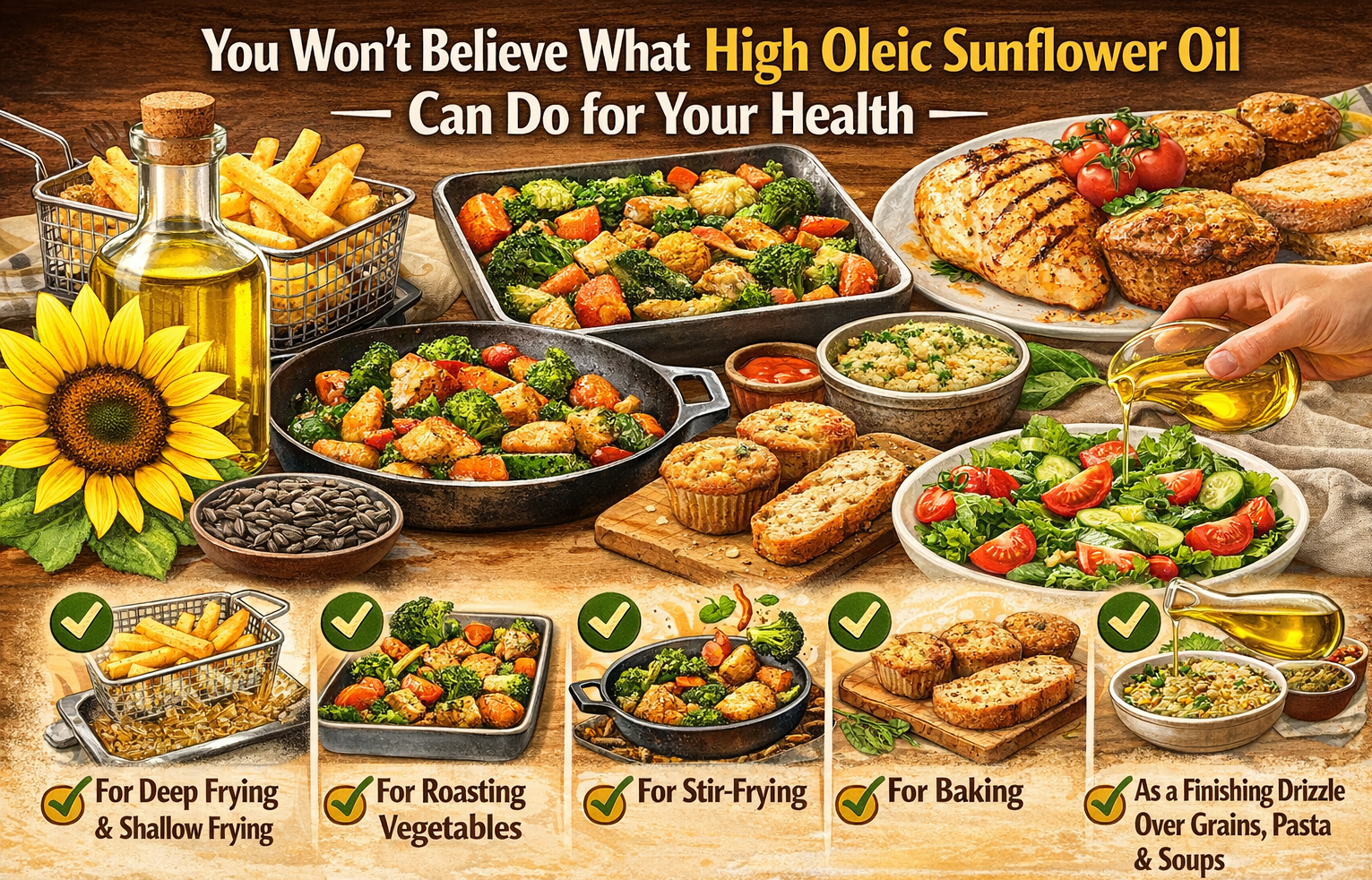
How to Cook With Sunflower Oil High Oleic
It is safe to use and you can also use it in many ways like:
How to Store Oleic Sunflower Oil ?
- Store in a cool, dark cupboard away from the sunlight
- Choose dark glass bottles where available as they protect the oil from light-induced degradation
- Once opened, use within three to six months for best quality and nutritional value
Recommended daily amount: When used as a substitute for other dietary oils, it is recommended that adults consume 1.5 tablespoons of high oleic acid sunflower oil daily in place of saturated fats.
Final Thoughts
High oleic sunflower oil is worth all the praise it’s getting on the internet but it’s also important that you use it in moderation with proper care. It combines the monounsaturated fat profile of olive oil with an exceptional smoke point, outstanding vitamin E content, minimal omega-6 burden, and a price that everyone can afford.
The next time you reach for an oil at the supermarket, turn the bottle over and look for those two words. Your heart, your cells, and your cooking will all benefit from the upgrade. Always research oils before using them, especially highly concentrated ones like RSO Oil ,
you can read The Shocking Truth About RSO Oil You Need to Know.
Frequently Asked Questions
Is high oleic sunflower oil inflammatory?
It is generally not inflammatory and is considered a healthier cooking oil due to its high monounsaturated fat content.
How is high oleic sunflower oil made?
High-oleic sunflower oil is made by extracting oil from specially bred sunflower seeds that are naturally high in oleic acid.
Is high oleic sunflower oil healthy?
It is the healthiest choice because it contains more stable, heart-healthy fats and fewer inflammatory omega-6s.
High oleic oil side effects?
High-oleic oil is generally safe, but excessive intake can contribute to weight gain and, if highly processed or repeatedly heated, may produce harmful compounds.
References
- Healthline (Is Sunflower Oil Healthy?)
- WebMD (Sunflower Oil: Is It Good for You?)
- PubMed (A Diet Rich in High-Oleic-Acid Sunflower Oil Favourably Alters LDL Cholesterol, Triglycerides, and Factor VII)


Member discussion