


What Is Lactose-Free Milk?
Lactose-free milk is real dairy milk that has had the lactose (milk sugar) broken down into simpler sugars.
How it works:
- Regular milk contains lactose
- Lactose-free milk contains the enzyme called lactase
- Lactase splits lactose into glucose and galactose
- Easier for the body to digest
Importantly, it is not dairy-free. It still contains milk proteins like casein and whey.
Why Does Lactose Cause Problems?
Lactose intolerance occurs when the body produces insufficient lactase, the enzyme needed to digest lactose.
Undigested lactose:
- Travels to the large intestine
- Ferments by gut bacteria
- Produces gas and discomfort
Common symptoms include:
- Bloating
- Gas
- Stomach cramps
- Diarrhea
Important Facts About Lactose Intolerance
| Fact | Explanation |
|---|---|
| Lactose intolerance is common worldwide | It affects a significant portion of the global adult population. |
| It is different from a milk allergy | A milk allergy involves an immune response, whereas lactose intolerance results from lactase deficiency. |
| Severity varies between individuals | Some people can tolerate small amounts of lactose without symptoms. |
| It can develop with age | Lactase enzyme production often declines over time. |
| It is manageable with dietary adjustments | Lactose-free products and enzyme supplements can reduce symptoms. |
Benefits of Lactose-Free Milk
1. Easier Digestion
Because lactose is already broken down, the body does not struggle to process it.
2. Same Nutritional Value
Lactose-free milk generally provides:
- Calcium
- Protein
- Vitamin B12
- Vitamin D
3. Helps Reduce Discomfort
People with lactose intolerance often experience fewer symptoms when switching.
4. Maintains Dairy Intake
Allows individuals to enjoy milk without giving up dairy entirely.
Does Lactose-Free Milk Taste Different?
Some people notice a slightly sweeter taste. This happens because glucose and galactose taste sweeter than lactose, even though no sugar is added.
Who Should Consider Lactose-Free Milk?
It may be helpful for:
- Individuals with lactose intolerance
- People experiencing bloating after milk
- Those sensitive to dairy sugar
It may not be suitable for:
- People with milk allergy
- Individuals avoiding dairy for other reasons
Lactose-Free vs Dairy-Free
| Lactose-Free Milk | Dairy-Free Milk |
|---|---|
| Derived from real cow’s milk | Made from plant sources (e.g., soy, almond, oat) |
| Contains milk proteins (casein and whey) | Contains no dairy proteins |
| Lactose is enzymatically broken down into simpler sugars | Naturally contains no lactose |
| Suitable for individuals with lactose intolerance | Suitable for vegans and individuals with milk protein allergy |
Can Lactose-Free Milk Improve Gut Health?
For lactose-intolerant individuals, it can reduce digestive stress. However, it is not a probiotic and does not directly alter gut bacteria like fermented foods.
How to Include It in Your Diet
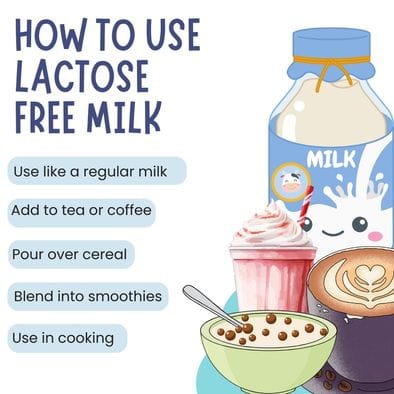
These are the best ways you can enjoy lactose free milk without compromising
When to See a Doctor
Consult a healthcare professional if you face:
- Continuous digestive problems
- Symptoms even with lactose-free milk
- Signs of milk allergy (rash, swelling, breathing issues)
FAQs
Is lactose-free milk real milk?
Yes. It is dairy milk treated with lactase to break down lactose.
Is lactose-free milk healthier?
It is not much healthier but it is easy to digest for those who are lactose-intolerant.
Can lactose-free milk cause symptoms?
Yes, if discomfort is due to milk proteins rather than lactose.
Why does lactose-free milk taste sweeter?
Because lactose is split into naturally sweeter sugars.
Can children drink lactose-free milk?
Yes, if recommended or needed.
Does boiling remove lactose?
No. Heat does not remove lactose.
References
1. National Institutes of Health (NIH) (Lactose intolerance)
2. Mayo Clinic (Lactose intolerance diagnosis and treatment)
3. NHS (UK) (Lactose intolerance overview)


Member discussion