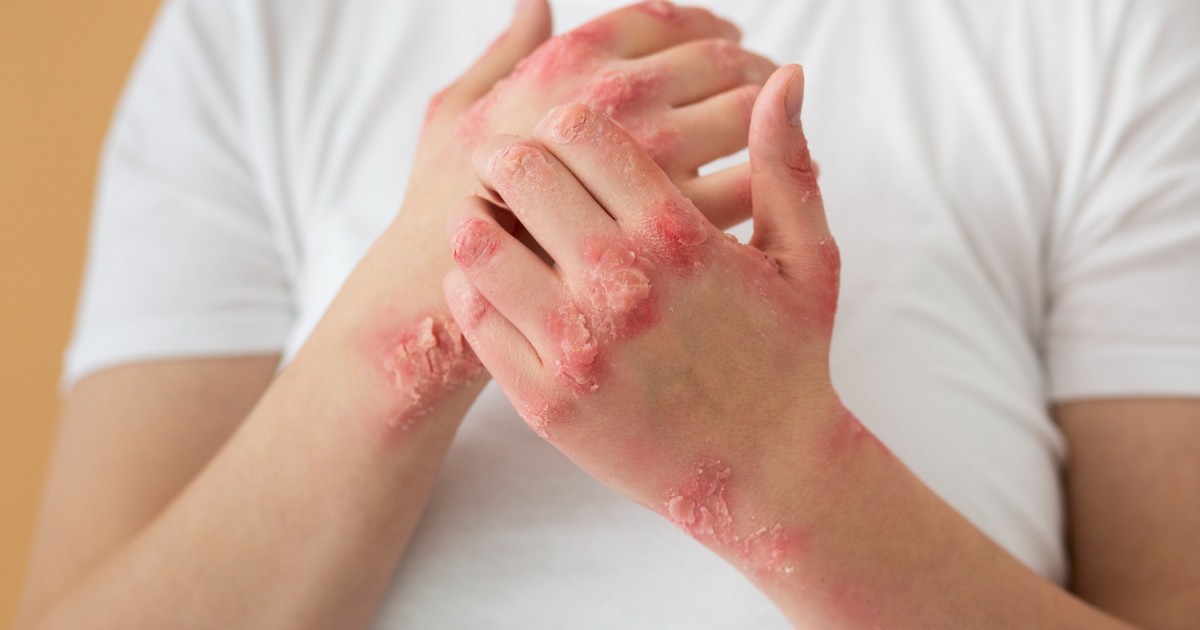
Will guttate psoriasis go away?
I've recently developed guttate psoriasis after a bad throat infection. It's quite concerning. Will this type of psoriasis eventually clear up completely, or is it something I'll have to manage long-term?
I've recently developed guttate psoriasis after a bad throat infection. It's quite concerning. Will this type of psoriasis eventually clear up completely, or is it something I'll have to manage long-term?
 6 months ago
From a holistic view, skin conditions often reflect inner imbalances. Guttate psoriasis, especially if triggered by an infection, sometimes resolves as the body heals. Practices like gentle yoga and mindful breathing can help reduce stress, which is often a trigger for psoriasis. While it might clear up, maintaining inner peace and a healthy lifestyle supports overall skin health.
6 months ago
Oh, guttate psoriasis sounds like a complicated dance move! But seriously, unlike a bad joke, it often *does* go away, especially after a strep infection. It's usually like a temporary visitor, not a permanent resident. But if it overstays its welcome, a dermatologist can help evict it!

 5 months ago
I'm not very familiar with guttate psoriasis. Does it mean it's different from other types of psoriasis? If it's linked to an infection, does treating the infection make it go away for sure? I hope it's not too serious for you.
6 months ago
I use a skin health app, and it shows that guttate psoriasis is often temporary, especially when it follows a strep infection. The app suggests that with proper medical treatment for the infection and good skin care, it has a high chance of clearing up. You can track your symptoms and recovery on such apps too, but definitely see a dermatologist for diagnosis and treatment plan.
Learn the key differences between psoriasis vs eczema, including symptoms, causes, triggers, body locati...
If you’re struggling with dry, itchy, or inflamed skin from conditions like eczema or psoriasis, you migh...
6 months ago
My dermatologist explained that guttate psoriasis often appears suddenly, typically after a strep throat infection, and in many cases, it can clear up completely on its own within a few weeks or months. However, it can also become chronic for some people. Early treatment of the underlying infection and proper skin care are important. So, yes, it often does go away, but not always permanently.
Get the Zerunio health brief
Evidence-based health, reviewed by clinicians. Free, weekly.
Enter your phone number – we’ll text you a one-time code.