


What Is Batana Oil?
Batana oil is extracted from the nuts of the American palm tree, native to Central and South America. It has been traditionally used by the Miskito people of Honduras, sometimes referred to as the “Tawira” or “people of beautiful hair.”
Batana oil is chemically similar to palm oil but differs in fatty acid composition and antioxidant content.
Nutritional Composition of Batana Oil
Batana oil contains:
| Component | Primary Function |
|---|---|
| Oleic Acid (Omega-9) | Enhances moisture retention and improves skin softness |
| Linoleic Acid (Omega-6) | Strengthens and supports the skin barrier |
| Palmitic Acid | Provides moisturizing and emollient properties |
| Vitamin E Compounds | Acts as an antioxidant to protect against cellular damage |
Key Benefits of Batana Oil
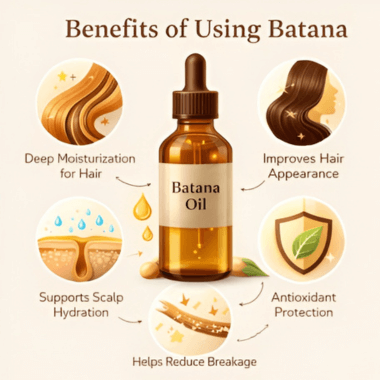
Deep Moisturization for Hair
Batana oil is rich in fatty acids that help:
- Reduce dryness
- Improve hair softness
- Enhance shine
It acts as a moisturiser, coating the hair shaft and reducing moisture loss.
Helps Improve Hair Appearance
While not a cure for hair loss, regular use may:
- Improve texture
- Reduce frizz
- Add gloss
- Support smoother strands
Important Fact: Most hair oils improve the appearance and manageability of hair rather than changing hair growth cycles.
Supports Scalp Hydration
Dry scalp can worsen flaking and discomfort.
Batana oil may help:
- Condition the scalp
- Reduce dryness
- Improve comfort
Antioxidant Protection
Vitamin E compounds in batana oil provide antioxidant activity.
Potential role:
- Protecting hair lipids from oxidative stress
- Supporting overall scalp health
Help Reduce Breakage
By improving lubrication and flexibility, oils like batana can:
- Reduce friction
- Decrease mechanical damage
- Limit breakage
Claims That Need Caution
Batana oil is often marketed as:
- A guaranteed hair regrowth solution
- A treatment for baldness
- A medical cure
There is limited clinical research proving batana oil can regrow hair in cases of genetic hair loss.
Batana Oil for Skin
Thanks to its fatty acid and antioxidant profile, batana oil may:
- Help moisturize dry skin
- Support skin barrier function
- Improve skin softness
Similar to other plant oils like argan or jojoba.
How to Use Batana Oil
Use Batana oil for Hair by following these steps:
- Apply small amount to damp or dry hair
- Focus on mid-lengths & ends
- Use as pre-wash treatment or leave-in
For Scalp:
- Massage gently
- Use sparingly
- Avoid heavy buildup
For Skin:
- Apply to dry areas
- Patch test first
Who Should Be Careful?
- People with oily scalp
- Acne-prone skin (may clog pores for some)
- Individuals with sensitivity to palm-derived products
Final Thoughts
Batana oil is best for nourishing, moisturising and making hair shine. But it is also important to use it with proper care. Always remember no hair oil can do miracles overnight and whatsoever claims this is fake. You need to give time for everything. With proper care and patience you can keep your hair healthy.
 Himani Thakur
Can batana oil improve hair growth and thickness? Read More: Batana Oil for Hair
FAQs
Does batana oil regrow hair?
Evidence is limited. It mainly improves hair condition and appearance.
Is batana oil good for dry hair?
Yes, due to its rich fatty acid profile.
Can batana oil clog pores?
Possible for some skin types. Patch testing is recommended.
References
1. Journal of Cosmetic Science (Role of fatty acids in hair conditioning)
2. NIH (Vitamin E (tocopherols & tocotrienols) and antioxidant effects)
3. International Journal of Trichology (Effects of oils on hair shaft protection)


Member discussion