


Celtic salt is sea salt which has extra minerals in comparison to normal salt. This salt is grey in colour and nowadays is getting popularity among individuals for having minerals like magnesium, potassium, calcium and iron. This salt helps in keeping the balance between taste and health. Meanwhile, normal table salt is highly processed because of which it loses its minerals and if eaten in high quantities people might face health concerns. Let’s understand the health benefits of Celtic salt.
What Is Celtic Salt?
Celtic salt is the salt taken from sea and is unrefined which was traditionally harvested from the coastal regions of Brittany, France. It is collected using traditional wooden tools and dried naturally by the sun and wind. Because it undergoes minimal processing, Celtic salt does not lose its minerals and natural moisture, which are often removed during the refining process used to produce standard table salt.
Key characteristics include:
- Light grey color
- Moist texture
- Slightly briny taste
- Rich mineral content
9 Surprising Health Benefits of Celtic Salt
1. Rich in Trace Minerals
One of the main reasons Celtic salt is popular is its mineral content.
Celtic salt have minerals like:
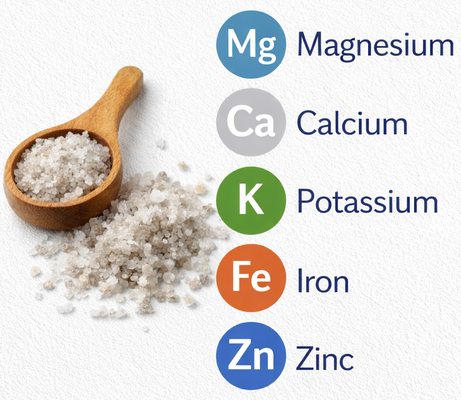
These minerals are present in less quantity in salt but still they balance the taste with health benefits.
2. May Help Maintain Electrolyte Balance
Electrolytes are important minerals that help regulate many functions in the body, including:
- Fluid balance
- Nerve signaling
- Muscle contractions
Because Celtic salt contains trace minerals, it may help support electrolyte balance, especially after exercise or sweating.
3. Supports Hydration
Some health experts suggest that natural salts may help the body retain and absorb water more effectively. When celtic salt is taken in limitation with water, it may help to support proper hydration, especially during hot weather or physical activity.
Interesting Fact: Athletes often drink electrolyte-rich drinks to restock minerals lost through sweat. Natural sea salts can contribute small amounts of these minerals.
4. Less Processed Than Table Salt
Regular table salt is heavily refined which removes its natural minerals, apart from this it might also have additives like anti-caking agents in table salt.
Whereas Celtic salt is typically minimally processed, allowing it to maintain its natural composition.
For people looking to reduce processed foods in their diet, Celtic salt can be a more natural seasoning option.
5. May Support Digestive Health
Salt plays an important role in stimulating digestive enzymes and the production of stomach acid.
Adequate stomach acid is important for:
- Breaking down food
- Absorbing nutrients
- Preventing harmful bacteria growth
Small amounts of natural salt may help support healthy digestion.
6. Enhances Flavor Naturally
Celtic salt has a complex and rich flavor that many chefs prefer over standard table salt.
Because of its stronger taste, people may use smaller amounts to season food, which can help reduce overall sodium intake while still enhancing flavor.
7. May Help Support Muscle Function
Electrolytes such as sodium, magnesium, and potassium play an important role in muscle contraction and nerve function.
The trace minerals found in Celtic salt may contribute to normal muscle performance, especially during physical activity.
8. Contains Natural Moisture
Unlike dry table salt, Celtic salt retains natural moisture from the sea, giving it a slightly damp texture. This moisture can help preserve certain minerals and contributes to its distinct taste and appearance.
9. May Support Overall Mineral Intake
Celtic salt adds a small amount of all important minerals to the diet which helps in providing health benefits.
Celtic Salt vs Table Salt
| Feature | Celtic Salt | Table Salt |
|---|---|---|
| Processing | Minimal | Highly refined |
| Mineral Content | Contains trace minerals | Mostly sodium chloride |
| Additives | Usually none | Often contains anti-caking agents |
| Texture | Moist and coarse | Dry and fine |
Important Considerations
Celtic salt has minerals in it but it also have sodium and consuming celtic salt in excess can increase the risk of:
- High blood pressure
- Heart disease
- Kidney problems
Health experts recommend moderate salt consumption regardless of the type.
For most adults, daily sodium intake should generally stay below 2,300 mg per day, according to many health organizations.
Final Thoughts
Celtic salt is a natural, minimally processed sea salt that contains trace minerals and a unique flavor. While it should still be consumed in moderation, it may give you benefits but it is also important to keep in mind that the presence of sodium in the salt can give health complications if consumed in excess.
Frequently Asked Questions (FAQs)
Is Celtic salt healthier than regular salt?
Celtic salt contains trace minerals and is less processed than table salt, but both should be consumed in moderation.
Can Celtic salt help with hydration?
Because it contains electrolytes like sodium and magnesium, it may help support hydration when consumed with water.
Why is Celtic salt grey?
The grey color comes from natural clay and mineral content found in the coastal salt marshes where it is harvested.
Is Celtic salt good for high blood pressure?
People with high blood pressure should limit sodium intake, regardless of the salt type.
References
1] National Institutes of Health (NIH)
2] Harvard T.H. Chan School of Public Health (Sodium and Health)
3] World Health Organization (WHO) (Salt Intake Guidelines)


Member discussion