


The Autoimmune Protocol (AIP) diet is a diet that helps in managing autoimmune diseases and chronic inflammation. It is an extension version of the Paleo diet and focuses on removing foods that may trigger inflammation, gut irritation, or immune system reactions.
Autoimmune diseases occur when the body’s immune system mistakenly attacks its tissues. Conditions such as rheumatoid arthritis, lupus, inflammatory bowel disease, Hashimoto’s thyroiditis, and psoriasis are examples of autoimmune disorders. So it's important to take care of the immune system and follow the diet which supports well-being.
What Is the AIP Diet?
The Autoimmune Protocol diet is a well structured elimination diet that removes foods which can lead to inflammation, gut damage, or immune activation.
It focuses on:
- Whole, nutrient-dense foods
- Foods that support gut health
- Eliminating potential inflammatory triggers
The diet typically involves two main phases:
1. Elimination phase
2. Reintroduction phase
This process helps people identify foods that may trigger autoimmune symptoms.
How Does the AIP Diet Work?
The AIP diet works by temporarily removing foods that may irritate the gut or trigger immune responses. The goal is to give the body time to heal and reduce inflammation.
Once symptoms improve, you can add those foods in you diet slowly one at a time to check which foods the body tolerates and which may cause flare-ups. This way you can easily create diet accrding to your health.
Phase 1: The Elimination Phase
The elimination phase usually lasts 4 to 8 weeks, although some people may follow it longer depending on their symptoms. During this phase, foods that are commonly linked to inflammation or immune reactions are removed from the diet.
Foods typically avoided are:
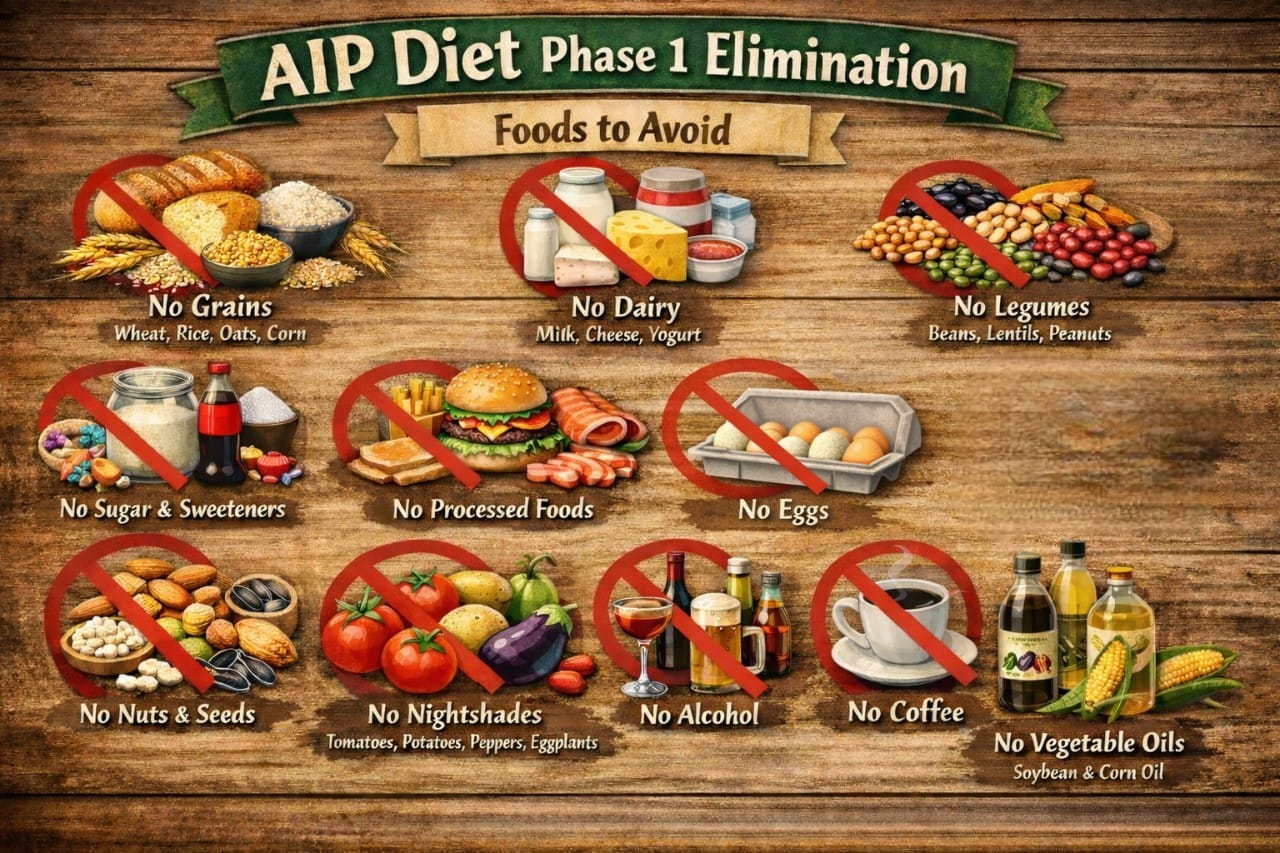
Not adding these food may help in reducing inflammation and gut issues.
Phase 2: The Reintroduction Phase
Once symptoms improve, the next step is the reintroduction phase.
In this stage:
- Foods are eaten once again one at a time
- Each food is tested over several days
- The body’s reaction is monitored
If symptoms return after introducing a certain food, that food may be considered a trigger and avoided long-term. This careful process helps identify personal food sensitivities.
Foods Allowed on the AIP Diet
Although the AIP diet removes many foods initially, it still includes a variety of nutritious and healing foods.
Foods Encouraged on AIP
- Fresh vegetables
- Fruits in moderation
- Grass-fed meat and poultry
- Wild-caught fish and seafood
- Bone broth
- Healthy fats such as olive oil and coconut oil
- Fermented foods like sauerkraut
- Herbs and natural spices (non-seed based)
These foods provide important nutrients that support immune health and gut healing.
Potential Benefits of the AIP Diet
Many people report improvements in symptoms after following the AIP diet.
Possible benefits include:
- Reduced inflammation
- Improved digestion
- Better energy levels
- Reduced autoimmune flare-ups
- Improved skin conditions
- Better gut health
Some small studies have shown promising results for conditions such as inflammatory bowel disease and Hashimoto’s thyroiditis, although more research is still needed.
Possible Challenges of the AIP Diet
While the AIP diet may help some individuals, it can be challenging to follow because it is highly restrictive during the elimination phase.
Possible challenges include:
- Limited food choices initially
- Difficulty eating out
- Nutrient imbalance if not planned carefully
- Time needed for meal preparation
Working with a registered dietitian or healthcare professional can help ensure the diet remains balanced.
Who Might Benefit from the AIP Diet?
The AIP diet may be considered by individuals with autoimmune conditions such as:
- Rheumatoid arthritis
- Lupus
- Psoriasis
- Inflammatory bowel disease
- Hashimoto’s thyroiditis
- Multiple sclerosis
However, the diet should ideally be followed under medical supervision, especially for individuals with existing health conditions.
Is the AIP Diet Supported by Science?
Research on the AIP diet is still developing. Some studies suggest it may help reduce symptoms in certain autoimmune conditions by lowering inflammation and improving gut health. However, experts believes that the diet may not work for everyone and should be considered as one part of a broader treatment plan.
Final Thoughts
The AIP diet is a structured elimination diet designed to help people identify foods that may trigger autoimmune symptoms. By temporarily removing certain foods and gradually reintroducing them, individuals may gain insight into how their diet affects their health. While it can be restrictive, many people find that the AIP diet helps them better understand their bodies and manage inflammation more effectively.
Frequently Asked Questions (FAQs)
How long should you follow the AIP diet?
The elimination phase usually lasts 4 to 8 weeks, but the timeline can vary depending on individual health needs.
Can the AIP diet cure autoimmune diseases?
The AIP diet does not cure autoimmune diseases, but it may help manage symptoms by reducing inflammation and identifying food triggers.
Is the AIP diet the same as the Paleo diet?
The AIP diet is a more restrictive version of the Paleo diet that removes additional foods like eggs, nuts, seeds and vegetabls like tomatoes, potatoes and peppers.
References
- National Institutes of Health (NIH) (Autoimmune protocol diet: A personalized elimination diet for patients with autoimmune diseases)
- National Center for Biotechnology Information (NCBI) (Autimmune Diet: Foods to avoid)
- Harvard T.H. Chan School of Public Health (AIP Diet and how it’s useful)


Member discussion