Veneer vs Crown: What Is the Difference and Which One Do You Need?

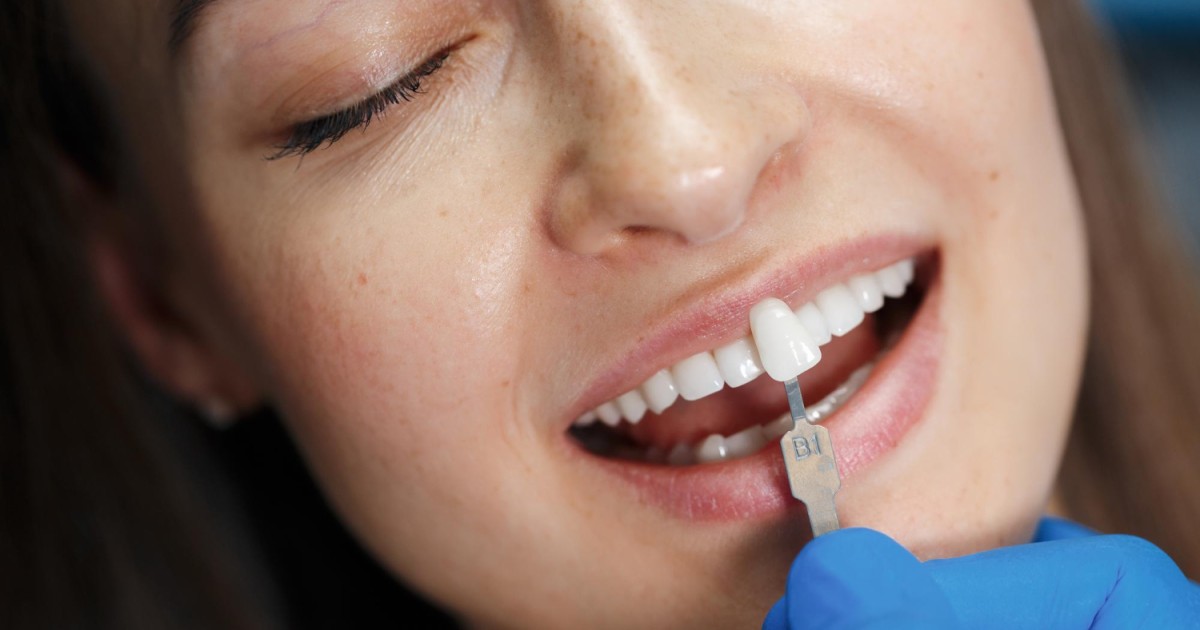
If your tooth is chipped, stained, broken, or badly worn, your dentist may discuss Veneer vs Crown as possible treatment options. Both can improve the appearance of a tooth and can be designed to look natural, but they differ in how much of the tooth they cover. A veneer generally covers only the front surface of the tooth, while a crown surrounds and covers most or all of the visible tooth structure.
These are two completely different treatments. The main difference between veneers and crowns is that veneers are generally used to improve the appearance of teeth, while crowns are used to restore and protect teeth that have significant structural damage. Veneers may be appropriate for teeth that are chipped, stained, crooked, or misshapen, whereas crowns can be used when a tooth has lost substantial structure or requires greater protection.
However, choosing between a veneer and a crown is not always straightforward. Your dentist will consider the condition and strength of the tooth, the amount of healthy tooth structure remaining, your cosmetic goals, and your overall oral health before recommending the most appropriate treatment. In some cases, neither a veneer nor a crown may be the best first option.
Veneer vs. Crown: The Basic Difference
Feature |
Veneer |
Crown |
What does it cover? |
Mainly the front surface |
The entire visible tooth |
Main purpose |
Cosmetic |
Restorative and protective |
Common teeth |
Mostly front teeth |
Front and back teeth |
Tooth preparation |
Usually less |
Usually more |
Used for stains? |
Yes, in suitable cases |
Sometimes, if the tooth is also weak |
Used for small chips? |
Sometimes |
Sometimes |
Used for severely damaged teeth? |
Usually no |
Often yes. |
Protects a weak tooth? |
Limited |
Yes. |
Can it be reversed? |
Usually no |
No |
Is it suitable for everyone? |
No |
No |
The exact treatment depends on your tooth structure that remains healthy after treatment and your bite.
What Is a Veneer?
A dental veneer is a thin covering that is bonded to the front of a tooth. Most people think about veneers when they want to improve their smile. It is known to provide a Hollywood smile look.
A veneer may be used for:
Stained teeth
Small chips
Uneven tooth shape
Small gaps
Teeth that look too small
Some discoloration that does not improve with whitening
Certain minor cosmetic changes
Veneers are commonly made from porcelain or other ceramic materials. Composite resin can also be used for some cases. The important thing is that a veneer does not surround the whole tooth like a crown.
What Is a Crown?
A crown is often called a cap. It is made to fit over the prepared tooth and cover the entire visible portion. Dentists use crowns to restore teeth that are:
Weak
Broken
Heavily decayed
Very worn
Supporting large restorations
Structurally compromised
Crowns can also be used in some teeth after root canal treatment and to restore dental implants. A crown can improve appearance too. But its main job is usually to restore and protect the tooth.
Veneer vs Crown: How Much Tooth Structure Is Removed?
Imagine looking at your front tooth in a mirror. A veneer mainly changes the surface that you see when you smile. A crown goes around the tooth.
When it comes to your smile, the veneer vs. crown difference matters because the dentist needs to create enough space for the restoration. A crown, therefore, generally requires more reshaping of the tooth than a veneer. This is one reason dentists do not recommend a crown simply because it is stronger.
If a healthy tooth only needs a small cosmetic correction, removing more natural tooth structure than needed is not ideal.
When Is a Veneer Usually a Better Choice?
Veneer vs. crown: "When is veneer a better option?" is the next question that comes to mind.
A veneer may be considered when the tooth is healthy and strong enough, but its appearance is bothering you.
1. Your tooth is deeply stained.
Some stains do not respond well to whitening.
For example, if a tooth has discoloration that cannot be improved enough with bleaching, a veneer may cover the visible stain. But whitening should be considered first when it is appropriate. There is no reason to prepare a tooth for a veneer if a simple whitening treatment can solve the problem.
2. You have a small chip.
A small chip on a front tooth can sometimes be treated with bonding or a veneer. The size and position of the chip matter. A tiny chip may not need either one.
3. Your teeth have small gaps.
Veneers can sometimes change the shape of teeth and close small spaces. However, if the gap is caused by tooth position or a bite problem, orthodontic treatment may be a better option.
4. Your tooth shape bothers you.
Maybe one front tooth looks shorter than the other. Or perhaps the tooth is naturally small or has an unusual shape. A veneer can sometimes improve the visible shape.
When Is a Crown Usually Better?
Veneer vs. crown: When a crown is a better option is the next question that comes to mind. A crown becomes more useful when the tooth has lost a significant amount of its natural structure.
1. The tooth has a large filling.
A tooth with a very large filling may have a much weaker natural tooth left. In such cases, simply covering the front surface may not give the tooth enough protection. A crown may be considered depending on the remaining structure.
2. The tooth is badly broken
A severely broken tooth may need full coverage. A veneer only covers the front. If the tooth needs protection around its sides and biting surfaces, a crown may make more sense.
3. The tooth has extensive decay.
A large cavity can weaken a tooth. The dentist first needs to remove the decay and restore the tooth. If there is not enough strong structure left, a crown may be needed.
4. The tooth is badly worn.
Heavy tooth wear can remove a lot of tooth structure. The treatment depends on why the teeth are wearing down and how much structure remains. Sometimes a crown is appropriate. Sometimes a more conservative restoration can be used.
Veneer vs. Crown for a Root Canal-Treated Tooth
Some patients often assume, "Root canal means you need a crown."
That is not always true for every tooth. The dentist needs to consider:
Which tooth was treated
How much natural tooth remains
Whether there is a large filling
Whether the tooth is cracked
How much chewing force the tooth receives
Whether full coverage is needed
Back teeth usually experience heavy chewing forces, so protection is especially important when a large amount of tooth structure has been lost. Your dentist should examine the actual tooth before deciding.
What If You Have a Chipped Front Tooth?
In a few cases you have a tiny chip on your front tooth. If the chip is larger but the tooth is still healthy and strong, a veneer might be considered. If the tooth is badly fractured or structurally weak, a crown could be needed. So the treatment is based oon how much of the tooth is damaged, not just on the fact that itis chipped.
Veneer vs. crown: Which One Removes More Teeth?
Generally, crowns require more tooth preparation (tooth cutting) than veneers. A crown has to fit over the tooth, so the dentist needs to create space around it. A veneer usually requires less preparation because it covers mainly the front surface.
However, the amount of tooth preparation is not the same in every patient. It depends on:
The material being used
Tooth position
Tooth color
Tooth shape
Bite
Existing restorations
Dentist's treatment plan
Some veneers can be prepared very conservatively.
Veneer vs Crown: Which Looks More Natural?
Both veneers and crowns can look very natural. Modern ceramic materials can be made to match the color, shape, and translucency of natural teeth. The final appearance depends on more than the material. Your dentist and dental laboratory also need to consider:
Tooth shape
Shade
Gum position
Facial proportions
Bite
Neighboring teeth
The American Dental Association highlights that different restorative materials have different properties, indications, and aesthetic characteristics. So "porcelain" alone doesn't tell you exactly how the final tooth will look.


Consult a dental surgeon
Which Lasts Longer: Veneer or Crown?
There is no single lifespan that applies to everyone.
For veneers, research has also shown good long-term survival, but failure and complications can still happen. The ADA research shows an overall survival rate of about 89% for certain porcelain and glass-ceramic laminate veneers after an average follow-up of around 9 years.
A restoration may fail sooner if you:
Grind your teeth
Bite hard objects
Have poor oral hygiene
Develop decay around the restoration
Have gum disease
Experience trauma
So don't think of either treatment as a permanent replacement for natural teeth.
Veneer vs Crown: Which Is More Expensive?
The answer depends on where you live, the dentist's experience, the material, and the laboratory cost. Give below is an average cost, which can give you an idea.
Treatment |
Typical U.S. cost per tooth |
Average/typical cost |
Insurance |
Composite veneer |
$250–$1,500 |
Around $750–$850 |
Usually not covered |
Porcelain veneer |
$925–$2,500 |
Around $1,450–$1,600 |
Usually not covered |
Dental crown |
$800–$3,000 |
Around $1,300–$1,350 |
May be partly covered when medically necessary |
Veneer vs. Crown: Pros and Cons
Veneers
Pros
Good for cosmetic changes
Can improve tooth color
Can change tooth shape
Usually requires less preparation than a crown
Can give very natural results
Cons
Not suitable for severely weak teeth
Can chip or debond
Usually cannot be reversed after tooth preparation
May not be suitable for heavy grinding
Does not give the same full coverage as a crown
Crowns
Pros
Covers the whole visible tooth
Protects weakened teeth
Can restore chewing function
Useful for heavily damaged teeth
Can also improve appearance
Cons
Requires more tooth preparation
Cannot be reversed
May be unnecessary for a healthy tooth with only a cosmetic problem
Can still chip, crack, or become loose
Requires ongoing oral care
Veneer vs. Crown: Choosing the Right Treatment
Dental problem |
Treatment that may be considered |
Stained but healthy front tooth |
Whitening or veneer |
Small cosmetic chip |
Bonding or veneer |
Small gap |
Bonding, veneer, or orthodontics |
Uneven tooth shape |
Bonding or veneer |
Large cavity |
Filling, onlay, or crown depending on damage |
Large filling with weak remaining tooth |
Crown may be appropriate. |
Severely broken tooth |
A crown may be needed. |
Weak tooth requiring full coverage |
Crown |
Healthy tooth needing mainly cosmetic change |
Veneer |
Heavy grinding |
Careful assessment before either |
This table is a guide, not a diagnosis.
What If Neither Veneer nor Crown Is Needed?
This is an important question, as sometimes it's not veneer vs. crown. Sometimes the best treatment is neither. For example:
Small chip
Composite bonding may repair it without placing a veneer.
Mild discoloration
Professional whitening may be enough.
Slightly crooked teeth
Orthodontic treatment could correct the actual problem instead of covering the teeth.
Moderate tooth damage
An inlay or onlay may sometimes be suitable when a tooth is too damaged for a simple filling but does not need a full crown. Cleveland Clinic also lists inlays and onlays as possible alternatives in selected cases.
This is why you should ask your dentist about all reasonable options before deciding.
Questions to Ask Your Dentist Before Choosing the Correct Treatment
Before agreeing to a veneer or crown, ask:
How much healthy tooth structure do I have?
Why are you recommending this treatment?
Could bonding or an onlay work instead?
How much tooth will need to be removed?
Do I have a bite or grinding problem?
What material will you use?
How long is it expected to last?
What happens if it chips or comes loose?
Do I need to treat cavities or gum disease first?
What will happen if I do nothing right now?
Veneers vs Crowns: Which One Is Right for You?
Feature |
Veneer |
Dental Crown |
Basic definition |
A thin shell bonded mainly to the front surface of a tooth |
A restoration that covers the entire visible portion of a prepared tooth |
Main purpose |
Primarily cosmetic |
Mainly restorative and protective, although it can improve appearance |
Best suited for |
Relatively healthy teeth with cosmetic concerns |
Weak, broken, heavily decayed or extensively restored teeth |
Tooth coverage |
Mainly the front surface and, depending on design, some other areas |
Covers the front, back, and biting surfaces of the visible tooth |
Amount of tooth preparation |
Usually less tooth structure is removed. |
Generally requires more tooth reduction to create space for the crown |
Natural tooth preservation |
Usually more conservative |
Requires greater alteration of the natural tooth |
Common teeth treated |
Mostly front teeth |
Front and back teeth |
Tooth discoloration |
Good option for selected stains that cannot be corrected with whitening |
May be used when discoloration occurs with significant structural damage |
Small chip |
May be suitable |
Usually unnecessary for a minor chip |
Large fracture |
Usually not suitable if substantial structure is missing |
Often considered when significant tooth structure has been lost |
Small gaps |
Can sometimes close small gaps |
Usually not the first choice for small cosmetic gaps |
Tooth shape |
Can change the visible shape and size of a tooth |
Can change the overall shape of the restored tooth |
Large cavity |
Usually not appropriate if the tooth is significantly weakened |
Often considered after decay is removed and the tooth is restored |
Large filling |
May not provide enough protection if a little natural tooth remains |
Often considered when the remaining tooth is weak |
Root canal-treated tooth |
Not automatically appropriate |
May be recommended when substantial tooth structure has been lost, depending on the tooth |
Cracked tooth |
Usually unsuitable for significant cracks |
May provide protection in selected cases, depending on the crack |
Back teeth |
Less commonly used |
Commonly used when posterior teeth need substantial restoration |
Chewing forces |
Provides less structural protection |
Designed to withstand and distribute chewing forces over a restored tooth |
Bruxism/grinding |
Can have a higher risk of chipping or debonding in heavy grinders |
Also requires careful planning and bite management |
Materials |
Porcelain, ceramic, or composite resin |
Zirconia, all-ceramic, porcelain-fused-to-metal, metal, and other materials |
Appearance |
Designed primarily for the visible front surface |
Can provide a natural appearance while restoring the whole tooth |
Strength |
Strong enough for appropriate cosmetic cases but does not replace missing tooth structure |
Provides greater coverage and protection for structurally compromised teeth |
Longevity |
Can last many years with proper care |
Can also last many years with proper care |
Reversible? |
Usually no if enamel has been removed. |
No |
Typical U.S. cost |
About $925–$2,500 per porcelain veneer |
About $800–$3,000 per crown |
Insurance |
Usually not covered because it is generally cosmetic. |
May be partly covered when medically necessary, depending on the plan |
Treatment goal |
Improve the appearance of a tooth. |
Restore function, strength, and appearance. |
Main concern before treatment |
Whether enough healthy enamel and tooth structure remain for bonding |
Whether enough tooth structure remains to support the crown |
Possible alternatives |
Whitening, composite bonding, or orthodontics |
Filling, inlay/onlay, or other restorative treatment, depending on damage |
References
- American Dental Association. Materials for Indirect Restorations. · source
Frequently asked questions
Veneer vs crown what is better for a damaged tooth?
When comparing veneer vs crown, the better option depends on how much of the tooth is damaged. A veneer may work for a small chip on a healthy tooth, while a crown may be needed when a tooth has lost significant structure and needs more protection.
Veneer vs crown which is more expensive?
The cost of veneer vs crown depends on the material, dentist, location, and treatment required. In the U.S., porcelain veneers generally cost about $925 to $2,500 per tooth, while crowns may cost around $800 to $3,000 per tooth. Insurance usually does not cover veneers, while crowns may be partly covered when they are medically necessary.