


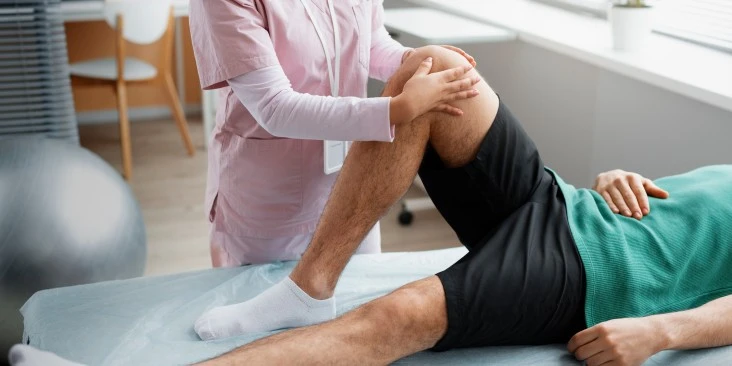
A knee contusion is an injury from a hit or bump to the knee. The force of the damage weakens small blood vessels which consequently allows blood to leak into surrounding tissues. This results in bruising, tenderness and occasionally swelling.
The skin remains intact, as opposed to a cut or an open wound. If someone runs and knocks the front of his/her knee on the ground, for instance, he/she might get bruised on the kneecap. The area may be tender when walking, bending knees, or touching.
The severity will depend on how hard you hit the knee and what tissue was affected.
A mild injury may cause a small patch of discoloration. The greater the impact, the deeper tissues that are affected include bone under the kneecap. This is known as a 'bone bruise' or 'bone contusion'. May lead to deep pain compared to usual skin bruising which persists for longer.
What Causes a Knee Contusion?
This is most often caused by a direct impact. This may occur at sports, home, work or road accidents. Common causes include:
Falls: Landing directly on your kneecap on a hard surface.
Sports injuries: being struck in a sport such as football, cricket, basketball, or some other contact sport.
Road accidents: Impact on dashboard or other hard surface in an accident.
Workplace injuries: Bruising your knee on a hard object, furniture or machinery.
Everyday accidents: Knee hitting the edge of a table, bed frame, stair.
Repeated impacts: Repeated blows during certain sports or physical activities can damage the tissues around the knee.
A twisting injury can also cause a bone bruise, particularly when the bones inside the knee press forcefully against each other. In such cases, there may be damage to the ligaments or cartilage as well.
The way an injury occurs gives a doctor useful information, but it does not always reveal how serious the damage is. The manner in which an injury occurs provides the doctor with information that will help them in the diagnosis.
What are the signs and symptoms of a knee contusion?
Symptoms may appear immediately after the injury. Others become more prominent as blood and fluid accumulates over the next several hours in the affected area.
1. Pain and tenderness
One of the earliest symptoms of pain. There can be significant impact pain followed by pain with knee movement.
Pain may increase while kneeling, climbing up and down the stairs, squatting or pressing against the affected area.
2. Bruising or skin color change.
A blue, purple, red or dark patch can form in the skin. As the bruise heals, its colour can change to greenish or yellowish shades.
All knee contusions result in an obvious bruise.Not all knee contusions are visible. A deeper injury may result in little change in the colour of the skin but it will be painful.
3. Swelling
Fluid and blood may build up in the injured tissues and make the knee swollen. The kneecap may be less apparent due to swelling or you may feel tightness in the area.
There may be a little swelling following the impact. But sudden or sudden and severe swelling requires immediate medical evaluation.
4. Stiffness
You may feel stiff in your knee, particularly after sitting for some time. It might be difficult to bend it all the way.
This can increase the difficulty of activities of daily living, like sitting up.
5. Difficulty walking
You might be able to walk without too much pain if the injury is mild. Or at times it may cause limping or difficulty in bearing weight if it is a more painful injury.
Avoid forcing yourself to walk through pain. If one of the legs is difficult to put weight on, it may mean that there is a fracture or other injury that requires an evaluation.
6. Deep, aching pain
If the impact breaks the bone, the pain will be more than what is normally felt on the skin after a bruise.
May worsen when standing, walking or bearing weight on the knee.
It is not possible to tell if a bone is bruised by just looking at the skin.
Radiological imaging tests might be necessary to determine the injury by a healthcare provider.
What Is the Difference Between a Knee Contusion and a Bone Bruise?
A knee contusion affects the skin and soft tissues around the knee. A bone bruise on the other hand affects the bone tissue itself, often following a stronger impact or a twisting injury.
Feature |
Soft-tissue bruise |
Bone bruise |
Area affected |
Skin and nearby soft tissues |
Bone tissue beneath the surface |
Pain |
Often tender when touched |
May feel deep and aching |
Visible discoloration |
Common, but not always present |
May be present or absent |
Recovery |
Often days to a few weeks |
May take several weeks or months |
Diagnosis |
Often based on examination |
MRI may be needed if suspected |
A bone bruise is not the same as a broken bone. However, both can occur after a similar accident, so symptoms alone cannot reliably rule out a fracture.
How Is a Knee Contusion Diagnosed?
A doctor will ask how the injury happened, when the pain started, and whether you can walk or bend the knee.
They may examine the knee for swelling, tenderness, skin changes, and movement. They may also check the stability of the joint and the circulation and sensation in your leg.
When is an imaging test required?
Not all bruises need a scan. If the blow was substantial, the pain is significant or the examination indicates the injury is deeper, your doctor may order imaging.
X-ray: Can be used to detect many fractures and some bone disorders. Does not demonstrate soft tissue injuries or bone bruises.
MRI: Provides detailed information regarding the bone, cartilage, ligaments and other soft tissue. It can be used if your doctor thinks that a bone bruise or internal knee injury may have occurred.
CT scan – may be required if a more detailed picture of a suspected fracture or involvement of adjacent bones is required.
Self-care for a Knee Contusion.
Sometimes, mild injuries can be treated at home.
1. Rest and protect the knee
The first day or two aim is to prevent injury to the knee, minimise pain and swelling and prevent further damage.
Avoid excessive activity in the knee and do not overuse it.
Cease activities that caused the injury.
Do not do running, jumping, kneeling, deep squats or other actions that exacerbate the pain.
A mild bruise doesn't require bed rest.
Rather, avoid one of the earliest symptoms of pain and allow the knee to calm down.
Avoid excessive distance and if walking is painful, use support and reduce distance.
Apply an ice pack
Apply an ice pack: Cold can help reduce pain and swelling during the first 24 to 48 hours. Follow these steps:
Place an ice in a thin towel.
Cover with it over injured area for 15-20 minutes.
Take it out, and let skin cool down.
Do several times throughout the day as necessary.
Never put ice directly on your skin. Never sleep with a pack on your knee. Ask a health care provider before using cold therapy if you have low sensation or poor blood flow.
3. Use gentle compression
An elastic bandage can help to reduce swelling. Tie it around the knee, applying even, gentle pressure.
It should not be tight, but supportive. If your foot becomes cold, pale, numb, tingly or becomes more painful, loosen or remove the bandage.
When wrapping, do not wrap too tightly, particularly if the knee is significantly swollen or there is the possibility of serious injury. The clinician will be able to recommend if a bandage or knee brace is needed.
4. Raise your leg
Rest with pillows under your leg, with knee elevated above level of your heart, if comfortable.
This can help to minimize swelling. Try doing this while lying on a bed or sofa.
5. Manage pain safely
Others use pain relievers that are available in stores to relieve pain. Paracetamol (acetaminophen) can be used to help ease pain. Medicines like ibuprofen also help to ease the pain and swelling, but are not for everyone.
If you suffer from a kidney condition, stomach ulcers, heart disease, take blood-thinning drugs, or you are pregnant, ask a pharmacist or doctor which medicine is right for you. Use as directed on the label and do not mix products with the same active ingredient.
Avoid pushing through an activity that your knee is not ready for by using a pain reliever.
7. Do not massage or heat massage the area initially.
Avoid putting pressure on a recently bruised knee. Do not use high temperatures at the early stage when swelling occurs.
Both can aggravate discomfort. After swelling subsides, your healthcare provider might recommend other methods of enhancing movement if any stiffness persists.


Consult a orthopedist
How long will a knee contusion last?
Recovery will depend on the nature of the injury, how hard the blow was and whether other parts of the knee were injured as well.
Injury severity |
General recovery expectation |
Mild soft-tissue bruise |
Often improves within several days to two weeks |
More painful or deeper soft-tissue injury |
May take several weeks |
Bone bruise |
May take several weeks to months |
You should notice gradual improvement as the knee heals. Pain might subside before the knee is fully functional and able to move around.
If it continues to worsen, it continues to swell or you aren't getting better as you thought, check with a doctor. Ongoing symptoms could indicate that the initial injury requires additional evaluation.
Recovery After a Knee Contusion - Exercises
It's important to slowly resume activity. This will vary depending on your knee's reaction and the nature of the injury.
For the first couple of days
Try to keep the knee protected and minimize pain and swelling. Avoid pushing or stretching.
If movement is comfortable and there's no serious injury, a bit of bending and straightening can prevent stiffness. If the exercise causes sudden pain or causes swelling to worsen, then stop.
As the pain and swelling subsides
There can be a progressive increase in normal walking and gentle movement. A physiotherapist might suggest exercises to return knee movement and build up muscles around the knee.
These are all possible recovery steps you can take:
- Slow bending of the knees in a comfortable range.
Straightening the knee whilst seated or lying.
- Soft quadriceps contractions.
- Steadily increasing the distance of the walk.
The exercise program must be appropriate for the injury. Avoid starting strength training if you haven't been assessed and have a lot of pain or trouble putting weight on the affected leg.
For how long can you wait before getting back into sports?
Don't rely exclusively on a set number of days. Recovery varies from person to person. You should be able to walk without any pain or swelling, bend and straighten your knee comfortably, and do the movements required for your activity without pain or swelling before you return to sports.
Your strength and balance should also be near normal. For instance, someone who can walk around the house, may not be able to sprint, jump and change direction rapidly.
When to consult a doctor for a knee contusion?
Many times, a mild bruise can be treated at home, but there are a few symptoms that require immediate medical care.
If you have any of the following, call the emergency services:
- Any obvious deformity of the knee or suspected dislocation of the knee.
- Swelling that gets worse or severe, after an injury.
Extreme pain or lack of movement of the knee.
- Not being able to put weight on the leg following a serious blow.
- A cold, pale, numb or unusually weak foot.
- A serious incident, which may include a high impact road traffic accident and/or a fall from a height.
These symptoms can be a sign of a fracture, severe internal injury or injury to blood vessels or nerves. Avoid pushing or pulling the knee back into place.
Arrange a medical assessment if:
You heard a pop and your knee gives way.
Your knee locks or gets stuck in one position.
Bruising or swelling continues to increase.
You develop redness, warmth, or fever, especially with worsening pain.
Pain is not improving over the next few days.
You take blood-thinning medicine or have a bleeding disorder.
Is a Knee Contusion Preventable?
While accidents cannot be avoided in every situation, there are some simple steps that may help minimize your risk.
Equipment and clothing: Wear appropriate protective clothing for activities in which you might fall or get hit with hard surfaces.
Warm up before exercise: Get body warm first with light activity before running or jumping or before sports.
Make surroundings safe: Clear walkways, lights around stairs, remove loose rugs.
Develop leg strength: strong thigh and hip muscles aid the movement of the knee and help maintain balance.
Don't return too soon: Allow an injured knee to heal before vigorous activity.
If you engage in contact sports, make sure you learn safe moving techniques, and adhere to the rules of the sport. While some protective equipment protects against all injury, others can be used to limit some risks.
References
Frequently asked questions
Can a knee contusion cause long-term problems?
Most mild bruises heal without lasting problems. A deeper bone bruise or an injury involving cartilage or ligaments may take longer to recover and can sometimes lead to ongoing symptoms. Persistent pain or swelling deserves medical review.
How do you reduce swelling from a knee contusion?
Rest the knee, apply an ice pack wrapped in a towel for 15 to 20 minutes at a time, use gentle compression if appropriate, and raise your leg while resting. Rapid or severe swelling requires urgent assessment.
Can you walk with a knee contusion?
Yes, you may be able to walk with a mild knee contusion. However, avoid walking long distances if it increases your pain or swelling. If you cannot bear weight after an injury, seek medical care rather than trying to walk it off.
