


You are not alone. One of the most uncommon findings of liver function test results is a high ALP, and diet plays an important role in managing this. It includes everything from the foods that are harmful to your liver or bones to the things that help them in functioning. Some lifestyle habits can also help and make a huge difference.
What Is Alkaline Phosphatase and Why Does It Get High?
Alkaline Phosphatase (ALP) is an enzyme that exists in the body. Alkaline phosphatase is a liver, bone, kidney, and digestive enzyme in your body. It is used in the metabolism of proteins, to support bone mineralization and liver function.
The normal range of ALP for adults is 44-147 IU/L, but can vary depending on the laboratory, age, sex of the patient, and pregnancy status. Never compare your results with a generic number, always use your own lab results to compare.
If ALP is increased and reach above the normal range in your laboratory reports, then there could be three most likely causes:
Liver problems - Fatty liver (MASLD/NAFLD), hepatitis, blocked bile ducts, or cirrhosis
Bone disease - Paget's disease, fracture, bone cancer and rapid bone growth in children and teens.
Other causes - Some medications (NSAIDs, certain antibiotics, anticonvulsants, high doses of vitamin A supplements), thyroid disorders or kidney disease.
What Foods to Avoid if Alkaline Phosphatase is High
When we talk about health, food comes hand in hand. Food has a very major role in health. Food can be healthy or unhealthy depending on the quality and type of food you are having. Here are some tips related to food, like what foods to avoid if Alkaline phosphatase is high. Let's understand:
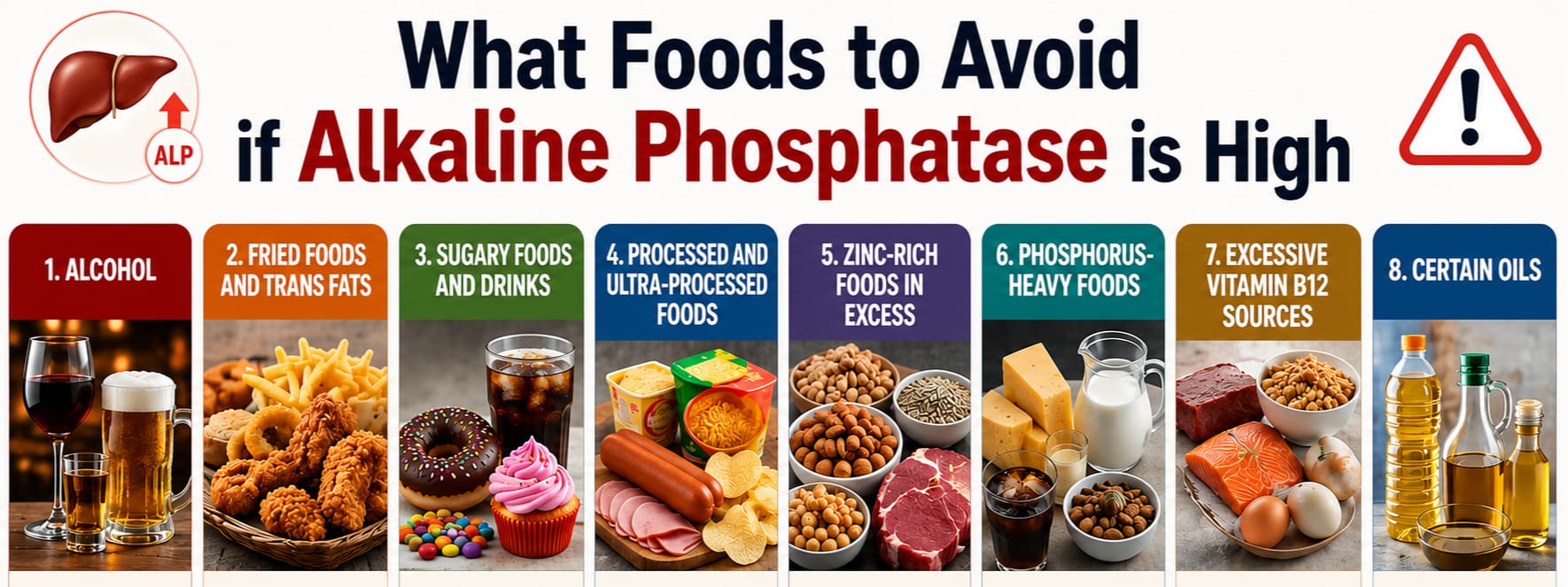
1. Alcohol, Stop This First
When someone's ALP increases, then how can you lower the Alkaline phosphatase levels is the main issue, you just have to eliminate alcohol consumption. If a person is used to it, then it directly attacks liver cells, causes inflammation, and the liver has to overwork to get rid of it. When a liver is stressed, even light alcohol consumption can contribute to poor enzyme levels.
2. Fried foods and trans fats
Fried food, fast food, processed meat and packaged snacks contain saturated and trans fats. As per the reports, a large, fatty meal increases ALP levels compared to a low-fat meal.
These foods will overload your liver, increase inflammation, and make it difficult to maintain your body's enzyme balance.
Swap them with:
- Avoid fried food, opt for baked or grilled.
- Use olive oil instead of butter or processed vegetable oils.
- Nuts, seeds and avocado are healthy fat sources.
3. Sugary Foods and Drinks
The fructose is very high in corn syrup present in soft drinks, packaged fruit juices and highly processed snacks. It contributes to the accumulation of fat in the liver. Non-alcoholic fatty liver disease (NAFLD) is one of the most common causes of high ALP in adults.
What to limit or eliminate:
- Sugar-sweet carbonated beverages and energy drinks.
- Any packed fruit juice, even those so-called "natural packed fruit juices," has high fructose.
- Sweets, ice cream, cake and biscuits
- Whole-grain bread contains carbohydrates that release sugar quickly
Swap them with
Whole foods and fruits can help, as they contain fibre that slows down the release of sugar into the bloodstream and are less damaging to the liver.
4. Processed and Ultra-Processed Foods
Artificial phosphates, preservatives and additives are added to ready-to-eat meals, packaged sauces, instant noodles, canned meat and fast food. The body absorbs artificial phosphates much better than natural phosphates in food, and you can't excrete extra phosphates, putting strain on your kidneys and raising your ALP.
They are also rich in salt, which leads to water retention and increases the workload for the liver.
5. Zinc-Rich Foods in Excess
Zinc is a mineral essential for the body, and excessive intake of it can directly increase ALP activity. If you have high blood levels, then avoid:
- Oysters and shellfish (very high in zinc)
- Red meat and dark meats: Beef, pork, dark meat chicken.
- Pumpkin seeds: in large quantities, as well as cashews.
- Baked beans
These are not necessarily to be removed completely, but just not to be eaten in large amounts, regularly, until the ALP gets back to normal.
6. Phosphorus-Heavy Foods
Too much phosphorus can contribute to bone and kidney-related diseases. Reduce intake of high-phosphorus foods such as:
- Whole milk and hard cheese are examples of full-fat dairy. Examples of full-fat dairy include milk, hard cheese and cream.
- Red meat, organ meats.
- Colas and carbonated drinks (especially dark-coloured sodas).
- Foods that contain additives such as phosphates are processed.
Moderate levels of natural phosphorus from whole foods are generally not a problem, it's the phosphates added to processed foods that are the issue.
7. Excessive Vitamin B12 Sources
Very high consumption of B12, especially from shellfish such as clams and mussels, may stimulate the production of ALP. This is a lesser issue than alcohol or trans fat, but it should be curbed if it's quite high.
What to limit:
- Large quantities of clams, mussels and crab
- Similar Aged cheeses, such as brie.
8. Certain Oils
Cod liver oil, corn oil and coconut oil have been found to increase the level of ALP. Start using a small amount of extra virgin olive oil instead of these harsh oils. Olive oil has anti-inflammatory properties and is less harsh on the liver.
What to Eat to Help Lower Alkaline Phosphatase Naturally
Control is not the only aspect of diet. These foods effectively support liver and bone health and, with following points, you can learn how to lower alkaline phosphatase naturally:
For the liver:
Cruciferous vegetables (broccoli, brussels sprouts, cauliflower) – enzymes that detoxify the liver
Berries - (blueberries, strawberries) — high in antioxidants, which help to lower inflammation in the liver.
Turmeric - Curcumin present in turmeric is well known for its anti-inflammatory properties on the liver.
The antioxidant-rich green tea can possibly reduce liver enzyme levels.
Oats - Beta-glucan fibre helps the liver function present in oats, which helps the liver to function properly.
For bones:
Calcium-rich vegetables - broccoli, kale and bok choy are good sources of calcium without too much phosphorus.
Vitamin D foods - (e.g., fortified plant milks, eggs, taken in moderation, promote bone health.
Lifestyle factors that reduce ALP in addition to diet.
Rarely do these habits make Alkaline phosphatase normal, if you have any underlying condition. But you have to make some important additions and changes to the diet:
Exercise regularly - Just half an hour of moderate walking five times a week can help in reducing liver fat, inflammation and healthy liver enzyme levels. It's not about having to have intense exercise sessions, it's about being consistent.
Stop smoking - Smoking is associated with higher ALP levels and poor liver function. Quitting or cutting back on smoking can do the most.
Review your medications with your doctor - Regular use of NSAIDs (ibuprofen, aspirin), some antibiotics, anticonvulsants and high doses of vitamin A or D may result in raised ALP levels.
Don't discontinue any medications without speaking with a doctor, but do find out if any of your medications may not be causing it.
Maintain a healthy weight - Extra body fat, especially fat around your stomach, has been directly associated with elevated liver enzymes and fatty liver disease. Slow, steady weight loss (not crash dieting) decreases the amount of fat in the liver and may lower ALP levels.
Get follow-up blood tests - Changes in diet usually take 4-12 weeks to be detected in blood tests. Ask your doctor frequently to recheck your levels.
Final Verdict
When Alkaline phosphatase comes elevated on a blood test report, it can be worrying, but it's manageable. One of the best ways to do that is to know what foods to avoid if alkaline phosphatase is high and change your diet according to that.
Firstly, the non-negotiables are to cut alcohol, eliminate fried foods, stop having ultra-processed foods and cut down on sugary drinks. These three changes can relieve a lot of pressure on the liver and can make a noticeable difference in some weeks. Eat foods that support the liver.
The only thing to keep in mind is that diet helps in healing, but does not provide a diagnosis. There is always a cause of high ALP, such as fatty liver, a bile duct problem, a bone problem or a side effect of a drug. Try to know the cause in parallel with the dietary changes, with the help of your doctor.
Making small, steady changes such as changing food habits, exercising more, drinking less alcohol and keeping a check on your blood tests. These steps give real results. Your liver will act differently when you provide it with the right conditions; it recovers.
Frequently Asked Questions
What foods should I avoid mostly if my ALP is high?
Firstly, avoid alcohol, fried food, ultra-processed foods, and sugary drinks. The three categories cause the most harm to the liver and are most closely associated with high ALP. All these, of course, are mainly about what foods to avoid if alkaline phosphatase is high, as these foods put a great impact on your health.
Can I lower alkaline phosphatase with diet alone?
In some cases, if the increase is not that much and occurs due to a poor diet, and fatty liver. However, it must have an underlying cause, such as a blockage in the bile duct, bone disease or side effects of medications. A high alkaline phosphatase diet can help the treatment, but not cure it. Always talk to your doctor.
Does coffee actually help with high ALP?
Yes - it's one of the most consistent results of liver health research. Several studies have been linked to a significant reduction in ALP levels upon drinking 2-3 cups of black coffee daily. It will not cure a significant liver disease, but it is a better choice.
Is dairy bad if your ALP is high?
It depends. High levels of phosphorus and saturated fat from full-fat dairy and processed cheeses can overload the liver. But not all plain or low-fat dairy products are bad. If your doctor has diagnosed a high phosphorus issue, then you should minimize dairy. Otherwise, some small amount of whole dairy won't harm.
Why is my ALP high even though I am eating healthy?
ALP may be increased, but not necessarily because of diet. Some bone disorders, bile duct disease, some drugs, pregnancy and thyroid disease all can increase ALP without even eating much. That's why it is important to consult a doctor. Diet will work, but it is important to find the underlying issue first.
Can children have high ALP?
Yes, and it's typically fine. As children's teen bones are growing, they naturally have an elevated ALP. This is not concerning unless it is extreme or followed by symptoms.
How long does a diet change take to lower ALP levels?
If the cause is diet-related, it will probably show up in blood tests in 4-12 weeks of regular diet changes. Your doctor will recommend the best time for you to


Member discussion