


Capelin roe is a popular seafood ingredient that has recently gained a lot of attention on social media and food platforms. Many people are curious about this colorful ingredient that often appears on sushi rolls and seafood dishes. Masago is known for its vibrant orange color, slightly sweet-savory taste, and crunchy texture. But is it really healthy to eat? Let’s know more about capelin fish eggs and its health benefits.
What is capelin roe?
Capelin roe are the eggs of capelin fish which are eaten as a main course on sushi. Capelin fish are not that famous for eating and it is rather used as bait to catch the bigger one.
The eggs are tiny, crunchy, and usually bright orange, although natural capelin roe is pale yellow and is sometimes colored for presentation in sushi. It has a mild seafood flavor that is slightly salty and slightly sweet.
Capelin roe is commonly used in:
- Sushi rolls
- Seafood salads
- Poke bowls
- Rice dishes
- Sauces and dips
Capelin roe is often confused with tobiko, another type of fish roe used in sushi. However, capelin roe eggs are smaller, softer, and less crunchy than tobiko.
Nutritional Values of Masago
Although it is typically eaten in small quantities, it is surprisingly nutrient-dense. Fish roe is packed with vitamins, minerals, and healthy fats.
| Nutrient | Amount |
|---|---|
| Calories | 40 kcal |
| Protein | 6 g |
| Fat | 2 g |
| Carbohydrates | 1 g |
| Selenium | 16% Daily Value |
| Vitamin B12 | 47% Daily Value |
| Phosphorus | 11% Daily Value |
It is also rich in omega-3 fatty acids, which support heart health and reduce inflammation.
Health Benefits
1. Rich in Essential Nutrients
Masago contains important nutrients including vitamin B12, selenium, magnesium, and phosphorus. Vitamin B12 is particularly important for energy production, nerve health, and red blood cell formation.
Because these nutrients are present in a small serving, it is known as a nutrient-dense food.
2. High in Omega-3 Fatty Acids
Capelin roe contains omega-3 fatty acids, which are healthy fats known to:
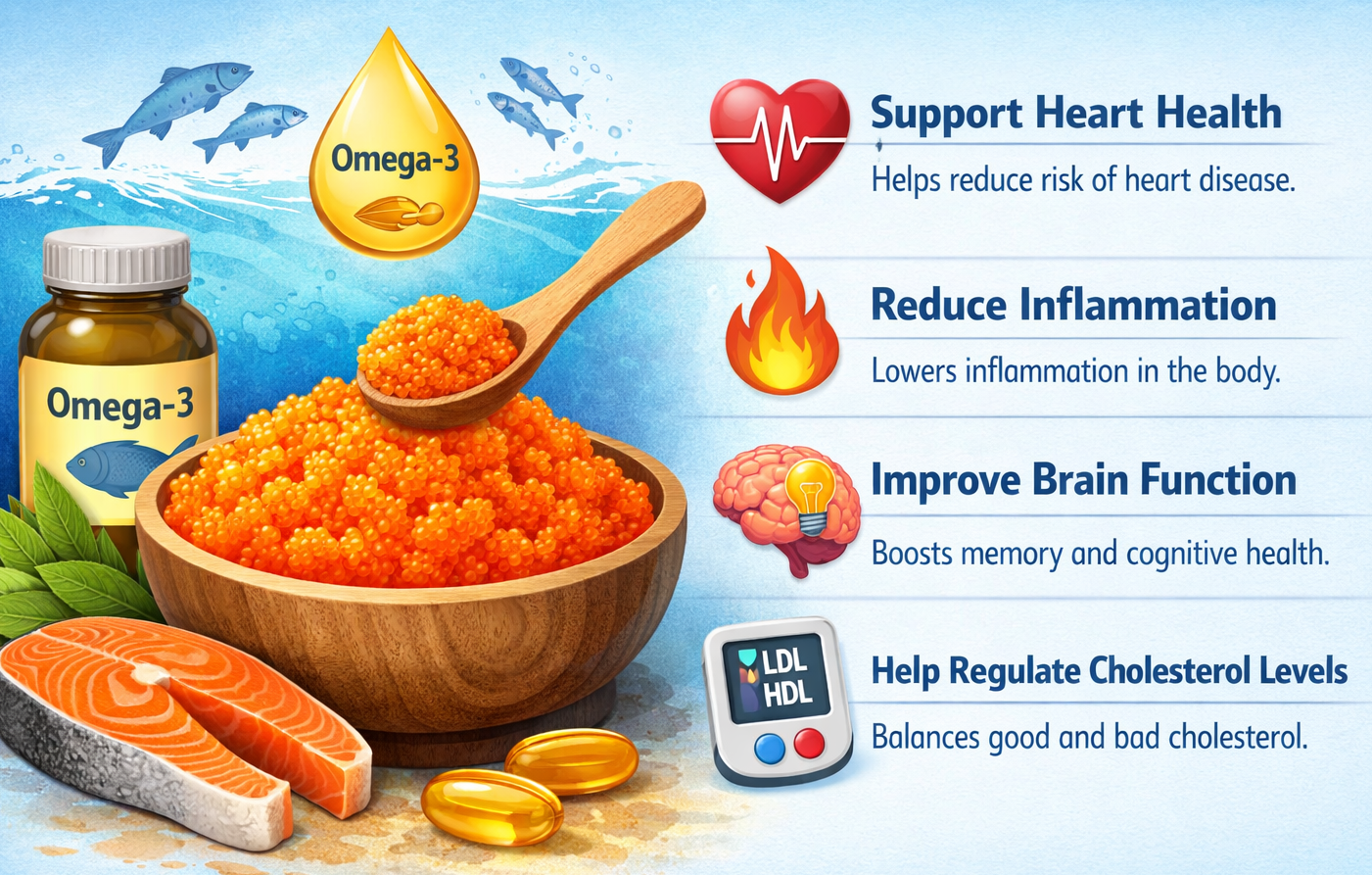
Omega-3 fats are important because the body cannot produce them on its own.
Omega-3 fatty acids in seafood have been linked to a lower risk of heart disease and improved brain health.
3. Supports Immune Function
Capelin roe is a good source of selenium, an antioxidant mineral that helps protect the body from oxidative stress and supports immune system function.
Selenium also plays an important role in thyroid health and metabolism.
4. Good Source of Protein
Fish roe provides high-quality protein containing all essential amino acids. Protein helps in:
- Muscle growth and repair
- Hormone production
- Tissue regeneration
Even small servings can help increase daily protein intake.
5. Low in Mercury
Compared with larger fish such as tuna or swordfish, capelin fish are lower in mercury, making their roe a safer seafood option when consumed in moderation.
This is one reason capelin roe is sometimes considered safe for occasional consumption during pregnancy, although moderation is still recommended.
Potential Risks
While capelin fish eggs offers several nutritional benefits, it also has some potential health risks that should be considered.
1. High Sodium Content
Masago is usually salted during processing, which increases its sodium levels. Just one tablespoon may contain about 240 mg of sodium.
Excess sodium intake may lead to:
- High blood pressure
- Fluid retention
- Increased risk of heart disease
People with hypertension or heart problems should consume it in limited amounts.
2. Risk of Allergic Reactions
Capelin roe is a seafood product and may trigger allergic reactions in people who are sensitive to fish or shellfish.
Symptoms may include:
- Skin rashes
- Digestive issues
- Swelling or breathing difficulties
3. Additives in Processed
Commercial masago sometimes contains additional ingredients such as:
- Artificial coloring
- Monosodium glutamate (MSG)
- High-fructose corn syrup
These additives may cause reactions in sensitive individuals or contribute to metabolic health issues if consumed frequently.
4. Environmental Concerns
Capelin roe is harvested from capelin fish populations. Some environmental groups have raised concerns that certain fishing methods targeting egg-bearing fish could affect capelin populations and marine ecosystems.
If you enjoy eating these tiny eggs of capelin fish, try to choose high-quality products from sustainable fisheries and consume them in moderation.
Frequently Asked Questions (FAQs)
Is masago healthy?
Yes, it can be healthy because it contains protein, omega-3 fatty acids, vitamin B12, and selenium.
Is masago safe during pregnancy?
It is generally considered low in mercury, but pregnant individuals should limit intake and ensure it is properly processed.
What does masago taste like?
It has a mild seafood flavor with a slightly sweet and salty taste, along with a crunchy texture.
References
1. Healthline (What Is capelin roe? Benefits and Downsides of Capelin Fish Roe)
2. WebMD (Health Benefits of eggs of capelin)
3. Advanced Living (Capelin roe: Review the Latest Research


Member discussion